Kirjojen hintavertailu. Mukana 12 536 534 kirjaa ja 12 kauppaa.

Kirjailija

David Owen

Kirjat ja teokset yhdessä paikassa: 85 kirjaa, julkaisuja vuosilta 1964-2025, suosituimpien joukossa A Handbook for Authentic Learning in Higher Education. Vertaile teosten hintoja ja tarkista saatavuus suomalaisista kirjakaupoista.

85 kirjaa

Kirjojen julkaisuhaarukka 1964-2025.

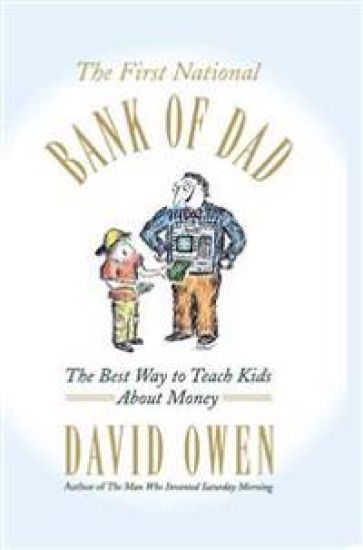
The First National Bank of Dad

The First National Bank of Dad

David Owen

SIMON SCHUSTER
2007
pokkari
An entertaining and essential guide shows parents how to teach their children about financial responsibility by providing a brilliant system that will encourage children to become savers, cautious spenders, charitable donors, and logical investors. Reprint. 20,000 first printing.
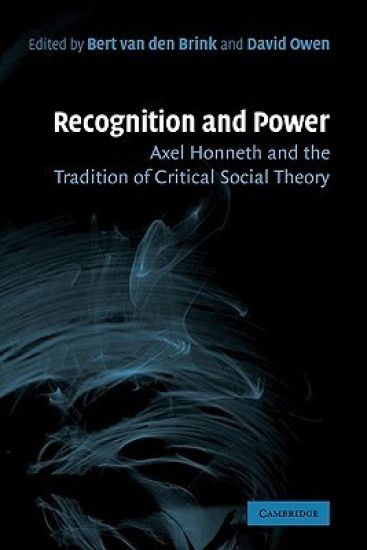
Recognition and Power

Recognition and Power

Bert van den Brink; David Owen

Cambridge University Press
2007
sidottu
The topic of recognition has come to occupy a central place in debates in social and political theory. Developed by George Herbert Mead and Charles Taylor, it has been given expression in the program for Critical Theory developed by Axel Honneth in his book The Struggle for Recognition. Honneth's research program offers an empirically insightful way of reflecting on emancipatory struggles for greater justice and a powerful theoretical tool for generating a conception of justice and the good that enables the normative evaluation of such struggles. This 2007 volume offers a critical clarification and evaluation of this research program, particularly its relationship to the other major development in critical social and political theory; namely, the focus on power as formative of practical identities (or forms of subjectivity) proposed by Michel Foucault and developed by theorists such as Judith Butler, James Tully, and Iris Marion Young.
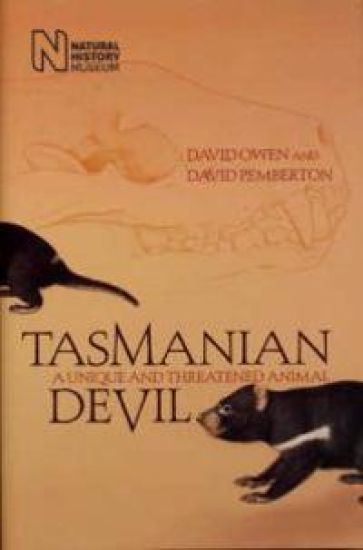
Tasmanian Devil

Tasmanian Devil

David Owen; David Pemberton

The Natural History Museum
2005
sidottu
This is the first book published on the animal that has the distinction of being the world's largest marsupial carnivore, and it is packed with information that has never before been accessible to the general reader. The story of the Tasmanian devil is a remarkable one - surprising, controversial, funny, and tragic. Few mammals have been so negatively named, but this book aims to reveal the true nature of the Tasmanian devil. Far from being a scavenging, ferocious oddity, it is a treasured and valuable wildlife species, and one that faces the threat of extinction. It was in 1803 that a boatload of convicts, English officers and sailors gave the Tasmanian devil its name. Now, for the first time since Europeans first encountered this intriguing and misunderstood animal, the devil's story is being told.
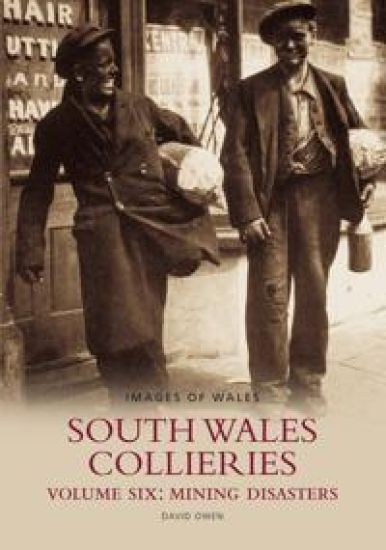
South Wales Collieries Volume 6: Mining disasters
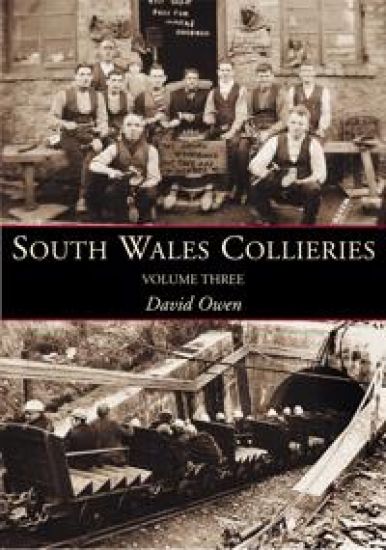
The story of mining in South Wales has been one of the people who extracted the black gold from the hillsides and valleys of the area. Their hard work has often been accompanied by danger and countless thousands have lost their lives in the valleys of Wales as a result of man's urge and need to extract coal. From the children squashed by coal trucks as they opened doors underground for ventilation to the huge disasters at Aberfan and Senghenydd, David Owen takes us 'down the mine' and into a tale of human misery, of families destroyed, livelihoods lost, all in the hunt for coal.
Hit & Hope

Hit & Hope

David Owen

Simon Schuster
2005
pokkari
Tiger Woods called his book HOW I PLAY GOLF. Great for him but what has that got to do with the rest of us mortals. Even Jack Nicklaus said of Mr. Woods 'He plays a game with which I am not familiar.' David Owen plays a game with which we are all familiar. He plays in a weekly foursome, takes mulligans off the first tee, practises intermittently at best, marks his ball on the green with his lucky coin (until the luck wears out, and he switches to something newer/hotter/fresher), wore a copper wristband because Seve Ballesteros said so, and struggles for consistency even though his swing IS consistent - and mediocre. He bets, he wins, he loses, he agonizes, he dreams. HIT AND HOPE is as pure a definition of the game of golf as anyone has ever devised. Through the annecdotes in this book, Owen takes the mundane aspects of the game and how we approach it and stands them on their head, turns them inside out, and lays our follies bare for all the world to see. He does for contemporary golfers what P.G. Wodehouse did for golfers in the 1920s, or Jacques Tati did for humanity at large: he finds humour and nobility in our essential silliness, as expressed in our pursuit of a little white ball over a vast greensward.
Copies in Seconds

Copies in Seconds

David Owen

Simon Schuster
2005
pokkari
A lone inventor and the story of how one of the most revolutionary inventions of the twentieth century almost didn't happen. Introduced in 1960, the first plain-paper office copier is unusual among major high-technology inventions in that its central process was conceived by a single person. Chester Carlson grew up in unspeakable poverty, worked his way through junior college and the California Institute of Technology, and made his discovery in solitude in the depths of the Great Depression. He offered his big idea to two dozen major corporations -- among them IBM, RCA, and General Electric -- all of which turned him down. So persistent was this failure of capitalistic vision that by the time the Xerox 914 was manufactured, by an obscure photographic-supply company in Rochester, New York, Carlson's original patent had expired. Xerography was so unusual and nonintuitive that it conceivably could have been overlooked entirely. Scientists who visited the drafty warehouses where the first machines were built sometimes doubted that Carlson's invention was even theoretically feasible. Building the first plain-paper office copier -- with parts scrounged from junkyards, cleaning brushes made of hand-sewn rabbit fur, and a built-in fire extinguisher -- required the persistence, courage, and imagination of an extraordinary group of physicists, engineers, and corporate executives whose story has never before been fully told. Copies in Seconds is a tale of corporate innovation and risk-taking at its very best.
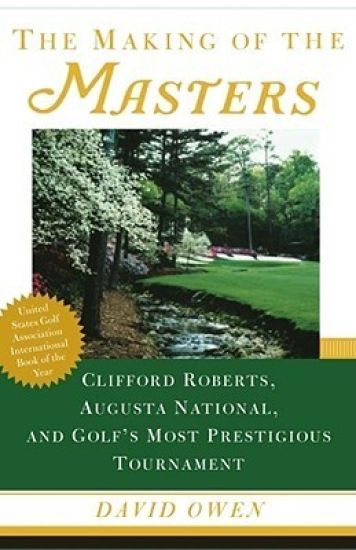
The Making of the Masters

The Making of the Masters

David Owen

Simon Schuster International
2003
pokkari
The complete history of America's most prestigious golf tournament draws on the archives of the Augusta National Golf Club to trace the evolution of the event, discuss its founder Clifford Roberts, and detail the events of the tournaments. Reprint.
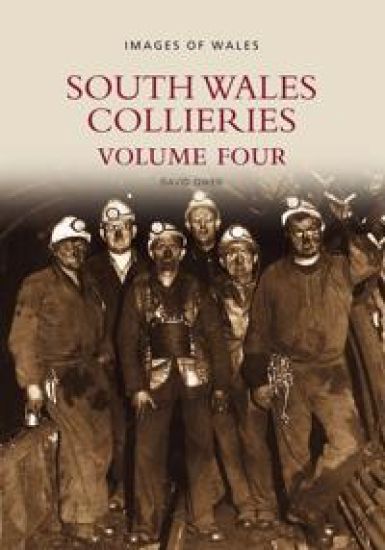
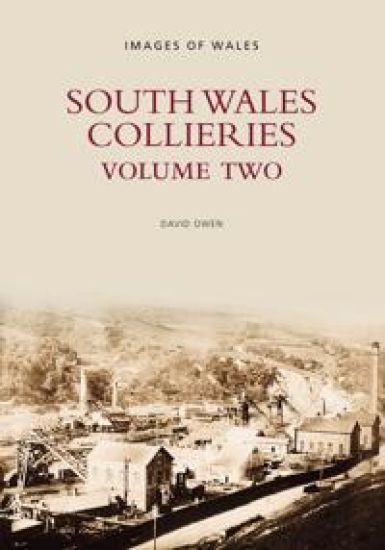
South Wales Collieries Volume 2

South Wales Collieries Volume 2

David Owen

The History Press Ltd
2002
nidottu
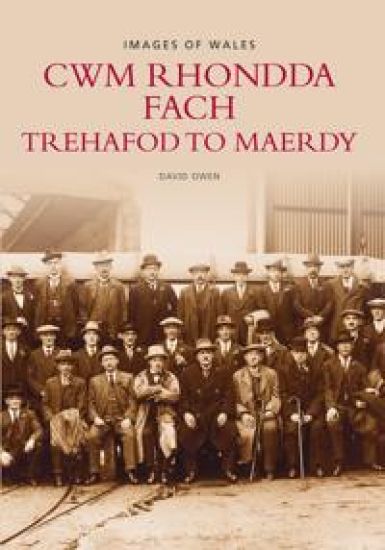
This is part of a series on South Wales Collieries, which illustrates the area's industrial history during the past 200 years, in text and photographs, and gives a glimpse of both working and village life in the valleys. This volume covers the Lewis Merthyr Collieries, Trehafod Village, and Rhondda Heritage Park.
Hume's Reason

Hume's Reason

David Owen

Oxford University Press
2002
nidottu
Many of the problems that Hume discusses, and many of the positions that he advocates, are expressed in terms of reason, which is central to his arguments about induction, belief, scepticism, the passions, and moral distinctions. This text sets his ideas against those of Descartes and Locke.
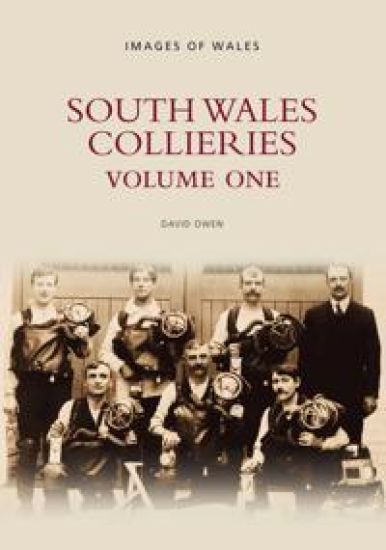
South Wales Collieries Volume 1

South Wales Collieries Volume 1

David Owen

The History Press Ltd
2001
nidottu
This collection of over 200 images provides an illustrated account of the development of the South Wales Coalfield, once one of the largest and most productive in Britain. It illustrates the area's industrial history during the past two hundred years as well as giving a glimpse of village life in the valleys of Rhondda Cynon Taff. Contained within are photographs of the miners, their housing and of the collieries that once provided employment for tens of thousands and that have now all but disappeared. For those who once worked in the coalfield the illustrations and text will conjure up memories of days gone by and for those too young to remeber the valleys as an industrial heartland of the Empire they will show just how hard life once was for their fathers and grandfathers alike. David Owen left school to train as a miner at Aberaman Colliery and worked underground at Tylorstown No. 9 until its closure on Friday 15th October 1960. He then transferred to Maerdy No. 3 & No. 4 Colliery where he worked underground for the rest of his career.
Teaching Geography 3-11

Teaching Geography 3-11

David Owen; Alison Ryan

Continuum International Publishing Group Ltd.
2001
nidottu
This text on teaching geography for students learning to teach in primary schools covers all areas, including such issues as equal opportunities and how to be a subject coordinator in a school.
Hume's Reason

Hume's Reason

David Owen

Oxford University Press
1999
sidottu
David Owen explores Hume's account of reason and its role in human understanding, seen in the context of other notable accounts by philosophers of the early modern period. Many of the most famous problems that Hume discusses, and many of the positions that he advocates, are expressed in terms of reason. It is central to his arguments about induction, belief, scepticism, the passions, and moral distinctions; to understand Hume's influential views on these matters, we must understand what his view of reason is. The book begins with chapters on the theories of reasoning put forward by Hume's notable predecessors Descartes and Locke. Owen shows that Hume followed them in rejecting a formal, deductive account of inference, in favour of a new naturalistic account. But he went farther, in what we now call the argument concerning induction, by showing that no account of reason as a separate faculty could explain our inferences to beliefs in the unobserved. Hume offers instead an associationist account of probable reasoning and a new theory of belief. The picture of reason as an independent faculty is replaced with an explanation of reasoning in terms of properties of the imagination. Hume's Reason offers a new interpretation of some of Hume's central ideas, and a treatment of reason which will be illuminating not just to historians of modern philosophy but to all philosophers who are concerned with the workings of human cognition.
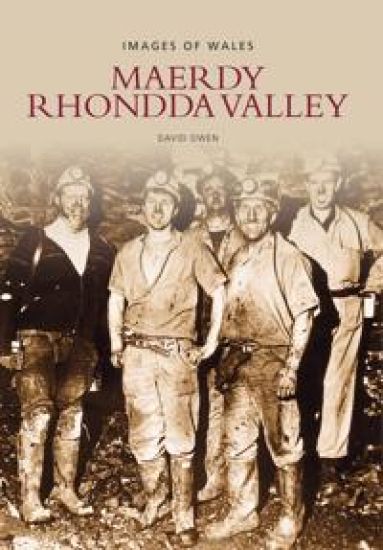
Maerdy Rhondda Valley

Maerdy Rhondda Valley

David Owen

The History Press Ltd
1999
nidottu
This book is part of the Images of Wales series, which uses old photographs and archived images to show the history of various local areas in Wales, through their streets, shops, pubs, and people.
Maturity and Modernity

Maturity and Modernity

David Owen

Routledge
1997
nidottu
Maturity and Modernity is the first book to analyze Nietzsche, Weber and Foucault as a tradition of theorising and to chart the development of genealogy as a mode of critique. It provides clear accounts of the main ideas of Nietzsche, Weber and Foucault (as well as a useful Glossary) and illustrates the relations between these thinkers at methodological, substantive and politcal levels.
My Usual Game

My Usual Game

David Owen

Random House USA Inc
1996
pokkari
My Usual Game chronicles DavidOwen's funny and enlightening quest to come toterms with a game that has frustrated and fascinatedhim ever since he was a child. Follow Owen as herescues his swing at golf school, spends a weekwith the inventor of the modern golf club, nearlywins a three-day Pro-Am at a tournament on the PGATour, travels with three golf-crazed friends totacky Myrtle Beach, follows Fred Couples and PaulAzinger at the Ryder Cup, and discovers what may bethe darkest secret of the golf swing: The differencebetween a slice and a draw is a certain number ofbeers. My UsualGame is a hilarious and wonderfully literatetour through the sometimes peculiar culture of thisvery popular sport. Golfers of all ages willdiscover My Usual Game for many yearsto come. It is destined to become a classic ofgolf literature."