Kirjojen hintavertailu. Mukana 12 595 353 kirjaa ja 12 kauppaa.

Kirjailija

David P. Forsythe

Kirjat ja teokset yhdessä paikassa: 21 kirjaa, julkaisuja vuosilta 1989-2024, suosituimpien joukossa Encyclopedia of Human Rights. Vertaile teosten hintoja ja tarkista saatavuus suomalaisista kirjakaupoista.

Mukana myös kirjoitusasut: David P Forsythe

21 kirjaa

Kirjojen julkaisuhaarukka 1989-2024.

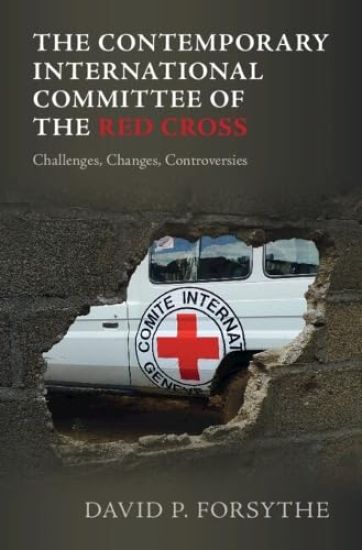
The Contemporary International Committee of the Red Cross

The Contemporary International Committee of the Red Cross

David P. Forsythe

Cambridge University Press
2024
sidottu
The International Committee of the Red Cross (ICRC) was founded in 1863 and is often considered the gold standard in humanitarian action. Despite its many positive achievements over more than 150 years, some former ICRC officials believe that the organization is now in decline because of a series of recent policy choices. Their view is that the organization has undermined its reputation for independent and neutral humanitarian action, while growing too fast and too large, which has weakened its reputation for quick, tightly focused, and effective action in the field. David P. Forsythe revisits the ICRC policy decisions of recent decades and suggests that the organization is not in fatal decline, but that it does need to reconsider some of its policies at the margins. Though some errors have been made and some corrections are in order, Forsythe argues that its obituary is premature.
The Contemporary International Committee of the Red Cross

The Contemporary International Committee of the Red Cross

David P. Forsythe

Cambridge University Press
2024
pokkari
The International Committee of the Red Cross (ICRC) was founded in 1863 and is often considered the gold standard in humanitarian action. Despite its many positive achievements over more than 150 years, some former ICRC officials believe that the organization is now in decline because of a series of recent policy choices. Their view is that the organization has undermined its reputation for independent and neutral humanitarian action, while growing too fast and too large, which has weakened its reputation for quick, tightly focused, and effective action in the field. David P. Forsythe revisits the ICRC policy decisions of recent decades and suggests that the organization is not in fatal decline, but that it does need to reconsider some of its policies at the margins. Though some errors have been made and some corrections are in order, Forsythe argues that its obituary is premature.
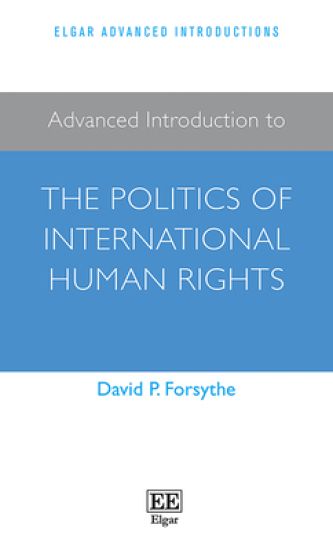
Advanced Introduction to the Politics of International Human Rights

Advanced Introduction to the Politics of International Human Rights

David P. Forsythe

Edward Elgar Publishing Ltd
2021
nidottu
Elgar Advanced Introductions are stimulating and thoughtful introductions to major fields in the social sciences, business and law, expertly written by the world’s leading scholars. Designed to be accessible yet rigorous, they offer concise and lucid surveys of the substantive and policy issues associated with discrete subject areas.David P. Forsythe presents a compelling introduction to international human rights in a political context. He stresses the difficulties of interjecting human rights into foreign policy and international politics, while recognising the considerable progress that has been made over time. Focusing on international organizations, states, corporations, and private advocacy groups, Forsythe addresses key themes including war, migration, climate change, and slavery.Key features include:a multidisciplinary approach that draws on findings in political science, law, diplomacy, history, and economicsdiscussion of a broad range of both traditional and contemporary topics from the United Nations to the internet and pandemicsan assessment of the progress made in promoting human rights and humanitarian ideas, and how these ideas translate into tangible improvements for human dignity.Adopting a politically realistic and historically informed perspective, this Advanced Introduction will be a valuable resource for students of human rights, international relations, and political science.
Advanced Introduction to the Politics of International Human Rights

Advanced Introduction to the Politics of International Human Rights

David P. Forsythe

Edward Elgar Publishing Ltd
2021
sidottu
Elgar Advanced Introductions are stimulating and thoughtful introductions to major fields in the social sciences, business and law, expertly written by the world’s leading scholars. Designed to be accessible yet rigorous, they offer concise and lucid surveys of the substantive and policy issues associated with discrete subject areas.David P. Forsythe presents a compelling introduction to international human rights in a political context. He stresses the difficulties of interjecting human rights into foreign policy and international politics, while recognising the considerable progress that has been made over time. Focusing on international organizations, states, corporations, and private advocacy groups, Forsythe addresses key themes including war, migration, climate change, and slavery.Key features include:a multidisciplinary approach that draws on findings in political science, law, diplomacy, history, and economicsdiscussion of a broad range of both traditional and contemporary topics from the United Nations to the internet and pandemicsan assessment of the progress made in promoting human rights and humanitarian ideas, and how these ideas translate into tangible improvements for human dignity.Adopting a politically realistic and historically informed perspective, this Advanced Introduction will be a valuable resource for students of human rights, international relations, and political science.
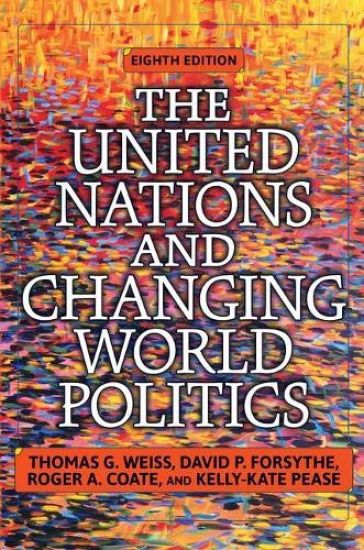
The United Nations and Changing World Politics

The United Nations and Changing World Politics

Thomas G. Weiss; David P. Forsythe; Roger A. Coate; Kelly-Kate Pease

Routledge
2019
sidottu
This completely revised and updated eighth edition serves as the definitive text for courses in which the United Nations is either the focus or a central component. Built around three critical themes in international relations (peace and security, human rights and humanitarian affairs, and sustainable human development) the eighth edition of The United Nations and Changing World Politics guides students through the seven turbulent decades of UN politics.This new edition is fully revised to incorporate recent developments on the international stage, including new peace operations in Mali and the Central African Republic; ongoing UN efforts to manage the crises in Libya, Syria, and Iraq; the Iran Nuclear Deal; and the new Sustainable Development Goals. The authors discuss how international law frames the controversies at the UN and guides how the UN responds to violence and insecurity, gross violations of human rights, poverty, underdevelopment, and environmental degradation. Students of all levels will learn that the UN is a complex organization, comprised of three interactive entities that cooperate and also compete with each other to define and advance the UN's principles and purposes.
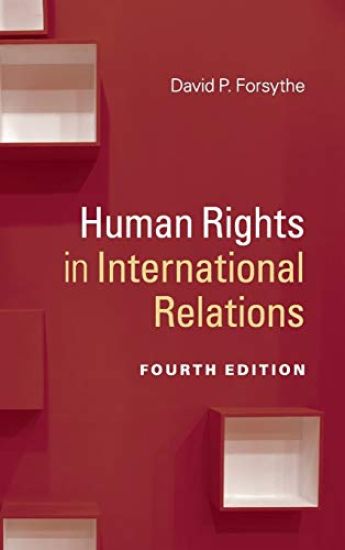
Human Rights in International Relations

Human Rights in International Relations

David P. Forsythe

Cambridge University Press
2017
sidottu
This fourth edition of David P. Forsythe's successful textbook provides an authoritative and timely analysis of the place of human rights in an age of upheaval in international politics. Human rights standards are examined at the global, regional and national levels, with separate chapters on transnational corporations and advocacy groups. Completely updated and revised, the fourth edition takes account of new sources and recent scholarship, as well as recent events, such as the Syrian war, the rise of ISIS, refugee flows, South Sudan crises, and the resurgence of nationalism. A new chapter has been added on the media and human rights, covering both traditional and social media. Examining attempts to protect human rights by various actors, such as the United Nations, the European Union, transnational corporations, and the media, the book stresses that the open-ended fate of universal human rights depends on human agency in this context. Containing further reading suggestions and discussion questions, this textbook is a vital resource for courses on human rights in an international context.
Human Rights in International Relations

Human Rights in International Relations

David P. Forsythe

Cambridge University Press
2017
pokkari
This fourth edition of David P. Forsythe's successful textbook provides an authoritative and timely analysis of the place of human rights in an age of upheaval in international politics. Human rights standards are examined at the global, regional and national levels, with separate chapters on transnational corporations and advocacy groups. Completely updated and revised, the fourth edition takes account of new sources and recent scholarship, as well as recent events, such as the Syrian war, the rise of ISIS, refugee flows, South Sudan crises, and the resurgence of nationalism. A new chapter has been added on the media and human rights, covering both traditional and social media. Examining attempts to protect human rights by various actors, such as the United Nations, the European Union, transnational corporations, and the media, the book stresses that the open-ended fate of universal human rights depends on human agency in this context. Containing further reading suggestions and discussion questions, this textbook is a vital resource for courses on human rights in an international context.
American Exceptionalism Reconsidered

American Exceptionalism Reconsidered

David P. Forsythe; Patrice C. McMahon

Routledge
2016
sidottu
Is the US really exceptional in terms of its willingness to take universal human rights seriously? According to the rhetoric of American political leaders, the United States has a unique and lasting commitment to human rights principles and to a liberal world order centered on rule of law and human dignity. But when push comes to shove—most recently in Libya and Syria--the United States failed to stop atrocities and dithered as disorder spread in both places. This book takes on the myths surrounding US foreign policy and the future of world order. Weighing impulses toward parochial nationalism against the ideal of cosmopolitan internationalism, the authors posit that what may be emerging is a new brand of American globalism, or a foreign policy that gives primacy to national self-interest but does so with considerable interest in and genuine attention to universal human rights and a willingness to suffer and pay for those outside its borders—at least on occasion. The occasions of exception—such as Libya and Syria—provide case studies for critical analysis and allow the authors to look to emerging dominant powers, especially China, for indicators of new challenges to the commitment to universal human rights and humanitarian affairs in the context of the ongoing clash between liberalism and realism.The book is guided by four central questions: 1) What is the relationship between cosmopolitan international standards and narrow national self-interest in US policy on human rights and humanitarian affairs? 2) What is the role of American public opinion and does it play any significant role in shaping US policy in this dialectical clash? 3) Beyond public opinion, what other factors account for the shifting interplay of liberal and realist inclinations in Washington policy making? 4) In the 21st century and as global power shifts, what are the current views and policies of other countries when it comes to the application of human rights and humanitarian affairs?
American Exceptionalism Reconsidered

American Exceptionalism Reconsidered

David P. Forsythe; Patrice C. McMahon

Routledge
2016
nidottu
Is the US really exceptional in terms of its willingness to take universal human rights seriously? According to the rhetoric of American political leaders, the United States has a unique and lasting commitment to human rights principles and to a liberal world order centered on rule of law and human dignity. But when push comes to shove—most recently in Libya and Syria--the United States failed to stop atrocities and dithered as disorder spread in both places. This book takes on the myths surrounding US foreign policy and the future of world order. Weighing impulses toward parochial nationalism against the ideal of cosmopolitan internationalism, the authors posit that what may be emerging is a new brand of American globalism, or a foreign policy that gives primacy to national self-interest but does so with considerable interest in and genuine attention to universal human rights and a willingness to suffer and pay for those outside its borders—at least on occasion. The occasions of exception—such as Libya and Syria—provide case studies for critical analysis and allow the authors to look to emerging dominant powers, especially China, for indicators of new challenges to the commitment to universal human rights and humanitarian affairs in the context of the ongoing clash between liberalism and realism.The book is guided by four central questions: 1) What is the relationship between cosmopolitan international standards and narrow national self-interest in US policy on human rights and humanitarian affairs? 2) What is the role of American public opinion and does it play any significant role in shaping US policy in this dialectical clash? 3) Beyond public opinion, what other factors account for the shifting interplay of liberal and realist inclinations in Washington policy making? 4) In the 21st century and as global power shifts, what are the current views and policies of other countries when it comes to the application of human rights and humanitarian affairs?
The International Committee of the Red Cross

The International Committee of the Red Cross

David P. Forsythe; Barbara Ann Rieffer-Flanagan

Routledge
2016
sidottu
The International Committee of the Red Cross (ICRC) has a complex position in international relations, being the guardian of international humanitarian law but often acting discretely to advance human dignity. Treated by most governments as if it were an inter-governmental organization, the ICRC is a non-governmental organization, all-Swiss at the top, and it is given rights and duties in the 1949 Geneva Conventions for Victims of War.Written by two formidable experts in the field, this book analyzes international humanitarian action as practiced by the International Red Cross, explaining its history and structure as well as examining contemporary field experience and broad diplomatic initiatives related to its principal tasks. Such tasks include: ensuring that detention conditions are humane for those imprisoned by reason of political conflict or war providing material and moral relief in conflict promoting development of the humanitarian part of the laws of war improving the unity and effectiveness of the movement Fully updated throughout, the new edition will also include brand new material on: armed actors who do not accept humanitarian restrictions on their actions, including expanded coverage of the Islamic State (ISIL, ISIS), Al Shabab, and Boko Haram, among others Syrian internationalized civil war issue of drone strikes and targeted killings, and the continuing push for regulation of what is called cyber war the question of the field of application of international humanitarian law (what is the battlefield?). Particularly when states declare "war" on "terrorist groups" operating inside other states regulation of new weapons and new uses of old weapons
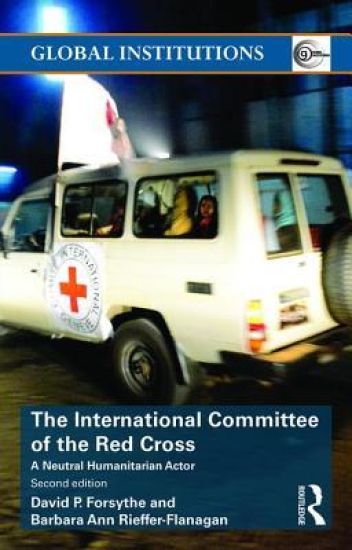
The International Committee of the Red Cross

The International Committee of the Red Cross

David P. Forsythe; Barbara Ann Rieffer-Flanagan

Routledge
2016
nidottu
The International Committee of the Red Cross (ICRC) has a complex position in international relations, being the guardian of international humanitarian law but often acting discretely to advance human dignity. Treated by most governments as if it were an inter-governmental organization, the ICRC is a non-governmental organization, all-Swiss at the top, and it is given rights and duties in the 1949 Geneva Conventions for Victims of War.Written by two formidable experts in the field, this book analyzes international humanitarian action as practiced by the International Red Cross, explaining its history and structure as well as examining contemporary field experience and broad diplomatic initiatives related to its principal tasks. Such tasks include: ensuring that detention conditions are humane for those imprisoned by reason of political conflict or war providing material and moral relief in conflict promoting development of the humanitarian part of the laws of war improving the unity and effectiveness of the movement Fully updated throughout, the new edition will also include brand new material on: armed actors who do not accept humanitarian restrictions on their actions, including expanded coverage of the Islamic State (ISIL, ISIS), Al Shabab, and Boko Haram, among others Syrian internationalized civil war issue of drone strikes and targeted killings, and the continuing push for regulation of what is called cyber war the question of the field of application of international humanitarian law (what is the battlefield?). Particularly when states declare "war" on "terrorist groups" operating inside other states regulation of new weapons and new uses of old weapons
The Politics of Prisoner Abuse

The Politics of Prisoner Abuse

David P. Forsythe

Cambridge University Press
2011
sidottu
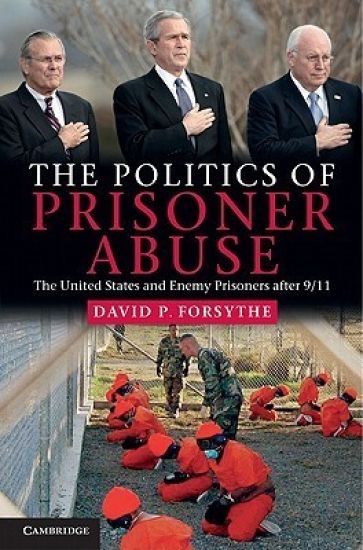
When states are threatened by war and terrorism, can we really expect them to abide by human rights and humanitarian law? David P. Forsythe's bold analysis of US policies towards terror suspects after 9/11 addresses this issue directly. Covering moral, political, and legal aspects, he examines the abuse of enemy detainees at the hands of the United States. At the center of the debate is the Bush Administration, which Forsythe argues displayed disdain for international law, in contrast to the general public's support for humanitarian affairs. Forsythe explores the similarities and differences between Presidents Obama and Bush on the question of prisoner treatment in an age of terrorism and asks how the Administration should proceed. The book traces the Pentagon's and CIA's records in mistreating prisoners, providing an account which will be of interest to all those who value human rights and humanitarian law.
The Politics of Prisoner Abuse

The Politics of Prisoner Abuse

David P. Forsythe

Cambridge University Press
2011
pokkari
When states are threatened by war and terrorism, can we really expect them to abide by human rights and humanitarian law? David P. Forsythe's bold analysis of US policies towards terror suspects after 9/11 addresses this issue directly. Covering moral, political, and legal aspects, he examines the abuse of enemy detainees at the hands of the United States. At the center of the debate is the Bush Administration, which Forsythe argues displayed disdain for international law, in contrast to the general public's support for humanitarian affairs. Forsythe explores the similarities and differences between Presidents Obama and Bush on the question of prisoner treatment in an age of terrorism and asks how the Administration should proceed. The book traces the Pentagon's and CIA's records in mistreating prisoners, providing an account which will be of interest to all those who value human rights and humanitarian law.
Encyclopedia of Human Rights

Encyclopedia of Human Rights

David P Forsythe

Oxford University Press Inc
2009
sidottu
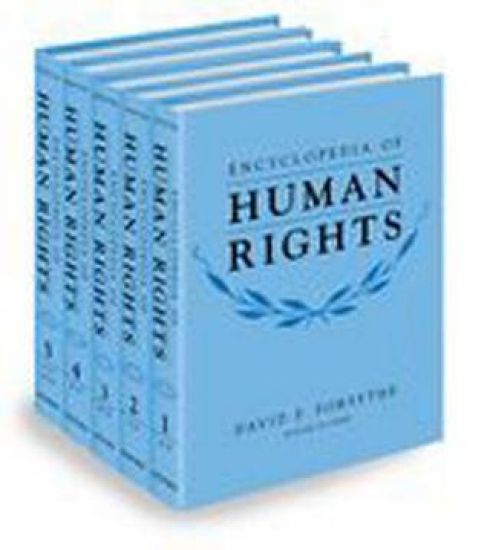
The international human rights movement has become firmly established in global politics since the UN's 1948 Universal Declaration of Human Rights, and principles of human rights now have a major impact on international diplomacy and lawmaking. This major five-volume encyclopedia set offers comprehensive coverage of all aspects of human rights theory, practice, law, and history. The set provides country profiles, and full coverage of the development of the movement, of historical cases of abuse, of the key figures, of major organizations past and present, and of a range of other issues in economics, government, religion, journalism, etc., that touch on human rights theory and practice.
The Humanitarians

The Humanitarians

David P. Forsythe

Cambridge University Press
2005
sidottu
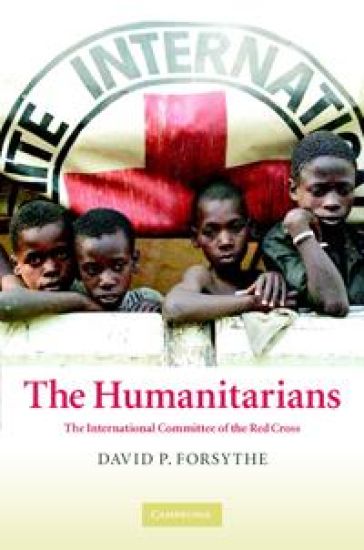
The International Committee of the Red Cross (ICRC) coordinates the world's largest private relief system for conflict situations. Its staff operates throughout the world, and in recent years the ICRC has mounted large operations in the Balkans and Somalia. Yet despite its very important role its internal workings are mysterious and often secretive. This book examines the ICRC from its origins in the mid-nineteenth century up to the present day, and provides a comprehensive overview of a unique private organisation, whose governing body remains all-Swiss, but which is recognized in international law as if it were an inter-governmental organization. David Forsythe focuses on the policy making and field work of the ICRC, while not ignoring international humanitarian law. He explores how it exercises its independence, impartiality, and neutrality to try to protect prisoners in Iraq, displaced and starving civilians in Somalia, and families separated by conflict in the Israeli-Palestinian conflict. David Forsythe received the Distinguished Scholar Award for 2007 from the Human Rights Section of the American Political Science Association.
The Humanitarians

The Humanitarians

David P. Forsythe

Cambridge University Press
2005
pokkari
The International Committee of the Red Cross (ICRC) coordinates the world's largest private relief system for conflict situations. Its staff operates throughout the world, and in recent years the ICRC has mounted large operations in the Balkans and Somalia. Yet despite its very important role its internal workings are mysterious and often secretive. This book examines the ICRC from its origins in the mid-nineteenth century up to the present day, and provides a comprehensive overview of a unique private organisation, whose governing body remains all-Swiss, but which is recognized in international law as if it were an inter-governmental organization. David Forsythe focuses on the policy making and field work of the ICRC, while not ignoring international humanitarian law. He explores how it exercises its independence, impartiality, and neutrality to try to protect prisoners in Iraq, displaced and starving civilians in Somalia, and families separated by conflict in the Israeli-Palestinian conflict. David Forsythe received the Distinguished Scholar Award for 2007 from the Human Rights Section of the American Political Science Association.
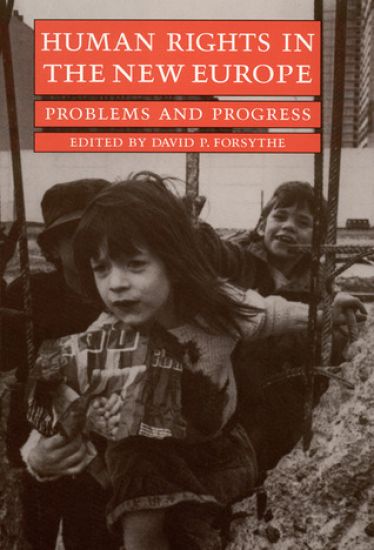
Human Rights in the New Europe

Human Rights in the New Europe

David P. Forsythe

University of Nebraska Press
1994
sidottu
Human Rights in the New Europe is one of the first books to bring together leading thinkers from both East and west in order to examine the situation of human rights in Europe, especially east-central Europe, after the fall of communism. The book focuses broadly on the promotion and protection of human rights practices in specific nations. David P. Forsythe's introductory pages set the stage for up-to-date information on the new situation in eastern Europe, and his conclusion stresses the interplay of national and international factors that affect governments in former communist countries as they attempt or are pressured to apply internationally recognized human rights.Several themes are stressed in the contributed essays. One is the primacy of national factors over international factors in determining the future of human rights. Another is the question of legal engineering: can it control some of the historical factors that interfere with the application of human rights? Many states of eastern Europe have not been characterized over time as either stable democracies or other types of government that display tolerance and moderation. Further, the economy ineastern Europe has been poor in recent years. The prospects for developing governments that are protective of human rights are good in some areas but not in others. Human Rights in the New Europe presents a balanced and cautious overview of the future of human rights in Europe. The contributors, including Doug Bereuter, Vaclav Trojan, Pavel Hollander, Josef Blahoz, Mark Gibney, Richard Claude, Jack Donnelly, Bruce Garver, John Hibbing, Helen Lanham, and Ray Zariski, agree that there has been progress in some areas but that precise predictions cannot be made in the fluctuating climate of the early 1990s.
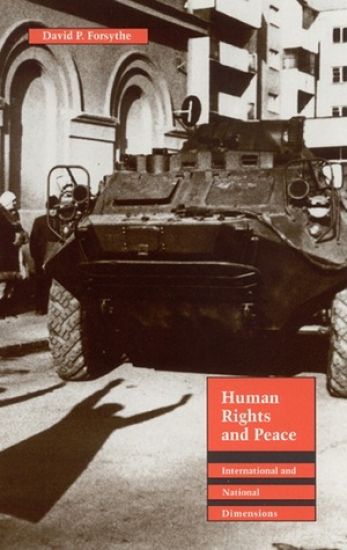
Human Rights and Peace

Human Rights and Peace

David P. Forsythe

University of Nebraska Press
1994
sidottu
"Professor Forsythe's attention to relations between peace and human rights opens new areas for analysis and synthesizes important information. This book confirms, once again, his eminent position as a scholar of human rights." - Claude E. Welch, Jr., Distinguished Service Professor, SUNY, Buffalo. As our world becomes a truly global village through instantaneous media transmission of events, the relationship between human rights and peaceful international relations receives more and more attention. David P. Forsythe's book analyzes and discusses the dimensions of cover and overt human rights violations and how they militate against the establishment of democracies in the Third World. "Human Rights and Peace" evaluates critically the argument that human rights in general and democracy in particular contribute to peaceful international relations. David P. Forsythe is a professor of political science at the University of Nebraska-Lincoln. His publications include "The Internationalization of Human Rights", "The Politics of International Law", "Human Rights and World Politics", and "U. S. Foreign Policy".
Human Rights and Peace

Human Rights and Peace

David P. Forsythe

University of Nebraska Press
1993
pokkari
As our world becomes a truly global village through instantaneous media transmission of events, the relationship between human rights and peaceful international relations receives more and more attention. David P. Forsythe's book analyzes and discusses the dimensions of cover and overt human rights violations and how they militate against the establishment of democracies in the Third World. Part One describes the paradox of internationally recognized human rights standards and international violence. Forsythe draws a crucial comparison between the lack of overt force between industrialized democracies and the use of covert force by certain democracies against some elected Third World governments. Part Two deals with human rights and intrastate violence. A creative framework of analysis, centering on the concept of political legitimacy, is illustrated by case studies of Sri Lanka, Liberia, and Romania. Forsythe shows that, in different ways and in different situations, the violation of human rights standards can be correlated with political revolution. Human Rights and Peace evaluates critically the argument that human rights in general and democracy in particular contribute to peaceful international relations.
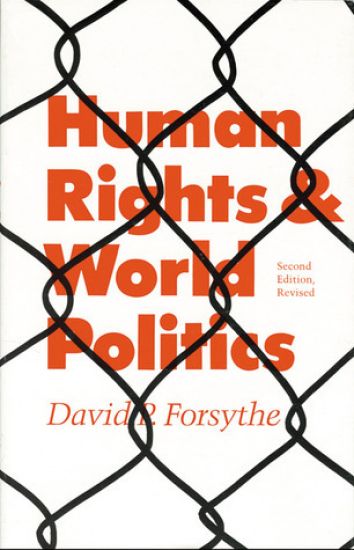
Human Rights and World Politics

Human Rights and World Politics

David P. Forsythe

University of Nebraska Press
1989
pokkari
By the 1980s the concept of internationally recognized human rights was being reinforced by a growing body of international law and by the multiplication of agencies concerned with such matters as torture in Paraguay, slavery in Mauritania, the British use of force in Northern Ireland, and starvation and malnutrition in East Africa and Southeast Asia. No matter how much a national leader might find it more convenient to focus on other matters, some world organization or private group could be counted on to keep the issue of universal human rights alive. Because the subject is particularly timely, David P. Forsythe has revised Human Rights and World Politics, first published in 1983. For this second edition, Forsythe has updated all chapters and completely rewritten the one on U.S. foreign policy to include the second Reagan administration. After a brief history of the evolution of human rights in international law and diplomacy, he surveys human rights standards as developed by the United Nations and other official organizations. Moving from the definitive core of law, Forsythe turns to the interpretation and implementation of rights agreements; the role of private or unofficial organizations such as Amnesty International and the Red Cross; the relationship between civil-political and socio-economic rights; the role of human rights in U.S. foreign policy, particularly under Carter and Reagan; and lobbying in Washington by human-rights interest groups. In all, Forsythe's exhaustive research and careful analysis bring clarity and concreteness to a subject too often obscured by rhetoric.