

Kirjailija
David P. Norton
Kirjat ja teokset yhdessä paikassa: 9 kirjaa, julkaisuja vuosilta 1996-2024, suosituimpien joukossa The Strategy-Focused Organization. Vertaile teosten hintoja ja tarkista saatavuus suomalaisista kirjakaupoista.
Mukana myös kirjoitusasut: David P Norton
9 kirjaa
Kirjojen julkaisuhaarukka 1996-2024.


In a world of stiffening competition, business strategy is more crucial than ever. Yet most organizations struggle in this area--not with formulating strategy but with executing it, or putting their strategy into action. Owing to execution failures, companies realize just a fraction of the financial performance promised in their strategic plans. It doesn't have to be that way, maintain Robert Kaplan and David Norton in The Execution Premium. Building on their breakthrough works on strategy-focused organizations, the authors describe a multistage system that enables you to gain measurable benefits from your carefully formulated business strategy. This book shows you how to: Develop an effective strategy--with tools such as SWOT analysis, vision formulation, and strategic change agendas Plan execution of the strategy--through portfolios of strategic initiatives linked to strategy maps and Balanced Scorecards Put your strategy into action--by integrating operational tools such as process dashboards, rolling forecasts, and activity-based costing Test and update your strategy--using carefully designed management meetings to review operational and strategic data Drawing on extensive research and detailed case studies from a broad array of industries, The Execution Premium presents a systematic and proven framework for achieving the financial results promised by your strategy.

Drive Business Performance
Bruno Aziza; Joey Fitts; Robert S. Kaplan; David P. Norton
John Wiley Sons Inc
2008
sidottu
This groundbreaking guide provides a deep understanding of how to achieve enterprise performance management objectives, backed up by first-hand accounts from Fortune 500 companies who are winning by building accountability, intelligence, and informed decision-making into their organizational DNA. Drive Business Performance explains the competitive advantage experienced by organizations that create and manage a "Culture of Performance."
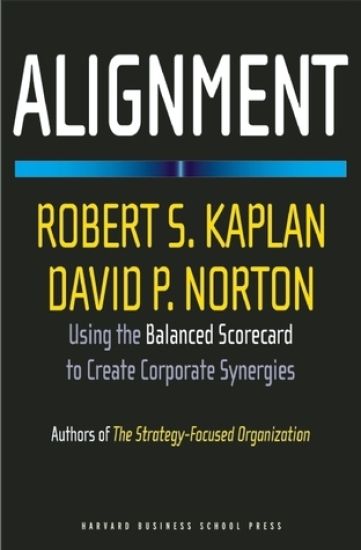
Most organizations consist of multiple business and support units, each populated by highly trained, experienced executives. But often the efforts of individual units are not coordinated, resulting in conflicts, lost opportunities, and diminished performance. Robert S. Kaplan and David P. Norton argue that the responsibility for this critical alignment lies with corporate headquarters. In this book, the authors apply their revolutionary Balanced Scorecard management system to corporate-level strategy, revealing how highly successful enterprises achieve powerful synergies by explicitly defining corporate headquarters' role in setting, coordinating, and overseeing organizational strategy. Based on extensive field research in organizations worldwide, Alignment shows how companies can build an enterprise-level Strategy Map and Balanced Scorecard that clearly articulate the "enterprise value proposition": how the enterprise creates value above that achieved by individual business units operating alone. The book provides case studies, actionable frameworks, and sample scorecards that show how to align business and support units, boards of directors, and external partners with the corporate strategy and create a governance process that will ensure that alignment is sustained. The next breakthrough in strategy execution from the field's premier thinkers, Alignment shows how today's companies can unlock unrealized value from enterprise synergies.
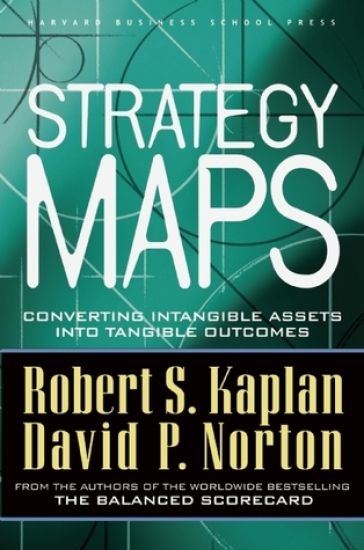
More than a decade ago, Robert S. Kaplan and David P. Norton introduced the Balanced Scorecard, a revolutionary performance measurement system that allowed organizations to quantify intangible assets such as people, information, and customer relationships. Then, in The Strategy-Focused Organization, Kaplan and Norton showed how organizations achieved breakthrough performance with a management system that put the Balanced Scorecard into action. Now, using their ongoing research with hundreds of Balanced Scorecard adopters across the globe, the authors have created a powerful new tool--the "strategy map"--that enables companies to describe the links between intangible assets and value creation with a clarity and precision never before possible. Kaplan and Norton argue that the most critical aspect of strategy--implementing it in a way that ensures sustained value creation--depends on managing four key internal processes: operations, customer relationships, innovation, and regulatory and social processes. The authors show how companies can use strategy maps to link those processes to desired outcomes; evaluate, measure, and improve the processes most critical to success; and target investments in human, informational, and organizational capital. Providing a visual "aha!" for executives everywhere who can't figure out why their strategy isn't working, Strategy Maps is a blueprint any organization can follow to align processes, people, and information technology for superior performance.

Comment utiliser le tableau de bord prospectif
Robert S Kaplan; David P Norton
Eyrolles Group
2001
pokkari
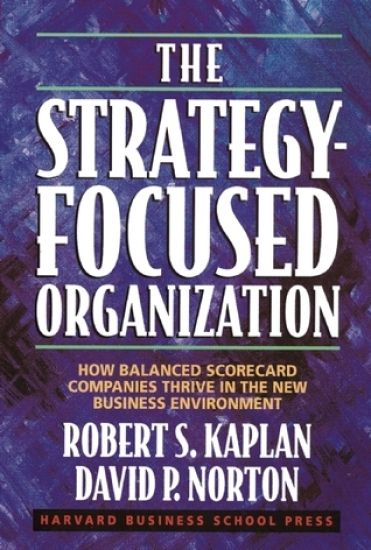
The Strategy-Focused Organization
Robert S. Kaplan; David P. Norton
Harvard Business Review Press
2000
sidottu
The creators of the revolutionary performance management tool called the Balanced Scorecard introduce a new approach that makes strategy a continuous process owned not just by top management, but by everyone. In The Strategy-Focused Organization, Robert Kaplan and David Norton share the results of ten years of learning and research into more than 200 companies that have implemented the Balanced Scorecard. Drawing from more than twenty in-depth case studies--including Mobil, CIGNA, and AT&T Canada--Kaplan and Norton illustrate how Balanced Scorecard adopters have taken their groundbreaking tool to the next level. These organizations have used the scorecard to create an entirely new performance management framework that puts strategy at the center of key management processes and systems. Kaplan and Norton articulate the five key principles required for building strategy-focused organizations: 1) translate the strategy into operational terms, 2) align the organization to the strategy, 3) make strategy everyone's everyday job, 4) make strategy a continual process, and 5) mobilize change through strong, effective leadership. The authors provide a detailed account of how a range of organizations in the private, public, and nonprofit sectors have deployed these principles to achieve breakthrough, sustainable performance improvements.
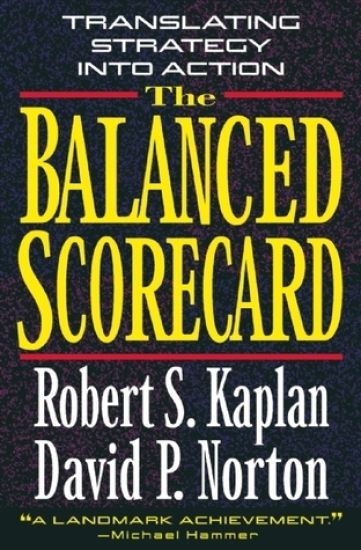
The Balanced Scorecard translates a company's vision and strategy into a coherent set of performance measures. The four perspectives of the scorecard--financial measures, customer knowledge, internal business processes, and learning and growth--offer a balance between short-term and long-term objectives, between outcomes desired and performance drivers of those outcomes, and between hard objective measures and softer, more subjective measures. In the first part, Kaplan and Norton provide the theoretical foundations for the Balanced Scorecard; in the second part, they describe the steps organizations must take to build their own Scorecards; and, finally, they discuss how the Balanced Scorecard can be used as a driver of change.