Kirjojen hintavertailu. Mukana 12 309 139 kirjaa ja 12 kauppaa.

Kirjailija

David Papineau

Kirjat ja teokset yhdessä paikassa: 12 kirjaa, julkaisuja vuosilta 1979-2026, suosituimpien joukossa Causation. Vertaile teosten hintoja ja tarkista saatavuus suomalaisista kirjakaupoista.

12 kirjaa

Kirjojen julkaisuhaarukka 1979-2026.

Causation

Causation

David Papineau

Cambridge University Press
2026
sidottu
Most philosophical work on causation is divorced from scientific practice, but in this book David Papineau develops a theory based on systems of directed regularities in order to provide a principled grounding for the science of causal inference. His book first introduces non-specialists to the techniques of causal inference, and then shows how the resulting theory can account for all aspects of causation. While Papineau draws on a wide range of scientific and philosophical sources, everything is explained from first principles and will be accessible to readers from all backgrounds. The resulting theory marks a new departure in the philosophy of causation, and will be of interest not only to philosophers but also to anybody interested in the statistical techniques that are widely used throughout science to analyse causal structures.
Causation

Causation

David Papineau

Cambridge University Press
2026
nidottu
Most philosophical work on causation is divorced from scientific practice, but in this book David Papineau develops a theory based on systems of directed regularities in order to provide a principled grounding for the science of causal inference. His book first introduces non-specialists to the techniques of causal inference, and then shows how the resulting theory can account for all aspects of causation. While Papineau draws on a wide range of scientific and philosophical sources, everything is explained from first principles and will be accessible to readers from all backgrounds. The resulting theory marks a new departure in the philosophy of causation, and will be of interest not only to philosophers but also to anybody interested in the statistical techniques that are widely used throughout science to analyse causal structures.
The Metaphysics of Sensory Experience

The Metaphysics of Sensory Experience

David Papineau

Oxford University Press
2021
sidottu
What are the materials of conscious perceptual experience? What is going on when we are consciously aware of a visual scene, or hear sounds, or otherwise enjoy sensory experience? In this book David Papineau exposes the flaws in contemporary answers to this central philosophical question and defends a new alternative. Contemporary theories of perceptual experience all hold that conscious experiences reach out into the world beyond the mind. According to naïve realism, experiences literally incorporate perceived facts, while representationalism holds that experiences contain ordinary properties of the kind possessed by physical objects. These ideas might seem attractive at first sight, however Papineau shows that they do not stand up to examination. Instead, he argues for a purely qualitative account of sensory experience. Conscious sensory experiences are intrinsic states with no essential connection to external circumstances or represented properties. This might run counter to initial intuition, yet Papineau develops this qualitative theory in detail and illustrates how it can accommodate the rich structure of sensory experience. Papineau's qualitative account has respectable antecedents in the history of philosophy. By placing the qualitative theory on a firm footing, he shows that those curious about experience need not be restricted to the options in contemporary philosophical discourse.
Knowing the Score

Knowing the Score

David Papineau

Constable
2019
isokokoinen pokkari
'A tour de force that provides fresh insight not only into the nature of sport, but cooperation, the mind, altruism, teamwork, leadership, tribalism and ritualism. It's a book that every sports fan should read, and every sports writer should absorb' Matthew Syed'David Papineau's book is an important contribution to our thinking about sports, society, psychology, and moral philosophy. But it is also much more than that. Gripping from start to finish, it is a terrific read full of humour and good sense. You don't even have to like sports to enjoy it' Ian BurumaWhy do sports competitors choke? How can Roger Federer select which shot to play in 400 milliseconds? Should foreign-born footballers be eligible to play for England? Why do opposing professional cyclists help each other? Why do American and European golfers hate each other? Why does test cricket run in families? Why is punching tolerated in rugby but not in soccer?These may not look like philosophical questions, but David Papineau shows that under the surface they all raise long-standing philosophical issues. To get to the bottom of these and other sporting puzzles, we need help from metaphysics or ethics, or from the philosophy of mind or political philosophy, as well as numerous other philosophical disciplines. Knowing the Score will be an entertaining, fact-filled and erudite book that ranges far and wide through the sporting world. As a prominent philosopher who is also an enthusiastic amateur sportsman and omnivorous sports fan, David Papineau is uniquely well-placed to show how philosophy can illuminate sporting issues. By bringing his philosophical expertise to bear, he will add a new dimension to the way we think about sport.
Handbook of Embodied Cognition and Sport Psychology

Handbook of Embodied Cognition and Sport Psychology

Richard S. W. Masters; David Papineau

MIT Press
2019
sidottu
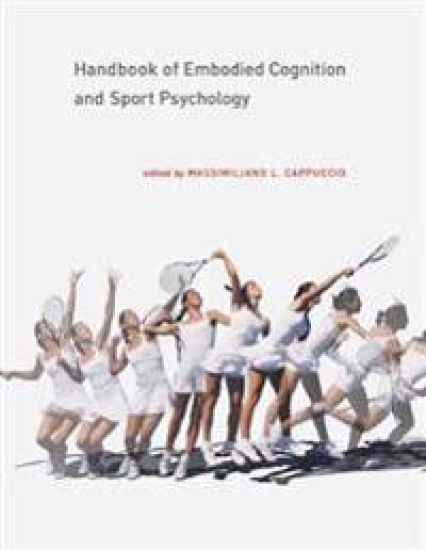
The first systematic collaboration between cognitive scientists and sports psychologists considers the mind-body relationship from the perspective of athletic skill and sports practice.This landmark work is the first systematic collaboration between cognitive scientists and sports psychologists that considers the mind-body relationship from the perspective of athletic skill and sports practice. With twenty-six chapters by leading researchers, the book connects and integrates findings from fields that range from philosophy of mind to sociology of sports. The chapters show not only that sports can tell scientists how the human mind works but also that the scientific study of the human mind can help athletes succeed. Sports psychology research has always focused on the themes, notions, and models of embodied cognition; embodied cognition, in turn, has found striking confirmation of its theoretical claims in the psychological accounts of sports performance and athletic skill. Athletic skill is a legitimate form of intelligence, involving cognitive faculties no less sophisticated and complex than those required by mathematical problem solving.After presenting the key concepts necessary for applying embodied cognition to sports psychology, the book discusses skill disruption (the tendency to "choke" under pressure); sensorimotor skill acquisition and how training correlates to the development of cognitive faculties; the intersubjective and social dimension of sports skills, seen in team sports; sports practice in cultural and societal contexts; the notion of "affordance" and its significance for ecological psychology and embodied cognition theory; and the mind's predictive capabilities, which enable anticipation, creativity, improvisation, and imagination in sports performance.ContributorsAna Maria Abreu, Kenneth Aggerholm, Salvatore Maria Aglioti, Jesus Ilundain-Agurruza, Duarte Araujo, Jurgen Beckmann, Kath Bicknell, Geoffrey P. Bingham, Jens E. Birch, Gunnar Breivik, Noel E. Brick, Massimiliano L. Cappuccio, Thomas H. Carr, Alberto Cei, Anthony Chemero, Wayne Christensen, Lincoln J. Colling, Cassie Comley, Keith Davids, Matt Dicks, Caren Diehl, Karl Erickson, Anna Esposito, Pedro Tiago Esteves, Mirko Farina, Giolo Fele, Denis Francesconi, Shaun Gallagher, Gowrishankar Ganesh, Raul Sanchez-Garcia, Rob Gray, Denise M. Hill, Daniel D. Hutto, Tsuyoshi Ikegami, Geir Jordet, Adam Kiefer, Michael Kirchhoff, Kevin Krein, Kenneth Liberman, Tadhg E. MacIntyre, Nelson Mauro Maldonato, David L. Mann, Richard S. W. Masters, Patrick McGivern, Doris McIlwain, Michele Merritt, Christopher Mesagno, Vegard Fusche Moe, Barbara Gail Montero, Aidan P. Moran, David Moreau, Hiroki Nakamoto, Alberto Oliverio, David Papineau, Gert-Jan Pepping, Miriam Reiner, Ian Renshaw, Michael A. Riley, Zuzanna Rucinska, Lawrence Shapiro, Paula Silva, Shannon Spaulding, John Sutton, Phillip D. Tomporowski, John Toner, Andrew D. Wilson, Audrey Yap, Qin Zhu, Christopher Madan
Philosophical Devices

Philosophical Devices

David Papineau

Oxford University Press
2012
nidottu
This book is designed to explain the technical ideas that are taken for granted in much contemporary philosophical writing. Notions like 'denumerability', 'modal scope distinction', 'Bayesian conditionalization', and 'logical completeness' are usually only elucidated deep within difficult specialist texts. By offering simple explanations that by-pass much irrelevant and boring detail, Philosophical Devices is able to cover a wealth of material that is normally only available to specialists. The book contains four sections, each of three chapters. The first section is about sets and numbers, starting with the membership relation and ending with the generalized continuum hypothesis. The second is about analyticity, a prioricity, and necessity. The third is about probability, outlining the difference between objective and subjective probability and exploring aspects of conditionalization and correlation. The fourth deals with metalogic, focusing on the contrast between syntax and semantics, and finishing with a sketch of Gödel's theorem. Philosophical Devices will be useful for university students who have got past the foothills of philosophy and are starting to read more widely, but it does not assume any prior expertise. All the issues discussed are intrinsically interesting, and often downright fascinating. It can be read with pleasure and profit by anybody who is curious about the technical infrastructure of contemporary philosophy.
Philosophical Devices

Philosophical Devices

David Papineau

Oxford University Press
2012
sidottu
This book is designed to explain the technical ideas that are taken for granted in much contemporary philosophical writing. Notions like 'denumerability', 'modal scope distinction', 'Bayesian conditionalization', and 'logical completeness' are usually only elucidated deep within difficult specialist texts. By offering simple explanations that by-pass much irrelevant and boring detail, Philosophical Devices is able to cover a wealth of material that is normally only available to specialists. The book contains four sections, each of three chapters. The first section is about sets and numbers, starting with the membership relation and ending with the generalized continuum hypothesis. The second is about analyticity, a prioricity, and necessity. The third is about probability, outlining the difference between objective and subjective probability and exploring aspects of conditionalization and correlation. The fourth deals with metalogic, focusing on the contrast between syntax and semantics, and finishing with a sketch of Gödel's theorem. Philosophical Devices will be useful for university students who have got past the foothills of philosophy and are starting to read more widely, but it does not assume any prior expertise. All the issues discussed are intrinsically interesting, and often downright fascinating. It can be read with pleasure and profit by anybody who is curious about the technical infrastructure of contemporary philosophy.
Introducing Consciousness

Introducing Consciousness

David Papineau

Icon Books Ltd
2010
nidottu
'An excellent book' - Ted Honderich, Emeritus Professor of Philosophy of Mind and Logic at University College London (UCL) Introducing Consciousness provides a comprehensive guide to the current state of consciousness studies. It starts with the history of the philosophical relation between mind and matter, and proceeds to scientific attempts to explain consciousness in terms of neural mechanisms, cerebral computation and quantum mechanics. Along the way, readers will be introduced to zombies and Chinese Rooms, ghosts in machines and Erwin Schrodinger's cat.
Thinking about Consciousness

Thinking about Consciousness

David Papineau

Clarendon Press
2004
nidottu
Consciousness is widely regarded as an intractable mystery. Many scientists and philosophers view it as an enigma whose solution waits on some unforeseeable theoretical breakthrough. David Papineau argues that this pessimism is quite misplaced. Consciousness seems mysterious, not because of any hidden essence, but only because we humans think about it in a special way. Thinking about Consciousness analyses this special mode of thought in detail, and exposes the ways in which it can lead us into confusions about consciousness. At the heart of the book lies a distinction between two ways of thinking about conscious states. We humans can think about conscious states materially, as normal items inhabiting the material world. But we can also think about them phenomenally, as items that feel a certain way. Dualists hold that this phenomenal mode of thought describes some special non-material reality. But David Papineau argues that it is invalid to move from a distinctive phenomenal mode of thought to a distinct non-material reality. By carefully analysing the structure of phenomenal concepts, he is able to expose the flaws in the standard arguments for dualism, while at the same time explaining why dualism can seem so intuitively compelling. Thinking about Consciousness also casts a new light on contemporary scientific research into consciousness. Much of this research is motivated by the apparently 'hard problem' of identifying the referents of phenomenal concepts. David Papineau argues that such research promises less than it can deliver. Once phenomenal concepts are recognised for what they are, many of the questions posed by consciousness research turn out to be irredeemably vague. This is the first book to provide a detailed analysis of phenomenal concepts from a materialist point of view. By recognising the importance of phenomenal thinking, David Papineau is able to place a materialist account of consciousness on a firm foundation, and to lay many traditional problems of consciousness to rest.
Thinking about Consciousness

Thinking about Consciousness

David Papineau

Clarendon Press
2002
sidottu
This text analyzes the mode of consciousness in detail. At the heart of the book lies a distinction between two ways of thinking about conscious states. The author argues that it is invalid to move from a distinctive phenomenal mode of thought to a distinct non-material reality.
Theory and Meaning

Theory and Meaning

David Papineau

Oxford University Press
1979
sidottu
This book is concerned with those aspects of the theory of meaning for scientific terms that are relevant to questions about the evaluation of scientific theories. The contemporary debate about theory choice in science is normally presented as a conflict between two sets of ideas. On the one hand are notions of objectivity, realism, rationality, and progress in science. On the other is the view that meanings depend on theory, with associated claims about the theory dependence of observation, the theoretical context account of meaning, incommensurability, and so on. The book shows that there is no real contest here; that the two sets of ideas are in fact quite compatible. More specifically, it argues that the meanings of all scientific terms, including those used to report observations, are inseparable from the total context of surrounding theory and so will inevitably vary with theoretical change, but that this is quite consistent with a broadly objectivist account of science. The first half of the book shows how ideas about the theory dependence of observation and meaning have led to the breakdown of the traditional empiricist account of science, and how some of the more obvious responses to these ideas are inadequate. The second half shows how these ideas can satisfactorily be accommodated within a non-relativist account of science.