Kirjailija
David Patterson
Kirjat ja teokset yhdessä paikassa: 38 kirjaa, julkaisuja vuosilta 1990-2024, suosituimpien joukossa Exile. Vertaile teosten hintoja ja tarkista saatavuus suomalaisista kirjakaupoista.
38 kirjaa
Kirjojen julkaisuhaarukka 1990-2024.
This book provides a well-structured, lyrical, and fictionalized account of the narrator's earlier years in the village of Bialik's birth. It describes the awakening curiosity of the gifted child, his wonder at the riddle of the mirror, and his inability to read the symbols of the alphabet.
Today let's walk by Faith, not by sight, that all things shall come together for good to those that Love the Lord. (Roman 8:28) Why? I know this because our God always makes it ALL-RIGHT Remember, Emanuel, God is with us Walk in your healing and blessings this day. Hallelujah Spirit of a Soldier is a 30 day devotional to help grow your faith and strength in the word of ChristPray to live and live to pray, for it is God's connection for us to follow his way, live his truth, and embrace his life.
Rechnerorganisation Und Rechnerentwurf: Die Hardware/Software-Schnittstelle - MIPS Edition
David Patterson; John Leroy Hennessy
de Gruyter Oldenbourg
2024
nidottu
Die bersetzung der sechsten Auflage des Standardwerks zur Rechnerorganisation Computer Organization and Design bietet dem Leser neue Beispiele, bungsaufgaben sowie Stoff ber mobiles Computing und die Cloud. Die Inhalte wurden verbessert und mit der Vorstellung neuer Prozessoren aktualisiert. Das sechste Kapitel wurde um einen Abschnitt ber dom nenspezifische Architekturen erweitert, ein neuer Ansatz, der am Beispiel von Googles Tensor Processing Unit (TPU) ausf hrlich dargestellt wird. Abschnitte zur Beschleunigung demonstrieren am Beispiel der Matrixmultiplikation verschiedene Optimierungsschritte, die wichtige Architekturprinzipien ausnutzen. Sieben bedeutende Konzepte der Computerarchitektur werden eingef hrt und diskutiert: Performanz durch Parallelit t, Performanz durch Pipelining, Performanz durch Vorhersagen, Speicherhierarchien, Abstraktion zur Vereinfachung des Designs, das Beschleunigen des h ufigen Falls und Zuverl ssigkeit durch Redundanz. Wie bei den vorherigen Auflagen ist ein MIPS-Prozessor der Kern, der verwendet wird, um die Grundlagen von Hardwaretechnologien, Assemblersprache, Computerarithmetik, Pipelining, Speicherhierarchien und der Ein-/Ausgabe zu vermitteln.Z
In the Jewish tradition, going back to Jacob, many fathers have written down whatever wisdom they might have attained in their lives in order to pass along that wisdom to their heirs. It is called an ethical will. Written as a testimony and a testament, in an epistolary format, this book is a compendium of the wisdom of a father, who has spent a lifetime studying the teachings of the Jewish tradition, as well as literary and philosophical traditions of the West. The insights taken from those traditions, which explore the life of the soul, are intended for anyone who has a soul. The book is organized around eighteen words that form the foundations of human life. The number eighteen is taken from the Hebrew word for "life," chai, which has a numerical value of eighteen. Among the words at the heart of these reflections are faith, goodness, responsibility, meaning, gratitude, prayer, love, and others.
The book celebrates work spanning five decades, including paintings, drawings, etchings, monoprints, all of which demonstrate his consummate skill across many media.
Shoah and Torah systematically takes up the task of reading the Shoah through the lens of the Torah and the Torah through the lens of the Shoah.The investigation rests upon (1) the metaphysical standing that the Nazis ascribed to the Torah, (2) the obliteration of the Torah in the extermination of the Jews, (3) the significance of the Torah for an understanding of the Shoah, and (4) the significance of the Shoah for an understanding of the Torah.The basis for the inquiry lies not in the content of a certain belief but in the categories of a certain mode of thought. Distinct from all other studies, this book is grounded in the categories of Jewish thought and Judaism—the categories of creation, revelation, and redemption—that the Nazis sought to obliterate in the Shoah.Thus, the investigation is itself a response to the Nazi project of the extermination of the Jews and the millennial testimony of the Jews to the Torah.
Signposts focuses on those key moments in life when God uses our experiences to make scriptural truth more real to us and points us in the direction He has for us. It is a testament to God's hand in the author's life throughout his journey and a reminder that God is working in the readers' lives as well, even when it doesn't seem like it. He shares his experiences with honesty and transparency, displaying that the Bible is not simply truth to be known, but truth to be lived. David Patterson pastored the same church for over 35 years in Boise, Idaho. He is married and blessed with three children and two grandchildren. His interests are reading, sports and keeping up with current events. He is a student of history and loves animals and the outdoors. He has authored numerous Christian study courses and a self-published commentary on the Gospel of John, but this is his first foray into book writing. He is currently retired and enjoying life with his wife in his home in Boise.
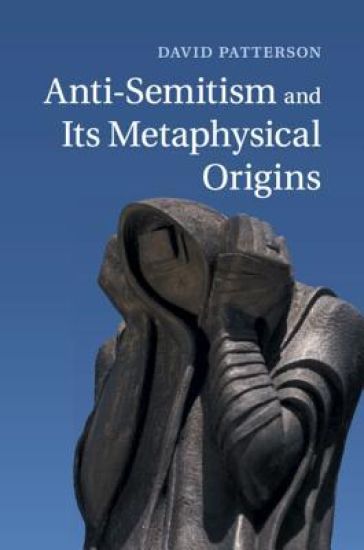
In this book, David Patterson offers original insights into the dynamics that underlie the phenomenon of endemic antisemitism, arguing that in all its manifestations, antisemitism is fundamentally anti-Judaism. Structured in a unique matrix of chapters that are linked historically and theoretically, his book elucidates the interconnections that tie antisemitism with the Holocaust, as well as the Judaism that the Nazis sought to obliterate from the world. As Patterson demonstrates this is an ongoing effort and is the basis of today's antisemitism. Spelling out the historical, theological, and philosophical viewpoints that led to the Holocaust and that are with us even now, he offers insights into the basis of the hatred of Jews that permeates much of today's world. Patterson here addresses the 'big questions' that define our humanity. His volume is written for those who wish to have a deeper understanding of both the history and the current manifestations of Antisemitism.
Explores Elie Wiesel's portraits of the sages of Judaism and elaborates on the Hasidic legacy from his life and his teaching.Elie Wiesel identified himself as a Vizhnitzer Hasid, who was above all things a witness to the testimony and teaching of the Jewish tradition at the core of the Hasidic tradition. While he is well known for his testimony on the Holocaust and as a messenger to humanity, he is less well known for his engagement with the teachings of Jewish tradition and the Hasidic heritage that informs that engagement. Portraits illuminates Wiesel's Jewish teachings and the Hasidic legacy that he embraced by examining how he brought to life the sages of the Jewish tradition. David Patterson reveals that Wiesel's Hasidic engagement with the holy texts of the Jewish tradition does not fall into the usual categories of exegesis or hermeneutics and of commentary or textual analysis. Rather, he engages not the text but the person, the teacher, and the soul. This book is a summons to remember the testimony reduced to ashes and the voices that cry out from those ashes. Just as the teaching is embodied in the teachers, so is the tradition embodied in their portraits.
Shoah and Torah systematically takes up the task of reading the Shoah through the lens of the Torah and the Torah through the lens of the Shoah.The investigation rests upon (1) the metaphysical standing that the Nazis ascribed to the Torah, (2) the obliteration of the Torah in the extermination of the Jews, (3) the significance of the Torah for an understanding of the Shoah, and (4) the significance of the Shoah for an understanding of the Torah.The basis for the inquiry lies not in the content of a certain belief but in the categories of a certain mode of thought. Distinct from all other studies, this book is grounded in the categories of Jewish thought and Judaism—the categories of creation, revelation, and redemption—that the Nazis sought to obliterate in the Shoah.Thus, the investigation is itself a response to the Nazi project of the extermination of the Jews and the millennial testimony of the Jews to the Torah.
There are a variety of reasons that individuals choose to join the military. Some join to find a purpose or learn a skill while others might join as a sense of patriotic duty or a desire to serve their country. Regardless the reason, because of their sacrifice, we are able to enjoy the civil liberties that we hold so dearly. This book is dedicated to every man and woman across every branch of the military who chose to wear the uniform. On behalf of Pa-Pro-Vi Publishing Company LLC, we thank YOU for YOUR service Suited for Service is an anthology of stories from the men and women of the brotherhood who sacrificed their lives so that we could enjoy our civil liberties.
Explores Elie Wiesel's portraits of the sages of Judaism and elaborates on the Hasidic legacy from his life and his teaching.Elie Wiesel identified himself as a Vizhnitzer Hasid, who was above all things a witness to the testimony and teaching of the Jewish tradition at the core of the Hasidic tradition. While he is well known for his testimony on the Holocaust and as a messenger to humanity, he is less well known for his engagement with the teachings of Jewish tradition and the Hasidic heritage that informs that engagement. Portraits illuminates Wiesel's Jewish teachings and the Hasidic legacy that he embraced by examining how he brought to life the sages of the Jewish tradition. David Patterson reveals that Wiesel's Hasidic engagement with the holy texts of the Jewish tradition does not fall into the usual categories of exegesis or hermeneutics and of commentary or textual analysis. Rather, he engages not the text but the person, the teacher, and the soul. This book is a summons to remember the testimony reduced to ashes and the voices that cry out from those ashes. Just as the teaching is embodied in the teachers, so is the tradition embodied in their portraits.
By the time Joseph Chaim Brenner arrived in London (where Out of the Depths was written) in 1904, his literary reputation was already established by a volume of short stories and a previous novel, In Winter. Born in Russia in 1881, Brenner at the age of twenty-four had fled the disorders of the Russian Empire for the mean peace of London's East End. Out of the Depths is concerned with a group of Russian immigrants in London who work for a Jewish daily newspaper. They are caught up in a conflict with the owner when he seeks to introduce a typesetting machine into the newspaper shop. Following an unsuccessful strike, the impoverished workers decline into a general collective misery that is relieved only by the strength and honesty of the central character. The language of Out of the Depths has a remarkably modern energy. Brenner anticipates literary techniques that came into wide use only later. The employment of stream of consciousness, shifting perspectives, and emotive presentation and the use of vocabulary from the Yiddish, Russian, German, and English languages have a startling impact, a texture that Dr. Patterson faithfully captures while conforming to the demands of English idiom. Employing an ancient language in a modern idiomatic style, this little-known work by a writer of remarkable honesty gives intense expression to the social upheavals of the time and to the profound moral questioning that for some was almost a consequence of living in the first years of this century. David Patterson's translation of Out of the Depths received the Webber Prize for translation in 1989.
This book provides a well-structured, lyrical, and fictionalized account of the narrator's earlier years in the village of Bialik's birth. It describes the awakening curiosity of the gifted child, his wonder at the riddle of the mirror, and his inability to read the symbols of the alphabet.
By the time Joseph Chaim Brenner arrived in London (where Out of the Depths was written) in 1904, his literary reputation was already established by a volume of short stories and a previous novel, In Winter. Born in Russia in 1881, Brenner at the age of twenty-four had fled the disorders of the Russian Empire for the mean peace of London's East End. Out of the Depths is concerned with a group of Russian immigrants in London who work for a Jewish daily newspaper. They are caught up in a conflict with the owner when he seeks to introduce a typesetting machine into the newspaper shop. Following an unsuccessful strike, the impoverished workers decline into a general collective misery that is relieved only by the strength and honesty of the central character. The language of Out of the Depths has a remarkably modern energy. Brenner anticipates literary techniques that came into wide use only later. The employment of stream of consciousness, shifting perspectives, and emotive presentation and the use of vocabulary from the Yiddish, Russian, German, and English languages have a startling impact, a texture that Dr. Patterson faithfully captures while conforming to the demands of English idiom. Employing an ancient language in a modern idiomatic style, this little-known work by a writer of remarkable honesty gives intense expression to the social upheavals of the time and to the profound moral questioning that for some was almost a consequence of living in the first years of this century. David Patterson's translation of Out of the Depths received the Webber Prize for translation in 1989.
The Holocaust and the Nonrepresentable
David Patterson
State University of New York Press
2019
pokkari
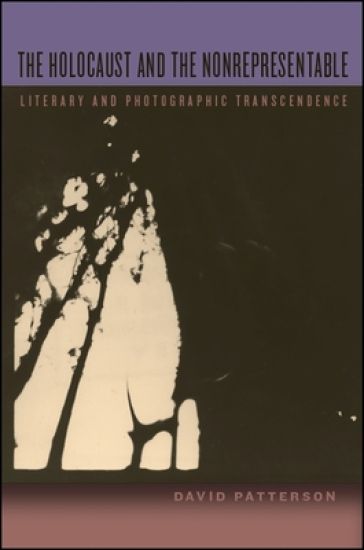
Argues that Holocaust representation has ethical implications fundamentally linked to questions of good and evil.Many books focus on issues of Holocaust representation, but few address why the Holocaust in particular poses such a representational problem. David Patterson draws from Emmanuel Levinas's contention that the Good cannot be represented. He argues that the assault on the Good is equally nonrepresentable and this nonrepresentable aspect of the Holocaust is its distinguishing feature. Utilizing Jewish religious thought, Patterson examines how the literary word expresses the ineffable and how the photographic image manifests the invisible. Where the Holocaust is concerned, representation is a matter not of imagination but of ethical implication, not of what it was like but of what must be done. Ultimately Patterson provides a deeper understanding of why the Holocaust itself is indefinable-not only as an evil but also as a fundamental assault on the very categories of good and evil affirmed over centuries of Jewish teaching and testimony.
This book articulates a deeper understanding of the phenomenon of Jew hatred as a metaphysical aspect of the human soul. Proceeding from the Jewish thinking that the anti-Semites oppose, David Patterson argues that anti-Semitism arises from the most ancient of temptations, the temptation to be as God, and thus to flee from an absolute accountability to and for the other human being.
The Holocaust and the Nonrepresentable
David Patterson
State University of New York Press
2018
sidottu
Argues that Holocaust representation has ethical implications fundamentally linked to questions of good and evil.Many books focus on issues of Holocaust representation, but few address why the Holocaust in particular poses such a representational problem. David Patterson draws from Emmanuel Levinas's contention that the Good cannot be represented. He argues that the assault on the Good is equally nonrepresentable and this nonrepresentable aspect of the Holocaust is its distinguishing feature. Utilizing Jewish religious thought, Patterson examines how the literary word expresses the ineffable and how the photographic image manifests the invisible. Where the Holocaust is concerned, representation is a matter not of imagination but of ethical implication, not of what it was like but of what must be done. Ultimately Patterson provides a deeper understanding of why the Holocaust itself is indefinable-not only as an evil but also as a fundamental assault on the very categories of good and evil affirmed over centuries of Jewish teaching and testimony.