Kirjojen hintavertailu. Mukana 12 657 676 kirjaa ja 12 kauppaa.

Kirjailija

David Patterson

Kirjat ja teokset yhdessä paikassa: 38 kirjaa, julkaisuja vuosilta 1990-2024, suosituimpien joukossa Exile. Vertaile teosten hintoja ja tarkista saatavuus suomalaisista kirjakaupoista.

38 kirjaa

Kirjojen julkaisuhaarukka 1990-2024.

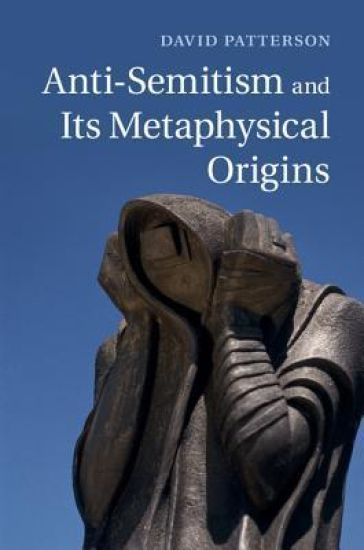
Anti-Semitism and its Metaphysical Origins

Anti-Semitism and its Metaphysical Origins

David Patterson

Cambridge University Press
2015
sidottu
This book articulates a deeper understanding of the phenomenon of Jew hatred as a metaphysical aspect of the human soul. Proceeding from the Jewish thinking that the anti-Semites oppose, David Patterson argues that anti-Semitism arises from the most ancient of temptations, the temptation to be as God, and thus to flee from an absolute accountability to and for the other human being.
The Shriek of Silence

The Shriek of Silence

David Patterson

The University Press of Kentucky
2014
nidottu
"In the Holocaust novel, silence is always a character, and the word is always its subject matter." So writes David Patterson in this profound and original study of more than thirty important writers. Contrary to existing views, he argues, the Holocaust novel is not an attempt to depict an unimaginable reality or an ineffable horror. It is, rather, an endeavor to fetch the word from silence and restore it to meaning, to resurrect the human soul, to regenerate the relation between the self and God, the self and other, the self and itself. This book is less a critical study in the usual sense than an impassioned meditation on the deeper sources of the Holocaust novel. Among the authors examined are Elie Wiesel, Arnost Lustig, Aharon Appelfeld, Katzetnik 135633, Primo Levi, Yehuda Amichai, Piotr Rawicz, A. Anatoli, Saul Bellow, I.B. Singer, Anna Langfus, Rachmil Bryks, and Ilse Aichinger. The Shriek of Silence is a first in several respects: the first to examine the Holocaust novels in their original languages, the first to articulate a theoretical basis for its approach, and the first phenomenological investigation -- one that attempts to penetrate the process of creation for these novelists. Organized along conceptual lines, the book examines "the word in exile," the themes of death of the father and the child, transformations of the self, and the implications of the reader. Its philosophical foundations are Rosenzweig, Buber, Neher, and Levinas. Its critical approach is shaped by Bakhtin. The novelists of the Holocaust, in witnessing through their words, regain their voices and in so doing are reborn. By probing the depths of their struggle, Patterson's study draws us too toward a higher understanding, perhaps even our own rebirth.
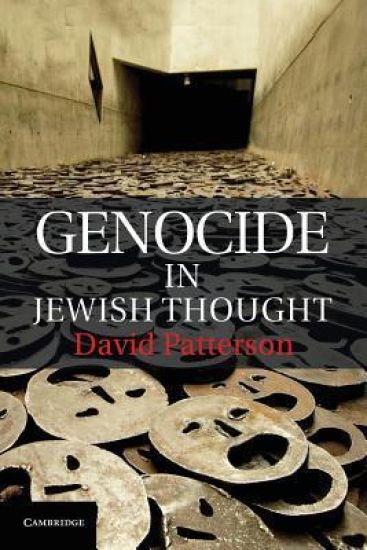
Genocide in Jewish Thought

Genocide in Jewish Thought

David Patterson

Cambridge University Press
2014
pokkari
Among the topics explored in this book are ways of viewing the soul, the relation between body and soul, environmentalist thought, the phenomenon of torture, and the philosophical and theological warrants for genocide. Presenting an analysis of abstract modes of thought that have contributed to genocide, the book argues that a Jewish model of concrete thinking may inform our understanding of the abstractions that can lead to genocide. Its aim is to draw upon distinctively Jewish categories of thought to demonstrate how the conceptual defacing of the other human being serves to promote the murder of peoples, and to suggest a way of thinking that might help prevent genocide.
Genocide in Jewish Thought

Genocide in Jewish Thought

David Patterson

Cambridge University Press
2012
sidottu
Among the topics explored in this book are ways of viewing the soul, the relation between body and soul, environmentalist thought, the phenomenon of torture, and the philosophical and theological warrants for genocide. Presenting an analysis of abstract modes of thought that have contributed to genocide, the book argues that a Jewish model of concrete thinking may inform our understanding of the abstractions that can lead to genocide. Its aim is to draw upon distinctively Jewish categories of thought to demonstrate how the conceptual defacing of the other human being serves to promote the murder of peoples, and to suggest a way of thinking that might help prevent genocide.
A Genealogy of Evil

A Genealogy of Evil

David Patterson

Cambridge University Press
2010
sidottu
Based on extensive scrutiny of primary sources from Nazi and Jihadist ideologues, David Patterson argues that Jihadist anti-Semitism stems from Nazi ideology. This book challenges the idea that Jihadist anti-Semitism has medieval roots, identifying its distinctively modern characteristics and tracing interconnections that link the Nazis to the Muslim Brotherhood to the PLO, Fatah, Hamas, Islamic Jihad, Hezbollah, Al-Qaeda, the Sudan, the Iranian Islamic Republic, and other groups with an anti-Semitic worldview. Based on his close reading of numerous Jihadist texts, Patterson critiques their antisemitic teachings and affirms the importance of Jewish teaching, concluding that humanity needs the very Jewish teaching and testimony that the Jihadists advocate destroying.
A Genealogy of Evil

A Genealogy of Evil

David Patterson

Cambridge University Press
2010
pokkari
Based on extensive scrutiny of primary sources from Nazi and Jihadist ideologues, David Patterson argues that Jihadist anti-Semitism stems from Nazi ideology. This book challenges the idea that Jihadist anti-Semitism has medieval roots, identifying its distinctively modern characteristics and tracing interconnections that link the Nazis to the Muslim Brotherhood to the PLO, Fatah, Hamas, Islamic Jihad, Hezbollah, Al-Qaeda, the Sudan, the Iranian Islamic Republic, and other groups with an anti-Semitic worldview. Based on his close reading of numerous Jihadist texts, Patterson critiques their antisemitic teachings and affirms the importance of Jewish teaching, concluding that humanity needs the very Jewish teaching and testimony that the Jihadists advocate destroying.
Hebrew Language and Jewish Thought

Hebrew Language and Jewish Thought

David Patterson

Routledge
2009
nidottu
Drawing on more than three hundred Hebrew roots, the author shows that Jewish thought employs Hebrew concepts and categories that are altogether distinct from those that characterize the Western speculative tradition. Among the key categories that shape Jewish thought are holiness, divinity, humanity, prayer, responsibility, exile, dwelling, gratitude, and language itself. While the Hebrew language is central to the investigation, the reader need not have a knowledge of Hebrew in order to follow it. Essential reading for students and scholars of Judaism, this book will also be of value to anyone interested in the categories of thinking that form humanity's ultimate concerns.
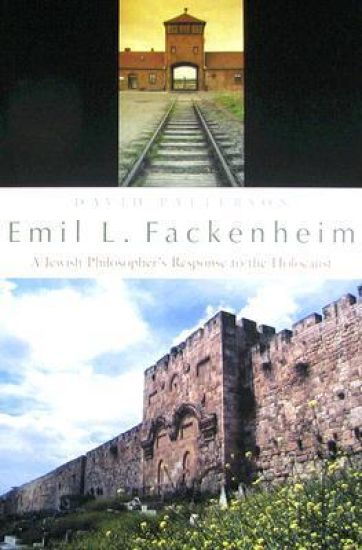
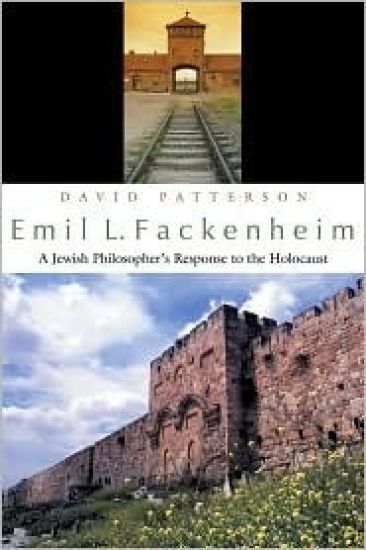
Emil L. Fackenheim

Emil L. Fackenheim

David Patterson

Syracuse University Press
2008
nidottu
Emil Fackenheim was the last in a long line of Jewish philosophers to emerge from Germany, the modern center of Western philosophy, following Moses Mendelssohn, Leo Baeck, and Martin Buber. In this revealing book, David Patterson explores Fackenheim's rigorous pursuit of a philosophical response to the tragedy of the Holocaust. Fackenheim's writing sheds light on the tensions between Jewish thinking and German philosophy, illustrating how elements of the latter were used by the Nazis to justify Jewish annihilation. In addition, he emphasizes the important implications of defining Jewish philosophy as its own entity, separate from the tenets of the Jewish cultural tradition.
Emil L. Fackenheim

Emil L. Fackenheim

David Patterson

Syracuse University Press
2008
sidottu
Emil Fackenheim was the last in a long line of Jewish philosophers to emerge from Germany, the modern center of Western philosophy, following Moses Mendelssohn, Leo Baeck, and Martin Buber. In this revealing book, David Patterson explores Fackenheim's rigorous pursuit of a philosophical response to the tragedy of the Holocaust. Fackenheim's writing sheds light on the tensions between Jewish thinking and German philosophy, illustrating how elements of the latter were used by the Nazis to justify Jewish annihilation. In addition, he emphasizes the important implications of defining Jewish philosophy as its own entity, separate from the tenets of the Jewish cultural tradition.
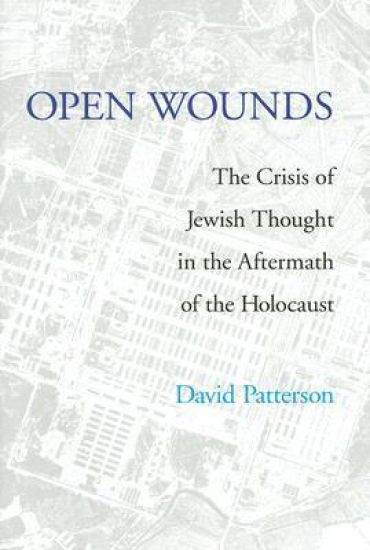
Open Wounds

Open Wounds

David Patterson

University of Washington Press
2006
sidottu
In this book, David Patterson sets out to describe why Jews must live -- but especially think -- in a way that is distinctly Jewish.For Patterson, the primary responsibility of post-Holocaust Jewish thought is to avoid thinking in the same categories that led to the attempted extermination of the Jewish people. The Nazis, he says, were not anti- Semitic because they were racists; they were racists because they were anti-Semitic, and their anti-Semitism was furthered by a Western ontological tradition that made God irrelevant by placing the thinking ego at the center of being.If the Jewish people, in their particularity, are "chosen" to attest to the universal "chosenness" of every human being, then each human being is singled out to assume an absolute responsibility to and for all human beings. And that, Patterson says, is why the anti-Semite hates the Jew: because the very presence of the Jew robs him of his ego and serves as a constant reminder that we are all forever in debt, and that redemption is always yet to be. Thus the Nazis, before they killed Jewish bodies, were compelled to murder Jewish souls through the degradations of the Shoah.But why is the need for a revitalized Jewish thought so urgent today? It is not only because modern Jewish thought, hoping to accommodate itself to rational idealism, is thereby obliged to put itself in league with postmodernists who "preach tolerance for everything except biblically based religion, beginning with Judaism," and who effectively call on Jews, as fellow "citizens of the global village," to disappear. It is also because without the Jewish reality of Jerusalem, there is only the Jewish abstraction of Auschwitz, for in Auschwitz the Jews were murdered not as husbands and wives, parents and children, but as efficiently numbered units. If the Jews, Patterson claims, are not a people set apart by "a Voice that is other than human," then the Holocaust can never be understood as evil rather than simply immoral.With Open Wounds, Patterson aims to make possible a religious response to the Holocaust. Post-Holocaust Jewish thinking, confronting the work of healing the world -- of tikkun haolam -- must recover not just Jewish tradition but also the category of the holy in human beings' thinking about humanity.
Hebrew Language and Jewish Thought

Hebrew Language and Jewish Thought

David Patterson

Routledge
2005
sidottu
Drawing on more than three hundred Hebrew roots, the author shows that Jewish thought employs Hebrew concepts and categories that are altogether distinct from those that characterize the Western speculative tradition. Among the key categories that shape Jewish thought are holiness, divinity, humanity, prayer, responsibility, exile, dwelling, gratitude, and language itself. While the Hebrew language is central to the investigation, the reader need not have a knowledge of Hebrew in order to follow it. Essential reading for students and scholars of Judaism, this book will also be of value to anyone interested in the categories of thinking that form humanity's ultimate concerns.
After-words

After-words

David Patterson; John K. Roth

University of Washington Press
2005
pokkari
More than fifty years after it ended, the Holocaust continues to leave survivors and their descendants, as well as historians, philosophers, and theologians, searching for words to convey the enormity of that event. Efforts to express its realities and its impact on successive generations often stretch language to the breaking point--or to the point of silence. Words whose meaning was contested before the Holocaust prove even more fragile in its wake.David Patterson and John K. Roth identify three such "after-words": forgiveness, reconciliation, and justice. These words, though forever altered by the Holocaust, are still spoken and heard. But how should the concepts they represent be understood? How can their integrity be restored within the framework of current philosophical and, especially, religious traditions? Writing in a format that creates the feel of dialogue, the nine contributors to After-Words tackle these and other difficult questions about the nature of memory and forgiveness after the Holocaust to encourage others to participate in similar inter- and intrafaith inquiries.The contributors to After-Words are members of the Pastora Goldner Holocaust Symposium. Led since its founding in 1996 by Leonard Grob and Henry Knight, the symposium's Holocaust and genocide scholars--a group that is interfaith, international, interdisciplinary, and intergenerational--meet biennially in Oxfordshire, England.
After-words

After-words

David Patterson; John K. Roth

University of Washington Press
2003
sidottu
More than fifty years after it ended, the Holocaust continues to leave survivors and their descendants, as well as historians, philosophers, and theologians, searching for words to convey the enormity of that event. Efforts to express its realities and its impact on successive generations often stretch language to the breaking point--or to the point of silence. Words whose meaning was contested before the Holocaust prove even more fragile in its wake.David Patterson and John K. Roth identify three such "after-words": forgiveness, reconciliation, and justice. These words, though forever altered by the Holocaust, are still spoken and heard. But how should the concepts they represent be understood? How can their integrity be restored within the framework of current philosophical and, especially, religious traditions? Writing in a format that creates the feel of dialogue, the nine contributors to After-Words tackle these and other difficult questions about the nature of memory and forgiveness after the Holocaust to encourage others to participate in similar inter- and intrafaith inquiries.The contributors to After-Words are members of the Pastora Goldner Holocaust Symposium. Led since its founding in 1996 by Leonard Grob and Henry Knight, the symposium's Holocaust and genocide scholars--a group that is interfaith, international, interdisciplinary, and intergenerational--meet biennially in Oxfordshire, England.
Along the Edge of Annihilation

Along the Edge of Annihilation

David Patterson

University of Washington Press
1999
pokkari
This extraordinary book is based on more than fifty diaries of Jewish Holocaust victims of all ages, written while the events described were actually taking place. Many of the writers did not survive. Patterson's book is unique not only in the number of diaries and original texts it examines but also in the questions it raises and in the approach it takes from within Jewish traditions and contexts.Patterson has organized his book around a series of themes that lead to a deeper understanding of the meaning of these works for both their writers and their readers, affirming the Holocaust diary as a form of spiritual resistance. Throughout, he draws upon his impressive knowledge of Jewish texts, ancient and modern—Torah, Talmud, Midrash, Zohar, the medieval commentators, the Hasidic masters, and modern Jewish philosophers and thinkers.In Along the Edge of Annihilation David Patterson illuminates the spiritual and physical devastation experienced by the Jews of Europe during the Holocaust, and shows how they chose life and the spirit of life in the midst of the Inferno.
Along the Edge of Annihilation

Along the Edge of Annihilation

David Patterson

University of Washington Press
1999
sidottu
This extraordinary book is based on more than fifty diaries of Jewish Holocaust victims of all ages, written while the events described were actually taking place. Many of the writers did not survive. Patterson's book is unique not only in the number of diaries and original texts it examines but also in the questions it raises and in the approach it takes from within Jewish traditions and contexts.Patterson has organized his book around a series of themes that lead to a deeper understanding of the meaning of these works for both their writers and their readers, affirming the Holocaust diary as a form of spiritual resistance. Throughout, he draws upon his impressive knowledge of Jewish texts, ancient and modern—Torah, Talmud, Midrash, Zohar, the medieval commentators, the Hasidic masters, and modern Jewish philosophers and thinkers.In Along the Edge of Annihilation David Patterson illuminates the spiritual and physical devastation experienced by the Jews of Europe during the Holocaust, and shows how they chose life and the spirit of life in the midst of the Inferno.
Sun Turned to Darkness

Sun Turned to Darkness

David Patterson

Syracuse University Press
1998
sidottu
An examination of the recorded memoirs of 50 Holocaust survivors. Patterson draws on the sacred texts of Jewish tradition and the philosophy of Fackenheim and Levinas. He discusses the recovery of tradition, recovery seen as recovery from illness, and recovery as a process which has no resolution.
Exile

Exile

David Patterson

The University Press of Kentucky
1994
sidottu
The life of a human community rests on common experience. Yet in modem life there is an experience common to all that threatens the very basis of community -- the experience of exile. No one in the modem world has been spared the encounter with homelessness. Refugees and fugitives, the disillusioned and disenfranchised grow in number every day. Why does it happen? What does it mean? And how are we implicated? David Patterson responds to these and related questions by examining exile, a primary motif in Russian thought over the last century and a half. By "exile" he means not only a form of punishment but an existential condition. Drawing on texts by such familiar figures as Dostoevsky, Tolstoy, Solzhenitsyn, and Brodsky, as well as less thoroughly examined figures, including Florensky, Shestov, Tertz, and Gendelev, Patterson moves beyond the political and geographical fact of exile to explore its spiritual, metaphysical, and linguistic aspects. Thus he pursues the connections between exile and identity, identity and meaning, meaning and language. Patterson shows that the problem of meaning in human life is a problem of homelessness, that the effort to return from exile is an effort to return meaning to the word, and that the exile of the word is an exile of the human being. By making heard voices from the Russian wilderness, Patterson makes visible the wilderness of the world.
A Phoenix in Fetters

A Phoenix in Fetters

David Patterson

Rowman Littlefield
1990
sidottu
Between the French Revolution and World War I, Hebrew literature experienced a veritable renaissance, first in Central Europe and then in Eastern Europe. Its vigorous search for new modes of expression played a major role in the revival of Hebrew as a living language. In A Phoenix in Fetters, David Patterson describes the extraordinary paradox affecting Hebrew literature in the 19th century. On the one hand it aspired to serve as a conduit for the Jews of eastern Europe from the medieval to the modern world. On the other hand, it embraced a theory of literature that artificially restricted its development. The paradox was resolved only in the first decades of the 20th century.