Kirjojen hintavertailu. Mukana 12 595 353 kirjaa ja 12 kauppaa.

Kirjailija

David Pearce

Kirjat ja teokset yhdessä paikassa: 31 kirjaa, julkaisuja vuosilta 1989-2023, suosituimpien joukossa The Valuation of Social Cost (Routledge Revivals). Vertaile teosten hintoja ja tarkista saatavuus suomalaisista kirjakaupoista.

31 kirjaa

Kirjojen julkaisuhaarukka 1989-2023.

Measuring Sustainable Development

Measuring Sustainable Development

Giles Atkinson; Richard Dubourg; Kirk Hamilton; Mohan Munasinghe; David Pearce; Carlos Young

Edward Elgar Publishing Ltd
1999
nidottu
This path-breaking book focuses on the theory and practice of economic development as viewed from the perspective of sustainability, and the implications of sustainability for development policy. It demonstrates how various indicators can be developed and used to determine whether or not an economy is on a sustainable path of development.The book is concerned with measuring sustainability in a macroeconomic context so that decision makers are more aware of the real trends in the economy and the way in which their policies may affect these trends. The discussion on such measurement includes: the physical indicators of sustainability, resource and environmental accounting, savings and the empirical measurement of sustainable development, international trade and unsustainable development, ecological indicators, income distribution and social needs, and the assessment of structural adjustment policies and their implications for sustainable development. The authors conclude that the first step towards sustainable development is for a greater awareness of the effects of development on the environment, and the environment on human well-being.Measuring Sustainable Development will be particularly welcomed by policymakers and practitioners as well as researchers, academics and students of development economics and environmental economics.
Measuring Sustainable Development

Measuring Sustainable Development

Giles Atkinson; Richard Dubourg; Kirk Hamilton; Mohan Munasinghe; David Pearce; Carlos Young

Edward Elgar Publishing Ltd
1997
sidottu
This path-breaking book focuses on the theory and practice of economic development as viewed from the perspective of sustainability, and the implications of sustainability for development policy. It demonstrates how various indicators can be developed and used to determine whether or not an economy is on a sustainable path of development.The book is concerned with measuring sustainability in a macroeconomic context so that decision makers are more aware of the real trends in the economy and the way in which their policies may affect these trends. The discussion on such measurement includes: the physical indicators of sustainability, resource and environmental accounting, savings and the empirical measurement of sustainable development, international trade and unsustainable development, ecological indicators, income distribution and social needs, and the assessment of structural adjustment policies and their implications for sustainable development. The authors conclude that the first step towards sustainable development is for a greater awareness of the effects of development on the environment, and the environment on human well-being.Measuring Sustainable Development will be particularly welcomed by policymakers and practitioners as well as researchers, academics and students of development economics and environmental economics.
Economic Values and the Environment in the Developing World

Economic Values and the Environment in the Developing World

Stavros Georgiou; Dale Whittington; David Pearce; Dominic Moran

Edward Elgar Publishing Ltd
1997
sidottu
This important new book is an extensive, yet concise overview which critically surveys the application of economic valuation techniques to environmental problems in less developed countries. The authors argue that economic valuation has just as important a role to play in the developing as in the developed world in valuing environmental resources and change. Additionally, the information which such techniques provide is invaluable when helping to devise sound environmental policies. The book demonstrates that economic valuation is of extreme importance in raising the profile of the environmental aspects of development initiatives and policies, and that the application of economic valuation is both widespread and successful in developing countries.This book will be essential reading for professional environmental economists, particularly those working in the developing world, project appraisal analysts, policymakers in development organizations and graduate students of development and environmental economics.
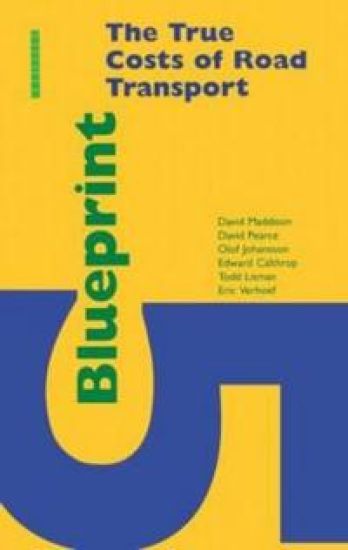
Blueprint 5

Blueprint 5

Olof Johansson; David Pearce; David Maddison

Earthscan Ltd
1996
nidottu
Evidence has come to light regarding the impact of benzene emissions from road transport, the incidence of asthmatic attacks and the possible toll of particulate matter from diesel engines on human health. This book examines the issues and argues that, without a fundamental change in policy, it is inevitable that the transport sector will continue to impose increasing costs on the natural environment, human health and the economy. It also quantifies the external costs of road transport and suggests new measures, such as road pricing and financial incentives, to pave the way to a sustainable transport system.
The Economic Value of Biodiversity

The Economic Value of Biodiversity

David Pearce; Dominic Moran

Earthscan Ltd
1994
nidottu
Explains in non-technical terms how economic cost-benefit analysis techniques can be applied to biodiversity loss, and how they can provide a measurement for the efficiency of conservation efforts. David Pearce has also written "Blueprint for a Green Economy".
Blueprint 3

Blueprint 3

David Pearce

Earthscan Ltd
1994
nidottu
Blueprint 3 is the direct sequel to the ground-breaking Blueprint for a Green Economy. Taking the argument much further, David Pearce and his colleagues show how progress towards sustainability in the UK can be measured. They set out the conditions for sustainable development and the measures of economic progress these imply, before looking in detail at all the main areas of economic activity to which the measures are applicable. The result is a wide-ranging and cogent critique of existing policies which also offers new options - options which will require far-reaching reform of this country's existing political and institutional structure. Blueprint 3 will be a touchstone for future discussions of all the major policy areas.
Blueprint 2

Blueprint 2

David Pearce

Earthscan Ltd
1991
nidottu
Following 'Blueprint for a Green Economy' (the Pearce Report), David Pearce and his team have turned their attention to global environmental threats. If it makes sense to apply economic analysis to national environmental problems, then it makes even more sense to apply it to world-wide dangers. The authors start by describing the reasons for using economic approaches to common resources like climate, ozone and biodiversity. They then take a detailed look at the economic ways of tackling the issues involved in global warming, ozone layer depletion, environmental degradation in the Third World, population, rain forests, aid, equity, international environmental co-operation and what might amount to green foreign policies. They show not only how to take all these things into account in economic theory, but also the economic price of failing to do so. Blueprint 2 is an agenda for international and governmental economic action.
Sustainable Development

Sustainable Development

David Pearce; Edward B. Barbier; Anil Markandya

Edward Elgar Publishing Ltd
1990
sidottu
This major book makes a significant contribution to the development of economic principles and practice for natural resource management in Third World countries.The 1980s witnessed the second environmental revolution: its theme is 'sustainable development'. This book offers a definition of sustainable development in terms of the non-depletion of natural environments. It investigates the economic implications of sustainability, with special reference to the practice of cost-benefit analysis and problems of accounting for the interests of future generations. The major part of the book is devoted to an analysis of environmental problems in the developing world. The essential ingredients of policy measures aimed at sustainable development are discussed.
Blueprint 1

Blueprint 1

David Pearce; Anil Markandya; Edward Barbier

Earthscan Ltd
1989
nidottu
Popularly known as "The Pearce Report", this book is a report prepared for the Department of the Environment. It demonstrates the ways in which elements in our environment at present under threat from many forms of pollution can be "costed".
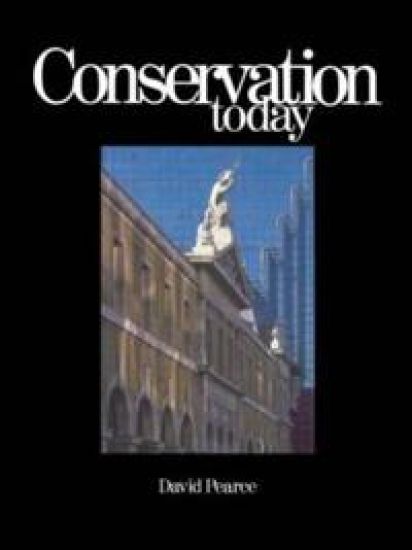
Conservation Today

Conservation Today

David Pearce

TaylorFrancis Ltd
1989
sidottu
This book provides a comprehensive survey of the latest developments in heritage preservation, including 60 case histories of successful developments over the last decade and sets out an action agenda for the future.
Conservation Today

Conservation Today

David Pearce

Routledge
1989
nidottu
This is the official book accompanying the major exhibition at the Royal Academy in May and June 1989, organised by the oyal Fine Art Commission. The exhibition, which is sponsored by The Wolfson Foundation, will follow its London opening with a travelling exhibit to the major British cities and to 13 European countries under the auspices of the British Council. The issue of conserving the 'built environment' is now no longer a problem for architects and planners alone; European Architectural Heritage Year in 1975 did much to awaken public interest in the issues and opportunities for creative re-use of old buildings. This exhibition shows what has been done in Britain to fulfil the aspirations of EAHY. The record of change is remarkable: the old hostility between development and preservation is slowly altering. It is now seen as possible to preserve and to profit. Nor are the 'profits' exclusively financial; the social gain from a better and more attractive environment is huge. The book provides a comprehensive survey of the latest developments in heritage preservation. It covers the legislative and financial framework for preservation and development, and includes 60 case histories of successful developments over the last decade. It also sets out an action agenda for the future, and a few warnings of possible dangers.