Kirjojen hintavertailu. Mukana 12 595 353 kirjaa ja 12 kauppaa.

Kirjailija

David Pedder

Kirjat ja teokset yhdessä paikassa: 2 kirjaa, julkaisuja vuodelta 2007, suosituimpien joukossa Improving Learning How to Learn. Vertaile teosten hintoja ja tarkista saatavuus suomalaisista kirjakaupoista.

2 kirjaa

Improving Learning How to Learn

Improving Learning How to Learn

Mary James; Robert McCormick; Paul Black; Patrick Carmichael; Mary-Jane Drummond; Alison Fox; John MacBeath; Bethan Marshall; David Pedder; Richard Procter; Sue Swaffield; Joanna Swann; Dylan Wiliam

Routledge
2007
sidottu
Learning how to learn is an essential preparation for lifelong learning. Whilst this is widely acknowledged by teachers, they have lacked a rich professional knowledge base from which they can teach their pupils how to learn. This book makes a major contribution to the creation of such a professional knowledge base for teachers by building on previous work associated with ‘formative assessment’ or ‘assessment for learning’ which has a strong evidence base, and is now being promoted nationally and internationally. However, it adds an important new dimension by reporting the conditions within schools, and across networks of schools, that are conducive to the promotion, in classrooms, of learning how to learn as an extension of assessment for learning. There is a companion book, Learning How to Learn in Classrooms: Tools for schools (also available from Routledge), which provides practical resources for those teachers looking to put into practice the principles covered in this book.
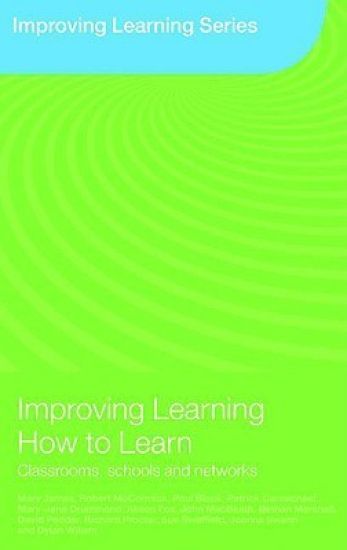
Improving Learning How to Learn

Improving Learning How to Learn

Mary James; Robert McCormick; Paul Black; Patrick Carmichael; Mary-Jane Drummond; Alison Fox; John MacBeath; Bethan Marshall; David Pedder; Richard Procter; Sue Swaffield; Joanna Swann; Dylan Wiliam

Routledge
2007
nidottu
Learning how to learn is an essential preparation for lifelong learning. Whilst this is widely acknowledged by teachers, they have lacked a rich professional knowledge base from which they can teach their pupils how to learn. This book makes a major contribution to the creation of such a professional knowledge base for teachers by building on previous work associated with ‘formative assessment’ or ‘assessment for learning’ which has a strong evidence base, and is now being promoted nationally and internationally. However, it adds an important new dimension by reporting the conditions within schools, and across networks of schools, that are conducive to the promotion, in classrooms, of learning how to learn as an extension of assessment for learning. There is a companion book, Learning How to Learn in Classrooms: Tools for schools (also available from Routledge), which provides practical resources for those teachers looking to put into practice the principles covered in this book.