Kirjojen hintavertailu. Mukana 12 142 929 kirjaa ja 12 kauppaa.

Kirjailija

David Perkins

Kirjat ja teokset yhdessä paikassa: 17 kirjaa, julkaisuja vuosilta 1959-2020, suosituimpien joukossa The Eureka Effect. Vertaile teosten hintoja ja tarkista saatavuus suomalaisista kirjakaupoista.

17 kirjaa

Kirjojen julkaisuhaarukka 1959-2020.

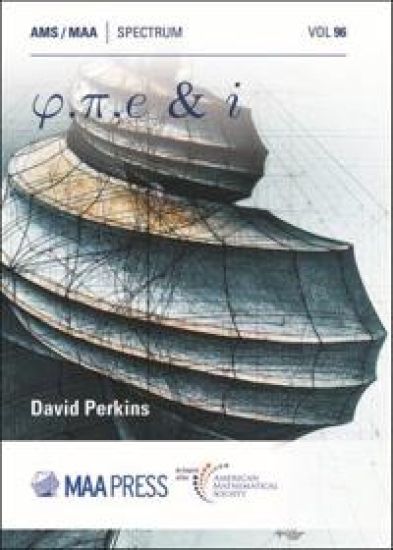
Phi, Pi, e, and i

Phi, Pi, e, and i

David Perkins

American Mathematical Society
2020
nidottu
Certain constants occupy precise balancing points in the cosmos of number, like habitable planets sprinkled throughout our galaxy at just the right distances from their suns. This book introduces and connects four of these constants (phi, pi, e and i), each of which has recently been the individual subject of historical and mathematical expositions. But here we discuss their properties, as a group, at a level appropriate for an audience armed only with the tools of elementary calculus. This material offers an excellent excuse to display the power of calculus to reveal elegant truths that are not often seen in college classes. These truths are described here via the work of such luminaries as Nilakantha, Liu Hui, Hemachandra, Khayyam, Newton, Wallis, and Euler.
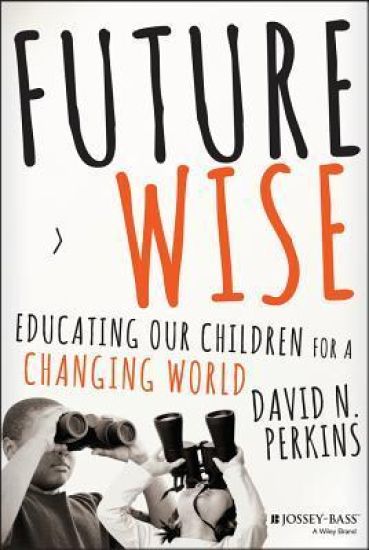
Future Wise

Future Wise

David Perkins

John Wiley Sons Inc
2014
sidottu
How to teach big understandings and the ideas that matter most Everyone has an opinion about education, and teachers face pressures from Common Core content standards, high-stakes testing, and countless other directions. But how do we know what today's learners will really need to know in the future? Future Wise: Educating Our Children for a Changing World is a toolkit for approaching that question with new insight. There is no one answer to the question of what's worth teaching, but with the tools in this book, you'll be one step closer to constructing a curriculum that prepares students for whatever situations they might face in the future. K-12 teachers and administrators play a crucial role in building a thriving society. David Perkins, founding member and co-director of Project Zero at Harvard's Graduate School of Education, argues that curriculum is one of the most important elements of making students ready for the world of tomorrow. In Future Wise, you'll learn concepts, curriculum criteria, and techniques for prioritizing content so you can guide students toward the big understandings that matter. Understand how learners use knowledge in life after graduationLearn strategies for teaching critical thinking and addressing big questionsIdentify top priorities when it comes to disciplines and content areasGain curriculum design skills that make the most of learning across the years of education Future Wise presents a brand new framework for thinking about education. Curriculum can be one of the hardest things for teachers and administrators to change, but David Perkins shows that only by reimagining what we teach can we lead students down the road to functional knowledge. Future Wise is the practical guidebook you need to embark on this important quest.
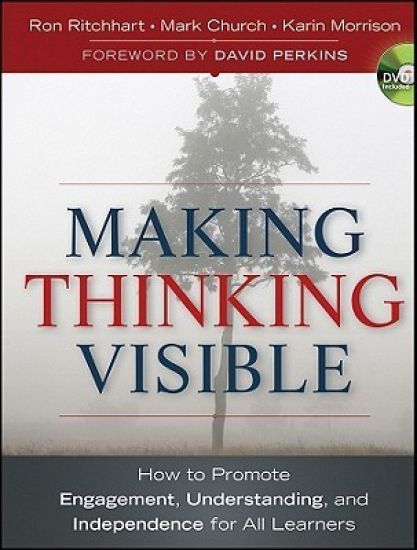
Making Thinking Visible

Making Thinking Visible

Ron Ritchhart; Mark Church; Karin Morrison; David Perkins

John Wiley Sons Inc
2011
nidottu
A proven program for enhancing students' thinking and comprehension abilities Visible Thinking is a research-based approach to teaching thinking, begun at Harvard's Project Zero, that develops students' thinking dispositions, while at the same time deepening their understanding of the topics they study. Rather than a set of fixed lessons, Visible Thinking is a varied collection of practices, including thinking routines?small sets of questions or a short sequence of steps?as well as the documentation of student thinking. Using this process thinking becomes visible as the students' different viewpoints are expressed, documented, discussed and reflected upon. Helps direct student thinking and structure classroom discussionCan be applied with students at all grade levels and in all content areasIncludes easy-to-implement classroom strategies The book also comes with a DVD of video clips featuring Visible Thinking in practice in different classrooms.
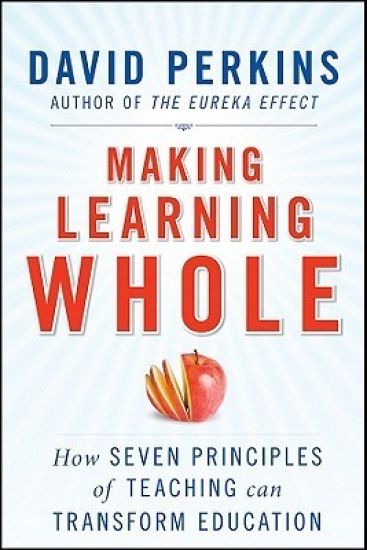
Making Learning Whole

Making Learning Whole

David Perkins

JOHN WILEY SONS INC
2010
nidottu
New in Paperback! Make learning more meaningful by teaching the "whole game" David Perkins, a noted authority on teaching and learning and co-director of Harvard's Project Zero, introduces a practical and research-based framework for teaching. He describes how teaching any subject at any level can be made more effective if students are introduced to the "whole game," rather than isolated pieces of a discipline. Perkins explains how learning academic subjects should be approached like learning baseball or any game, and he demonstrates this with seven principles for making learning whole: from making the game worth playing (emphasizing the importance of motivation to sustained learning), to working on the hard parts (the importance of thoughtful practice), to learning how to learn (developing self-managed learners). Vividly explains how to organize learning in ways that allow people to do important things with what they knowOffers guidelines for transforming education to prepare our youth for success in a rapidly changing worldFilled with real-world, illustrative examples of the seven principles At the end of each chapter, Perkins includes "Wonders of Learning," a summary of the key ideas.
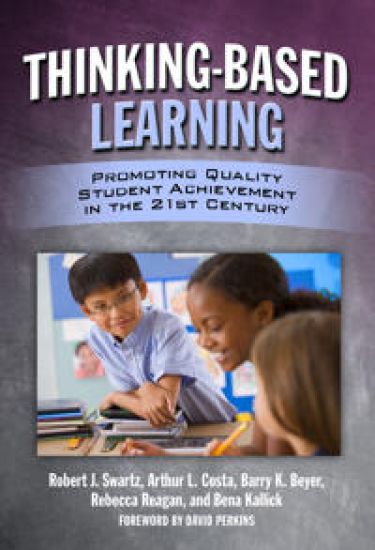
Thinking-Based Leaning

Thinking-Based Leaning

David Perkins

Teachers' College Press
2010
nidottu
This book provides accessible educational practices that teachers can use to infuse skillful thinking into standards-based content instruction in any subject area or grade level. With rich examples from practice, readers will learn to teach students how, for example, to find and use evidence to support conclusions, to develop and articulate creative ideas, to listen to others seriously and with understanding, and to communicate their thinking with clarity and precision. The authors demonstrate how taking time to frontload deliberate, selective thinking practices can propel students to higher levels of achievement. Specific chapters look at the role of metacognition in the classroom, translating good thinking into good writing, and assessment of progress in thinking.Featuring the collaborative work of renowned authors and professional development leaders, this resource shows teachers how to help their students develop habits of effective thinking and dispositions for learning-like persistence and self-regulation-that will ultimately improve their work in other courses and grades and in their lives overall.
The Happy Prince

The Happy Prince

David Perkins; Caroline Dooley

Samuel French Ltd
2008
nidottu
Large Cast / Flexible Age Range / Unit Set A touching musical based on the well-loved story by Oscar Wilde... the golden statue of the Happy Prince stands high above the city looking down on the misery and poverty beneath him. Desperate to bring hope and happiness to the poor people, he asks a swallow to distribute his gold and jewels to them. The generosity of the Happy Prince and the courage of the swallow help to overcome the greed of the powerful mayor and we are shown that the most precious things in life are often the least obvious. THE HAPPY PRINCE has been specially written for a large cast with a mixed range of ages and abilities making it suitable for schools, youth theatres or amateur groups. The 16 principal roles are augmented by much chorus work which can be adapted according to the size of the company. Helpful and detailed Director's Notes are included to assist with every aspect of the production. The running time is approximately 80 minutes.
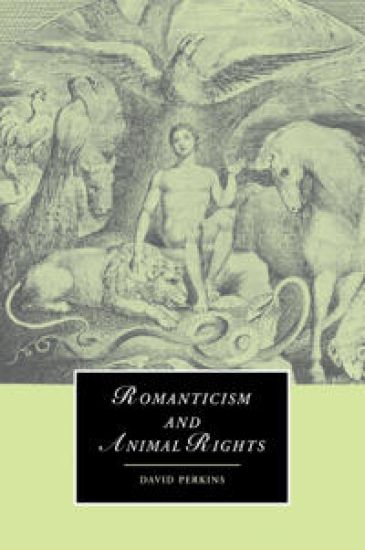
Romanticism and Animal Rights

Romanticism and Animal Rights

David Perkins

Cambridge University Press
2007
pokkari
In England in the second half of the eighteenth century an unprecedented amount of writing urged kindness to animals. This theme was carried in many genres, from sermons to encyclopedias, from scientific works to literature for children, and in the poetry of Cowper, Wordsworth, Coleridge, Clare and others. Romanticism and Animal Rights discusses the arguments writers used, and the particular meanings of these arguments in a social and economic context so different from the present. After introductory chapters, the material is divided according to specific practices that particularly influenced feeling or aroused protest: pet keeping, hunting, baiting, working animals, eating them, and the various harms inflicted on wild birds. The book shows how extensively English Romantic writing took up issues of what we now call animal rights. In this respect it joins the growing number of studies that seek precedents or affinities in English Romanticism for our own ecological concerns.
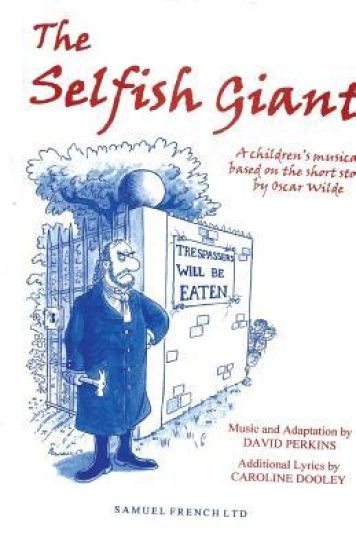
The Selfish Giant

The Selfish Giant

David Perkins; Caroline Dooley

Samuel French Ltd
2003
nidottu
A giant builds a high wall around his beautiful garden to prevent the children from playing in it. However, a valuable lesson is taught when the wall keeps the spring from returning and the garden remains in winter all year round. This is an adaptation of Oscar Wildes's short story.
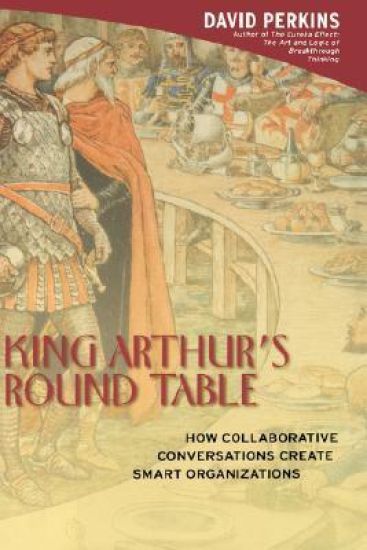
King Arthur s Round Table

King Arthur s Round Table

David Perkins

WILEY
2003
sidottu
Your organization functions and grows through conversations-face-to-face and electronic, from the mailroom to the boardroom. The quality of those conversations determines how smart your organization is. This revelatory book shows you how the Round Table of Arthurian legend can help foster collaboration and transform today's world of business, nonprofits, and government. "When I want a group to work effectively, I turn immediately to my colleague of thirty-five years, David Perkins. This book is a distillation of his knowledge and wisdom." -Howard Gardner author of Frames of Mind: The Theory of Multiple Intelligences and Intelligence Reframed "David Perkins applies his wit and inventive mind to create a fresh perspective on the world of collaboration in organizations. His archetypes and toolboxes offer valuable insights to anyone facing the challenges of collaborative problem solving." -David Straus author of How to Make Collaboration Work
The Eureka Effect

The Eureka Effect

David Perkins

WW Norton Co
2001
nidottu
From Archimedes' discovery of the principle of water displacement while taking a bath to Einstein's Theory of Relativity, from Brunelleschi's development of perspective drawing to the Impressionist revolution, from the taming of fire to the creation of the laser, "breakthrough thinking"—that is, a sudden, seemingly unaccountable moment of inspiration—has shaped and advanced civilization. But Nature invents, too—through evolutionary watersheds like vertebrate mammals and formerly grounded creatures making the leap to flight. How, then, does breakthrough thinking really work? What, if anything, does human invention have in common with biological evolution? Drawing on a rich knowledge of artificial intelligence and cognitive psychology, David Perkins offers a uniquely integrative theory of how breakthroughs occur, along with dozens of delightful mind puzzles and illustrations that will have you quizzing whomever happens to be nearest. B/W line drawings. Published in hardcover as Archimedes' Bathtub. "This cornucopia of brain-teasers tests your mettle, sharpens your skills, and illuminates the mysteries of human problem-solving."—Howard Gardner, Harvard University, author of The Disciplined Mind
Is Literary History Possible?

Is Literary History Possible?

David Perkins

Johns Hopkins University Press
1993
pokkari
Is Literary History Possible? is a landmark study of the thinking underlying recent theory about literary history. Through analysis of particular literary histories -- most of them contemporary works -- Perkins elaborates on two fundamental problems that arise in the writing of literary history: the contradictions inherent in organizing, structuring, and presenting the subject; and the "always unsuccessful" attempt of literary histories to explain the development of the literature they describe.
A History of Modern Poetry

A History of Modern Poetry

David Perkins

The Belknap Press
1989
nidottu
There have been many books on early modernist poetry, not so many on its various sequels, and still fewer on the currents and cross-currents of poetry since World War II. Until now there has been no single comprehensive history of British and American poetry throughout the half century from the mid-1920s to the recent past. This David Perkins is uniquely equipped to provide; only a critic as well informed as he in the whole range of twentieth-century poetry could offer a lucid, coherent, and structured account of so diverse a body of work.Perkins devotes major discussions to the later careers of the first Modernist poets, such as Eliot, Pound, Stevens, and Williams, and to their immediate followers in the United States, E. E. Cummings, Archibald MacLeish, and Hart Crane; to W. H. Auden, Dylan Thomas, and the period style of the 1930s; to the emergence of the New Criticism and of a poetry reflecting its tenets in William Empson, John Crowe Ransom, Allen Tate, John Berryman, and Robert Lowell, and to the reaction against this style; to postwar Great Britain from Philip Larkin and the “Movement” in the 1950s to Ted Hughes, Charles Tomlinson, and Geoffrey Hill; to the theory and style of “open form” in Charles Olson and Robert Duncan; to Allen Ginsberg and the Beat poetry of the 1960s; to the poetry of women’s experience in Sylvia Plath and Adrienne Rich; to the work of Black poets from Robert Hayden and Gwendolyn Brooks to Amiri Baraka; and to Elizabeth Bishop, W. S. Merwin, A. R. Ammons, John Ashbery, and James Merrill.Perkins discusses some 160 poets, mentioning many others more briefly, and does not hesitate to explain, to criticize, to admire, to render judgments. He clarifies the complex interrelations of individuals, groups, and movements and the contexts in which the poets worked: not only the predecessors and contemporaries they responded to but the journals that published them, the expectations of the audience, changing premises about poetry, the writings of critics, developments in other arts, and the momentous events of political and social history. Readers seeking guidance through the maze of postwar poetry will find the second half of the book especially illuminating.
A History of Modern Poetry

A History of Modern Poetry

David Perkins

The Belknap Press
1979
nidottu
The first comprehensive history of modern poetry in English from the 1890s to the 1920s, this book embraces an era of enormous creative variety—the formative period during which the Romantic traditions of the past were abandoned or transformed and a major new literature created. By the end of the period covered, Eliot’s The Waste Land, Lawrence’s Birds, Beasts and Flowers, Stevens’s Harmonium, and Pound’s Draft of XVI Cantos had been published, and the first post-Eliot generation of poets was beginning to emerge.More than a hundred poets are treated in this volume, and many more are noticed in passing. David Perkins discusses each poet and type of poetry with keen critical appreciation. He traces opposed and evolving assumptions about poetry, and considers the effects on poetry of its changing audiences, of premises and procedures in literary criticism, of the publishing outlets poets could hope to use, and the interrelations of poetry with developments in the other arts—the novel, painting, film, music—as well as in social, political, and intellectual life. The poetry of the United States and that of the British Isles are seen in interplay rather than separately.This book is an important contribution to the understanding of modern literature. At the same time, it throws new light on the cultural history of both America and Britain in the twentieth century.
Wordsworth and the Poetry of Sincerity

Wordsworth and the Poetry of Sincerity

David Perkins

Harvard University Press
1964
sidottu
This book presents not just the Romantic Wordsworth, but Wordsworth as part of a large historical movement in poetry, beginning in the eighteenth century and continuing to the present day. It concentrates on the difficult, much discussed, but little analyzed problem of "sincerity" in poetry, which it treats both critically and historically, as a demand relatively new in Wordsworth's time and still with us. It contains an extended criticism of Wordsworth's later poems, and explores the vexing question of why the mode of his poetry changed as he grew older. The author shows that the ideal of sincerity has influenced poets, critics, and common readers from Wordsworth to now, and describes the problems raised for poets by this new challenge. The first problem is the adequacy of language--does the very structure and fact of language stand as an obstacle to a complete sincerity? Perkins says: "One can hardly explain the history of poetic style or, indeed, of literature since Wordsworth, unless one keeps in mind that there has been a continuing mistrust of language. By words, it is feared, we chop realities into categories. The categories are arbitrary, or, even if they are not, their generality strips our experience of its unique aspects." Another problem raised by the challenge of sincerity is the distrust of poetic form. How can you write with a personal sincerity when you have to use meters and stanzas? Or, more fundamentally, how can you be honest to the complexity and uncertainty of your own experience, when a poem must always be more limited than the consciousness from which it arises? Still another problem is the distrust of poetic conventions and traditions. The author says, "The wish to be sincere is challenged and baffled by the fact that poetry is a learned performance, that all poetic expression depends on traditions and conventions peculiar to the art and inherited from the past...Yet if you imitate the great achievements of the past, how can your poem be thought a sincere personal utterance? The question of imitation is only the most obvious result of this anxiety. For a fanatic sincerity may suppose that merely to be influenced by other writers--in fact, to be influenced by anything at all--somehow clouds the purity of self-expression."