Kirjojen hintavertailu. Mukana 12 180 089 kirjaa ja 12 kauppaa.

Kirjailija

David Potter

Kirjat ja teokset yhdessä paikassa: 69 kirjaa, julkaisuja vuosilta 1986-2026, suosituimpien joukossa Atlas of the Roman Empire. Vertaile teosten hintoja ja tarkista saatavuus suomalaisista kirjakaupoista.

69 kirjaa

Kirjojen julkaisuhaarukka 1986-2026.

Neuro-Linguistic Programming for Change Leaders
We know a lot about change leadership. We understand how to design change programmes, and we know how to prescribe best practice change methods. Yet, despite all this knowledge, it is reported that up to 70% of change leadership projects fail to realize many of their objectives. The fault lines are cited as occurring at the micro level of social interaction. What we don’t adequately explain and demonstrate within the change leadership literature is how change leaders may consciously generate in themselves and in others resourceful mindsets, emotions, attitudes, and behaviours to enable positive change leadership dynamics. Neuro-Linguistic Programming for Change Leaders: The Butterfly Effect fills this gap by connecting the practices of personal development with those of corporate change leadership.This book has the vision of advancing NLP as a serious technology in the change leader’s tool box. The book introduces to operations managers, HR practitioners, OD specialists, and students of management new ideas and practices, which can transform their effectiveness as change leaders.It focuses on the benefits of applied NLP to change leaders as a generative change toolkit. Secondly, the book provides a model that shows change leaders how to build a climate of psychological safety to establish rapport with stakeholders. Thirdly, the book provides a strategy for enabling broader cultural change and stakeholder engagement throughout the organization.
Neuro-Linguistic Programming for Change Leaders
We know a lot about change leadership. We understand how to design change programmes, and we know how to prescribe best practice change methods. Yet, despite all this knowledge, it is reported that up to 70% of change leadership projects fail to realize many of their objectives. The fault lines are cited as occurring at the micro level of social interaction. What we don’t adequately explain and demonstrate within the change leadership literature is how change leaders may consciously generate in themselves and in others resourceful mindsets, emotions, attitudes, and behaviours to enable positive change leadership dynamics. Neuro-Linguistic Programming for Change Leaders: The Butterfly Effect fills this gap by connecting the practices of personal development with those of corporate change leadership.This book has the vision of advancing NLP as a serious technology in the change leader’s tool box. The book introduces to operations managers, HR practitioners, OD specialists, and students of management new ideas and practices, which can transform their effectiveness as change leaders.It focuses on the benefits of applied NLP to change leaders as a generative change toolkit. Secondly, the book provides a model that shows change leaders how to build a climate of psychological safety to establish rapport with stakeholders. Thirdly, the book provides a strategy for enabling broader cultural change and stakeholder engagement throughout the organization.
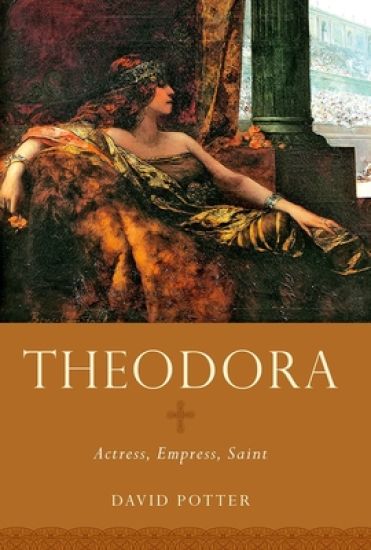
Theodora

Theodora

David Potter

Oxford University Press Inc
2017
nidottu
Two of the most famous mosaics from the ancient world, in the church of San Vitale in Ravenna, depict the sixth-century emperor Justinian and, on the wall facing him, his wife, Theodora (497-548). This majestic portrait gives no inkling of Theodora's very humble beginnings or her improbable rise to fame and power. Raised in a family of circus performers near Constantinople's Hippodrome, she abandoned a successful acting career in her late teens to follow a lover whom she was legally forbidden to marry. When he left her, she was a single mother who built a new life for herself as a secret agent, in which role she met the heir to the throne. To the shock of the ruling elite, the two were married, and when Justinian assumed power in 527, they ruled the Eastern Roman Empire together. Their reign was the most celebrated in Byzantine history, bringing wealth, prestige, and even Rome itself back to the Empire. Theodora was one of the dominant political figures of her era, helping shape imperial foreign and domestic policy and twice saving her husband from threatened deposition. She played a central role trying to solve the religious disputes of her era and proactively assisted women who were being trafficked. An extraordinarily able politician, she excited admiration and hatred from those around her. Enemies wrote extensively and imaginatively about her presumed early career as a prostitute, while supporters elevated her, quite literally, to sainthood. Theodora's is a tale of a woman of exceptional talent who overcame immense obstacles to achieve incredible power, which she exercised without ever forgetting where she had come from. In Theodora: Actress, Empress, Saint, David Potter penetrates the highly biased accounts of her found in the writings of her contemporaries and takes advantage of the latest research on early Byzantium to craft a modern, well-rounded, and engaging narrative of Theodora's life. This fascinating portrait will intrigue all readers with an interest in ancient and women's history.
I Remember 67 Well

I Remember 67 Well

David Potter

Pitch Publishing Ltd
2016
nidottu
The 25th May 1967 is a date ingrained into the DNA of every Celtic supporter. Their club will always be the first British winners of the European Cup, having beaten Inter Milan in the final with a late Stevie Chalmers goal, on a balmy Lisbon night - but for some, grainy YouTube clips and faded news cuttings of that glorious sixties evening are their main insight into the club's finest day. Launched ahead of the 50th anniversary of the triumph, I Remember 67 Well brings to life the legend and tells the full story of what is undoubtedly Celtic's greatest-ever footballing achievement - and one which may never be bettered. The momentous European campaign is replayed from that thumping 5-0 first-round aggregate win over Zurich. Set against the backdrop of global and news events that made headlines at home and abroad and the club's domestic achievements, which included pipping Rangers to the Scottish title, I Remember 67 Well gives Celtic supporters the opportunity to relive their greatest season, and one in which their club ruled Europe.
Leading Cultural Change

Leading Cultural Change

James McCalman; David Potter

Kogan Page Ltd
2016
sidottu
With coverage of the major theories and concepts alongside diagnostic tools and a practical framework for implementation, Leading Cultural Change will help the reader analyse and diagnose their current organizational culture, become aware of the key challenges and how to overcome them and learn how to adapt their leadership style, ensuring they are fit to lead a cultural change programme. Taking in core topics such as change context, language and dialogue as a key cultural process and the change team process, it uses a longitudinal case study of Cordia, a public sector organization transitioning into an LLP, to enhance learning and understanding. Leading Cultural Change is a unique text, rooted in behavioural sciences, which explores the topic as an organizational necessity to achieving sustained competitive advantage.
Theodora

Theodora

David Potter

Oxford University Press Inc
2016
sidottu
Two of the most famous mosaics from the Byzantine period, from the church of San Vitale in Ravenna, depict the sixth-century Emperor Justinian and, on the wall facing him, his wife, Theodora (497-548). This magestic portrait gives no inkling to Theodora's very humble beginnings or her improbable rise to fame and power. Raised in a family of circus performers near Constantinople's Hippodrome, she became one of the most influential women in Byzantine history. It was on stage as an actress--or, as some said, "stage whore"--that Theodora caught the attention of the future emperor Justinian. To the shock of the ruling elite, the two were married, and when Justinian assumed power in 527, they ruled the Eastern Roman Empire together. Their reign was the most celebrated in Byzantine history, bringing wealth, prestige, and even Rome itself back to the Empire. During this time Theodora was Justinian's most trusted advisor, and her influence on the Empire is discernible in a variety of important ways. Her interest in social causes, for example, is seen in the added legal protections for women and the lower classes. Theodora's most lasting impact was her support for the unorthodox Christian sect of Monophysitism. Although her husband was orthodox, Theodora maintained her religions independence, and today in Syria, where the sect still thrives, she is revered as a saint. In Theodora: Actress, Empress, Saint, renowned historian David Potter provides a new account of the life and times of this important historical figure. Potter penetrates the highly biased accounts of her found in the writings of her contemporaries and takes advantage of the latest research on early Byzantium to craft a modern, well-rounded, and engaging narrative of Theodora's life. There is simply nothing of this scope currently available to historians or the general reader, and those with an interest in ancient and women's history will be intrigued by Potter's account of this fascinating figure.
Constantine the Emperor

Constantine the Emperor

David Potter

Oxford University Press Inc
2015
nidottu
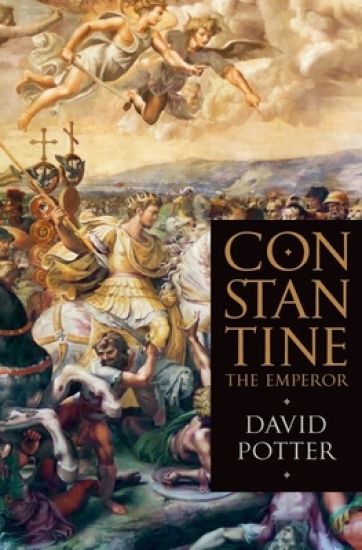
No Roman emperor had a greater impact on the modern world than did Constantine. The reason is not simply that he converted to Christianity, but that he did so in a way that brought his subjects along after him. Indeed, this major new biography argues that Constantine's conversion is but one feature of a unique administrative style that enabled him to take control of an empire beset by internal rebellions and external threats by Persians and Goths. The vast record of Constantine's administration reveals a government careful in its exercise of power but capable of ruthless, even savage, actions. Constantine executed (or drove to suicide) his father-in-law, two brothers-in-law, his eldest son, and his once beloved wife. An unparalleled general throughout his life, planning a major assault on the Sassanian Empire in Persia even on his deathbed. Alongside the visionary who believed that his success came from the direct intervention of his God resided an aggressive warrior, a sometimes cruel partner, and an immensely shrewd ruler. These characteristics combined together in a long and remarkable career, which restored the Roman Empire to its former glory. Beginning with his first biographer Eusebius, Constantine's image has been subject to distortion. More recent revisions include John Carroll's view of him as the intellectual ancestor of the Holocaust (Constantine's Sword) and Dan Brown's presentation of him as the man who oversaw the reshaping of Christian history (The Da Vinci Code). In Constantine the Emperor, David Potter confronts each of these skewed and partial accounts to provide the most comprehensive, authoritative, and readable account of Constantine's extraordinary life.
Leading Cultural Change

Leading Cultural Change

James McCalman; David Potter

Kogan Page Ltd
2015
nidottu
With coverage of the major theories and concepts alongside diagnostic tools and a practical framework for implementation, Leading Cultural Change will help the reader analyse and diagnose their current organizational culture, become aware of the key challenges and how to overcome them and learn how to adapt their leadership style, ensuring they are fit to lead a cultural change programme. Taking in core topics such as change context, language and dialogue as a key cultural process and the change team process, it uses a longitudinal case study of Cordia, a public sector organization transitioning into an LLP, to enhance learning and understanding. Leading Cultural Change is a unique text, rooted in behavioural sciences, which explores the topic as an organizational necessity to achieving sustained competitive advantage.
Encyclopaedia of Scottish Football

Encyclopaedia of Scottish Football

Phil H. Jones; David Potter

Pitch Publishing Ltd
2014
nidottu
The Encyclopaedia of Scottish Football contains thousands of entries, and is recognised as the ultimate comprehensive reference book packed with in-depth information about the history of football in Scotland - as well as hundreds of compelling nuggets of unlikely history. Now, after listening to their devoted readers' feedback, the authors have answered their call for a concise edition which focuses on the key topics for regular reference. The updated edition focuses on the essential topics of Club Football in Scotland, Club Football in Europe, International Football and International Tournaments. As well as in-depth coverage of these topics, each entry is characteristically introduced with a collection of unmissable factlets. How did Scotland fare on the international stage in the 1950s? When did Third Lanark go out of business? Who scored the winner in the Scottish Cup Final the year you were born? You know where to find out.
The Roman Empire at Bay, AD 180-395
The Roman Empire at Bay is the only one volume history of the critical years 180-395 AD, which saw the transformation of the Roman Empire from a unitary state centred on Rome, into a new polity with two capitals and a new religion—Christianity. The book integrates social and intellectual history into the narrative, looking to explore the relationship between contingent events and deeper structure. It also covers an amazingly dramatic narrative from the civil wars after the death of Commodus through the conversion of Constantine to the arrival of the Goths in the Roman Empire, setting in motion the final collapse of the western empire.The new edition takes account of important new scholarship in questions of Roman identity, on economy and society as well as work on the age of Constantine, which has advanced significantly in the last decade, while recent archaeological and art historical work is more fully drawn into the narrative. At its core, the central question that drives The Roman Empire at Bay remains, what did it mean to be a Roman and how did that meaning change as the empire changed? Updated for a new generation of students, this book remains a crucial tool in the study of this period.