Kirjojen hintavertailu. Mukana 12 595 353 kirjaa ja 12 kauppaa.

Kirjailija

David Price

Kirjat ja teokset yhdessä paikassa: 63 kirjaa, julkaisuja vuosilta 2000-2026, suosituimpien joukossa The Prison Officer. Vertaile teosten hintoja ja tarkista saatavuus suomalaisista kirjakaupoista.

63 kirjaa

Kirjojen julkaisuhaarukka 2000-2026.

The Prison Officer

The Prison Officer

Alison Liebling; David Price; Guy Shefer

Willan Publishing
2010
sidottu
This book is a thoroughly updated version of the popular first edition of The Prison Officer. It incorporates the significant increase in knowledge about the work of prison officer since the first edition was published and provides a live account of prison work and ways of understanding the role of the prison officer in the late-modern context. Few detailed narratives exist of prison work and the sort of role the prison officer occupies; this book addresses the gap. Using a range of quantitative and qualitative data and drawing on available theoretical literature it explores the role of the prison officer in an ‘appreciative’ way, taking into account the little-discussed issues of power and discretion. It provides a single accessible guide to the world and work of the prison officer, looking in detail at the present role of the prison officer in Britain and demonstrating the centrality of staff-prisoner relationships to every operation carried out by officers. This book will be of relevance to anyone with an interest in the work of a prison officer; students and others looking for an introductory survey of the literature and essential reading for any established and aspiring officers.
How to Build a Spitfire

How to Build a Spitfire

David Price

BLOOMSBURY PUBLISHING PLC
2026
nidottu
A unique homage to the fighter aircraft that won the Battle of Britain, marrying the story of how the author built a replica Spitfire in his garden with the plane's operational history. In April 2018 David Price, dedicated aviation museum volunteer and author of The Crew and Mosquito Men, decided to build a Spitfire replica in his back garden. In How to Build a Spitfire he juxtaposes the story of the ups and down of his own ambitious project to recreate an icon of British aviation with a narrative of the development of the Spitfire itself, focusing in particular on the production of the aircraft and its various component parts – including the Merlin engine. The story includes incredible testimonies from workers in the Supermarine factory in Southampton and in other Spitfire production facilities. Bringing together the sometimes light-hearted tale of a personal quest, enthusiastically pursued, with an authoritative account of the technical workings of a war-winning weapon, and the stories of the men who flew it, How to Build a Spitfire is a distinctive and affectionate homage to an enduring symbol of British engineering genius and national resilience.
How to Build a Spitfire

How to Build a Spitfire

David Price

BLOOMSBURY PUBLISHING PLC
2025
sidottu
A unique homage to the fighter aircraft that won the Battle of Britain, marrying the story of how the author built a replica Spitfire in his garden with the plane's operational history.In April 2018 David Price, dedicated aviation museum volunteer and author of THE CREW and MOSQUITO MEN, decided to build a Spitfire replica in his back garden. In How to Build a Spitfire he juxtaposes the story of the ups and down of his own ambitious project to recreate an icon of British aviation with a narrative of the development of the Spitfire itself, focusing in particular on the construction and production of the aircraft and its various component parts (including the Merlin engine), amplified by the testimonies of some of those who worked in the Supermarine factory in Southampton and in other Spitfire production facilities. Bringing together the sometimes light-hearted tale of a personal quest, enthusiastically pursued, with an accessible but authoritative account of the technical workings of a war-winning weapon, and the stories of some of the men who flew it, How to Build a Spitfire is a distinctive and affectionate homage to an enduring symbol of British engineering genius and national resilience.
In the Beginning Was the Image

In the Beginning Was the Image

David Price

OXFORD UNIVERSITY PRESS INC
2025
nidottu
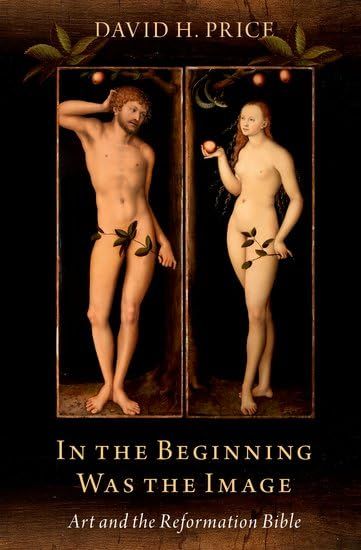
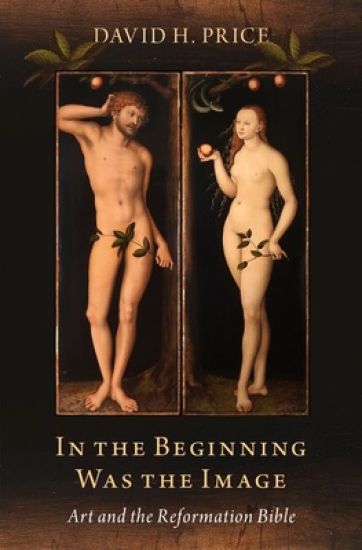
This pioneering study focuses on the decisive contributions of the three leading artists of the Northern Renaissance--Albrecht Dürer, Lucas Cranach the Elder, and Hans Holbein the Younger--to the printed Bible and to the transformation of ecclesiastical art in the Protestant Reformation. A time of artistic and theological revolution, the Renaissance and Reformation also witnessed a visual reformation of the Bible. In David H. Price's new interpretation, these artists emerge as major reformers in their own right who created a dynamic and innovative visual culture of biblicism. In the Beginning Was the Image explicitly addresses a key paradox of the Bible's new cultural status: as divergent Bible editions and translations shattered the unity of Christianity, new artistic approaches arose to accommodate theological and textual diversity. Rulers and theologians produced new Bibles as foundations for transformative socio-political movements, and their success, according to Price's compelling research, depended on the inventiveness and creativity of these artists. Written in a style designed to be accessible to a broad range of readers, Price's richly nuanced study explores the art of Dürer, Cranach, and Holbein and the biblical iconographies they developed to connect the new biblicism to faith and political authority.
Winning the Ten Crucial Days

Winning the Ten Crucial Days

David Price

Casemate Publishers
2025
sidottu
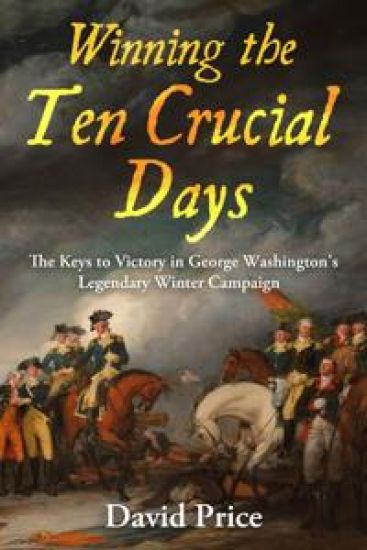
The “Ten Crucial Days” winter campaign of 1776–77 is one of the most storied in the annals of military history. David Price examines this pivotal moment in the American War of Independence through an interpretive framework that focuses on five key factors: leadership, geography, weather, artillery, and contingency. His narrative differs from earlier works on the subject that are largely a chronological account of this period. The “Ten Crucial Days” were the canvas on which a masterpiece of bold and enterprising leadership was painted. It may have borne George Washington’s signature, but the brushes were furnished by the officers and common soldiers he commanded and the coloration made vibrant by the hues from various contributing factors: the quality of decision-making on both sides of the conflict, the nature of the terrain, the effects of weather, the roar of cannon fire, and the vagaries of fortune. The confluence of these overlapping factors seemingly conspired to frustrate British designs at a critical moment in their effort to overpower the American rebellion. Although each was important in its own right, their aggregate influence on the course of events reflected the mutually reinforcing nature of these elements. Leadership that met the moment—when combined with the auspicious effects of favorable geography, weather that accommodated the needs of an army, the adept use of numerically superior artillery, and fortuitous developments that fall under the rubric of contingency—won the “Ten Crucial Days” and propelled the Revolutionary cause into a lengthy war of attrition that eventuated in American independence.
Rural and Remote Communities as Non-State Actors

Rural and Remote Communities as Non-State Actors

Ciprian Nicolae Radavoi; David Price

TAYLOR FRANCIS LTD
2024
nidottu
While entities as different as armed groups, multinational corporations, political parties, megacities, labour unions, terrorist organisations, or indigenous peoples are mentioned as non-state actors in the relevant literature, rural communities are never referred to. This book addresses the role of rural communities as non-state actors, lifting this invisibility veil with arguments coming from three theories of/scholarly approaches to international law: positivism, sociolegal realism (the New Haven School), and constitutionalism. It argues, first, that rural communities are recognised by the community of states as derived subjects of international law since they are made bearers of rights and duties in some major multilateral treaties. Second, rural communities have the ability to affect international lawmaking as they acquire the tools to influence decision-making in international arbitration and court litigation. Finally, the book highlights the need to recognise the status of rural communities when seeking global justice, as these are the communities that benefit the least from globalisation, while paying the highest price in terms of damage to the natural and sociocultural environment. Advocating for the existence of some supreme norms above the will of the states and the recognition of rural communities as non-state actors, this book will be of interest to academics, policy-makers, and non-governmental organisations working in the field of public international law and rural social matters.The Open Access version of this book, available at http://www.taylorfrancis.com, has been made available under a Creative Commons [Attribution-Non Commercial-No Derivatives (CC-BY-NC-ND)] 4.0 license.
Preserved Steam on the West Highland Railway

Preserved Steam on the West Highland Railway

David Price

AMBERLEY PUBLISHING
2024
nidottu
The railway from Glasgow to Fort William and Mallaig passes through superb and varied scenery from the shores of the Firth of Clyde, alongside lochs and mountains, across the desolate Great Moor of Rannoch before descending to Glen Spean and approaching Fort William from the north. A reversal is needed to continue to Mallaig, crossing the spectacular Glenfinnan viaduct to reach the fishing port on the west coast. Although diesel traction took over in the early 1960s, a limited steam service to Mallaig to cater for the tourist market was introduced by ScotRail in 1984. West Coast Railways took over in 1995 and now operate a service for some six months of the year. Since 1987 there have also been some steam-hauled trips on the line to Glasgow. David Price has visited the line many times and presents a vibrant selection of images that illustrate steam on the West Highland Railway.
Investor-State Dispute Settlement and International Investment Agreements
This book examines the international investment agreements and the dispute settlement mechanisms contained therein, which bind the Gulf Cooperation Council member States.The Gulf Cooperation Council (GCC), comprising Bahrain, Kuwait, Oman, Qatar, Saudi Arabia, and the United Arab Emirates, is complex and unique. Recently, all member States have experienced increasing investor–state arbitration claims, while their nationals are increasingly instituting investor–state arbitrations to protect their own foreign investments. Intra-GCC disputes, though relatively rare, have also appeared, largely as a result of the recent Gulf crisis. While focussing particularly upon the investor–state dispute settlement experience of member States as respondents, the book also explores the experiences of their nationals as claimants to determine how they can approach investor– state dispute settlement in the future. The book also reflects on existing treaty-making practices, making recommendations for regional-level dispute settlement to improve upon investor–state dispute settlement outcomes.This book provides a detailed analysis of the global investor–state dispute settlement regime and international investment agreements, and it will be of interest to students, academics, and practitioners with an interest in international investment law and arbitration.
Mosquito Men

Mosquito Men

David Price

BLOOMSBURY PUBLISHING PLC
2023
nidottu
Nicknamed The ‘Wooden Wonder’ for its timber frame and superb performance, the de Havilland Mosquito ranks alongside the Spitfire, the Hurricane and the Lancaster as one of the RAF’s greatest-ever flying machines. Novel in design, operationally flexible and exceptionally fast, it inflicted mayhem on the German war machine as night-fighter, fighter-bomber and pathfinder.Mosquito Men traces the contrasting careers of the young men of 627 Squadron, including that of Ken Oatley – last surviving member of an illustrious group – who flew twenty-two operations in Mosquitos as a navigator. Rich in technically authoritative accounts of individual missions, David Price’s atmospheric narrative interweaves individual stories with events in the wider war as the Allies closed in on Germany from the summer of 1944.For those fans of the Mosquito aircraft recently described by Rowland White, Mosquito Men will add the human element to this iconic plane.
Time in Africa

Time in Africa

David Price

Friesenpress
2023
sidottu
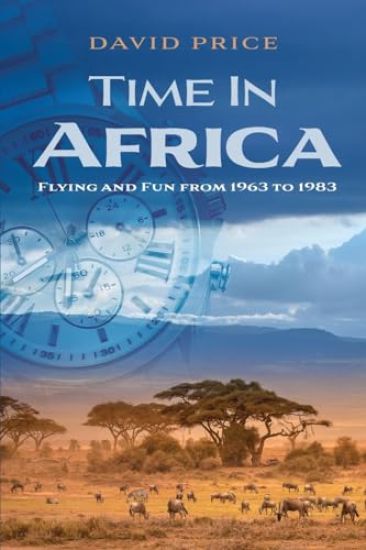
Time in Africa: Flying and Fun from 1963 to 1983 covers 20 amazing years of David Price's life as a pilot, working primarily in Africa. Although filled with personal adventures and humorous anecdotes, Time in Africa is much more than an autobiography. It is also an amazing glimpse of a time in aviation before computerized flight controls and when some older planes were still made of plywood and canvas. Having flown planes such as a DC3, Dove, Comet 4, Viscount, B737 and B707, the author shares stories of near disaster, having to make mechanical repairs and adjustments while flying-including once with a fire ax, and landing and taking off in the desert without a runway. Adding further interest to these stories is the setting: Libya, Kenya, Tanzania, Uganda, Cameroon, Zambia, Guinea, and Nigeria in their early days of independence post colonization. A natural storyteller, David portrays what life was like in Africa-both for the privileged Whites and the native Blacks-along with providing insight into the politics and attitudes of the time. From starting an airplane with car batteries strapped to a baggage trolley to having to put out a charcoal fire started in the aisle of a plane to brew a cup of tea, it is clear that there were few dull moments during David's time as a pilot in Africa. It is also evident that he enjoyed every minute there, as will his readers as he takes them back to an amazing place in an interesting time.
Time in Africa

Time in Africa

David Price

Friesenpress
2023
pokkari
Time in Africa: Flying and Fun from 1963 to 1983 covers 20 amazing years of David Price's life as a pilot, working primarily in Africa. Although filled with personal adventures and humorous anecdotes, Time in Africa is much more than an autobiography. It is also an amazing glimpse of a time in aviation before computerized flight controls and when some older planes were still made of plywood and canvas. Having flown planes such as a DC3, Dove, Comet 4, Viscount, B737 and B707, the author shares stories of near disaster, having to make mechanical repairs and adjustments while flying-including once with a fire ax, and landing and taking off in the desert without a runway.Adding further interest to these stories is the setting: Libya, Kenya, Tanzania, Uganda, Cameroon, Zambia, Guinea, and Nigeria in their early days of independence post colonization. A natural storyteller, David portrays what life was like in Africa-both for the privileged Whites and the native Blacks-along with providing insight into the politics and attitudes of the time.From starting an airplane with car batteries strapped to a baggage trolley to having to put out a charcoal fire started in the aisle of a plane to brew a cup of tea, it is clear that there were few dull moments during David's time as a pilot in Africa. It is also evident that he enjoyed every minute there, as will his readers as he takes them back to an amazing place in an interesting time.
Rural and Remote Communities as Non-State Actors

Rural and Remote Communities as Non-State Actors

Ciprian Nicolae Radavoi; David Price

TAYLOR FRANCIS LTD
2023
sidottu
While entities as different as armed groups, multinational corporations, political parties, megacities, labour unions, terrorist organisations, or indigenous peoples are mentioned as non-state actors in the relevant literature, rural communities are never referred to. This book addresses the role of rural communities as non-state actors, lifting this invisibility veil with arguments coming from three theories of/scholarly approaches to international law: positivism, sociolegal realism (the New Haven School), and constitutionalism. It argues, first, that rural communities are recognised by the community of states as derived subjects of international law since they are made bearers of rights and duties in some major multilateral treaties. Second, rural communities have the ability to affect international lawmaking as they acquire the tools to influence decision-making in international arbitration and court litigation. Finally, the book highlights the need to recognise the status of rural communities when seeking global justice, as these are the communities that benefit the least from globalisation, while paying the highest price in terms of damage to the natural and sociocultural environment. Advocating for the existence of some supreme norms above the will of the states and the recognition of rural communities as non-state actors, this book will be of interest to academics, policy-makers, and non-governmental organisations working in the field of public international law and rural social matters.The Open Access version of this book, available at http://www.taylorfrancis.com, has been made available under a Creative Commons [Attribution-Non Commercial-No Derivatives (CC-BY-NC-ND)] 4.0 license.
The Battle of Harlem Heights, 1776

The Battle of Harlem Heights, 1776

David Price

Westholme Publishing
2023
sidottu
The Battle of Harlem Heights is an underappreciated milestone in American military history. The engagement on upper Manhattan Island on September 16, 1776, was the first successful battle for George Washington's troops in the quest for independence from Great Britain and presaged the emergence of an effective fighting force among the citizen-soldiers who made up the Continental Army. The cooperative effort of regiments from New England, Maryland, and Virginia--whose men lacked any sense of national identity before the Revolution--indicated the potential for this fledgling army to cohere around a common national purpose and affiliation and become the primary instrument for securing America's right to self-rule. The action began when a contingent of rangers led by Col. Thomas Knowlton of Connecticut encountered British light infantry while conducting a reconnaissance mission on Washington's orders. What began as a skirmish transformed into a full-fledged battle as both sides reinforced, and a heavy engagement continued for several hours until, with ammunition running low, the British withdrew. Washington decided not to pursue and risk confrontation with a larger force, thereby keeping his army intact. In The Battle of Harlem Heights, 1776, David Price conveys the significance of the Continental Army's first victory and highlights the role of one of its key participants, the largely forgotten Knowlton--the "father of American military intelligence"--who gave his life during the action while urging his rangers forward. No matter how many times U.S. Army troops have recorded a battlefield success over the past two and a half centuries--whether on American soil, in a European wood, across a Middle Eastern desert, or on a Pacific island--one thing about that history remains indisputable. They did it first at Harlem Heights. Small Battles: Military History as Local History Mark Edward Lender and James Kirby Martin, Series Editors Small Battles offers a fresh and important new perspective on the story of America's early conflicts. It was the small battles, not the clash of major armies, that truly defined the fighting during the colonial wars, the American Revolution, the War of 1812, and the hostilities on the frontiers. This is dramatic military history as seen through the prism of local history--history with a depth of detail, a feeling for place, people, and the impact of battle and its consequences that the story of major battles often cannot convey. The Small Battles series focuses on America's military conflicts at their most intimate and revealing level.
Mosquito Men

Mosquito Men

David Price

BLOOMSBURY PUBLISHING PLC
2022
sidottu
In November 1940, a remarkable prototype aircraft made its maiden flight from an airstrip north of London. Novel in construction and exceptionally fast, the new plane was soon outpacing the Spitfire, and went on to contribute to the RAF's offensive against Nazi Germany as bomber, pathfinder and night fighter. The men who flew it nicknamed this most flexible of aircraft 'the wooden wonder' for its composite wooden frame and superb performance. Its more familiar name was the de Havilland Mosquito, and it used lightning speed and agility to inflict mayhem on the German war machine. From the summer of 1943, as Bomber Command intensified its saturation bombing of German cities, Mosquitos were used by the Pathfinder Force, which marked targets for night-time bombing, to devastating effect. Mosquito Men traces the contrasting careers of the young men of 627 Squadron, including that of Ken Oatley – last living member of an illustrious group – who flew twenty-two operations in Mosquitos as a navigator. David Price's atmospheric narrative interweaves the human stories of the crews of 627 Squadron with events in the wider war as the Allies closed in on Germany from the summer of 1944. Mosquito Men is rich in evocative and technically authoritative accounts of individual missions flown by an aircraft that ranks alongside the Spitfire, the Hurricane and the Lancaster as one of the RAF's greatest ever flying machines – and perhaps the most versatile warplane ever built.
The Railway Through the Central Highlands

The Railway Through the Central Highlands

David Price

Amberley Publishing
2022
nidottu
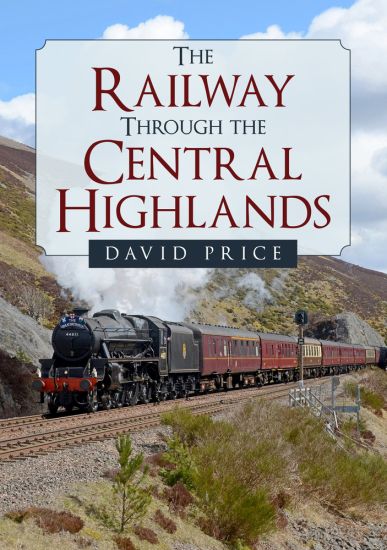
The railway route through the Central Highlands from Perth to Inverness offers a spectacular journey through a variety of landscapes. Initially traversing the pastoral Strathtay as far as Ballanluig, the scenery becomes more dramatic and bleak as the line runs alongside the river Garry and on to Druimuachdar, the highest standard gauge railway summit in the United Kingdom. From Newtonmore, the valley of the Spey is followed to Aviemore, giving excellent views of the Cairngorm Mountains. Here is the junction with the preserved Strathspey Railway, which uses part of the original route northwards that was built in 1863. A new route from Aviemore to Inverness was opened in 1898 involving another major climb to a summit at Slochd and a series of superb viaducts across the river valleys. The author has visited the line regularly over the last four decades and presents a selection of his steam and diesel photographs showing the different traction in use during this period.
In the Beginning Was the Image

In the Beginning Was the Image

David Price

Oxford University Press Inc
2021
sidottu
This pioneering study focuses on the decisive contributions of the three leading artists of the Northern Renaissance--Albrecht Dürer, Lucas Cranach the Elder, and Hans Holbein the Younger-- to the printed Bible and to the transformation of ecclesiastical art in the Protestant Reformation. A time of artistic and theological revolution, the Renaissance and Reformation also witnessed a visual reformation of the Bible. In David H. Price's new interpretation, these artists emerge as major reformers in their own right who created a dynamic and innovative visual culture of biblicism. In the Beginning Was the Image explicitly addresses a key paradox of the Bible's new cultural status: as divergent Bible editions and translations shattered the unity of Christianity, new artistic approaches arose to accommodate theological and textual diversity. Rulers and theologians produced new Bibles as foundations for transformative socio-political movements, and their success, according to Price's compelling research, depended on the inventiveness and creativity of these artists. Written in a style designed to be accessible to a broad range of readers, Price's richly nuanced study explores the art of Dürer, Cranach, and Holbein and the biblical iconographies they developed to connect the new biblicism to faith and political authority.