Kirjojen hintavertailu. Mukana 12 108 981 kirjaa ja 12 kauppaa.

Kirjailija

David Quammen

Kirjat ja teokset yhdessä paikassa: 31 kirjaa, julkaisuja vuosilta 1985-2023, suosituimpien joukossa E. O. Wilson: Biophilia, The Diversity Of Life, Naturalist (loa #340). Vertaile teosten hintoja ja tarkista saatavuus suomalaisista kirjakaupoista.

31 kirjaa

Kirjojen julkaisuhaarukka 1985-2023.

E. O. Wilson: Biophilia, The Diversity Of Life, Naturalist (loa #340)

E. O. Wilson: Biophilia, The Diversity Of Life, Naturalist (loa #340)

Edward O. Wilson; David Quammen

The Library of America
2021
sidottu
A landmark collected edition of the Pulitzer Prize-winning author and world-renowned biologist, illuminating the marvels of biodiversity in a time of climate crisis and mass extinction. Library of America presents three environmental classics from two-time Pulitzer Prize-winner E. O. Wilson, a masterful writer-scientist whose graceful prose is equal to his groundbreaking discoveries. These books illuminate the evolution and complex beauty of our imperiled ecosystems and the flora, fauna, and civilization they sustain, even as they reveal the personal evolution of one of the greatest scientific minds of our age. Here are the lyrical, thought-provoking essays of Biophilia, a field biologist's reflections on the manifold meanings of wilderness. Here too is his magisterial, dazzlingly informative Diversity of Life a sweeping tour of global biodiversity and a prophetic call to preserve the planet, filled on every page with little-known creatures, unique habitats, and fascinating ecological detail. Also included is Wilson's moving autobiography, Naturalist. Following him from his outdoor boyhood in Alabama and the Florida panhandle to the rainforests of Surinam and New Guinea--from his first discoveries as a young ant specialist to his emergence as a champion of conservation and rewilding--it rounds out a collection that will inspire wonder, curiosity, and love for a natural world now rapidly disappearing. Thirty-two pages of photographs and numerous illustrations accompany these works, which are introduced by David Quammen, one of America's leading science and nature writers.
Breathless

Breathless

David Quammen

Vintage Publishing
2023
pokkari
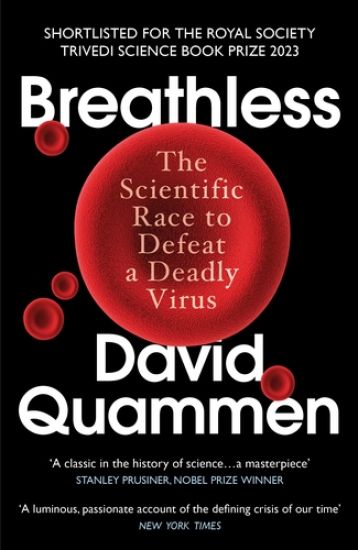
**A NEW YORK TIMES BOOK OF THE YEAR 2022 and FINANCIAL TIMES BEST BOOK OF 2023***Shortlisted for the Royal Society Trivedi Science Book Prize 2023*From the author of Spillover, the book that predicted the pandemic, Breathless is the story of Covid-19 and its fierce journey through the human population, as seen by the scientists tasked with fighting it.Bestelling author David Quammen draws on countless interviews with experts, including leading virologists, to take us inside the global race to understand SARS-CoV-2, it's ever-changing nature and capacity to kill. In doing so, he explains how new viruses emerge when we disrupt ecosystems and suggests why the coronavirus may be here to stay.By peering over the shoulders of the brilliant scientists leading the chase, Breathless uncovers the warnings from infectious diseases experts that went unheeded; and which clues are the most compelling in the hunt for the virus' origin.'A viral howdunnit that is pacy and unafraid to educate readers' Observer'A luminous, passionate account of the defining crisis of our time' New York Times'A classic...a masterpiece' Stanley Prusiner, Nobel Prize Winner'As close to authoritative history as we have... It reads like a real-time thriller' Chicago Tribune
Breathless: The Scientific Race to Defeat a Deadly Virus
National Book Award finalist Breathless tells the story of the worldwide scientific race to decipher the coronavirus SARS-CoV-2, trace its source, and make possible the vaccines to fight the Covid-19 pandemic--a "luminous, passionate account of the defining crisis of our time" (The New York Times). Breathless is a "gripping" (The Atlantic) but "clear-eyed analysis" (Time) of SARs-CoV-2 and its fierce journey through the human population, as seen by the scientists who study its origin, its ever-changing nature, and its capacity to kill us. David Quammen expertly shows how strange new viruses emerge from animals into humans as we disrupt wild ecosystems and how those viruses adapt to their human hosts, sometimes causing global catastrophe. He explains why this coronavirus will probably be a "forever virus," destined to circulate among humans and bedevil us endlessly, in one variant form or another. As scientists labor to catch it, comprehend it, and control it, with their high-tech tools and methods, the virus finds ways of escape. Based on interviews with nearly one hundred scientists, including leading virologists in China and around the world, Quammen explains that: -Infectious disease experts saw this pandemic coming -Some scientists, for more than two decades, warned that "the next big one" would be caused by a changeable new virus--very possibly a coronavirus--but such warnings were ignored for political or economic reasons -The precise origins of this virus may not be known for years, but some clues are compelling, and some suppositions can be dismissed -And much more Written by "one of our finest explainers of the natural world for decades" (Chicago Tribune), This "compelling and terrifying" (The New York Times) account is an unparalleled look inside the frantic international race to understand and control SARS-CoV-2--and what it might mean for the next potential global health crisis.
Sin Aliento / Breathless: The Scientific Race to Defeat a Deadly Virus
La apasionante cr nica de la carrera contrarreloj para descifrar el SARS-CoV-2 y frenar una pandemia devastadora. Finalista del National Book Award «Unacr nica iluminadora y apasionada de la crisis que ha definido nuestro tiempo .--The New York Times David Quammen, uno de los mejores escritores cient ficos del mundo y autor de Contagio (Debate, 2020), la obra de referencia sobre enfermedades zoon ticas (las que saltan de animales a humanos), nos sumerge en la fren tica carrera por descifrar el coronavirus SARS-CoV-2, encontrar su origen y hacer posible el desarrollo de vacunas para combatir la pandemia de COVID-19. Tras entrevistar a casi un centenar de cient ficos, entre ellos los vir logos m s importantes del panorama internacional, Quammen denuncia c mo durante d cadas los expertos advirtieron de que esta pandemia llegar a, pero sus consejos fueron ignorados por razones econ micas o pol ticas. Adem s, tambi n se encarga de descifrar las claves para entender algunas teor as sobre el origen del virus y descartar otras suposiciones m s escandalosas, pero menos fiables. Este libro nos traslada a la primera l nea de batalla contra la COVID-19 a trav s de los ojos de aquellos cient ficos que lideraron esta lucha, y lo hace con la prosa comprensible y reveladora de un maestro incomparable como Quammen. ENGLISH DESCRIPTION National Book Award finalist, Breathless, tells the story of the worldwide scientific race to decipher the coronavirus SARS-CoV-2, trace its source, and make possible the vaccines to fight the Covid-19 pandemic--a "luminous, passionate account of the defining crisis of our time." (The New York Times). Breathless is a "gripping" (The Atlantic) but "clear-eyed analysis" (Time) of SARs-CoV-2 and its fierce journey through the human population, as seen by the scientists who study its origin, its ever-changing nature, and its capacity to kill us. David Quammen expertly shows how strange new viruses emerge from animals into humans as we disrupt wild ecosystems and how those viruses adapt to their human hosts, sometimes causing global catastrophe. He explains why this coronavirus will probably be a "forever virus," destined to circulate among humans and bedevil us endlessly, in one variant form or another. As scientists labor to catch it, comprehend it, and control it, with their high-tech tools and methods, the virus finds ways of escape. Based on interviews with nearly one hundred scientists, including leading virologists in China and around the world, Quammen explains that: -Infectious disease experts saw this pandemic coming -Some scientists, for more than two decades, warned that "the next big one" would be caused by a changeable new virus--very possibly a coronavirus--but such warnings were ignored for political or economic reasons -The precise origins of this virus may not be known for years, but some clues are compelling, and some suppositions can be dismissed -And much more Written by "one of our finest explainers of the natural world for decades" (Chicago Tribune), this "compelling and terrifying" (The New York Times) account is an unparalleled look inside the frantic international race to understand and control SARS-CoV-2--and what it might mean for the next potential global health crisis.
The Heartbeat of the Wild

The Heartbeat of the Wild

David Quammen

National Geographic Society
2023
sidottu
For more than two decades, award-winning science and nature writer David Quammen has traveled to Earth’s most far-flung and fragile destinations, sending back field notes from places caught in the tension between humans and the wild. This illuminating book features 20 of those assignments: elegantly written narratives, originally published in National Geographic magazine and updated for today, telling colorful and impassioned stories from some of the planet’s wildest locales. Quammen shares encounters with African elephants, chimpanzees, and gorillas (and their saviors, including Jane Goodall); the salmon of northeastern Russia and the people whose livelihood depends on them; the lions of Kenya and the villagers whose homes border on parks created to preserve the species; and the champions of rewilding efforts in southernmost South America, designed to rescue iconic species including jaguars and macaws.
Breathless

Breathless

David Quammen

Vintage Publishing
2022
sidottu
**A NEW YORK TIMES BOOK OF THE YEAR 2022 and FINANCIAL TIMES BEST BOOK OF 2023****Shortlisted for the Royal Science Society Book Prize 2023**From the author of the prescient Spillover: Animal Infections and the Next Human PandemicBreathless is the story of the scientific quest to decipher, control and fight Covid-19.Breathless traces SARS-CoV-2's fierce journey through the human population as seen by the scientists who study its origin, ever-changing nature and capacity to kill. It shows how strange viruses emerge as we disrupt wild ecosystems - sometimes causing global catastrophe - and suggests this coronavirus could be a 'forever virus' that's destined to bedevil us endlessly.Quammen also explains that experts saw this pandemic coming; that scientists warned 'the next big one' would be caused by a changeable new virus, but were ignored for political or economic reasons; and that while the origins of this virus may not be known for years, some suppositions are compelling and others can be dismissed.Breathless takes us inside the frantic international effort to control SARS-CoV-2 as if peering over the shoulders of the brilliant scientists who led the chase.Praise for Spillover:'A frightening and fascinating masterpiece of science reporting' Walter Isaacson'A real-life thriller with an outcome that affects us all' Elizabeth Kolbert
Breathless: The Scientific Race to Defeat a Deadly Virus
National Book Award finalist Breathless tells the story of the worldwide scientific race to decipher the coronavirus SARS-CoV-2, trace its source, and make possible the vaccines to fight the Covid-19 pandemic--a "luminous, passionate account of the defining crisis of our time." (The New York Times). Breathless is a "gripping" (The Atlantic) but "clear-eyed analysis" (Time) of SARs-CoV-2 and its fierce journey through the human population, as seen by the scientists who study its origin, its ever-changing nature, and its capacity to kill us. David Quammen expertly shows how strange new viruses emerge from animals into humans as we disrupt wild ecosystems and how those viruses adapt to their human hosts, sometimes causing global catastrophe. He explains why this coronavirus will probably be a "forever virus," destined to circulate among humans and bedevil us endlessly, in one variant form or another. As scientists labor to catch it, comprehend it, and control it, with their high-tech tools and methods, the virus finds ways of escape. Based on interviews with nearly one hundred scientists, including leading virologists in China and around the world, Quammen explains that: -Infectious disease experts saw this pandemic coming -Some scientists, for more than two decades, warned that "the next big one" would be caused by a changeable new virus--very possibly a coronavirus--but such warnings were ignored for political or economic reasons -The precise origins of this virus may not be known for years, but some clues are compelling, and some suppositions can be dismissed -And much more Written by "one of our finest explainers of the natural world for decades" (Chicago Tribune), This "compelling and terrifying" (The New York Times) account is an unparalleled look inside the frantic international race to understand and control SARS-CoV-2--and what it might mean for the next potential global health crisis.
From the Seashore to the Seafloor

From the Seashore to the Seafloor

Janet Voight; David Quammen

THE UNIVERSITY OF CHICAGO PRESS
2022
sidottu
An octopus expert and celebrated artist offer a deep dive to meet the enchanting inhabitants of the world's marine ecosystems. Have you ever walked along the beach and wondered what kind of creatures can be found beneath the waves? Have you pictured what it would be like to see the ocean not from the shore, but from its depths? These questions drive Janet Voight, an expert on mollusks who has explored the seas in the submersible Alivn that can dive some 14,000 feet below the water's surface. In this book, she partners with artist Peggy Macnamara to invite readers to share her undersea journeys of discovery. With accessible scientific description, Voight introduces the animals that inhabit rocky and sandy shores, explains the fragility of coral reefs, and honors the extraordinary creatures that must search for food in the ocean's depths, where light and heat are rare. These fascinating insights are accompanied by Macnamara's stunning watercolors, illuminating these ecosystems and other scenes from Voight's research. Together, they show connections between life at every depth-and warn of the threats these beguiling places and their eccentric denizens face.
Contagio: La evolución de las pandemias / Spillover: Animal Infections and the Next Human Pandemic
EL LIBRO INTERNACIONAL DE REFERENCIA DURANTE LA CUARENTENA. Desde hace a os, para los expertos y cualquier persona informada, el estallido de la siguiente pandemia era una cuesti n de tiempo, y su origen, evidente: un virus latente en animales que diera el salto al ser humano como el HIV que provoc el SIDA o el H1N1 que caus la gripe de 1918, el bola, el SARS, el virus de Marburgo o el que produjo la gripe aviar. En esta obra de referencia internacional, David Quammen se sumerge en la historia reciente de esas enfermedades zoon ticas, y persigue su rastro en compa a de los mejores cient ficos del mundo en la selva centroafricana, las cuevas de China meridional o las azoteas de Banglad s, pero tambi n en los sofisticados laboratorios cuyo personal investiga virus letales bajo las m s altas medidas de seguridad. Aunque Contagio se lee como un thriller, repleto de incidentes, pistas e interrogantes, a la vista de la crisis desatada por la aparici n del SARS-CoV-2, su lectura no solo resulta apasionante; es imprescindible. ENGLISH DESCRIPTION Mr. Quammen] is not just among our best science writers but among our best writers, period. ―Dwight Garner, New York Times The next big human pandemic―the next disease cataclysm, perhaps on the scale of AIDS or the 1918 influenza―is likely to be caused by a new virus coming to humans from wildlife. Experts call such an event "spillover" and they warn us to brace ourselves. David Quammen has tracked this subject from the jungles of Central Africa, the rooftops of Bangladesh, and the caves of southern China to the laboratories where researchers work in space suits to study lethal viruses. He illuminates the dynamics of Ebola, SARS, bird flu, Lyme disease, and other emerging threats and tells the story of AIDS and its origins as it has never before been told. Spillover reads like a mystery tale, full of mayhem and clues and questions. When the Next Big One arrives, what will it look like? From which innocent host animal will it emerge? Will we be ready?
Tangled Tree

Tangled Tree

David Quammen

Harper Collins UK
2019
pokkari
Longlisted for the National Book Award for Nonfiction and A New York Times Notable Book of 2018. Our understanding of the â??tree of lifeâ??, with powerful implications for human genetics, human health and our own human nature, has recently completely changed.
The Song of the Dodo: Island Biogeography in an Age of Extinctions
David Quammen's book, The Song of the Dodo, is a brilliant, stirring work, breathtaking in its scope, far-reaching in its message -- a crucial book in precarious times, which radically alters the way in which we understand the natural world and our place in that world. It's also a book full of entertainment and wonders. In The Song of the Dodo, we follow Quammen's keen intellect through the ideas, theories, and experiments of prominent naturalists of the last two centuries. We trail after him as he travels the world, tracking the subject of island biogeography, which encompasses nothing less than the study of the origin and extinction of all species. Why is this island idea so important? Because islands are where species most commonly go extinct -- and because, as Quammen points out, we live in an age when all of Earth's landscapes are being chopped into island-like fragments by human activity. Through his eyes, we glimpse the nature of evolution and extinction, and in so doing come to understand the monumental diversity of our planet, and the importance of preserving its wild landscapes, animals, and plants. We also meet some fascinating human characters. By the book's end we are wiser, and more deeply concerned, but Quammen leaves us with a message of excitement and hope.
The Tangled Tree: A Radical New History of Life
In this New York Times bestseller and longlist nominee for the National Book Award, "our greatest living chronicler of the natural world" (The New York Times), David Quammen explains how recent discoveries in molecular biology affect our understanding of evolution and life's history. In the mid-1970s, scientists began using DNA sequences to reexamine the history of all life. Perhaps the most startling discovery to come out of this new field--the study of life's diversity and relatedness at the molecular level--is horizontal gene transfer (HGT), or the movement of genes across species lines. It turns out that HGT has been widespread and important; we now know that roughly eight percent of the human genome arrived sideways by viral infection--a type of HGT. In The Tangled Tree, "the grandest tale in biology....David Quammen presents the science--and the scientists involved--with patience, candor, and flair" (Nature). We learn about the major players, such as Carl Woese, the most important little-known biologist of the twentieth century; Lynn Margulis, the notorious maverick whose wild ideas about "mosaic" creatures proved to be true; and Tsutomu Wantanabe, who discovered that the scourge of antibiotic-resistant bacteria is a direct result of horizontal gene transfer, bringing the deep study of genome histories to bear on a global crisis in public health. "David Quammen proves to be an immensely well-informed guide to a complex story" (The Wall Street Journal). In The Tangled Tree, he explains how molecular studies of evolution have brought startling recognitions about the tangled tree of life--including where we humans fit upon it. Thanks to new technologies, we now have the ability to alter even our genetic composition--through sideways insertions, as nature has long been doing. "The Tangled Tree is a source of wonder....Quammen has written a deep and daring intellectual adventure" (The Boston Globe).
The Tangled Tree: A Radical New History of Life
Nonpareil science writer David Quammen explains how recent discoveries in molecular biology can change our understanding of evolution and life's history, with powerful implications for human health and even our own human nature.In the mid-1970s, scientists began using DNA sequences to reexamine the history of all life. Perhaps the most startling discovery to come out of this new field-the study of life's diversity and relatedness at the molecular level-is horizontal gene transfer (HGT), or the movement of genes across species lines. It turns out that HGT has been widespread and important. For instance, we now know that roughly eight percent of the human genome arrived not through traditional inheritance from directly ancestral forms, but sideways by viral infection-a type of HGT.In The Tangled Tree David Quammen, one of that rare breed of science journalists who blends exploration with a talent for synthesis and storytelling (Nature), chronicles these discoveries through the lives of the researchers who made them-such as Carl Woese, the most important little-known biologist of the twentieth century; Lynn Margulis, the notorious maverick whose wild ideas about mosaic creatures proved to be true; and Tsutomu Wantanabe, who discovered that the scourge of antibiotic-resistant bacteria is a direct result of horizontal gene transfer, bringing the deep study of genome histories to bear on a global crisis in public health.Quammen is no ordinary writer. He is simply astonishing, one of that rare class of writer gifted with verve, ingenuity, humor, guts, and great heart (Elle). Now, in The Tangled Tree, he explains how molecular studies of evolution have brought startling recognitions about the tangled tree of life-including where we humans fit upon it. Thanks to new technologies such as CRISPR, we now have the ability to alter even our genetic composition-through sideways insertions, as nature has long been doing. The Tangled Tree is a brilliant guide to our transformed understanding of evolution, of life's history, and of our own human nature.
Yellowstone

Yellowstone

David Quammen

National Geographic Society
2016
sidottu
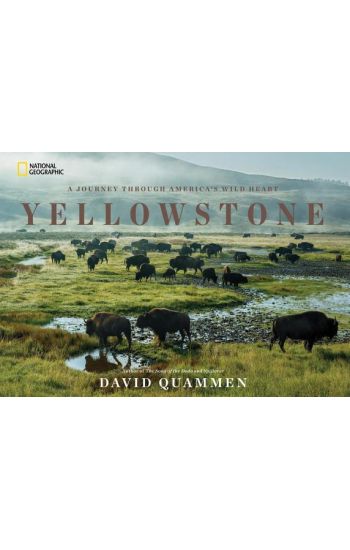
Best-selling author David Quammen takes readers on a breathtaking journey through America's most inspiring and imperilled ecosystem - Yellowstone National Park. Filled with amazing images captured by eight National Geographic photographers over an extensive two year deployment in the park, it is unlike any Yellowstone book before it. Yellowstone's storied past, rich ecosystem and dynamic landscape are brilliantly portrayed in a captivating mosaic of photographs and eloquently written text that blend history, science and research from the field.
The Chimp and the River

The Chimp and the River

David Quammen

WW Norton Co
2015
pokkari
The real story of AIDS how it originated with a virus in a chimpanzee, jumped to one human, and then infected more than 60 million people is very different from what most of us think we know. Recent research has revealed dark surprises and yielded a radically new scenario of how AIDS began and spread. First recounted in Spillover, which Walter Isaacson called a frightening and fascinating masterpiece, The Chimp and the River is the true account of how an unnoticed chimpanzee infection became a human plague. With a new introduction by the author, David Quammen s hair-raising report tracks the virus from chimp populations in the jungles of southeastern Cameroon to laboratories across the globe, as he unravels the mysteries of when, where, and under what circumstances such a consequential spillover can happen. An audacious search for answers amid more than a century of data, The Chimp and the River tells the haunting tale of one of the most devastating pandemics of our time. Extracted from Spillover by David Quammen, updated and with additional material."
Ebola

Ebola

David Quammen

WW Norton Co
2014
pokkari
In 1976 a deadly virus emerged from the Congo forest. As swiftly as it came, it disappeared, leaving no trace. Over the four decades since, Ebola has emerged sporadically, each time to devastating effect. It can kill up to 90 percent of its victims. In between these outbreaks, it is untraceable, hiding deep in the jungle. The search is on to find Ebola s elusive host animal. And until we find it, Ebola will continue to strike. Acclaimed science writer and explorer David Quammen first came near the virus while he was traveling in the jungles of Gabon, accompanied by local men whose village had been devastated by a recent outbreak. Here he tells the story of Ebola its past, present, and its unknowable future. Extracted from Spillover by David Quammen, updated and with additional material."
Spillover: Animal Infections and the Next Human Pandemic
In 2020, the novel coronavirus gripped the world in a global pandemic and led to the death of hundreds of thousands. The source of the previously unknown virus? Bats. This phenomenon--in which a new pathogen comes to humans from wildlife--is known as spillover, and it may not be long before it happens again. Prior to the emergence of our latest health crisis, renowned science writer David Quammen was traveling the globe to better understand spillover's devastating potential. For five years he followed scientists to a rooftop in Bangladesh, a forest in the Congo, a Chinese rat farm, and a suburban woodland in New York, and through high-biosecurity laboratories. He interviewed survivors and gathered stories of the dead. He found surprises in the latest research, alarm among public health officials, and deep concern in the eyes of researchers.Spillover delivers the science, the history, the mystery, and the human anguish of disease outbreaks as gripping drama. And it asks questions more urgent now than ever before: From what innocent creature, in what remote landscape, will the Next Big One emerge? Are pandemics independent misfortunes, or linked? Are they merely happening to us, or are we somehow causing them? What can be done? Quammen traces the origins of Ebola, Marburg, SARS, avian influenza, Lyme disease, and other bizarre cases of spillover, including the grim, unexpected story of how AIDS began from a single Cameroonian chimpanzee. The result is more than a clarion work of reportage. It's also the elegantly told tale of a quest, through time and landscape, for a new understanding of how our world works--and how we can survive within it.
Spillover

Spillover

David Quammen

Vintage
2013
pokkari
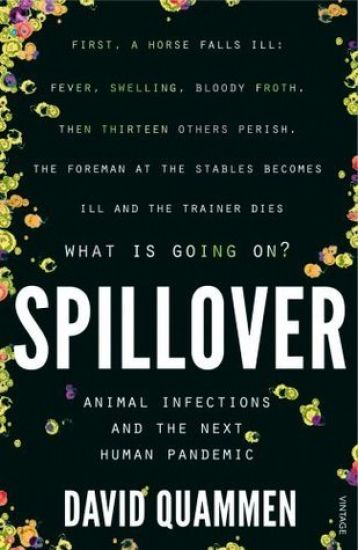
First, a horse in Brisbane falls ill: fever, swelling, bloody froth. Then thirteen others drop dead. The foreman at the stables becomes ill and the trainer dies. This title tracks these infections to their source and asks what we can do to prevent some new pandemic spreading across the face of the earth.
Monster Of God

Monster Of God

David Quammen

Pimlico
2012
nidottu
For millennia, nature's biggest and fiercest predators have tormented mankind. The knowledge and fear of the existence of these ferocious man-eaters is forever in the back of our minds, looming in our worst nightmares. Millions of humans have suffered attacks by predators on land and at sea. Yet animals have always shared the landscape with humans. Since the dawn of time our ecosystems have been linked and humans have co-existed with flesh-eating beasts as members of the same food chain. Now, of course, as humans spread and despoil the planet, these fearsome predators may only survive on the other side of glass barriers and chain-link fences. Their gradual disappearance is changing the nature of our own existence. We no longer occupy an intermediate position on the food chain; instead we survey it invulnerably from above - so far above that we are in danger of forgetting that we even belong to an ecosystem. David Quammen's enthralling new book covers the four corners of the globe as he explores the fate of lions in India's Gir forest, saltwater crocodiles in Northern Australia, brown bears in the mountains of Romania, and Siberian tigers. Tracking these great and terrible beasts through the toughest terrain in the world, Quammen is equally intrigued by the traditional relationship between the great predators and the people who live among them, and weaves into his story the fears and myths that have haunted humankind for 3000 years.