Kirjojen hintavertailu. Mukana 12 595 353 kirjaa ja 12 kauppaa.
Kirjailija
David R. Colburn
Kirjat ja teokset yhdessä paikassa: 8 kirjaa, julkaisuja vuosilta 1982-2022, suosituimpien joukossa Government in the Sunshine State. Vertaile teosten hintoja ja tarkista saatavuus suomalaisista kirjakaupoista.
Addressing how the diversity in nationality of its population has shaped government, the authors of this book offer a history of the State's political development over the last 150 years and the issues facing it today.
Inside the reinvention of Florida politicsReubin Askew was swept into the governor’s office in 1970 as part of a remarkable wave of progressive politics and legislative reform in Florida. A man of uncompromising principle and independence, he was elected primarily on a platform of tax reform.In the years that followed, Askew led a group of politicians from both parties who sought—and achieved—judicial reform, redistricting, busing and desegregation, the end of the Cross Florida Barge Canal, the Sunshine Amendment, and much more.This period was truly a golden age of Florida politics, and Martin Dyckman’s narrative is well written, fast paced, and reads like a novel. Dyckman also reveals how the return of special interests, the rise of partisan politics, unlimited campaign spending, term limits, gerrymandering, and more have eroded the achievements of the Golden Age in subsequent decades.
An insightful analysis of how the Democrats lost—and the GOP gained—the most important swing state in the nation. It places Florida’s gubernatorial politics since 1940 in the context of the state’s remarkable cultural, economic, and demographic transformation.
Likely to raise hackles among Democrats and Republicans alike, this dynamic history of modern Florida argues that the Sunshine State has become the political and demographic future of the nation. In the twenty-first century, David Colburn says, Florida is a dynamic, highly partisan, largely conservative state at the cultural, social, and economic intersection of the Western Hemisphere. But the transition hasn't been entirely felicitous. Allegations abound that the state is a ""banana republic"" favoring the wealthy, a piece of paradise that embraces ""immigrants, natives, seniors, rednecks, evangelicals, and yes, flim-flam artists and mobile home salesmen. All of whom came to the state looking for ways to improve their lot in life."" Colburn depicts the state's colorful governors at the center of every postwar development from Cracker to Sun Belt politics, from segregation to integration, from boosterism and modernization to economic and environmental crises. As the story of one of the most influential states in the nation, the book redefines Florida politics.
Florida began the twentieth century rooted in the Confederacy - the least populated of the southern states, with a rural, agricultural, frontier society. By the end of the century, Florida had become the most populated, urban, and culturally diverse state in the South - and the fourth largest in the nation. Florida's Megatrends is a lively overview of the forces that forged Florida in the twentieth century, the trends that are projected for the first quarter of this century, and how both will shape Florida in the future. The transformation of Florida began with railroad barons and developers from northern states who triggered the 1920s land boom. Waves of migration and immigration continued throughout the twentieth century. With a constant influx of new residents from the Caribbean and Latin America, combined with the African-American and Native American populations, Florida has become one of the most racially and ethnically diverse states in the nation. The state's economy is no longer dominated by agriculture but by tourism, construction, commerce, and technology. In Florida Megatrends, two of Florida's most respected scholars examine the evolution of the state, the remarkable changes that have shaped it, and the relevant concerns facing Florida in the future from political, historical, sociological, economic, and environmental perspectives.
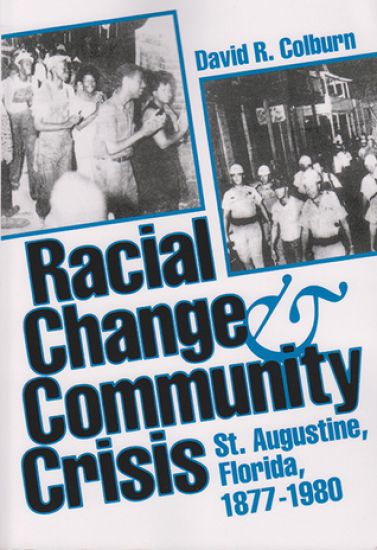
"Colburn presents the facts and is not afraid to interpret them. His narrative captures the inherent drama of specific events and situations: the ruthless beatings of demonstrators, the complacency and fear of many white moderates, the genuinely incredible power of nonviolence to accomplish grand political ends, and the great courage this weapon required of those who wielded it."--Reviews in American HistoryIn 1964, racial reform and racial extremism clashed in St. Augustine, Florida, the city the Southern Christian Leadership Conference targeted for the activities of its nonviolent army. Under the leadership of Martin Luther King, Jr., the SCLC staged demonstrations in St. Augustine that they hoped would pressure the U.S. Congress into passing civil rights legislation. Extremists, led by Ku Klux Klan and John Birch Society members, saw in St. Augustine a last opportunity to halt the forces of racial change. What resulted--beatings, shootings, bombings, and mass arrests--was some of the ugliest racial violence the nation has witnessed.