Kirjojen hintavertailu. Mukana 12 595 353 kirjaa ja 12 kauppaa.

Kirjailija

David R. Heffelfinger

Kirjat ja teokset yhdessä paikassa: 7 kirjaa, julkaisuja vuosilta 2006-2024, suosituimpien joukossa Java EE 6 Development with NetBeans 7. Vertaile teosten hintoja ja tarkista saatavuus suomalaisista kirjakaupoista.

Mukana myös kirjoitusasut: David R Heffelfinger

7 kirjaa

Kirjojen julkaisuhaarukka 2006-2024.

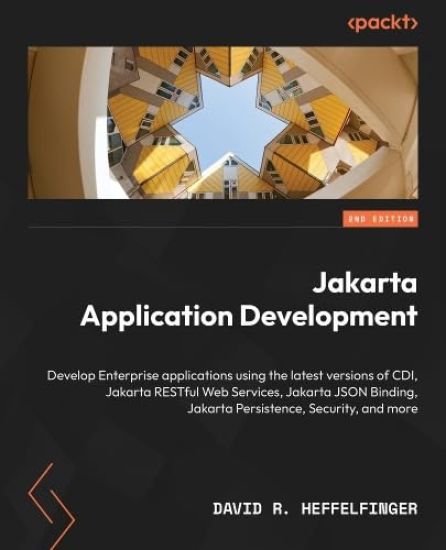
Jakarta EE Application Development

Jakarta EE Application Development

David R. Heffelfinger

PACKT PUBLISHING LIMITED
2024
nidottu
Learn Jakarta EE by building real-world microservices with code examples, practical exercises, and the latest Jakarta EE features Key Features Craft microservices using standard Jakarta EE technologies such as Jakarta RESTful Web Services, JSON Processing, and JSON Binding Design web-based applications with Jakarta Faces Harness Jakarta EE technologies such as Jakarta Enterprise Beans and Jakarta Messaging to build enterprise applications Purchase of the print or Kindle book includes a free PDF eBook Book DescriptionJakarta EE stands as a robust standard with multiple implementations, presenting developers with a versatile toolkit for building enterprise applications. However, despite the advantages of enterprise application development, vendor lock-in remains a concern for many developers, limiting flexibility and interoperability across diverse environments. This Jakarta EE application development guide addresses the challenge of vendor lock-in by offering comprehensive coverage of the major Jakarta EE APIs and goes beyond the basics to help you develop applications deployable on any Jakarta EE compliant runtime. This book introduces you to JSON Processing and JSON Binding and shows you how the Model API and the Streaming API are used to process JSON data. You’ll then explore additional Jakarta EE APIs, such as WebSocket and Messaging, for loosely coupled, asynchronous communication and discover ways to secure applications with the Jakarta EE Security API. Finally, you'll learn about Jakarta RESTful web service development and techniques to develop cloud-ready microservices in Jakarta EE. By the end of this book, you'll have developed the skills to craft secure, scalable, and cloud-native microservices that solve modern enterprise challenges.What you will learn Design microservices architectures with a clear separation of concerns Understand the contexts and dependency injection (CDI) specification to develop Java EE applications Use Jakarta Faces to create interactive web applications using component-based development Understand the steps involved in handling JSON data with Jakarta JSON Processing and Binding Design secure RESTful web services using server-sent events (SSE) for real-time data updates Secure your applications with the Jakarta Security API Build message-driven applications with Jakarta Messaging Who this book is forThis book is for Java developers looking to learn Jakarta EE and expand their skill set. You’ll also find this book useful if you are familiar with Java EE and want to stay abreast of the latest version of the Jakarta EE specification. Knowledge of core Java concepts such as OOP, data types, control flow, and basic collections will be beneficial.
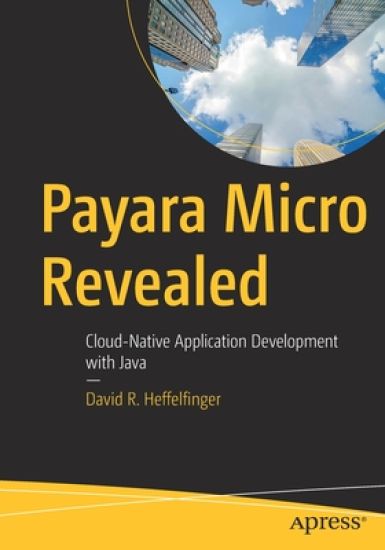
Payara Micro Revealed

Payara Micro Revealed

David R. Heffelfinger

APRESS
2022
nidottu
Develop, configure, and deploy Java cloud-native applications using Payara Micro. This book demystifies Java cloud-native application development using standard Microprofile APIs and covers Payara-specific features such as automatic clustering and application initialization performance improvements. You will learn how to improve startup performance by taking advantage of class data sharing, and configure cloud-native applications via standard development tools such as Maven and Gradle. The book also clarifies how to develop functionality necessary in a cloud environment, such as health checks and request tracing, using MicroProfile APIs. The book begins by showing how to develop microservices using RESTful web services, followed by how to create microservice clients using MicroProfile and the REST client API. Dependency Injection via Jakarta Context and Dependency Injection (CDI) is also covered. Various approaches to application configuration are covered as well, including property files, environment variables, and system properties. You will learn to configure fault tolerance and high availability, generate system and custom application metrics, and generate health checks to automatically improve overall application health. You will know how to trace the flow of a request across service boundaries with OpenTracing. You will be able to make future maintenance easily through generating documentation, including how to automatically update documentation as your code is updated. Additionally, you will learn how to secure cloud applications and to automatically cluster applications and improve application startup performance.What You Will LearnDevelop microservices using standard Java APIsImplement cloud functionality such as request tracing and health checksDeploy applications as thin archives and as uber archivesConfigure applications via Maven and GradleGenerate custommetrics for capacity planning and proactive discovery of issuesImplement features in support of high availability and fault toleranceSecure your applications with Jason Web TokensTake advantage of Payara’s own cloud platform for easy deploymentWho This Book Is ForJava developers who wish to develop cloud-native applications and microservices, and Java EE application developers who wish to transition to developing cloud-native applications that are lightweight and easily deployed
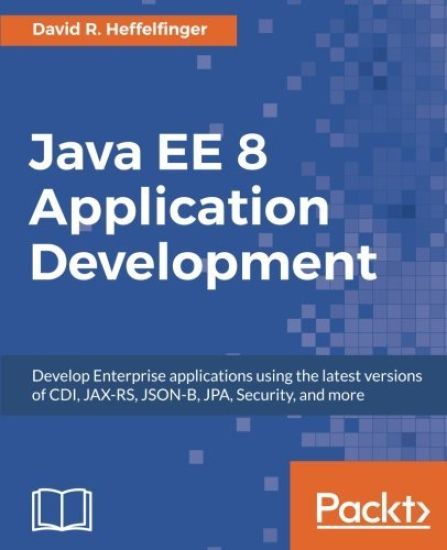
Java EE 8 Application Development

Java EE 8 Application Development

David R. Heffelfinger

Packt Publishing Limited
2017
nidottu
Develop Enterprise Java applications compliant with the latest version of the Java EE specification About This Book • This book covers all of the major Java EE 8 APIs and includes new additions such as enhanced Security, JSON-B Processing, and more • Learn additional Java EE APIs, such as the Java API for Websocket and the Java Message Service (JMS) • Develop applications by taking advantage of the latest versions of CDI, Security, Servlets, and JSF and other Java EE specifications Who This Book Is For If you are a Java developer who wants to become proficient with Java EE 8, this book is ideal for you. You are expected to have some experience with Java and to have developed and deployed applications in the past, but you don't need any previous knowledge of Java EE. What You Will Learn • Develop and deploy Java EE applications • Embrace the latest additions to the Contexts and Dependency Injection (CDI) specification to develop Java EE applications • Develop web-based applications by utilizing the latest version of JavaServer Faces, JSF 2.3. • Understand the steps needed to process JSON data with JSON-P and the new JSON-B Java EE API • Implement RESTful web services using the new JAX-RS 2.1 API, which also includes support for Server-Sent Events (SSE) and the new reactive client API In Detail Java EE is an Enterprise Java standard. Applications written to comply with the Java EE specification do not tie developers to a specific vendor; instead they can be deployed to any Java EE compliant application server. With this book, you'll get all the tools and techniques you need to build robust and scalable applications in Java EE 8. This book covers all the major Java EE 8 APIs including JSF 2.3, Enterprise JavaBeans (EJB) 3.2, Contexts and Dependency Injection (CDI) 2.0, the Java API for WebSockets, JAX-RS 2.1, Servlet 4.0, and more. The book begins by introducing you to Java EE 8 application development and goes on to cover all the major Java EE 8 APIs. It goes beyond the basics to develop Java EE applications that can be deployed to any Java EE 8 compliant application server. It also introduces advanced topics such as JSON-P and JSON-B, the Java APIs for JSON processing, and the Java API for JSON binding. These topics dive deep, explaining how the two APIs (the Model API and the Streaming API) are used to process JSON data. Moving on, we cover additional Java EE APIs, such as the Java API for Websocket and the Java Message Service (JMS), which allows loosely coupled, asynchronous communication. Further on, you'll discover ways to secure Java EE applications by taking advantage of the new Java EE Security API. Finally, you'll learn more about the RESTful web service development using the latest JAX-RS 2.1 specification. You'll also get to know techniques to develop cloud-ready microservices in Java EE. Style and approach The book takes a pragmatic approach, showing you various techniques to utilize new features of Java EE 8 specification. It is packed with clear, step-by-step instructions, practical examples, and straightforward explanations.
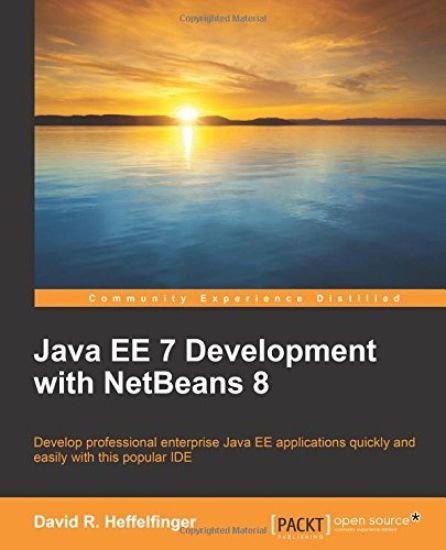
Java EE 7 Development with NetBeans 8

Java EE 7 Development with NetBeans 8

David R. Heffelfinger

Packt Publishing Limited
2015
nidottu
About This BookUse the features of the popular NetBeans IDE to accelerate your development of Java EE applicationsCovers the latest versions of the major Java EE APIs such as JSF 2.2, EJB 3.2, JPA 2.1, CDI 1.1, and JAX-RS 2.0Walks you through the development of applications utilizing popular JSF component libraries such as PrimeFaces, RichFaces, and ICEfacesWho This Book Is ForThe book is aimed at Java developers who wish to develop Java EE applications while taking advantage of NetBeans functionality to automate repetitive tasks. Familiarity with NetBeans or Java EE is not assumed.
Java EE 6 Development with NetBeans 7

Java EE 6 Development with NetBeans 7

David R. Heffelfinger; David R Heffelfinger

Packt Publishing Limited
2011
nidottu
Develop professional enterprise Java EE applications quickly and easily with this popular IDE Key Features Use features of the popular NetBeans IDE to accelerate development of Java EE applications Develop JavaServer Pages (JSPs) to display both static and dynamic content in a web browser Covers the latest versions of major Java EE APIs such as JSF 2.0, EJB 3.1, and JPA 2.0, and new additions to Java EE such as CDI and JAX-RS Learn development with the popular PrimeFaces JSF 2.0 component library Book DescriptionNetBeans has several features that greatly simplify Java EE development, but with many features and great flexibility, Java developers can become overwhelmed by the options available in NetBeans. This book provides step-by-step recipes that show you how to take control of the environment and make use of these features to make your enterprise Java application development more efficient and productive than ever before, so that you can concentrate on the important parts of your application.Java EE 6 Development with NetBeans 7 takes you through the most important parts of Java EE programming and shows you how to use the features of NetBeans that will improve your development experience with clear, careful instructions and screenshots. It will show you how to use NetBeans functionality to automate many of the tedious or repetitive tasks frequently encountered when developing enterprise Java applications, freeing you up to focus on the business logic specific parts of the application. As well as showing you time-saving tricks, keyboard shortcuts, and other productivity enhancements possible with NetBeans, it will take you through the major Java EE APIs and how to get them working in the NetBeans environment. While focusing on NetBeans features, you will learn about developing applications using the servlet API and JSPs, including taking advantage of JSTL and developing custom JSP tags. Developing applications that take advantage of JavaServer Faces is also covered in detail, including how to generate standard JSF applications from an existing database schema. The book also covers how to easily develop elegant JSF applications by taking advantage of the PrimeFaces JSF 2.0 component library that is bundled with NetBeans.What you will learn Develop Java web applications by leveraging NetBeans functionality Build standard JSF applications by taking advantage of NetBeans features Integrate NetBeans with third-party RDBMS Develop JavaServer Pages (JSPs) to display both static and dynamic content in a web browser Develop aesthetically pleasing JSF web applications by leveraging the PrimeFaces JSF 2.0 component library Quickly and easily develop applications taking advantage of the Java Persistence API Implement the Model-View-Controller design pattern by using JavaBeans as the model component Take advantage of NetBeans functionality to easily develop Enterprise JavaBeans, including configuring transaction management via annotations Use static and dynamic navigation to define navigation between pages Utilize NetBeans to easily add messaging functionality to enterprise applications, through the Java Messaging Service API and through message-driven EJBs Develop SOAP-based and RESTful web services using NetBeans, including exposing EJB functionality as web services Who this book is forThe book is aimed at Java developers who wish to develop Java EE applications while taking advantage of NetBeans functionality to automate repetitive tasks and to ease their software development efforts. Familiarity with NetBeans or Java EE is not assumed.
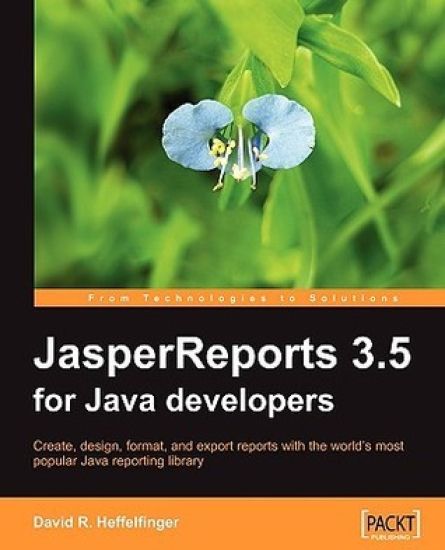
JasperReports 3.5 for Java Developers

JasperReports 3.5 for Java Developers

David R. Heffelfinger

Packt Publishing Limited
2009
nidottu
This book is a comprehensive and practical guide aimed at getting the results you want as quickly as possible. The chapters gradually build up your skills and by the end of the book you will be confident enough to design powerful reports. Each concept is clearly illustrated with diagrams and screen shots and easy-to-understand code. If you are a Java developer who wants to create rich reports for either the Web or print, and wants to get started quickly with JasperReports to do this, this book is for you. No knowledge of JasperReports is presumed.
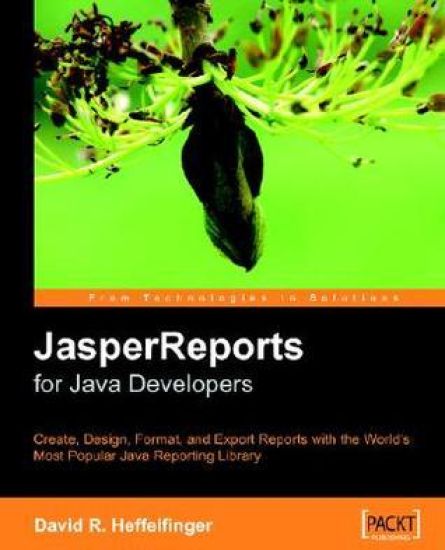
JasperReports for Java Developers

JasperReports for Java Developers

David R. Heffelfinger

Packt Publishing Limited
2006
nidottu
This book is a concise and practical guide aimed at getting the results you want as quickly as possible. This book is for Java developers who want to create rich reports for either the web or print, and want to get started quickly with JasperReports to do this. No knowledge of JasperReports is presumed, although obviously familiarity with Java, SQL, and XML are assumed where they are required.