Kirjojen hintavertailu. Mukana 12 131 148 kirjaa ja 12 kauppaa.

Kirjailija

David R. Marples

Kirjat ja teokset yhdessä paikassa: 22 kirjaa, julkaisuja vuosilta 1987-2024, suosituimpien joukossa Heroes and Villains. Vertaile teosten hintoja ja tarkista saatavuus suomalaisista kirjakaupoista.

Mukana myös kirjoitusasut: David R Marples

22 kirjaa

Kirjojen julkaisuhaarukka 1987-2024.

Heroes and Villains

Heroes and Villains

David R. Marples

Central European University Press
2007
nidottu
Certain to engender debate in the media, especially in Ukraine itself, as well as the academic community. Using a wide selection of newspapers, journals, monographs, and school textbooks from different regions of the country, the book examines the sensitive issue of the changing perspectives – often shifting 180 degrees – on several events discussed in the new narratives of the Stalin years published in the Ukraine since the late Gorbachev period until 2005. These events were pivotal to Ukrainian history in the 20th century, including the Famine of 1932–33 and Ukrainian insurgency during the war years.
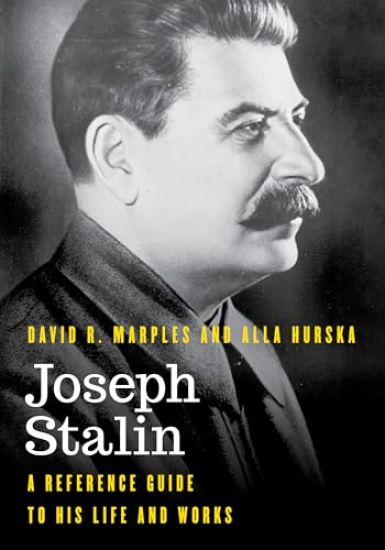
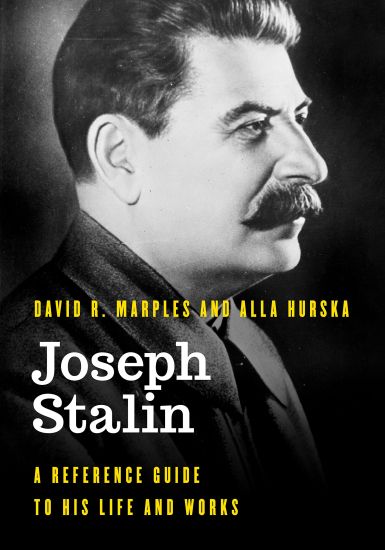
Joseph Stalin

Joseph Stalin

David R. Marples; Alla Hurska

BLOOMSBURY PUBLISHING PLC
2024
nidottu
The figure of Stalin continues to intrigue, fascinate, and repel historians into the 21st century, while in the Russian Federation, he has returned to the status of a figure to be respected, principally as the leader who led his country through industrialization and militarization, enabling it to defeat Nazi Germany in the Second World War, thereby saving Europe and much of the world from the "brown plague" of Fascism. He presided over some of the most cataclysmic events of the 20th century, some of which he was the architect: collectivization of agriculture, famine, the Purges, and the Second World War.Joseph Stalin: A Reference Guide to His Life and Works captures his life, and legacy. It features a chronology, an introduction offers a brief account of his life, a dictionary section lists entries on Stalin's associates from the period of the Russian Empire in the late 19th century to the leader's death in 1953, and beyond, highlighting their careers and the main events.
An Unsettled Nation: Moldova in the Geopolitics of Russia, Romania, and Ukraine

An Unsettled Nation: Moldova in the Geopolitics of Russia, Romania, and Ukraine

Eduard Baidaus; John-Paul Himka; David R Marples

ibidem-Verlag, Jessica Haunschild u Christian Schon
2023
nidottu
This book investigates state-building, distorted identities, and separatism in the Republic of Moldova. At various times, this region was a former imperial Russia borderland, a province in interwar Romania, a republic in the Soviet Union, and ultimately a modern state where the interests of Moscow and the West collide. The book presents research on the historical preconditions and spread of the secessionist movement in Transnistria, the war in the Dniester River valley, and the diplomatic deadlock of the Transnistrian problem. It further examines the conflicting positions that political parties, the public, and experts have taken towards the problems that challenge the nation- and state-building processes in this post-Soviet state. Additional focal points include the reassertion of Russia's power in the post-Soviet space, Ukraine's effort to become a major political player in the region, and Romania's attempt to retrieve its influence in Moldova. This study demonstrates that separatism generates mutually exclusive nation-building projects on the territory of a single state, where pre-existing historical conditions and geopolitical realities interweave and impede the construction of a modern nation-state. It also evinces that international actors play a significant role in this process, and that they are dominant and superimposed on the local decision-makers. Moreover, domestic and external factors connected with nation-building policies often conflict with each other and hinder the development of a resolution of the so-called "frozen conflict" over Transnistria.
World War II as an Identity Project

World War II as an Identity Project

Oleksandr Melnyk; David R Marples

ibidem-Verlag, Jessica Haunschild u Christian Schon
2022
nidottu
This book explores the relationship between history, legitimacy, and violence in the building and breaking of nations and states on the territory of contemporary Ukraine during the Second World War and in its aftermath. At its center are various institutions of the Soviet state. Other states and rival political movements also enter the picture insofar as their acitivities influenced Soviet policies. Methodologically, the study shifts attention from a limited body of normative texts and their creators within the Soviet political and cultural elite to a wider array of practices, organizations, and players engaged in power struggles and production of knowledge about the past in different social domains. Specifically, it brings into focus groups not normally thought of as participants in the production of Soviet memory discourse, notably NKVD officers, Soviet archivists, Ukrainian nationalists, Nazi collaborators, and former partisans in the German-occupied territories. The book not only demonstrates the complexity of nation-shaping processes, but also restores agency to some seemingly powerless actors.
Joseph Stalin

Joseph Stalin

David R. Marples; Alla Hurska

ROWMAN LITTLEFIELD
2022
sidottu
The figure of Stalin continues to intrigue, fascinate, and repel historians into the 21st century, while in the Russian Federation, he has returned to the status of a figure to be respected, principally as the leader who led his country through industrialization and militarization, enabling it to defeat Nazi Germany in the Second World War, thereby saving Europe and much of the world from the "brown plague" of Fascism. He presided over some of the most cataclysmic events of the 20th century, of some of which he was the architect: collectivization of agriculture, famime, the Purges, and the Second World War.Joseph Stalin: A Reference Guide to His Life and Works captures his life, and legacy. It features a chronology, an introduction offers a brief account of his life, a dictionary section lists entries on Stalin's associates from the period of the Russian Empire in the late 19th century to the leader's death in 1953, and beyond, highlighting their careers and the main events.
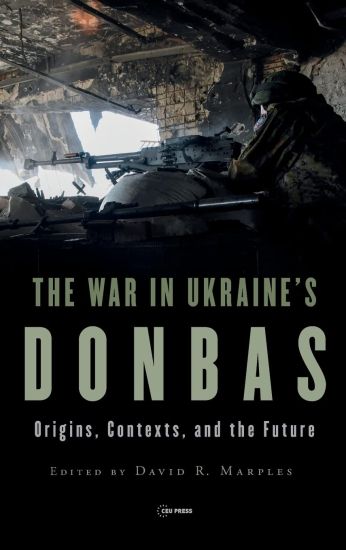
The War in Ukraine’s Donbas

The War in Ukraine’s Donbas

David R. Marples

CENTRAL EUROPEAN UNIVERSITY PRESS
2022
nidottu
This collective work analyzes the ongoing conflict in Ukraine, providing a coherent picture of Ukraine and Eastern Europe in the period 2013–2020. Giving voice to different social groups, scholarly communities and agencies relevant to Ukraine’s recent history, The War in Ukraine's Donbas goes beyond simplistic media interpretations that limit the analysis to Vladimir Putin and Russian aims to annex Ukraine. Instead, the authors identify the deeper roots linked to the autonomy and history of Donbas as a region. The contributions explore local society and traditions and the alienation from Ukraine caused by the events of Euromaidan, which saw the removal of the Donetsk-based president Viktor Yanukovych. Other chapters address the refugee crisis, the Minsk Accords in 2014 and the impact of the new president Volodymyr Zelensky and his efforts to bring the war to an end by negotiations among Russia, Ukraine, France, and Germany. The book concludes with four proposals for a durable peace in Donbas: territorial power-sharing; the conversion of rebels into legitimate political parties; amnesty for all participants of the armed conflict; and a transitional period of several years until political institutions are fully re-established.
The War in Ukraine’s Donbas

The War in Ukraine’s Donbas

David R. Marples

Central European University Press
2022
sidottu
This collective work analyzes the ongoing conflict in Ukraine, providing a coherent picture of Ukraine and Eastern Europe in the period 2013–2020. Giving voice to different social groups, scholarly communities and agencies relevant to Ukraine’s recent history, The War in Ukraine's Donbas goes beyond simplistic media interpretations that limit the analysis to Vladimir Putin and Russian aims to annex Ukraine. Instead, the authors identify the deeper roots linked to the autonomy and history of Donbas as a region. The contributions explore local society and traditions and the alienation from Ukraine caused by the events of Euromaidan, which saw the removal of the Donetsk-based president Viktor Yanukovych. Other chapters address the refugee crisis, the Minsk Accords in 2014 and the impact of the new president Volodymyr Zelensky and his efforts to bring the war to an end by negotiations among Russia, Ukraine, France, and Germany. The book concludes with four proposals for a durable peace in Donbas: territorial power-sharing; the conversion of rebels into legitimate political parties; amnesty for all participants of the armed conflict; and a transitional period of several years until political institutions are fully re-established.
Understanding Ukraine and Belarus

Understanding Ukraine and Belarus

David R Marples

E-International Relations
2020
pokkari
This book describes the author's academic journey from an undergraduate in London to his current research on Ukraine and Belarus as a History professor in Alberta, Canada. It highlights the dramatic changes of the late Soviet and post-Soviet periods, his travel stories, experiences, and the Stalinist legacy in both countries. It includes extended focus on his visits to Chernobyl and the contaminated zone in the late 1980s and 1990s, as well as a summer working with indigenous groups in eastern Siberia. Visiting Belarus more than 25 times since the 1990s, he was banned for seven years before the visa rules were relaxed in 2017. In the case of Ukraine, it chronicles a transition from a total outsider to one of the best-known scholars in Ukrainian studies, commenting on aspects of the coalescence of scholarship and politics, and the increasing role of social media and the Diaspora in the analysis of crucial events such as the Euromaidan uprising and its aftermath in Kyiv. David R. Marples is a Distinguished University Professor of Russian and East European History at the Department of History and Classics, University of Alberta, Canada.
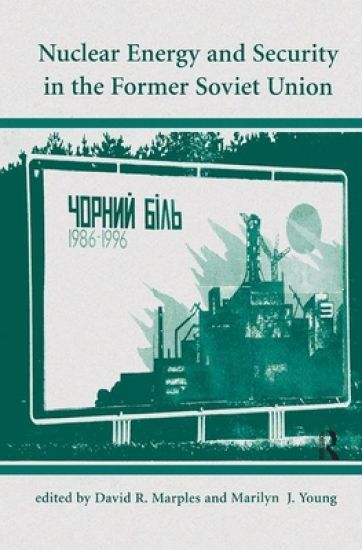
Nuclear Energy And Security In The Former Soviet Union

Nuclear Energy And Security In The Former Soviet Union

David R Marples; Marilyn J Young

Routledge
2019
sidottu
Only several years after the collapse of the Soviet Union, nuclear security issues are again at the forefront of international concern. This timely collection addresses issues of cleanup at Chernobyl and other sites of nuclear disasters, nuclear smuggling, safety concerns in the Ukrainian and Russian nuclear industries, and Ukraine's negotiations w
Russia in the Twentieth Century

Russia in the Twentieth Century

David R. Marples

Routledge
2017
sidottu
The history of Russia, as the natural successor to the Soviet Union, is of crucial importance to understanding why communism ultimately lost out to Western democracy and the free market system. David Marples presents a balanced overview of 20th century Russian history and shows that although contemporary Russia has retained many of the practices and memories of the Soviet period, it is not about to revert back to the Soviet example.
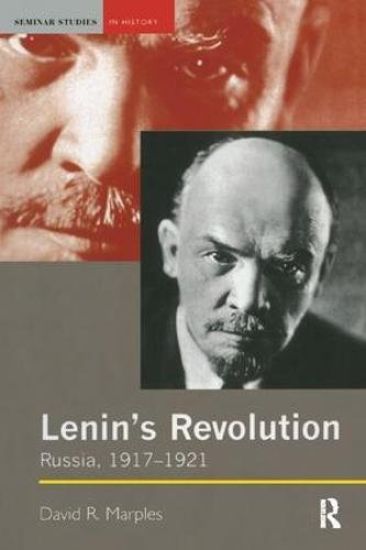
Lenin's Revolution

Lenin's Revolution

David R. Marples

Routledge
2017
sidottu
This study examines one of the key events in history, the Russian Revolution. Since the late Gorbachev period, a wealth of new material has become available to historians that has triggered intense scholarly debate on the nature of revolution. This timely new book takes account of the new scholarship, including - for example - the role of Lenin. It is argued that the intial flexibility of Lenin and the Bolshevik party allowed them to take power, but that the conduct of both changed considerably once they were obliged to take steps to maintain their authority. This book charts the Febuary Revolution, the October Revolution, the Civil War and the main individuals involved, giving a remarkable degree of clarity to the tumultuous events in Russia whose consequences the world lived with for the rest of the twentieth century.
Motherland

Motherland

David R. Marples

Routledge
2017
sidottu
Motherland tells the dramatic story of the rise and fall of the Soviet Union. From Lenin's virtual coup in November 1917 to Boris Yeltsin's ruthless takeover of power in 1991, the book culminates with a new view of the Yeltsin years.David Marples focuses on the evolution of Russia during the Soviet period, and the attempt to harness Russian nationalism to the avowed Soviet mission of promoting World Communism. Along the way heanalyses some of the more intensive historical debates and uncovers some of the myths perpetuated by state propaganda, especially those associated with the Great Patriotic War.
The Collapse of the Soviet Union, 1985-1991
Why did the Soviet Union collapse in 1991?The collapse of the Soviet Union has widely been seen as the result of the arms race and Cold War, and the failure of the Soviet side to keep pace with new technology. This book argues that the disintegration was mainly a result of two interrelated factors: the rise of the Soviet national republics, and the manipulation of the new Russian presidency by Boris Yeltsin in what became a direct power struggle between Yeltsin and the Soviet leader, Gorbachev.Written in a clear and accessible manner, the book provides:an explanation of how the national question came to dominate Soviet politics by 1990-1 analysis of the economic crisis that occurred in the late 1980s a chapter devoted to the year 1991, from the referendum to reform the Soviet Union to the unforeseen dissolution of the country by December a discussion of the personalities of and political confrontation between the two key statesman: Gorbachev and Yeltsin Also containing a Chronology, Glossary and Who's Who of key figures, The Collapse of the Soviet Union is essential reading for students of twentieth century European history.
´Our Glorious Past´: Lukashenka´s Belarus and the Great Patriotic War

´Our Glorious Past´: Lukashenka´s Belarus and the Great Patriotic War

David R Marples

ibidem-Verlag, Jessica Haunschild u Christian Schon
2014
sidottu
This timely book examines how the regime of President Aliaksandr Lukashenka has used the 'Great Patriotic War' (1941-45) as a key element in state and identity formation in Belarus. The campaign was discernible from 2003 and intensified after a rift with Russia that led to a re-examination of the earlier policy of close political and economic partnership. David R. Marples focuses in particular on the years 2009 and 2010, which commemorated two 65th anniversaries: the liberation of Minsk (3 July 1944) and the end of World War II in Europe (9 May 1945). Using a variety of sources, this unique book critically examines the official interpretations of the war from various angles: the initial invasion, occupation, the Partisans, historic sites and monuments, films, documentaries, museums, schools, and public occasions commemorating some of the major events. Relying on first-hand research, including books recommended by the Ministry of Education, state-controlled media and personal visits to the major historic sites and monuments of Belarus, Marples explains and measures the effectiveness of Lukashenka's program.In outlining the main tenets of the state interpretation of the war years, the book highlights the distortions and manipulations of historical evidence as well as the dismissal of alternative versions as 'historical revisionism.' It assesses the successes and weaknesses of the campaign as well as its long term effects and prospects.
OUR GLORIOUS PAST : LUKASHENKA'S BELARUS AND THE GREAT PATRIOTIC WAR

OUR GLORIOUS PAST : LUKASHENKA'S BELARUS AND THE GREAT PATRIOTIC WAR

David R Marples

ibidem-Verlag, Jessica Haunschild u Christian Schon
2014
nidottu
This timely book examines how the regime of President Aliaksandr Lukashenka has used the 'Great Patriotic War' (1941-45) as a key element in state and identity formation in Belarus. The campaign was discernible from 2003 and intensified after a rift with Russia that led to a re-examination of the earlier policy of close political and economic partnership. David R. Marples focuses in particular on the years 2009 and 2010, which commemorated two 65th anniversaries: the liberation of Minsk (3 July 1944) and the end of World War II in Europe (9 May 1945). Using a variety of sources, this unique book critically examines the official interpretations of the war from various angles: the initial invasion, occupation, the Partisans, historic sites and monuments, films, documentaries, museums, schools, and public occasions commemorating some of the major events. Relying on first-hand research, including books recommended by the Ministry of Education, state-controlled media and examinations through personal visits to the major historic sites and monuments of Belarus, Marples explains and measures the effectiveness of Lukashenkas program. In outlining the main tenets of the state interpretation of the war years, the book highlights the distortions and manipulations of historical evidence as well as the dismissal of alternative versions as 'historical revisionism'. It assesses the successes and weaknesses of the campaign as well as its long term effects and prospects.
Heroes and Villains

Heroes and Villains

David R. Marples

Central European University Press
2007
sidottu
Certain to engender debate in the media, especially in Ukraine itself, as well as the academic community. Using a wide selection of newspapers, journals, monographs, and school textbooks from different regions of the country, the book examines the sensitive issue of the changing perspectives – often shifting 180 degrees – on several events discussed in the new narratives of the Stalin years published in the Ukraine since the late Gorbachev period until 2005. These events were pivotal to Ukrainian history in the 20th century, including the Famine of 1932–33 and Ukrainian insurgency during the war years.
Nuclear Energy And Security In The Former Soviet Union

Nuclear Energy And Security In The Former Soviet Union

David R Marples; Marilyn J Young

Westview Press Inc
1999
nidottu
Only several years after the collapse of the Soviet Union, nuclear security issues are again at the forefront of international concern. This timely collection addresses issues of cleanup at Chernobyl and other sites of nuclear disasters, nuclear smuggling, safety concerns in the Ukrainian and Russian nuclear industries, and Ukraine’s negotiations with Russia and the West regarding the transference of its nuclear weapons to Russia. Preeminent scholars in their fields, the contributors provide up-to-the-minute information and fresh insights into questions critical to the future of the former Soviet Union and to Russian and Ukrainian relations with the West.
Ukraine under Perestroika

Ukraine under Perestroika

David R. Marples

Palgrave Macmillan
1991
sidottu
This volume highlights the problems of the environment and industry in Ukraine from 1985 to 1990. The main theme of the book is the close link between the damage to nature and the growth of political activism and patriotism in Ukraine.
Ukraine under Perestroika

Ukraine under Perestroika

David R. Marples

Palgrave Macmillan
1991
nidottu
This volume highlights the problems of the environment and industry in Ukraine from 1985 to 1990. The main theme of the book is the close link between the damage to nature and the growth of political activism and patriotism in Ukraine.