Kirjojen hintavertailu. Mukana 12 390 323 kirjaa ja 12 kauppaa.

Kirjailija

David R. Montgomery

Kirjat ja teokset yhdessä paikassa: 13 kirjaa, julkaisuja vuosilta 1994-2026, suosituimpien joukossa Indian Crafts and Skills, PB. Vertaile teosten hintoja ja tarkista saatavuus suomalaisista kirjakaupoista.

13 kirjaa

Kirjojen julkaisuhaarukka 1994-2026.

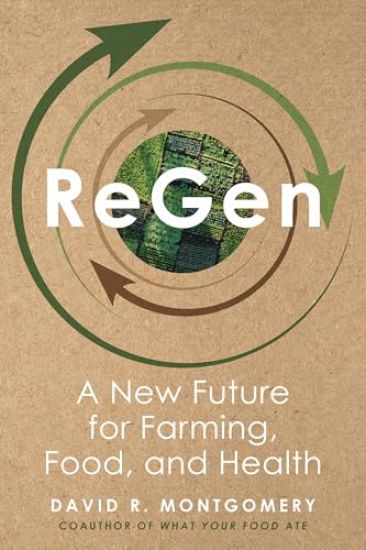
ReGen

ReGen

David R. Montgomery

WW NORTON CO
2026
sidottu
A century of conventional farming has left our planet with sick soil, accelerating the interlinked crises of food security, biodiversity loss, water pollution, and climate change. In ReGen, David R. Montgomery lays out a practical and productive vision for recovering soil health and safeguarding the future of food. The answer: soil-building regenerative farming. In exploring this much-needed turning point for agriculture, Montgomery marshals more than a decade of research, interviewing innovative farmers and seeing firsthand how they restored degraded farms around the world. ReGen breaks down common myths around conventional and organic farming, animal agriculture, and plant-based diets to frame ten policy recommendations for sustainably nourishing the world. As Montgomery shows, reducing tillage, laying off synthetic fertilizers and pesticides, growing a diversity of crops, and getting livestock back on the land can reverse centuries of soil degradation and harvest nutrient-dense food. Succinct, accessible, and urgent, ReGen points the way to a healthier, more resilient world.

What Your Food Ate

What Your Food Ate

David R. Montgomery; Anne Biklé

WW NORTON CO
2023
nidottu
We know that our diet influences our health. But is there more to the adage “you are what you eat?” Connecting the dots from agriculture to medicine, geologist David R. Montgomery and biologist Anne Biklé argue we overlook the other half of a healthy diet: how we grow our food. Journeying from research labs to the fields of regenerative farmers, they uncover scientific and historical evidence for how farming practices—so often disruptive to microbial partnerships—influence soil health and shape the types and amounts of health-promoting minerals, fats and phytochemicals in our crops, meat and dairy—and thus ourselves. Understanding these connections has profound implications for what we eat and how we grow it, now and in the future. A capstone work from lauded authors, What Your Food Ate is a story both sobering and inspiring: what’s good for the soil is good for us, too.
What Your Food Ate

What Your Food Ate

David R. Montgomery; Anne Biklé

WW NORTON CO
2022
sidottu
We know that our diet influences our health. But is there more to the adage “you are what you eat?” Connecting the dots from agriculture to medicine, geologist David R. Montgomery and biologist Anne Biklé argue we overlook the other half of a healthy diet: how we grow our food. Journeying from research labs to the fields of regenerative farmers, they uncover scientific and historical evidence for how farming practices—so often disruptive to microbial partnerships—influence soil health and shape the types and amounts of health-promoting minerals, fats and phytochemicals in our crops, meat and dairy—and thus ourselves. Understanding these connections has profound implications for what we eat and how we grow it, now and in the future. A capstone work from lauded authors, What Your Food Ate is a story both sobering and inspiring: what’s good for the soil is good for us, too.
Environmental Science and Sustainability

Environmental Science and Sustainability

Daniel J. Sherman; David R. Montgomery

WW Norton Co
2020
muu
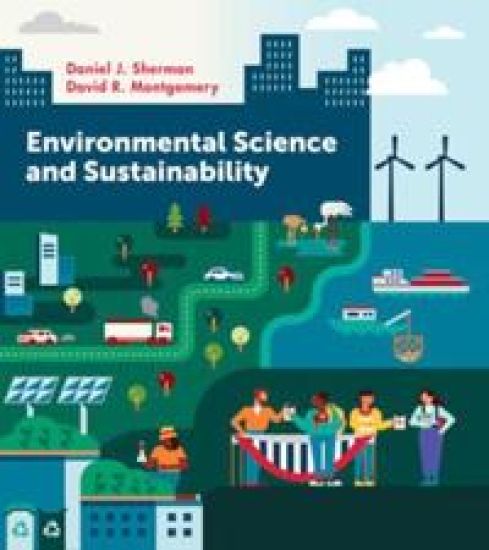
Environmental Science and Sustainability helps students discover their role in the environment and the impact of their choices. Authors David Montgomery and Daniel Sherman bring scientific and environmental policy expertise to a modern treatment of environmental science; in addition to teaching climate change, sustainability and resilience, they reveal how our personal decisions affect our planet and our lives.
Growing a Revolution

Growing a Revolution

David R. Montgomery

WW Norton Co
2018
nidottu
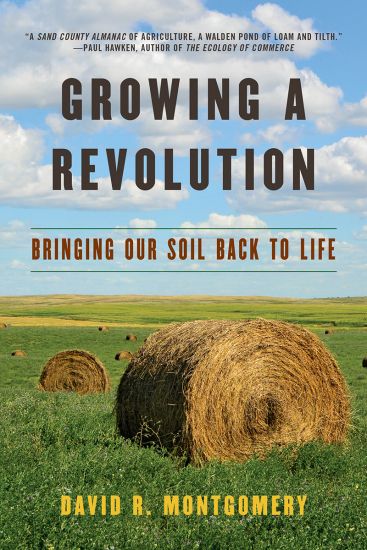
Since the dawn of agriculture, great civilizations have sunk into poverty after destroying their once fertile land. Today, few people realise how close we are to the same fate if we don’t take action. In Growing a Revolution, David R. Montgomery leads us on a journey through history and around the world to see how innovative farmers ditch the plough, mulch cover crops and adopt complex rotations to restore the soil, finding the foundation for the next agricultural revolution: a soil health revolution. Cutting through the debates about conventional versus organic agriculture, Montgomery shows how new regenerative methods heal damaged environments and improve farmers’ bottom lines. Ancient wisdom merges with modern science and Growing a Revolution shows how agriculture can help solve modern environmental woes.
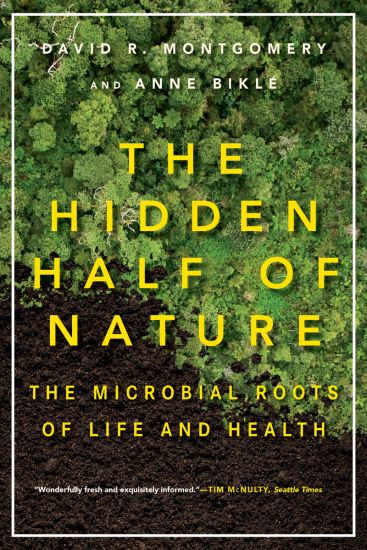
The Hidden Half of Nature

The Hidden Half of Nature

David R. Montgomery; Anne Biklé

WW Norton Co
2016
nidottu
Our world is built on an invisible one we are barely beginning to understand. In The Hidden Half of Nature, geologist David R. Montgomery and biologist Anne Biklé argue that Earth’s smallest creatures—microbes—could fundamentally change how we grow food, what we eat and how we practise medicine. The Hidden Half of Nature shares Montgomery and Biklé’s efforts to turn a barren patch of ground into a flourishing garden, and Biklé’s struggle with cancer. Taking readers deep into the science and history of agriculture and immunology, they show that microbes can provide powerful solutions to the problems plaguing modern agriculture as well as our own bodies. A spellbinding story, The Hidden Half of Nature reveals how we can restore fertility to the land and defeat chronic diseases.
The Rocks Don't Lie

The Rocks Don't Lie

David R. Montgomery

WW Norton Co
2013
nidottu
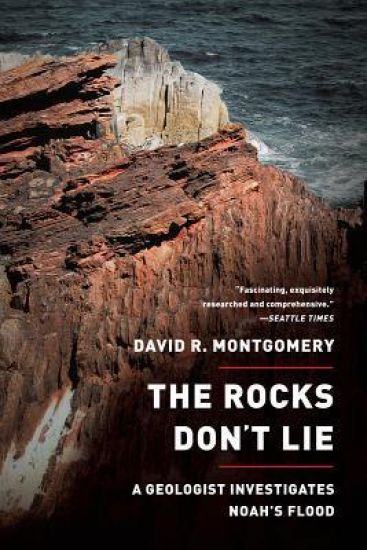
In Tibet, geologist David R. Montgomery heard a local story about a great flood that bore a striking similarity to Noah’s Flood. Intrigued, Montgomery began investigating the world’s flood stories and—drawing from historic works by theologians, natural philosophers, and scientists—discovered the counterintuitive role Noah’s Flood played in the development of both geology and creationism. Steno, the grandfather of geology, even invoked the Flood in laying geology’s founding principles based on his observations of northern Italian landscapes. Centuries later, the founders of modern creationism based their irrational view of a global flood on a perceptive critique of geology. With an explorer’s eye and a refreshing approach to both faith and science, Montgomery takes readers on a journey across landscapes and cultures. In the process we discover the illusive nature of truth, whether viewed through the lens of science or religion, and how it changed through history and continues changing, even today.
The Rocks Don't Lie

The Rocks Don't Lie

David R. Montgomery

WW Norton Co
2012
sidottu
In Tibet, geologist David R. Montgomery heard a local story about a great flood that bore a striking similarity to Noah’s Flood. Intrigued, Montgomery began investigating the world’s flood stories and—drawing from historic works by theologians, natural philosophers, and scientists—discovered the counterintuitive role Noah’s Flood played in the development of both geology and creationism. Steno, the grandfather of geology, even invoked the Flood in laying geology’s founding principles based on his observations of northern Italian landscapes. Centuries later, the founders of modern creationism based their irrational view of a global flood on a perceptive critique of geology. With an explorer’s eye and a refreshing approach to both faith and science, Montgomery takes readers on a journey across landscapes and cultures. In the process we discover the illusive nature of truth, whether viewed through the lens of science or religion, and how it changed through history and continues changing, even today.
Dirt

Dirt

David R. Montgomery

University of California Press
2012
pokkari
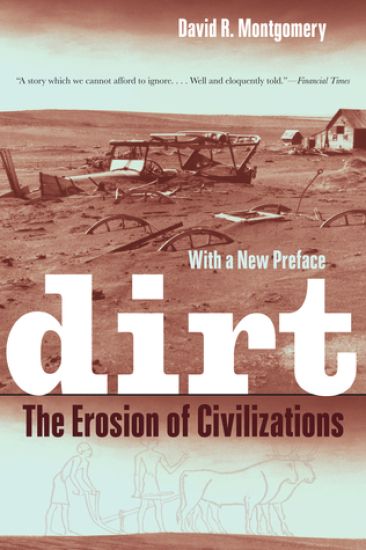
Dirt, soil, call it what you want - it's everywhere we go. It is the root of our existence, supporting our feet, our farms, and our cities. This fascinating yet disquieting book finds, however, that we are running out of dirt, and it's no laughing matter. An engaging natural and cultural history of soil that sweeps from ancient civilizations to modern times, "Dirt: The Erosion of Civilizations" explores the compelling idea that we are - and have long been - using up Earth's soil. Once bare of protective vegetation and exposed to wind and rain, cultivated soils erode bit by bit, slowly enough to be ignored in a single lifetime but fast enough over centuries to limit the lifespan of civilizations. A rich mix of history, archaeology and geology, "Dirt" traces the role of soil use and abuse in the history of Mesopotamia, Ancient Greece, the Roman Empire, China, European colonialism, Central America, and the American push westward. We see how soil has shaped us and we have shaped soil - as society after society has risen, prospered, and plowed through a natural endowment of fertile dirt. David R. Montgomery sees in the recent rise of organic and no-till farming the hope for a new agricultural revolution that might help us avoid the fate of previous civilizations.
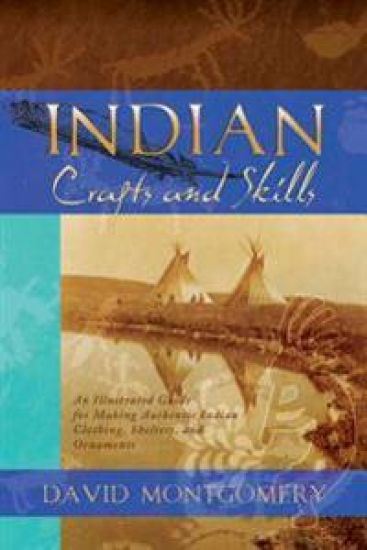
Indian Crafts and Skills, PB

Indian Crafts and Skills, PB

David R. Montgomery

Horizon Publishers Distributors
2007
nidottu
Author: ¬+ David R. Montgomery Description: Indian Crafts and Skills provides an excellent study of American Indian handiwork, both practical and artistic. This guide not only describes the skills Indians developed, but it also gives specific instructions for creating many kinds of Indian handiwork. The author, a skilled craftsman, explains the various types of shelters and tools used by the Indians, as well as weapons of warfare and hunting. Trapping and tracking are vividly described, complete with descriptions to help the reader identify almost every kind of wild animal track. Step-by-step, concise, easy-to-read instructions will tell you all you need to know about re-creating the Indian way of life. Not only will you explore the practical aspects of Indian livelihood, but you will also discover the beauty and joy of the Indian culture. This book is supplemented with a complete list of reference books and supply sources to help in creating the magic and mystery of Indian handiwork. Indian Crafts and Skills is an exciting book for people who wish to share in the heritage of skill and the artistry of the ancient inhabitants of America. ¬+ Product Details: Format: Paperback Print: Black & White Size: 6x9 Page Count: 216 ISBN: 9780882908410 Imprint: CFI Books Office Use: 2L53I
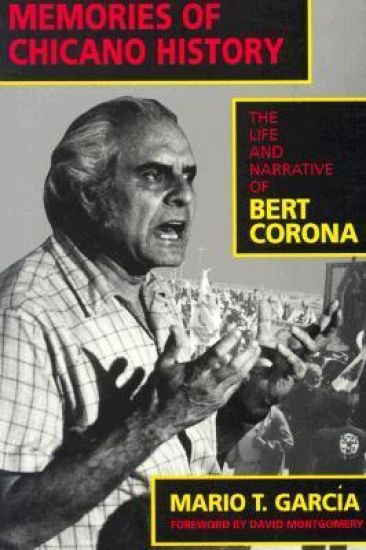
Memories of Chicano History

Memories of Chicano History

Mario T. García; David R. Montgomery

University of California Press
1994
pokkari
Who is Bert Corona? Though not readily identified by most Americans, nor indeed by many Mexican Americans, Corona is a man of enormous political commitment whose activism has spanned much of this century. Now his voice can be heard by the wide audience it deserves. In this landmark publication - the first autobiography by a major figure in Chicano history - Bert Corona relates his life story. Corona was born in El Paso in 1918. Inspired by his parents' participation in the Mexican Revolution, he dedicated his life to fighting economic and social injustice. An early labor organizer among ethnic communities in southern California, Corona has agitated for labor and civil rights since the 1940s. His efforts continue today in campaigns to organize undocumented immigrants. This book evolved from a three-year oral history project between Bert Corona and historian Mario T. Garcia. The result is a testimonio, a collaborative autobiography in which historical memories are preserved more through oral traditions than through written documents. Corona's story represents a collective memory of the Mexican-American community's struggle against discrimination and racism. His narration and Garcia's analysis together provide a journey into the Mexican-American world. Bert Corona's reflections offer us an invaluable glimpse at the lifework of a major grass-roots American leader. His story is further enriched by biographical sketches of others whose names have been little recorded during six decades of American labor history.