Kirjojen hintavertailu. Mukana 12 218 874 kirjaa ja 12 kauppaa.

Kirjailija

David R. Slavitt

Kirjat ja teokset yhdessä paikassa: 32 kirjaa, julkaisuja vuosilta 1969-2024, suosituimpien joukossa Vidui. Vertaile teosten hintoja ja tarkista saatavuus suomalaisista kirjakaupoista.

Mukana myös kirjoitusasut: David R Slavitt

32 kirjaa

Kirjojen julkaisuhaarukka 1969-2024.

Vidui

Vidui

David R Slavitt

Livingston Press at the University of West Al
2019
pokkari
Fiction. Jewish Studies. A version of Tolstoy's Death of Ivan Ilyich, except that it is contemporary, Jewish, and (therefore?) often funny. Tolstoy wasn't much given to humor, though it's a vital part of our visions of ourselves. Vidui is a Hebrew prayer to be recited when death is imminent, often translated as confession, but with the word meaning what it did for St. Augustine--a reckoning, a summing-up.
The Octaves

The Octaves

David R. Slavitt

Louisiana State University Press
2017
nidottu
An accomplished poet and a keen observer of the human condition, David Slavitt deploys both skills to create the whimsical, insightful, and witty poems of The Octaves. In these graceful but often blunt, slyly humorous eight-line poems, Slavitt notes the passing of decades and the loss that entails, the questions that arise when studying works from ancient Greece, and the paradoxes found in philosophy, art, and even the common cold.
Civil Wars

Civil Wars

David R. Slavitt

Louisiana State University Press
2013
nidottu
Praise for David R. Slavitt""Slavitt's touch is light, and he writes beautifully.... His satire is sharp, and he can be wildly funny.""- New York Times Book Review""One of America's most lucid and classical poets.... Slavitt's attitude is, as one would expect of a Hebrew as well as Greco-Latin classicist, sharply questioning as well as tragic. He is a poet one reads to know more.""- Booklist ""Slavitt is both smart and wise; he's as well known for his translations of the writers of antiquity as he is for his original work, both poetry and prose.... With a rich sense of humor, a bit of attitude, and a fascination with details, even minutiae, Slavitt tries his hand at new and curious measures and forms as well as seemingly free-range meditations- or, one might say, meanderings.""- Library JournalThe bravura of David R. Slavitt's first book of poems, published more than fifty years ago, continues to reverberate through his newest collection in a voice matured and roughened by age. Civil Wars conjures the mutterings of old men: meditations- despondent yet playfully witty and bold- on the meaning of life and death, the reasoning for human action or inaction, and misremembered memories. Nothing proves too lofty or too trifling for the poet's scrutiny. Slavitt's attention roves from the carnage inflicted by the Achaeans at Troy, to the performances of Borrah Minevich and the Harmonica Rascals, from meditations on Spinoza to the baseball of the New York Yankees. He considers with deliberation all of these subjects and deems them necessary to help create a spiritual connection in our lives. Slavitt encourages contemplation of the world and writing rather than acceptance of the thoughts of the critic, who ""comes, austere, a man of authority, / and offers to help"" but only dilutes the power of a poem. In this collection, Slavitt also includes translations of Greek, Hebrew, Provençal, French, and Old English poems, including a little-known piece by the mathematician Pierre de Fermat and the Old English epic poem ""The Battle of Maldon.
William Henry Harrison and Other Poems

William Henry Harrison and Other Poems

David R. Slavitt

Louisiana State University Press
2006
nidottu
The prodigiously imaginative mind and penetrating wit of David R. Slavitt are on full display in his newest collection of poetry that is perhaps his most engaging to date. The title poem begins by fooling around- ""With three names like that, it sounds as though his mother is calling him and she's really angry""- but then builds into a shrewd, thoughtful account of the life of the ninth U.S. president. A second long poem offers a fresh and very amusing appraisal of the practice of buying, writing, and sending souvenir postcards. In between this pair, there are shorter pieces impressive in their range and tone and theme (be sure to read ""Poem without Even One Word"") that dazzle in an already glittering body of work.Slavitt's poems can be playful, even silly, and then astonishingly convert levity into earnest urgency. Dark lines glint with the light of intelligence and mirth, even as artful puns and jokes reveal a rueful aspect. The poet gets older but his work is as graceful as ever, the lovable little boy signaling from inside the sometimes-cranky septuagenarian.
Change of Address

Change of Address

David R. Slavitt

Louisiana State University Press
2005
nidottu
A selection of recent work as well as the best from thirteen volumes of poetry published across four decades, Change of Address highlights the magnitude and scope of David Slavitt's poetic achievement. Meditating on both the quotidian and the sublime and ranging from brilliant satire to tender elegy, this retrospective collection brings into sharp relief Slavitt's intelligence, strength of voice, and ease in varied poetic forms. From the beginning of his career, Slavitt has displayed a rare technical virtuosity, and his verse has long confronted -- with urbanity and poise -- questions of love, grief, loss, and death. Though he is an exuberantly playful poet, his gamesmanship is earnest, toying wisely and bravely with the largest experiences of joy and heartbreak. And his gestures, while seemingly effortless, are carefully considered. The result is a body of poetry that haunts us as only the best literature can.A splendid capstone to Slavitt's copious output, Change of Address grants readers access to the extraordinary spectrum of his poetry in a single volume. ""body betrays, and even a mind can rebel,// but against what? What remains? Slowly but surely,// we are forced to suppose a soul, which serves us well,// while we serve it unfaithfully and impurely.// Infinitely regressive? Or merely shy?// Call it what watches, suffers, and remains// our subject/object, despite whatever pains// we may impose upon it, an inner I. Or is it a mere fiction that one may admit// as useful or even necessary? Its truth// is theoretical, a series, a trend,// almost algebraic: and one conjures it// from the motes that fly in the thin air of his youth// to create the granite block that marks his end.""- Soul
Falling from Silence

Falling from Silence

David R. Slavitt

Louisiana State University Press
2001
nidottu
Falling from Silence is the seventy-third book by David Slavitt, the prolific poet, novelist, translator, and editor. His amazing rate of production has only amplified and reigned the power of his art. This is the work of an accomplished veteran, a craftsman who laments the limitations of what his hard-earned talent can do in the face of age and loss. He turns to religion, reads the classics, and in moments of cheer that may not be mere mania, he horses around and fools with the words that have been his toys, but nothing helps- or, more accurately, nothing helps enough. It is nevertheless true that, as he says in Pen: ""The letters/ that danced in the light like gnats will suddenly light/ on some twig of a notion a held breath can make tremble/ in an unpredictable motion- like this pen's- / that no one would think could bear the fruit of truth."" Ranging in tone from devilish and droll to dignified and desolate, the poems here examine death and aging and bespeak the reassuring connection between the generations. In ""Angel of Death,"" the speaker remarkably balances grief and joy in describing the birth of his grandson, who bears the name of the poet's father: ""I hold him in my arms, the precious, breathing / weight, and admire the tiny hands / that will bear the weight one day of my coffïn's corner. . . . / That a Sam once more will carry me is a comfort.""Slavitt's wry wit, profound humanity, and agile intellect illuminate every page of Falling from Silence. In contrast to its title, it is, indeed, a resounding poetic triumph.
Epic and Epigram

Epic and Epigram

David R. Slavitt

Louisiana State University Press
1997
nidottu
David R. Slavitt's affectionate translations of epigrams by sixteenth-century Welsh academic John Owen transmute a careful selection of the writer's work into a vision of life, and in so doing bring Owen into conversation with the present day. Pithy, quick, favouring balance and economy over elaboration of style, the epigram is difficult in any language; that Owen mastered it in a language other than his own attests to his immense talent. Owen's small treasures go directly to the core: ""At your coming into the world, you gave a cry / of protest: why then protest that you must die?""Duessa's Version: A Dirge in Seven Canticles offers an irreverent and provocative recapitulation of The Faerie Queene, as told by Duessa, the mutable sorceress of Spenser's epic poem. Slavitt invests her with an unforgettable voice, outraged, profane, wise, and wickedly funny, and an exasperated contempt for the hero, Spenser's Redcrosse Knight. Duessa's retelling of The Faerie Queene becomes the scaffolding upon which Slavitt hangs his reflections on twentieth-century civilisation and culture that are indebted at once to intelligent observation, to Spenser, and to Borscht Belt comedy.Here are virtuoso performances by a poet with resources of wit and erudition that are nothing short of astonishing. These masterly translations are bound ""to get him, or at least his ghost, invited back.
A Gift

A Gift

David R. Slavitt

Louisiana State University Press
1996
nidottu
Epic poem, biography, literary criticism, historical romance, in A Gift, David Slavitt presents the fascinating life of Mozart's librettist, Lorenzo da Ponte, one of history's great unknowns, a man blessed and cursed by his conviction that within him lay the capacity for literary greatness.Educated in the church, the young da Ponte carouses in Venice, flees Italy, and finds himself in Austria, trying to establish a career in the theater. Under the tepid patronage of Joseph II of Austria, he turns out libretti for Salieri and learns the ""whorey tricks"" of writing on demand: ""Adaptation, translation, theft."" In lines that ring harrowingly true, Slavitt reflects the young man's self-doubts:The mad hopegrows like a mold on breadthat it's not so bad,is better than you think, but what that meansis only that your judgment is going too,you can't tell good from bad, are a fraud, impostorThen, on the brink of despair, he encounters Mozart, boorish, preferring crude farce to literary grace. Still, the partnership thrives with The Marriage of Figaro, Don Giovanni, Così fan tutte. But good luck is not to be trusted, and ""misfortune is not reliable either.""Despite his brilliant gift, success eludes da Ponte. Ever gullible, ever generous, he is destined to accumulate others' debts, to be at the wrong place at the wrong time, to be forgotten. Da Ponte lives out his life in the fledgling United States, plagued by sickness, debt, and the implacably looming specter of failure.Slavitt has created a lovely, heartening book, one that reminds us that untested faith is no faith at all. Alight with muted passion, A Gift chronicles a man's refusal to despair despite the growing awareness that nothing awaits but poverty and ignominy, ""that this ill-fitting garment is what the wardrobe holds."" Through Slavitt's lively imagination, we feel reverence rather than pity for the dogged nobility of da Ponte's struggle. Ultimately, Lorenzo da Ponte is a hero, his life a victory.
The Cliff

The Cliff

David R. Slavitt

Louisiana State University Press
1994
sidottu
John Smith is an imminent historian, secure in his well-paid position as an endowed professor at a major university. Any day he expects a favourable reply to his application for a residency at the Villa Sfrondata, a foundation-supported colony for artists and intellectuals on the banks of Italy's Lake Como, where he hopes to finish work on a study of MussoliniJohn Smith, the other John Smith, is a bitter and failed novelist, an adjunct assistant professor of English at the same university. Suffering from writer's block, ignored by his daughter, hounded by his former wife's attorney for back alimony, and about to lose his job, his prospects could not be dimmer, that is, until the day the Villa Sfrondata's invitation to the eminent historian is delivered to him by mistake. Before you know it, the down-and-out-how-can-things-get-worse-what-have-I-got-to-lose John Smith is in Italy, ensconced, imposter though he is, in a room at the centuries-old villa.But what had promised to be a blissful if ill-gotten idyll quickly sours. The villa is drafty and decaying, the staffs are surly and incompetent, and the other residents, among them a Nigerian economist, a Washington lawyer, a book designer, an art historian, and a feminist poet from California, are a motley and eccentric group whom Smith finds all but insufferable. He seizes every opportunity to deflate their overblown pretensions with a razor-sharp wit, which he possesses in astonishing abundance. At the same time, he must take care that some misstep does not reveal him as a fraud. His life is further complicated when one of the guest, the despised feminist poet, mysteriously disappears.After passing through what he calls ""a cloudy afternoon of the soul,"" including the very real fear that he will be implicated in the disappearance of the poet, Smith contrives in the end to amend his life and even to revive his all but abandoned literary career.This devastatingly satiric and funny book, David R. Slavitt's fiftieth, is a complicated burlesque that turns out to be a moving story of human frailty and spiritual rebirth. It is a feat of literary legerdemain that will dazzle even admirers of Slavitt's Turkish Delights, Lives of the Saints, Salazar Blinks, and The Hussar.
Crossroads

Crossroads

David R. Slavitt

Louisiana State University Press
1994
nidottu
In his twelfth book of original verse David R. Slavitt leads us to a crossroads where terror, loneliness, and despair are transfigured by love and art.Much of the collection centers on the poet's family history. In the title poem, Slavitt imagines the ""dour landscape"" of the Polish hamlet his grandparents left in search of a safer haven, at the same time that he reflects ruefully on the hazards of contemporary life in America:but what they abandoned is what I dream of now, asleep, while people who don't even know my name monitor consoles that show what zones in my house have been violated, what doors or windows opened, or motion sensors tripped by the cat or some intruder. On the street, cars are stolen and strippedby desperate men, wild children . . . Who can say?In another poem, he recalls his mother and his discovery only after her death, her murder, that the name she had been given was not Adele but Ida. As a young woman she had chosen to call herself something ""not too cute, but not too plain, not Ida."" And it is Adele he decides on for her grave marker, in deference to her whimsical and brave spirit.Not only family but also the worlds of art, music, and literature animate Slavitt's verses, from a consideration of the modes of salvation suggested by El Grenco's and Goy's paintings of Saint Peter to a reflection upon our common response to a discordantly tuned instrument, from echoes of Paradise Lost to witty and deft variations on Catullus.Throughout this collection David Slavitt's keen intelligence, wry humor, and deep compassion shine through. Crossroads allows us to observe a poet working at the peak of his powers.
Death Benefits

Death Benefits

David R. Slavitt

LOUISIANA STATE UNIVERSITY PRESS
2024
pokkari
Death Benefits deepens and extends David R. Slavitt's sublime, lyric confrontation with mortality and does so in a plainspoken and marvelously entertaining, conversational way. His poetry encourages us to recognize our own predicaments, as we see ourselves reflected as fellow sufferers entrapped by daily circumstance. In his new collection, Slavitt presents a sequence of one hundred sonnets, each one loaded with life, observation, and quicksilver wit. Readers will delight in looking on with wonder, at every turn of the page, to see how the poet will pull it off this time and what kind of linguistic magic he will use to fend off the mortal pain of getting through each day. His voice plays over the grid of the meter in utterly natural intonations. His music squarely faces the dark, but its enduring note is faith in common sense and the pleasure that poetry provides, rather than cynicism or despair.
Opus Posthumous and Other Poems

Opus Posthumous and Other Poems

David R. Slavitt

Louisiana State University Press
2021
pokkari
As he enters his sixth decade of publishing poetry, David R. Slavitt remains a determined wildcatter who ranges as far as he thinks necessary to drill for meaning, wherever and however he can get it. In his new collection, Slavitt traverses Africa, India, Israel, and the America in which he finds himself, complete with visits to zoos, casinos, baseball fields, and cemeteries, as he searches for clues from which he might learn at least a little. He translates verse from Yiddish and Provençal and offers commentaries on received wisdom, everyday events, and the vagaries of existence.With Opus Posthumous and Other Poems—the title is a joke, as he remains very much alive—Slavitt presents an august work possessed of a richness toward which he has worked throughout his long life. By turns wry, erudite, and dyspeptic, this new volume offers ample rewards of his maturity.
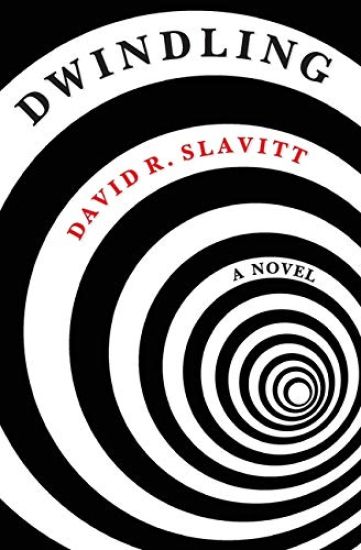
Dwindling

Dwindling

David R. Slavitt

New American Press
2020
nidottu
Dwindling is a virtuoso work by the author of more than a hundred acclaimed works of fiction, drama, poetry, and translation. In this remarkable novel, David R. Slavitt is simultaneously critic and novelist, ringmaster and clown. He begins his discursive performance with the Portuguese writer Fernando Pessoa and Pessoa's literary avatar Bernardo Soares, the mild-mannered accountant who Pessoa pretends wrote an infamous "factless biography" called The Book of Disquiet. As Slavitt continues to peel back layers of reality and imagination, fact and fabrication, we encounter the Nobel Prize-winning novelist Jos Saramago, the nihilism of the lobotomist Ant nio Egas Moniz, a wooden chicken, baseball games, good and evil, truth and lies, and the beating heart at the center of all our stories.
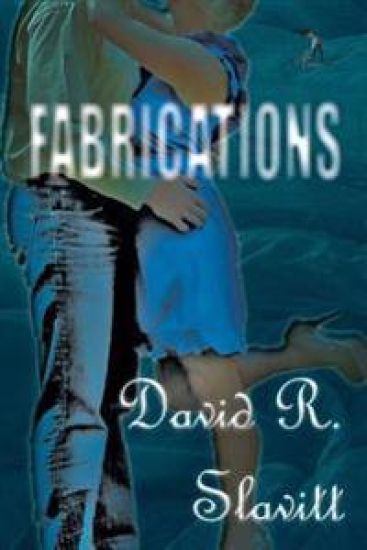
Fabrications

Fabrications

Anna Faktorovich; David R. Slavitt

Anaphora Literary Press
2015
nidottu
"Fabrications": is a spritely love story that in its odd way recapitulates Henry James's The Wings of the Dove. A young man and a young woman are in love but don't have the financial resources they know they will need not just to be comfortable but to avoid the resentment either one would feel about having made a great sacrifice for their lives together. In James's story, Merton Densher married a wealthy young woman at death's door so he can inherit the money he needs in order to marry Kate Croy. Here, it is Nadine, the starlet, who marries the elderly producer with heart troubles, so that she and Abner, the writer, can look forward to a life of comfort and ease. Slavitt notices what James didn't, or couldn't in 1902-that the situation is inherently comic. And he has written a novel that is sprightlier than its model but, because of its humor, closer to the texture of life.