
Kirjailija
David Ray Griffin
Kirjat ja teokset yhdessä paikassa: 31 kirjaa, julkaisuja vuosilta 1988-2023, suosituimpien joukossa Archetypal Process. Vertaile teosten hintoja ja tarkista saatavuus suomalaisista kirjakaupoista.
31 kirjaa
Kirjojen julkaisuhaarukka 1988-2023.
Reinhold Niebuhr and the Question of Global Democracy
David Ray Griffin
Process Century Press
2021
pokkari
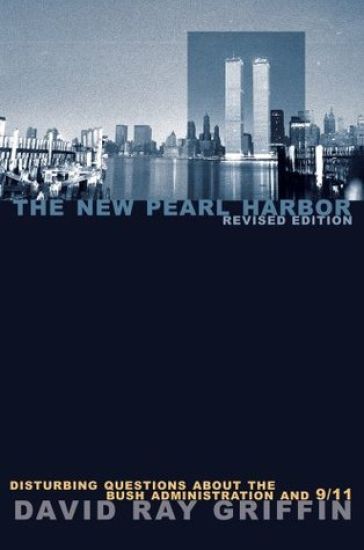
Disturbing questions about the Bush administrtion and 9/11. David Ray Griffin gathers stories from the mainstream press, reports from other countries, the work of researchers, and the contradictory words of members of the Bush administration themselves to present a case that there was official complicity in the attacks of 9/11.
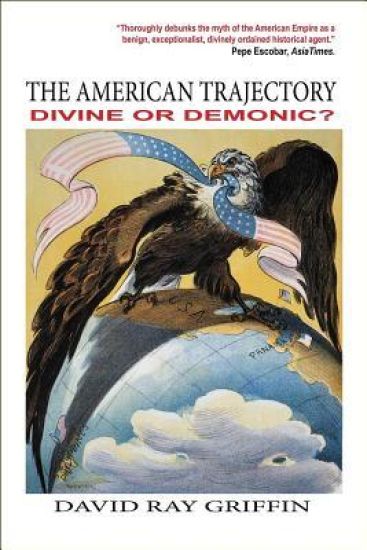
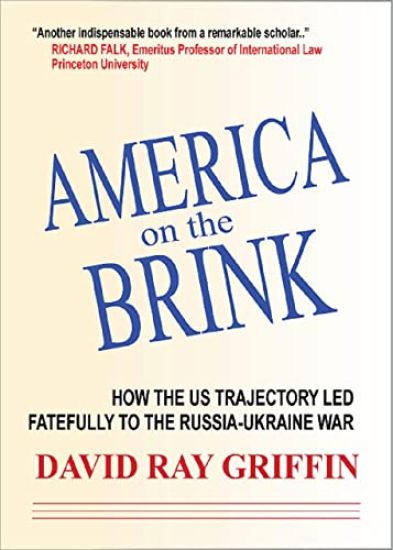
In The American Trajectory: Divine or Demonic? David Ray Griffin traces the trajectory of the American Empire from its founding through to the end of the 20th century. A prequel to Griffin's Bush and Cheney, this book demonstrates with many examples the falsity of the claim for American exceptionalism, a secular version of the old idea that America has been divinely founded and guided. The Introduction illustrates the claims for divine providence and American exceptionalism from George Washington to the book Exceptional by Dick and Liz Cheney. It then, after pointing out that the idea that America is an empire is no longer controversial, contrasts those who consider it benign with those who consider it malign. The remainder of the book supports the latter point of view. The American Trajectory contains many episodes that many readers will find surprising: The sinking of the Lusitania was anticipated, both by Churchill and Wilson, as a means of inducing America's entry into World War; The attack on Pearl Harbour was neither unprovoked nor a surprise; that during the Good War, the US government plotted and played politics with a view to becoming the dominant empire; There was no need to drop atomic bombs on Japan either to win the war or to save American lives; US decisions were central to the inability of the League of Nations and the United Nations to prevent war; The United States was more responsible than the Soviet Union for the Cold War; The Vietnam War was far from the only US military adventure during the Cold War that killed great numbers of civilians; The US government organized false flag attacks that deliberately killed Europeans; and America's military interventions after the dissolution of the Soviet Union taught some conservatives (such as Andrew Bacevich and Chalmers Johnson) that the US interventions during the Cold War were not primarily defensive. The conclusion deals with the question of how knowledge by citizens of how the American Empire has behaved could make America better and how America, which had long thought of itself as the Redeemer Nation, might redeem itself.
Many Americans have been embarrassed by the Trump presidency. But Americans should also be embarrassed by the fact that this country's foreign policy since 2001, which has resulted in millions of deaths, has been based on a complex deception. 9/11 Unmasked is the result of a six-year investigation by an international review panel, which has provided 51 points illustrating the problematic status of all the major claims in the official account of the 9/11 attacks, some of which are obviously false. Most dramatically, the official account of the destruction of the Twin Towers and World Trade Center 7 could not possibly be true, unless the laws of physics were suspended that day. But other claims made by the official account" "including the claims that the 9/11 planes were taken over by al-Qaeda hijackers, that one of those hijackers flew his plane into the Pentagon, and that passengers on the planes telephoned people on the ground" "are also demonstrably false.
Process Theology: On Postmodernism, Morality, Pluralism, Eschatology, and Demonic Evil
David Ray Griffin
RiverHouse LLC
2017
nidottu
Protecting Our Common, Sacred Home: Pope Francis and Process Thought
David Ray Griffin
RiverHouse LLC
2016
nidottu
As the world increasingly grapples with the consequences of global warming and its resulting climate changes, the urgency of the crisis has become inescapable, despite continuing corporate-led efforts at fomenting doubt and denial. Then in June 2015 there occurred a powerful intervention into the discussion by Pope Francis. His encyclical, Laudato Si' On the Care for Our Common Home, called for swift action on climate change. Almost simultaneously with the official publication of this encyclical, there was the biggest-ever conference of the movement known as process thought, based primarily on the philosophy of Alfred North Whitehead. This conference discussed various ways in which process thought could be helpful with respect to the global environmental crisis, especially climate change.In this book, David Ray Griffin undertakes to show why process thought--meaning process philosophy, theology, and social/economic thought--provides a natural and helpful context in which to expound and defend the ecological message in the pope's encyclical. In concise arguments, Griffin shows that the position of Whitehead-based process thought on climate change and related matters is remarkably similar to that of Pope Francis in the encyclical. This similarity is important for two reasons. First, as process thought and the pope's encyclical come out of very different traditions, the similarity allows each to add credibility to the other. Second, process thought, which embodies a long-standing type of philosophical theology that is consistent with today's best science and has been growing in influence, can be used to support dimensions of the pope's encyclical that might be rejected by secular minds.
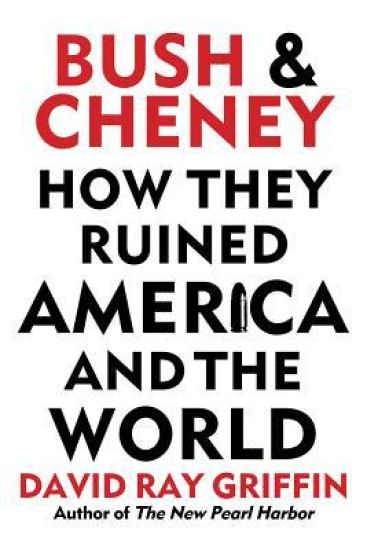
Was America’s response to the 9/11 attacks at the root of today’s instability and terror? The events of September 11, 2001, set off a chain of global crises and civil perils that have normalised a climate of fear and conflict. These include the disastrous effects of regime-change operations in Afghanistan, Iraq and Libya, the war on terror, the rise of ISIS, and the growing existential threats of ecological and nuclear holocaust. Looking back, it is clear that the story of 9/11 has been used to legitimise and manufacture support for disastrous policies. In Bush and Cheney, Griffin argues that ripple effects of 9/11 have become so destructive and dangerous that a national reckoning has become essential, in the words of William Rivers Pitt, to stop ‘the dominoes of September’ from continuing to fall.
God Exists But Gawd Does Not: From Evil to New Atheism to Fine-Tuning
David Ray Griffin
RiverHouse LLC
2016
nidottu
Panentheism and Scientific Naturalism: Rethinking Evil, Morality, Religious Experience, Religious Pluralism, and the Academic Study of Religion
David Ray Griffin
RiverHouse LLC
2014
nidottu
Can scientific naturalism, according to which there are no interruptions of the normal cause-effect relations, be compatible with divine activity, religious experience, and moral realism? Leading process philosopher of religion David Ray Griffin argues that panentheism provides the conceptual framework to overcome the perennial conflicts between these views, with important implications for religious pluralism, the problem of evil, and the academic study of religion. Panentheism-God as the soul of the world-explains how theism can be fully natural while still portraying God as distinct from and more than the world. Griffin's Panentheism and Scientific Naturalism is an essential source for philosophers of religion and others seeking to reconcile faith with science and Christianity with other religions.

WTC 7 och dess mystiska kollaps : varför den officiella rapporten om 11 september är ovetenskaplig och osann
David Ray Griffin
Alhambra
2010
nidottu
Klockan 17.20 på eftermiddagen den 11 september rasade byggnad 7 i World Trade Center, trots att det inte hade träffats av något plan och bara hade bränder på några få våningar. Anledningen till dess kollaps ansågs vara ett mysterium. I augusti 2008 lade NIST (National Institute of Standards and Technology) fram sin rapport om WTC 7, där man förklarar att skälet till kollapsen av World Trade Center 7 är inte längre ett mysterium och att vetenskapen står verkligen bakom det vi har hävdat. Genom att visa att ingetdera av deras påståenden är sanna demonstrerar David Ray Griffin att NIST har gjort sig skyldigt till den värsta sortens vetenskapliga falsarium: man fabricerar, förfuskar och ignorerar bevis. Han visar också att NIST:s rapport lämnar det centrala mysteriet olöst: Hur kunde en byggnad, skadad av brand inte sprängämnen rasa i fritt fall? DAVID RAY GRIFFIN har publicerat 35 böcker om filosofi, religion och politik. Hans senaste bok om 9/11 The New Pearl Harbor Revisited, blev vald av Publishers Weekly som Pick of the Week 2008.
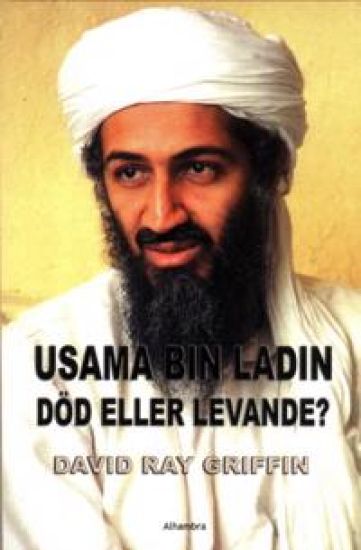
David Ray Griffins förra bok, The New Pearl Harbor Revisited, bestods en ära som bara tillkommer 51 böcker om året. Den 24 november 2008 utnämndes den till ?Pick of the Week?, av Publishers Weekly, en ansedd tidskrift som har väglett bokhandlare, bibliotekarier, bokagenter och utgivare i över 100 år. Förhandsberöm för denna bok, Usama bin Ladin: Död eller Levande? ?David Ray Griffin, en av Amerikas grundligaste och mest omdömesgilla analytiker, specialiserar sig på ämnen som ledande medier och de flesta politiker föredrar att ignorera. Ett trefaldigt leve för honom för att han nu tar upp frågan om huruvida Usama bin Ladin dog för några år sedan och därför inte borde vara något skäl för USA att fortsätta kriget i Afghanistan. Det finns starka krafter både i USA och bland några av dess allierade som otvivelaktigt vill ha en civilisationernas kamp. En del av dessa krafter kan mycket väl ha agerat i hemlighet tidigare och kanske ännu gör det för att skapa situationer, verkliga eller falska, som åstadkommer mer krigföring. Griffins nya bok med sina belägg för att ?budskapen från bin Ladin? kan ha fabricerats bör stimulera till en total omprövning av uppdraget i Afghanistan.? William Christison, f.d. hög CIA-tjänsteman ?Usama bin Ladin är världens mest kände terrorist. Men hur mycket av vad vi tror oss veta om honom är sant? David Griffin undersöker den frågan grundligare än någon tidigare författare. På grundval av framlagda belägg drar han slutsatsen att bin Ladin kan ha varit död sedan länge. Det betyder i så fall att en del tekniker i hemlighet fabricerat band för att hålla Usama bin Ladin vid liv i allmänhetens föreställningar.? Terrell E. Arnold, f.d. vicedirektör i US State Department Office of Counterterrorism, författare till A World Less Safe. ?Den här boken är en del av en växande samling faktaböcker som belyser den katastrofala klyftan mellan de som har makten, vilka gör som de vill, och de som har kunskap, vilka inte hörs? President Obama [måste] bryta sig ut ur sin slutna maktkrets för att ta del av den opartiska kunskap denna bok förmedlar?? Robert David Steele Vivas, f.d. spion, grundare av USMC Intelligence Centre, VD för OSS.net och VD för Earth Intelligence Network.
Motsägelser om 11 september : ett öppet brev till USA:s kongress och press
David Ray Griffin
Alhambra
2008
sidottu
David Ray Griffin är professor emeritus i religionsfilosofi och teologi vid Claremont School of Theology och Claremont Graduate University. Han har publicerat över 30 böcker, bl a Postmodern Politics for a Planet in Crisis, The New Pearl Harbor och Christian Faith and the Truth Behind 9/11: A Call to Reflection and Action. ?Oavsett vad man tror om vem som är ansvariga för 9/11-attackerna, behövs det åtminstone en noggrann, oberoende och fristående undersökning. I den här boken presenterar Griffin 25 relevanta frågor - motsägelser som kräver ärliga svar.?- Jim Hightower, författare till Simma mot strömmen ?David Ray Griffin, som här riktar sig speciellt till medlemmarna i Kongressen och till median, har framlagt de inte sällan otroliga men sanna detaljerna i 25 grundläggande motsägelser i Bushadministrationens rapport om 9/11. Denna bok, som baseras på noggrann forskning men är skriven i en flyhänt och lättläst stil, kullkastar helt uppfattningen att 9/11-kommissionens rapport presenterar en korrekt redogörelse för vad som hände den 11 september. Den visar fullständigt klart behovet av en ny undersökning.? - Bill Christison, f d CIA-tjänsteman
The mind-body problem, which Schopenhauer called the ""world-knot,"" has been a central problem for philosophy since the time of Descartes. Among realists--those who accept the reality of the physical world--the two dominant approaches have been dualism and materialism, but there is a growing consensus that, if we are ever to understand how mind and body are related, a radically new approach is required. David Ray Griffin develops a third form of realism, one that resolves the basic problem (common to dualism and materialism) of the continued acceptance of the Cartesian view of matter. In dialogue with various philosophers, including Dennett, Kim, McGinn, Nagel, Seager, Searle, and Strawson, Griffin shows that materialist physicalism is even more problematic than dualism. He proposes instead a panexperientialist physicalism grounded in the process philosophy of Alfred North Whitehead. Answering those who have rejected ""panpsychism"" as obviously absurd, Griffin argues compellingly that panexperientialism, by taking experience and spontaneity as fully natural, can finally provide a naturalistic account of the emergence of consciousness--an account that also does justice to the freedom we all suppose in practice. ""The panexperientialist approach is an important possible position on the mind-body problem, and Griffin does a great service in accessibly presenting its distinctive 'slant' on that problem. . . . This will remind the mainstream that there are alternatives, radical alternatives, that can present a reasoned case for themselves."" --William Seager, author of Metaphysics of Consciousness ""A major philosophical study relating Whitehead's philosophical position to one of the primary unresolved issues at the hear of the analytic agenda, the mind-body problem, this book has the potential to begin serious discourse across philosophical division on a topic central to philosophy."" --Donald W. Sherburne, editor of A Key to Whitehead's Process and Reality David Ray Griffin is codirector of the Center for Process Studies and Professor Emeritus of Philosophy of Religion at Claremont School of Theology and Claremont Graduate University. His previous books include Physics and the Ultimate Significance of Time (1986), The Reenchantment of Science (1988), and Founders of Constructive Postmodern Philosophy (1992).
Whitehead's Radically Different Postmodern Philosophy
David Ray Griffin
State University of New York Press
2008
pokkari
Examines the postmodern implications of Whitehead's metaphysical system.Postmodern philosophy is often dismissed as unintelligible, self-contradictory, and as a passing fad with no contribution to make to the problems faced by philosophers in our time. While this characterization may be true of the type of philosophy labeled postmodern in the 1980s and 1990s, David Ray Griffin argues that Alfred North Whitehead had formulated a radically different type of postmodern philosophy to which these criticisms do not apply. Griffin shows the power of Whitehead's philosophy in dealing with a range of contemporary issues-the mind-body relation, ecological ethics, truth as correspondence, the relation of time in physics to the (irreversible) time of our lives, and the reality of moral norms. He also defends a distinctive dimension of Whitehead's postmodernism, his theism, against various criticisms, including the charge that it is incompatible with relativity theory.
Whitehead's Radically Different Postmodern Philosophy
David Ray Griffin
State University of New York Press
2007
sidottu
Examines the postmodern implications of Whitehead's metaphysical system.Postmodern philosophy is often dismissed as unintelligible, self-contradictory, and as a passing fad with no contribution to make to the problems faced by philosophers in our time. While this characterization may be true of the type of philosophy labeled postmodern in the 1980s and 1990s, David Ray Griffin argues that Alfred North Whitehead had formulated a radically different type of postmodern philosophy to which these criticisms do not apply. Griffin shows the power of Whitehead's philosophy in dealing with a range of contemporary issues-the mind-body relation, ecological ethics, truth as correspondence, the relation of time in physics to the (irreversible) time of our lives, and the reality of moral norms. He also defends a distinctive dimension of Whitehead's postmodernism, his theism, against various criticisms, including the charge that it is incompatible with relativity theory.
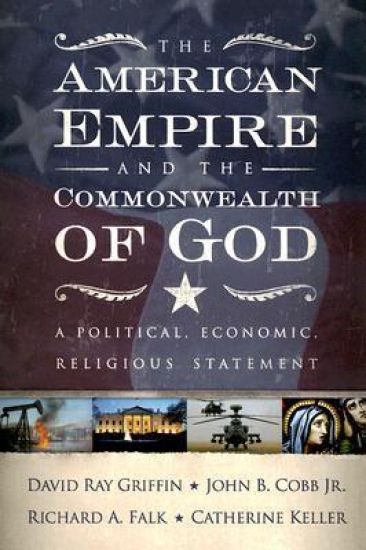
The American Empire and the Commonwealth of God
David Ray Griffin; John B. Cobb Jr.; Richard A. Falk; Catherine Keller
Westminster/John Knox Press,U.S.
2006
nidottu
In this book, four distinguished scholars level a powerful critique of the rapid expansion of the emerging American empire and its oppressive and destructive political, military, and economic policies. Arguing that a global Pax Americana is internationally disastrous, the authors demonstrate how America's imperialism inevitably leads to rampant irreversible ecological devastation, expanding military force for imperialistic purposes, and a grossly inequitable distribution of goods--all leading to the diminished well-being of human communities.
The baffling age-old question, if there is a good God, why is there evil in the world? has troubled ordinary people and great thinkers for centuries. God, Power, and Evil illuminates the issues by providing both a critical historical survey of theodicy as presented in the works of major Western philosophers and theologians--Plato, Aristotle, Plotinus, Augustine, Aquinas, Spinoza, Luther, Calvin, Leibniz, Barth, John Hick, James Ross, Fackenheim, Brunner, Berkeley, Albert Knudson, E. S. Brighton, and others--and a brilliant constructive statement of an understanding of theodicy written from the perspective of the process philosophical and theological thought inspired primarily by Alfred North Whitehead and Charles Hartshorne.
Furthering his contribution to the science and religion debate, David Ray Griffin draws upon the cosmology of Alfred North Whitehead and proposes a radical synthesis between two worldviews sometimes thought wholly incompatible. He argues that the traditions designated by the names "scientific naturalism" and "Christian faith" both embody a great truth--a truth of universal validity and importance--but that both of these truths have been distorted, fueling the conflict between the visions of the scientific and Christian communities. Griffin contends, however, that there is no inherent conflict between science, or even the kind of naturalism that it properly presupposes, and the Christian faith, understood in terms of the primary doctrines of the Christian good news.