Kirjojen hintavertailu. Mukana 12 657 676 kirjaa ja 12 kauppaa.

Kirjailija

David Rogers

Kirjat ja teokset yhdessä paikassa: 56 kirjaa, julkaisuja vuosilta 1999-2026, suosituimpien joukossa CHOMP! Charlie Carter and the Monster Pike. Vertaile teosten hintoja ja tarkista saatavuus suomalaisista kirjakaupoista.

56 kirjaa

Kirjojen julkaisuhaarukka 1999-2026.

Bullets, Bombs and Poison Gas

Bullets, Bombs and Poison Gas

David Rogers

Helion Company
2017
nidottu
Soldiers in the trenches were issued with four bullets a day unless they were either snipers or manned a machine gun. This does not seem like a lot of bullets. However, four bullets a day is 28 per week. Therefore a million soldiers need 28 million bullets per week. Of course there were a lot more than a million troops at the Western Front, so the number of required bullets was more than that! I realise that some of the soldiers performed vital service functions and some were busy on other duties, nevertheless there was a need for a lot of bullets. Supplying the troops was further complicated by the need to ensure that the many and varied shells were available for the howitzers, mortars and other artillery. Furthermore, there was a need for essential supplies of a whole manner of other materials, including rations for the troops and food for the many horses. Aircraft and tanks also started to make an appearance on the battlefield at this time which required supplies. Indeed there is one account of a horse drawn cart carrying aircraft fuel to the aeroplanes! The move to modern technology must have been interesting to watch. The static nature of battle was somewhat unique in the annals of warfare and led to the use of a narrow gauge railway network and a roll on roll off ferry port in Kent to speed deliveries along. Unfortunately, not all of the traffic was towards the trenches. Sadly there were many casualties who needed to return to the hospitals either in the field or back in Britain. The returning trains performed this vital function. Servicing this supply chain was a complex business, leading to some interesting issues.
Delighting in the Sabbath

Delighting in the Sabbath

David Rogers

Createspace Independent Publishing Platform
2017
nidottu
Why call the Sabbath a "delight"?If you have ever longed to honor the Seventh Day Sabbath established by the Creator but didn't know how to do so, you may have found yourself trying to find things to fill this set apart day or you simply followed manmade traditions but you never really felt fulfillment doing so. Perhaps guilt surrounded doing some of the activities or you simply did the very best you could without a true understanding of what the Father wants for us on this, His specially ordained day of "rest."Is there a certain way we are to keep the Sabbath holy? Can't we just do what we want as long as we don't work?Does it really matter to our Elohim what we do?In this anointed new teaching by David Rogers, learn what the Father desires for each of his children to do to honor the day He established as a gift to us, as He prepares to meet us personally and corporeally on the Sabbath.Understand what "resting" truly means as you come to appreciate and partake of the "delicate delights" of this holy, set apart day. You will understand and feel the warmth of the Almighty's love for us as we learn to set aside our own desires and walk as He calls us to do through Messiah. You will now and forever call Sabbath a true delight
100 Ideas for Secondary Teachers: Outstanding Geography Lessons
No matter what you teach, there is a 100 Ideas title for you!The 100 Ideas series offers teachers practical, easy-to-implement strategies and activities for the classroom. Each author is an expert in their field and is passionate about sharing best practice with their peers.Each title includes at least ten additional extra-creative Bonus Ideas that won't fail to inspire and engage all learners._______________Part of the best-selling 100 Ideas series, this book offers teachers quick and easy ways to engage students, convey complex knowledge, and build solid foundations for students' understanding and learning in geography. From 'doorstop geography' in around the school and local area, to 'migration and controversy' covering hot-topic global issues, each section and idea in this book provides effective, fun and memorable strategies for creating an outstanding learning experience for your students.
Britain'S Civilian Armies in World War II
Whilst the men and women of national service age were called to arms in the various Services, a parallel process was being undertaken involving the civilian population. This initiative relied in the main on volunteers accepting challenges and committing to undertake duties - some of which were far outside the comfort of their day jobs, or indeed, their previous experiences. This recruitment drive involved many more members of the population, including men and women of all ages (some with experience of the First World War), and young adults - some of which had only recently left school. Most, though not all, were provided with uniforms or badges of office - signalling to one and all that they were involved in the war effort. Of course, there were exceptions in that some young men were sent to the mining industry instead of undertaking their National Service in the armed forces, for example. In this case, there was no uniform per se; however, these so-called 'Bevin Boys' did undertake a vital role in the war effort whilst remaining civilians. Unlike the start of the First World War, the importance to the war effort of women was recognised from the outset. Some were asked to help in the manufacture of armaments, which is not covered here. Others were asked to work on the land, with timber, on the canals... the list of the varied roles was extensive. Another facet of this civilian recruitment drive focused on our young adults, for they were recognised for their potential military roles in the future. To that end, many boys (and in some cases, girls) were put into uniforms and trained in various activities.
Back to Life

Back to Life

David Rogers; Dr Grahame Brown

Ebury Publishing
2016
pokkari
Back pain is very hard (often impossible) to diagnose and to specify, hence heavy painkillers are thrown at people. This title offers a new way of dealing with back pain: understand the psychology of pain; debunk the myths; find the source of your pain; manage your pain - including all the emotions and anxiety that go with it; and more.
The Digital Transformation Playbook

The Digital Transformation Playbook

David Rogers

Columbia University Press
2016
sidottu
Rethink your business for the digital age. Every business begun before the Internet now faces the same challenge: How to transform to compete in a digital economy? Globally recognized digital expert David L. Rogers argues that digital transformation is not about updating your technology but about upgrading your strategic thinking. Based on Rogers's decade of research and teaching at Columbia Business School, and his consulting for businesses around the world, The Digital Transformation Playbook shows how pre-digital-era companies can reinvigorate their game plans and capture the new opportunities of the digital world. Rogers shows why traditional businesses need to rethink their underlying assumptions in five domains of strategy-customers, competition, data, innovation, and value. He reveals how to harness customer networks, platforms, big data, rapid experimentation, and disruptive business models-and how to integrate these into your existing business and organization. Rogers illustrates every strategy in this playbook with real-world case studies, from Google to GE, from Airbnb to the New York Times. With practical frameworks and nine step-by-step planning tools, he distills the lessons of today's greatest digital innovators and makes them usable for businesses at any stage. Many books offer advice for digital start-ups, but The Digital Transformation Playbook is the first complete treatment of how legacy businesses can transform to thrive in the digital age. It is an indispensable guide for executives looking to take their firms to the next stage of profitable growth.
Shadow Factories

Shadow Factories

David Rogers

Helion Company
2016
nidottu
Wartime is costly. Whilst the human cost is a burden which remains part of our every waking thoughts for many years after the end of the conflict, the physical cost, at least in some cases, is easier to deal with. Some, if not most of the physical cost of war, is spent in the constant supply of materials including armaments and machines to the troops– wherever they happen to be fighting. Of course the Services have always needed supplies of uniforms, equipment and machines. However, the rate of expansion of the Services and the rate of consumption of armaments increases dramatically in wartime. Pre-war traditional manufacturers simply could not cope with the sudden increase in orders. The only solution was to fabricate what was needed, in the Second World War at least, in additional factories. Shadow Factories was the term used to describe the use of third party factories and equipment used to manufacture components or complete units which were then passed on to the Services. These units could be anything from tanks, parts of aircraft to small pumps or rifles. The list was almost endless. Clearly it would be impossible to walk into the nearest engineering shop and expect them to manufacture heavy components. The railway yards were used to dealing with heavy blocks of metals and so they were approached to help with heavier vehicles such as tanks. Similarly the motor manufacturers were asked to help out with producing trucks and jeeps, for example. Of course this need necessitated formal contracts, and as far as possible discretion so that the German bombers could not locate and destroy vital sources of supplies. In some cases, such was the level of secrecy that components for aircraft for example, were fabricated in a number of shadow factories and assembled in a different location. In that way the exact engineering drawings could be more easily controlled and a stray bomb would only destroy part of the plans and planes. Where relevant, examples are provided from across the United Kingdom and cover an extensive range of machines and vehicles. Some details will also be provided concerning armament shells, some of which were made in one site and filled in other facilities. The government departments were certainly kept busy keeping track of it all!
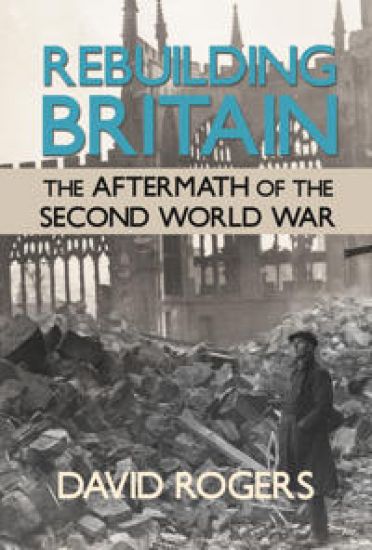
Rebuilding Britain

Rebuilding Britain

David Rogers

Helion Company
2016
nidottu
Undoubtedly, the Second World War was one of the darkest periods of history. With untold losses and countless with physical and mental scars, there was little to celebrate except the relief of closure. Yet what happened once the noise of the shelling subsided and the smoke dissipated? Certainly, late 1940s peacetime Britain was far from easy. Unemployment, power cuts, rationing, national service etc. were difficult to deal with, especially taking into account the physical nature of even some of the most basic tasks. As thoughts turned to recovery of such issues as the economy and unemployment, there was still a need to maintain the Services to such a level that they could provide a peacetime presence in the Rhine area, for example. Of course there were individuals conscripted during the war who were needed for some of the physical rebuilding programmes, the release of whom required national service from the next generation of young men and women. The coal industry needed its men back in the mines, for example. The call up to national service and demobilisation led to a steady stream of young men and women needing either training or an occupation in civvy street. This was at a time when Service numbers needed to be reduced! A difficult balancing act to say the least. The longer term issues of the day are still casting shadows– even now in the 21st century. For example, some of the concepts in the Education Act of 1944 are still used today and nationalisation of our transport infrastructure continues to be debated. Not forgetting of course that the Welfare State and the National Health Service were founded in the immediate post war years. Although undergoing evolution with time, the basic tenants of their foundation are as relevant today as they always were. There is one legacy of the Second World War which has mushroomed into a world-wide phenomenon, that of the Paralympic Games. Rehabilitating returning Service personnel with spinal injuries often led to little by way of an active life. The work of Sir Ludwig Guttmann FRS, that of using sport as a means of effecting rehabilitation, has led to treatments beyond expectations.
You Were Never Here: Brevet First Lieutenant David A. Hocroft, U.S. Army, Company A, 4th Artillery Regiment, December 1880-September 1884-B
The main fictional character, Lolotea, is based on Lozen, a historical Chihenne Chiricahua Apache skilled warrior and prophet, and younger sister of Victorio. Lozen and Lolotea team together using Lozen's documented mental ability to locate the enemy, the U.S. and Mexican Armies, destroying their homeland and cultures. Lolotea uses her incredible cunning in strategy, ruthless bravery, and fluency in English, French, Spanish and Apache with an acquired skill of Morse Code to act as an interpreter and scout for the U.S. Army while a secret agent for Geronimo and the rebellious Chiricahua. A chance encounter with Sergeant David A. Howcroft, an artillery battery commander changes her life, as well as his, forever as they become entangled in a tragic love story caught in the conflicting web of Native Americans protecting their families, property and customs against the "noble" directive of a young nation, "Manifest Destiny". The reader will experience historical battles that have been verified on the ground with descriptive clarity bringing surrealism to the years the Chiricahua evaded capture. Historical characters and events are juxtaposed with fictional ones in an intriguing manner that is graphically poignant and though provoking.
Music Matters

Music Matters

David Rogers

Createspace Independent Publishing Platform
2013
nidottu
The title 'Music matters' is really a shortened version of: 'Music does matter a great deal though not necessarily to everyone'. Some simply wish to have it as background for easy listening whereas for others it is the very stuff of life. The term Music is broad and covers many musical genres. No attempt will be made to examine folk music, the Viennese masterworks, funk, jazz, pop and the rest. Instead the work of the church musician is looked at in some detail. The twenty chapters are a mixed bag. Variety is of the essence. Coming upon unrelated topics unexpectedly is sometimes called serendipity which often provides an interesting and informative read.
Weather and Climate Resilience

Weather and Climate Resilience

David Rogers; Vladimir Tsirkunov

World Bank Publications
2013
nidottu
The importance of weather, climate, and water information is rising because of the need to minimize growing economic losses, serve more elaborate societal needs, and help countries adapt to climate change. Weather and Climate Resilience highlights recent World Bank experience and offers guidance on good practices that will help modernization efforts.Sustainable development hinges on the ability to copy with natural hazards and avoid the ensuing disasters that often befall a poorly prepared society. National Meteorological and Hydrological Services (NMHSs) play a vital role as a country's official source of warnings for weather hazards. Together with disasters managers, they play a critical part in reducing the adverse impact of hydrometeorological threats.In many developing countries, however, underinvestment in infrastructure and operations of NMHSs has left them with limited capacity to inform and warn. These countries are often disproportionately vulnerable to hydrometeorological hazards with many people living in areas exposed to floods, storm surges, extreme temperatures, drought and other dangers.Weather and Climate Resilience underscores the urgent need to strengthen NMHSs, especially in developing countries, and provides cost-benefit estimates of the return that countries can hope to achieve. It also offers a recommended approach that has been tested and implemented in Europe, Central and South Asia, and other countries.This book takes an important step in this process by increasing the awareness of development agencies and national governments of the role of World Meteorological Organization (WMO) and NMHSs in reducing the impact of hydrometeorological hazards and improving national economic performance. It synthesizes recent experiences of the World Bank and Global Facility for Disaster Reduction and Recovery (GFDRR), the WMO (World Meteorological Organization), and other development partners.
Mobile Security: A Guide for Users
Mobile device security is something that affects nearly every person in the world. Users are still however, crying out for good information on what they should do to prevent theft, protect their smartphone from attack and for advice that they can use practically to help themselves. This short book sets out to address that. Originally written as a whitepaper for the Police in the UK, it gives some of the history of mobile security and explains the efforts that have gone on behind the scenes in the mobile industry to help secure users. It also provides guidance for users to help protect themselves. The technology in mobile phones is constantly evolving and new threats and attacks emerge on a daily basis. Educating users is one of the most important and valuable things that can be done to help prevent harm. The author brings his extensive experience of the mobile industry and security development for devices to this book in order to help make users safer and more secure.
Top Secret

Top Secret

David Rogers

Helion Company
2013
nidottu
The early years of the 20th Century saw many advances in technology, for example aeroplanes were taking to the skies and wireless telegraphy becoming more widely available. There were also new war machines such as submarines and tanks. Additionally, pharmaceutical drugs and photographic components previously supplied from German manufacturers were no longer available during the Great War of 1914-18. Responding to some of the technical challenges, the Council of the Royal Society formed a War Committee, which in turn commissioned sub-committees concerned with chemistry, physics and engineering. Later, sub-committees relating to food, grain pests and the use of natural products were also initiated. For its part the Government formed the Admiralty Board of Invention and Research, the Munitions Invention Department, the Chemical Advisory Committee and others. Fellows of the Royal Society were key to both the Royal Society and Government initiatives. But who were the Fellows and why should they be of such strategic importance? Fellowship of the Royal Society is restricted, and requires individuals to be at the peak of their chosen scientific professions. All Fellows are experts in their chosen fields, which not only includes the traditional sciences, but also engineering and medicine. They are individuals whose scientific acumen, knowledge and skills are vital to solving seemingly intractable problems. It is no wonder that their expertise, opinions and help were sought during the dark days of the Great War. Remarkably, the exploits of the Fellows during the war are relatively unknown. Drawing from previously unpublished documents from the Royal Society archives deemed 'Secret' at the time, and wartime documents from the National Archives classified during the Great War as 'Subject to the Official Secrets Act', Top Secret: British Boffins in World War One brings a unique perspective on wartime inventions, research and developments from one of the darkest periods of 20th Century warfare. There are some remarkable examples of co-operation and effort often to tight deadlines using the utmost discretion. Some names may be familiar to you, some may not. All played their part, this is their story....
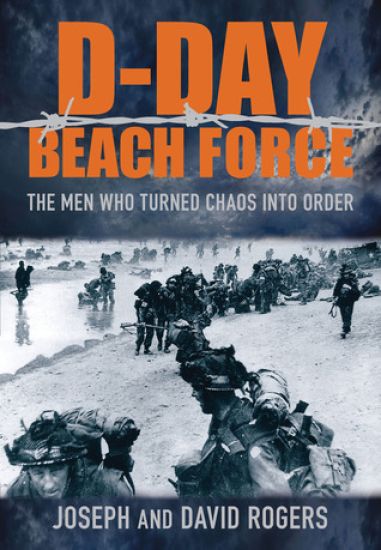
D-Day Beach Force

D-Day Beach Force

David Rogers; Joseph Rogers

The History Press Ltd
2012
nidottu
The British Beach Groups were a combined force of men stationed on the Normandy Beaches from the initial landing until the last unit was disbanded a few weeks after D-Day. They performed many vital roles during the assault, including: arranging and controlling the movement of all personnel and vehicles from landing craft to inland assembly areas; moving stores from ship’s holds to dumps in the beach maintenance areas; developing and organising the beaches and beach maintenance areas for defence, movement and administration, including the evacuation of casualties and the recovery vehicles; providing a beach signal organisation; organising the removal and repatriation of casualties, prisoners of war and salvaged equipment; creating dumps to hold the petrol, ammunition, rations etc. that were being landed; and establishing assembly areas for arriving personnel and their vehicles. This book explores how this often-forgotten unit were the first to arrive and the last to leave one of history’s greatest military operations and how their behind-the-scenes action saved lives and were essential for the success of the landings.