Kirjojen hintavertailu. Mukana 12 390 323 kirjaa ja 12 kauppaa.

Kirjailija

David Rooney

Kirjat ja teokset yhdessä paikassa: 22 kirjaa, julkaisuja vuosilta 1988-2026, suosituimpien joukossa About Time:a History of Civilization in Twelve Clocks. Vertaile teosten hintoja ja tarkista saatavuus suomalaisista kirjakaupoista.

22 kirjaa

Kirjojen julkaisuhaarukka 1988-2026.

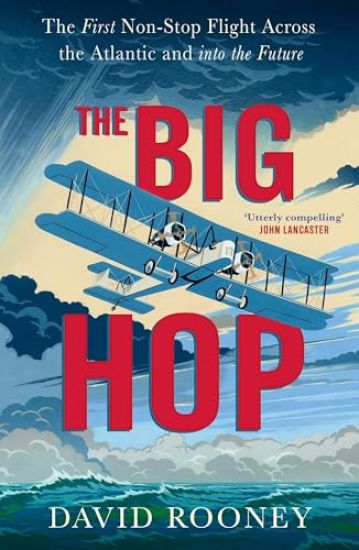
The Big Hop: The First Non-Stop Flight Across the Atlantic Ocean and Into the Future
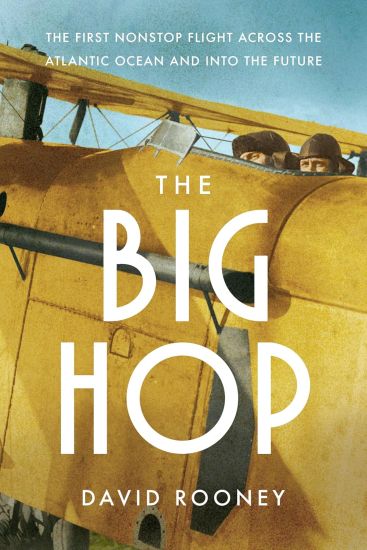
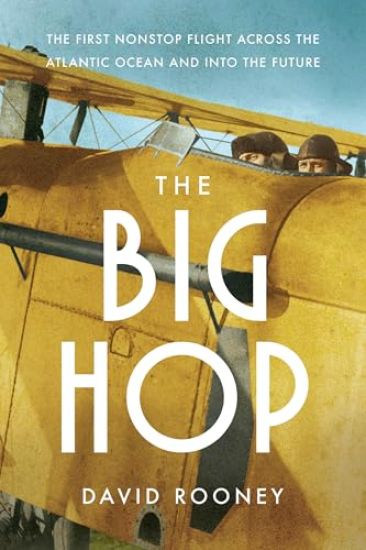
In 1919, in Newfoundland, four teams of aviators came from Britain to compete in "the Big Hop" an audacious race to be the first to fly, nonstop, across the Atlantic Ocean. One pair of competitors was forced to abandon the journey halfway, and two pairs never made it into the air. Only one team, after a death-defying sixteen-hour flight, made it to Ireland. Celebrated on both continents, the transatlantic contest offered a surge of inspiration--and a welcome distraction--to a public reeling from the Great War and the influenza pandemic. But the seven airmen who made the attempt were quickly forgotten, their achievement overshadowed by the solo Atlantic flights of Charles Lindbergh and Amelia Earhart years later. In The Big Hop, David Rooney grants the pioneering aviators of 1919 the spotlight they deserve. From Harry Hawker, the pilot who as a young man had watched Houdini fly over his native Australia, to the engineer Ted Brown, a US citizen who joined the Royal Flying Corps, Rooney traces the lives of the unassuming men who performed extraordinary acts in the sky. Mining evocative first-person accounts and aviation archives, Rooney also follows the participants' journeys: learning to fly on flimsy airplanes made of timber struts and varnished fabric; surviving the bloodiest war that Europe had ever yet seen; and battling faulty coolant systems, severe storms, and extreme fatigue while attempting the Atlantic. Rooney transports readers to the world in which the great contest took place, and traces the rise of aviation to its daredevil peak in the early decades of the twentieth century. Recounting a deeply moving adventure, The Big Hop explores why flights like these matter, and why we take to the skies.
The Big Hop

The Big Hop

David Rooney

Vintage Publishing
2026
pokkari
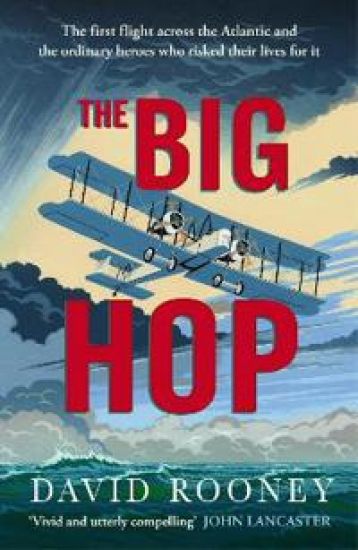
'David Rooney is an expert storyteller with a big heart, capturing not only the perils faced by the intrepid airmen who attempted the flight, but also their humanity' JOHN LANCASTER, author of The Great Air Race Newfoundland, 1919. Buffeted by winds, an unwieldy aircraft – made mainly from wood and stiff linen – struggled to take off from the North American island’s rocky slopes. Cramped side by side in its open cockpit were two men, freezing cold and barely able to move but resolute. They had a dream: to be the first in human history to fly, non-stop, across the Atlantic Ocean. But there were three other teams competing against them, and as the waves raged a few miles below, memories of wartime crashes resurfaced . . . It was just over six months since the ‘War to End all Wars’ had come to its close. Between them, the seven young aviators who would get off the ground for the transatlantic race had already defied death many times. Mining letters, diaries and evocative unpublished photographs, David Rooney’s deeply researched account of the audacious contest shows how it was the airmen’s thrilling wartime experiences that ultimately led them to the ‘Big Hop’, and brought old friends together for one more daring adventure. These Atlantic pioneers weren’t scientists or stoical upper-class officers. They were ordinary, working men, risking their lives in the name of progress. Unjustly forgotten by history, they nonetheless paved the way for the Earharts and Lindberghs who came after – and ushered in the age of global connection in which we live now. A non-stop flight across the Atlantic might seem routine today; almost a chore. But it is only possible because of those who went first.
The Big Hop

The Big Hop

David Rooney

Vintage Publishing
2025
sidottu
A non-stop flight across the Atlantic might seem routine today. But it is only possible because of those who went first.'Capturing not only the perils faced by the intrepid airmen who attempted the flight, but also their humanity' JOHN LANCASTER, author of The Great Air RaceNewfoundland, 1919. Buffeted by winds, an unwieldy aircraft struggled to take to the air. Cramped side by side in its open cockpit were two men, freezing cold, but resolute. They had a dream: to be the first in human history to fly, non-stop, across the Atlantic Ocean. But there were three other teams competing against them . . .The young aviators who would get off the ground had already defied death many times during World War One. David Rooney’s evocative and deeply researched account shows how it was their thrilling wartime experiences that ultimately led them to the ‘Big Hop’, and brought old friends together for one more daring adventure.These Atlantic pioneers weren’t scientists or upper-class officers. They were ordinary men, risking their lives in the name of progress, who ultimately ushered in the age of global connection in which we live now.'Fabulous ... Works on every level, balancing technological know-how with superb characterisation’ JACKY HYAMS, author of Hurricane: The Plane that Won the War
The Big Hop: The First Non-Stop Flight Across the Atlantic Ocean and Into the Future
In 1919, in Newfoundland, four teams of aviators came from Britain to compete in "the Big Hop" an audacious race to be the first to fly, nonstop, across the Atlantic Ocean. One pair of competitors was forced to abandon the journey halfway, and two pairs never made it into the air. Only one team, after a death-defying sixteen-hour flight, made it to Ireland.Celebrated on both continents, the transatlantic contest offered a surge of inspiration--and a welcome distraction--to a public reeling from the Great War and the influenza pandemic. But the seven airmen who made the attempt were quickly forgotten, their achievement overshadowed by the solo Atlantic flights of Charles Lindbergh and Amelia Earhart years later. In The Big Hop, David Rooney grants the pioneering aviators of 1919 the spotlight they deserve. From Harry Hawker, the pilot who as a young man had watched Houdini fly over his native Australia, to the engineer Ted Brown, a US citizen who joined the Royal Flying Corps, Rooney traces the lives of the unassuming men who performed extraordinary acts in the sky.Mining evocative first-person accounts and aviation archives, Rooney also follows the participants' journeys: learning to fly on flimsy airplanes made of timber struts and varnished fabric; surviving the bloodiest war that Europe had ever yet seen; and battling faulty coolant systems, severe storms, and extreme fatigue while attempting the Atlantic. Rooney transports readers to the world in which the great contest took place, and traces the rise of aviation to its daredevil peak in the early decades of the twentieth century. Recounting a deeply moving adventure, The Big Hop explores why flights like these matter, and why we take to the skies.
The Story of the Great Irish Famine
What lies beneath? The Great Irish Famine is a story that has been told for several generations and is the single most pivotal experience in modern Irish history. Now, acclaimed Irish illustrator David Rooney, through the evocative medium of scraperboard, scratches away at the detail of our shared history line by line, uncovering the collective memory that lies beneath us all.
A History of Guerilla Warfare

A History of Guerilla Warfare

David Rooney

PEN SWORD BOOKS LTD
2024
sidottu
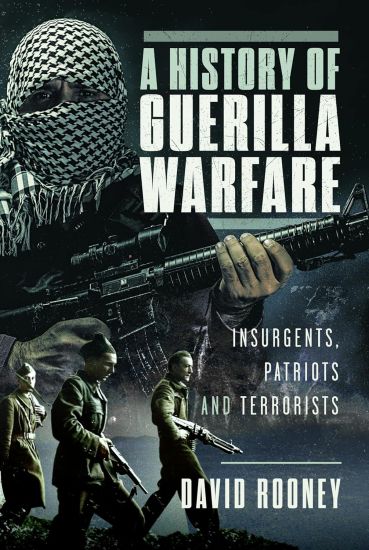
Throughout history, conflicts have given rise to unconventional forms of warfare, often propelled by personal, religious, tribal, or national ambitions. Historian David Rooney highlights pivotal figures such as the Maccabees, Napoleon, the Boer Wars, Michael Collins, Mao Tse Tung, T. E. Lawrence, Castro, Guevara, the Guerrillas of World War II, and Al Qaeda's Osama Bin Ladenhighlights pivotal figures such as the Maccabees, Napoleon, the Boer Wars, Michael Collins, Mao Tse Tung, T. E. Lawrence, Castro, Guevara, the Guerrillas of World War II, and Al Qaeda's Osama Bin Laden, illustrating the evolution of guerrilla theories. In today's era of swiftly forsaking convention and tradition for immediate results, the adoption of unconventional strategies by twenty-first-century warriors appears more prevalent than ever. Public discourse surrounding this topic is vibrant, and understanding its evolution is vital for increased awareness. Dive into the riveting exploration of unconventional warfare throughout the ages with historian David Rooney's insightful narrative. This compelling account not only unveils the trailblazing leaders who reshaped military strategies but also delves into the timely relevance of non-conventional approaches in today's fast-paced world. A must-read for those intrigued by the ever-shifting landscape of unconventional warfare and its profound impact on contemporary global dynamics
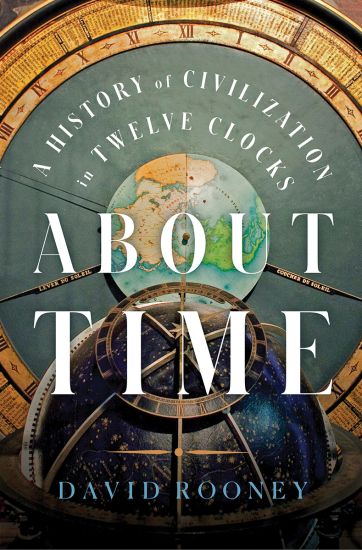
About Time: A History of Civilization in Twelve Clocks
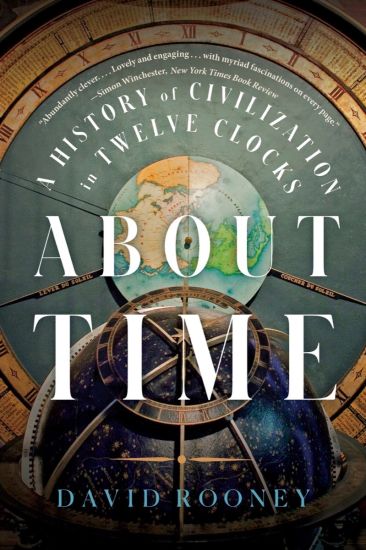
For thousands of years, people of all cultures have made and used clocks, from the city sundials of ancient Rome to the medieval water clocks of imperial China, hourglasses fomenting revolution in the Middle Ages, the Stock Exchange clock of Amsterdam in 1611, Enlightenment observatories in India, and the high-precision clocks circling the Earth on a fleet of GPS satellites that have been launched since 1978. Clocks have helped us navigate the world and build empires, and have even taken us to the brink of destruction. Elites have used them to wield power, make money, govern citizens, and control lives--and sometimes the people have used them to fight back.Through the stories of twelve clocks, About Time brings pivotal moments from the past vividly to life. Historian and lifelong clock enthusiast David Rooney takes us from the unveiling of al-Jazari's castle clock in 1206, in present-day Turkey; to the Cape of Good Hope observatory at the southern tip of Africa, where nineteenth-century British government astronomers moved the gears of empire with a time ball and a gun; to the burial of a plutonium clock now sealed beneath a public park in Osaka, where it will keep time for 5,000 years.Rooney shows, through these artifacts, how time has been imagined, politicized, and weaponized over the centuries--and how it might bring peace. Ultimately, he writes, the technical history of horology is only the start of the story. A history of clocks is a history of civilization.
Mad Mike

Mad Mike

David Rooney

PEN SWORD BOOKS LTD
2022
nidottu
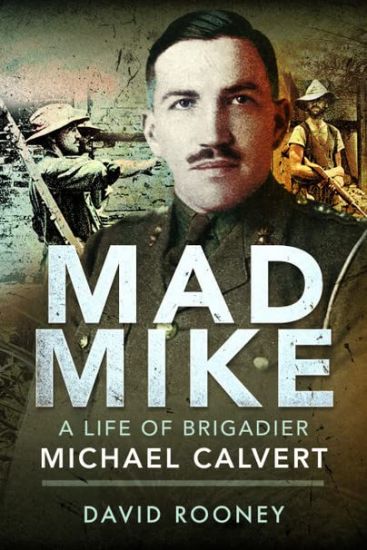
Anyone with the slightest knowledge of the Burma campaign of 1942-45 will have heard not only of General Orde Wingate and the Chindits, but also of Mad Mike Calvert, Wingates most intrepid column commander. His success in Burma, followed by his time with the SAS in Europe, had made Calvert one of the best known soldiers in the army. However, Calverts life was to fall apart when he was convicted of gross indecency and dismissed the service. To the end of his days he maintained that the whole thing was a setup and it is vastly to the credit of the industrious David Rooney that he was proved, as far as it is possible after such a great passage of time, that this was indeed the case. Nothing could ever remove the suffering unjustly inflicted on this very gallant soldier, however this book goes along way to clear his name, if not officially, at least in the public mind.
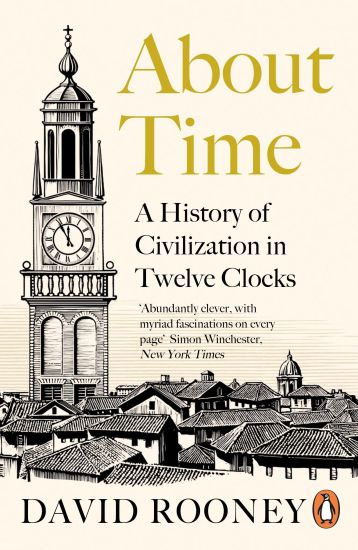
About Time

About Time

David Rooney

Penguin Books Ltd
2022
pokkari
'An utterly dazzling book, the best piece of history I have read for a long time' Jerry Brotton, author of A History of the World in Twelve Maps'Not merely an horologist's delight, but an ingenious meditation on the nature and symbolism of time-keeping itself' Richard HolmesThe measurement of time has always been essential to human civilization, from early Roman sundials to the advent of GPS. But while we have one eye on the time every day, are we aware of the power clocks have given governments, military leaders and business owners, and how they have shaped our lives and our world?In this spectacularly far-reaching book, David Rooney narrates a history of timekeeping and civilization in twelve concise chapters. Over their course, we meet the most epochal inventions in horological history, from medieval water clocks to Renaissance hourglasses, and from stock-exchange timestamps to satellites in Earth's orbit. We discover how clocks have helped people navigate the globe and build empires, but also, on occasion, taken us to the brink of destruction.This is the story of time, and the story of time is the story of us.
About Time: A History of Civilization in Twelve Clocks
For thousands of years, people of all cultures have made and used clocks, from the city sundials of ancient Rome to the medieval water clocks of imperial China, hourglasses fomenting revolution in the Middle Ages, the Stock Exchange clock of Amsterdam in 1611, Enlightenment observatories in India, and the high-precision clocks circling the Earth on a fleet of GPS satellites that have been launched since 1978. Clocks have helped us navigate the world and build empires, and have even taken us to the brink of destruction. Elites have used them to wield power, make money, govern citizens, and control lives--and sometimes the people have used them to fight back.Through the stories of twelve clocks, About Time brings pivotal moments from the past vividly to life. Historian and lifelong clock enthusiast David Rooney takes us from the unveiling of al-Jazari's castle clock in 1206, in present-day Turkey; to the Cape of Good Hope observatory at the southern tip of Africa, where nineteenth-century British government astronomers moved the gears of empire with a time ball and a gun; to the burial of a plutonium clock now sealed beneath a public park in Osaka, where it will keep time for 5,000 years.Rooney shows, through these artifacts, how time has been imagined, politicized, and weaponized over the centuries--and how it might bring peace. Ultimately, he writes, the technical history of horology is only the start of the story. A history of clocks is a history of civilization.
Spaces of Congestion and Traffic

Spaces of Congestion and Traffic

David Rooney

Routledge
2020
nidottu
This book provides a political history of urban traffic congestion in the twentieth century, and explores how and why experts from a range of professional disciplines have attempted to solve what they have called ‘the traffic problem’.It draws on case studies of historical traffic projects in London to trace the relationship among technologies, infrastructures, politics, and power on the capital’s congested streets. From the visions of urban planners to the concrete realities of engineers, and from the demands of traffic cops and economists to the new world of electronic surveillance, the book examines the political tensions embedded in the streets of our world cities. It also reveals the hand of capital in our traffic landscape.This book challenges conventional wisdom on urban traffic congestion, deploying a broad array of historical and material sources to tell a powerful account of how our cities work and why traffic remains such a problem. It is a welcome addition to literature on histories and geographies of urban mobility and will appeal to students and researchers in the fields of urban history, transport studies, historical geography, planning history, and the history of technology.
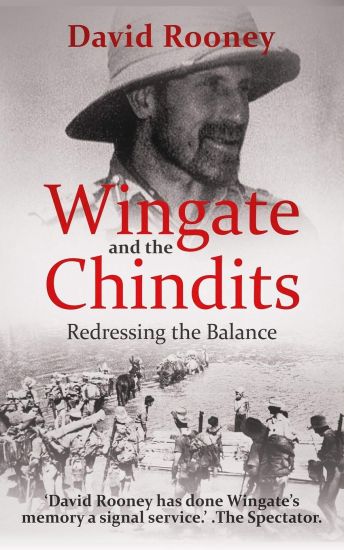
Wingate and the Chindits: Redressing the Balance

Wingate and the Chindits: Redressing the Balance

David Rooney

Independently Published
2019
nidottu
"David Rooney has done Wingate's memory a signal service." The Spectator.Major General Orde Wingate, DSO and two bars, who had created and personally led the Chindits, was killed in an air accident in 1944, at the height of the second Chindit campaign. General Slim joined the world-wide tributes paid to Wingate: but by 1956, to the distress of the Chindits, in his book Defeat Into Victory, Slim was dismissive of Wingate. What had happened to change Slim's mind so completely? David Rooney examines the life and achievements of a maverick soldier who inspired loyalty in some, hostility in others. Rooney's thoughtful and diligent research throws new light on Wingate's intriguing character, discovers why Slim changed his mind, and discloses details of the vendetta by which the military establishment, in the years after his death and following the viciously critical attack in the Official History, attempted to destroy Wingate's reputation.Rooney draws a balanced portrait of a military mind of daring originality, deserving of a better letter.This seminal work of military history is not only an insightful portrait of a unique British commander, but it is essential reading for anyone interested in the Second World War, special forces and the history of the British Army.Praise for Wingate and the Chindits.'His current book is, therefore, an exercise in setting the record straight... Rooney is presenting an unabashed case for the defense, and he does so with skill. Every student of the Burma campaign will want to examine this book carefully.' (Raymond Callahan, author of Churchill and His Generals and Burma 1942-45)'David Rooney's Wingate and the Chindits: Redressing the Balance ... attempts to redress the balance in favour of Wingate and to counter the unfair reputation he has acquired, in Rooney's view, among the military establishment.' (History Today)
Military Mavericks: Extraordinary Men of Battle

Military Mavericks: Extraordinary Men of Battle

David Rooney

Independently Published
2019
nidottu
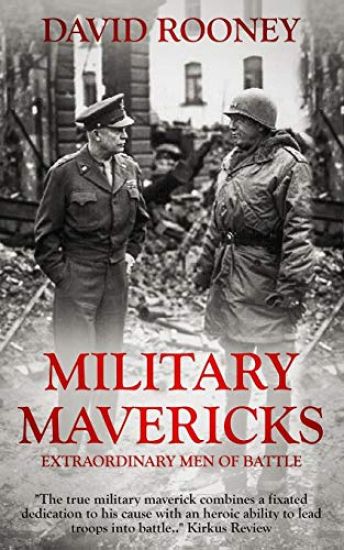
"The true military maverick combines a fixated dedication to his cause with an heroic ability to lead troops into battle." Kirkus ReviewPraise for David Rooney: "I thought I had read all the good books on the war in Burma, but this is the best yet." Brigadier Michael CalvertWhat makes a maverick? Is it simply an unorthodox mind? Or is it more than that - a flagrant disregard for convention? Is there a place for the maverick in a disciplined military hierarchy? If so, is the military maverick more likely to win, or lose, a battle?In an absorbing study of military figures who broke the rules, David Rooney shows how it is so often the maverick who turns challenges into opportunities - and snatches victory from the jaws of defeat.Here are the stories of twelve mavericks, from Alexander the Great and Stonewall Jackson, through Garibaldi and Lawrence of Arabia - and to Second World War commanders such as Heinz Guderian, Orde Wingate and George S. Patton.Each had flaws that would have brought down a lesser man, but each proved their bravery and leadership in battle. Full of insight into the nature of the military mind, this book reveals by how much, and how often, success in battle depends on the irreplaceable presence of just one man.
Burma Victory

Burma Victory

David Rooney

Independently Published
2019
nidottu
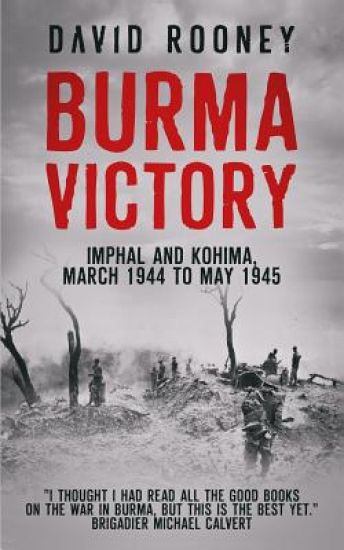
"I thought I had read all the good books on the war in Burma, but this is the best yet." Brigadier Michael CalvertThis is the story of the Fourteenth Army in Burma and the two great battles of Imphal and Kohima, in which the Japanese suffered the greatest defeat in their history.In 1942, following their lightning strikes on Pearl Harbor and Hong Kong, the Japanese invaded Burma.British forces were rapidly driven out, following a swift and total defeat. The British and Indian forces retaliated with limited offences and with mixed results. The Japanese advance continued, driving victoriously for the domination of Asia. Then came the Japanese attack of Imphal and Kohima, starting one of the most ferocious campaign of the war.Burma Victory portrays the "forgotten war" and the Allied fight to push the Japanese out of Burma.David Rooney - who saw war service in India and West Africa - tells the story of the campaigns of the new Fourteenth Army, under the command of the remarkable General Slim.Rooney captures the ebb and flow of battle and the roles of Wingate, Stilwell and the Chindits. In doing so, he offers a new analysis of the role of airpower and highlights the influence of British, American, Japanese and Chinese thinking at the highest level.Burma Victory is essential reading for anyone interested in General Slim, the Second World War and how defeat can be turned into victory.Recommended reading for fans of Max Hastings, Antony Beevor and Andrew Roberts.
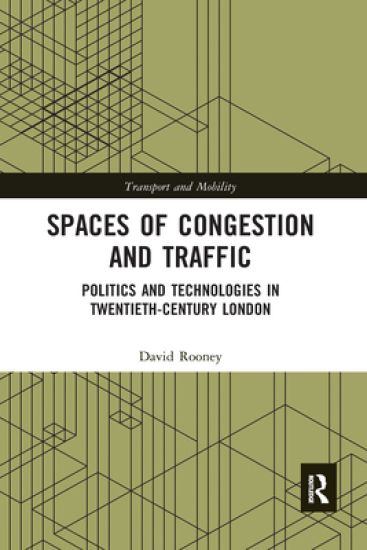
Spaces of Congestion and Traffic

Spaces of Congestion and Traffic

David Rooney

Routledge
2018
sidottu
This book provides a political history of urban traffic congestion in the twentieth century, and explores how and why experts from a range of professional disciplines have attempted to solve what they have called ‘the traffic problem’.It draws on case studies of historical traffic projects in London to trace the relationship among technologies, infrastructures, politics, and power on the capital’s congested streets. From the visions of urban planners to the concrete realities of engineers, and from the demands of traffic cops and economists to the new world of electronic surveillance, the book examines the political tensions embedded in the streets of our world cities. It also reveals the hand of capital in our traffic landscape.This book challenges conventional wisdom on urban traffic congestion, deploying a broad array of historical and material sources to tell a powerful account of how our cities work and why traffic remains such a problem. It is a welcome addition to literature on histories and geographies of urban mobility and will appeal to students and researchers in the fields of urban history, transport studies, historical geography, planning history, and the history of technology.
Wisdom and Management in the Knowledge Economy

Wisdom and Management in the Knowledge Economy

David Rooney; Bernard McKenna; Peter Liesch

Routledge
2014
nidottu
Today there are more technology, technologists, knowledge and experts than at any time in human history; but from a global perspective, it is difficult to argue that this accumulation of knowledge and technology has put the world in an unambiguously better position than it was in the past. Business is not getting any easier to do and major corporate collapses based on poor decisions, poor conduct, and poor judgement continue to occur. In public administration too, basic institutions and services (education, health, transport) seem to be continually undergoing “crises” of inadequate delivery and excessive pressure. Wisdom and Management in the Knowledge Economy explains why unwise managerial practice can happen in a world characterized by an excess of information and knowledge. Drawing on Aristotle’s idea of practical wisdom, the book develops a theory of social practice wisdom that addresses important social psychological and sociological dynamics that underpin wise management and organizations. As well as providing a detailed theory of social practice wisdom, this book considers practical issues in organizational communication, behavior, culture, change and knowledge as well as in HRM, leadership, ethics, strategy, international business, business education, and wisdom research. By introducing the notion of social practice wisdom, aspects of social structure, organizational culture, and organizational communication needed for wisdom to flourish are for the first time rendered visible in a way that opens new possibilities for wiser management, wiser organizations, and wisdom research.
Wisdom and Management in the Knowledge Economy

Wisdom and Management in the Knowledge Economy

David Rooney; Bernard McKenna; Peter Liesch

Routledge
2010
sidottu
Today there are more technology, technologists, knowledge and experts than at any time in human history; but from a global perspective, it is difficult to argue that this accumulation of knowledge and technology has put the world in an unambiguously better position than it was in the past. Business is not getting any easier to do and major corporate collapses based on poor decisions, poor conduct, and poor judgement continue to occur. In public administration too, basic institutions and services (education, health, transport) seem to be continually undergoing “crises” of inadequate delivery and excessive pressure. Wisdom and Management in the Knowledge Economy explains why unwise managerial practice can happen in a world characterized by an excess of information and knowledge. Drawing on Aristotle’s idea of practical wisdom, the book develops a theory of social practice wisdom that addresses important social psychological and sociological dynamics that underpin wise management and organizations. As well as providing a detailed theory of social practice wisdom, this book considers practical issues in organizational communication, behavior, culture, change and knowledge as well as in HRM, leadership, ethics, strategy, international business, business education, and wisdom research. By introducing the notion of social practice wisdom, aspects of social structure, organizational culture, and organizational communication needed for wisdom to flourish are for the first time rendered visible in a way that opens new possibilities for wiser management, wiser organizations, and wisdom research.