Kirjojen hintavertailu. Mukana 12 390 323 kirjaa ja 12 kauppaa.
Kirjailija
David Rosenberg
Kirjat ja teokset yhdessä paikassa: 36 kirjaa, julkaisuja vuosilta 1984-2024, suosituimpien joukossa Att leva med psykisk funktionsnedsättning : livssituation och effektiva vård- och stödinsatser. Vertaile teosten hintoja ja tarkista saatavuus suomalaisista kirjakaupoista.
This book documents how Israel emerged as one of the world's leading centers of high technology over the last three decades and the impact that it has had, or failed to have, on the wider economy and politics. Based on the study of start-up companies, the project attributes the rise of Israel's tech economy to its unique history, political system, and culture, and shows how those same factors have failed it in the quest to diversify its economy to make it more inclusive and equitable. This work will interest economists, political scientists, Israeli studies academics, investors, policy makers, journalists, and business readers.
Under very adverse conditions, Israel has become one of the world's leading knowledge economies. At a time when high technology, science, energy conservation, and medical research have become the hottest economic sector, these very things have emerged as the country's leading industry. Thus Israel's economy is uniquely based purely on technology and innovation. But the phenomenon has created two problems. The first is the sustainability of the model and the second is the social costs it has entailed in the form of income inequality and poverty. This book examines the rise of the country's knowledge economy and its consequences using macroeconomic data, interviews with industry players, academic studies, and media reports.
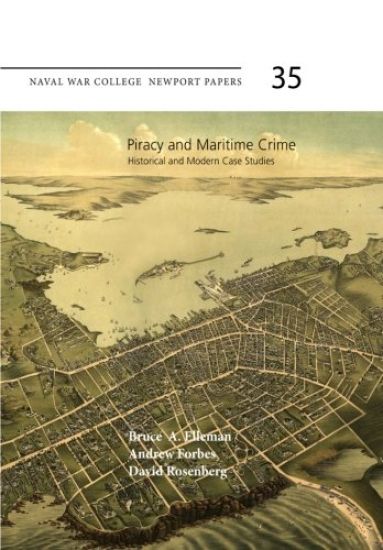
Piracy, or "robbery on the high seas," has existed for as long as people and commodities have traversed the oceans. The ancient Greeks, Romans, and Chinese all complained of it, and all created naval forces to fight pirates. The word "piracy" comes from the Latin pirate, "sea robber," and before that from the Greek pirates-"brigand," or "one who attacks." Piracy, however, has evolved over time, and this volume examines how piracy and ocean governance have changed from 1608, when the Dutch jurist Hugo Grotius published his Mare Liberum The Freedom of the Seas, or the Right Which Belongs to the Dutch to Take Part in the East Indian Trade]. As modern nation-states emerged from feudalism, privateering for both profit and war supplemented piracy at the margins of national sovereignty. More recently, an ocean enclosure movement under the aegis of the United Nations Convention on the Law of the Sea 1982 has granted states access to maritime resources far beyond their territorial limits. This in turn has given states more responsibility for providing safe passage through their waters. This book provides case studies on how these developments have changed the ways in which nations deal with piracy.Who owns the sea? Who has rights of navigation through its waters? Who is responsible for protecting ships at sea? For most of human history, the high seas were seen as vast, dangerous, uncharted regions filled with demons and dragons. In premodern times, the sea was a space apart from society. 'Amr ibn al-'As, a seventh-century Arab military leader who was responsible for the conquest of Egypt in 640, observed, "The sea is a boundless expanse, whereon great ships look tiny specks; nought but the heavens above and waters beneath; when calm, the sailor's heart is broken; when tempestuous, his senses reel. Trust it little, fear it much. Man at sea is an insect on a splinter, now engulfed, now scared to death."Throughout much of human history, therefore, it was assumed that the seas could not be owned, occupied, or governed. Fighting pirates at sea, although desirable, was beyond the jurisdiction and ability of most "states," whether feudal or national. As Grotius asserted in Mare Liberum, "The sea is common to all, because it is so limitless that it cannot become a possession of any one, and because it is adapted for the use of all, whether we consider it from the point of view of navigation or of fisheries." Grotius's view was developed to counter the activities of, in particular, Spain and Portugal, who were using their navies to assert their global maritime spheres of influence. The Dutch and other Europeans also wanted to pursue maritime interests. In this fashion, Grotius's "freedom of the seas" doctrine became a widely accepted foundation of modern international law.Historically, a state's sovereignty stopped at the shoreline. The world's oceans remained open-access, "common pool" resources. "How can a country control the seas?" asked the ruler of Macassar in the early seventeenth century, when the Dutch were attempting to monopolize the spice trade: "God has made the earth and the sea, has divided the earth among mankind and given the sea in common. It is a thing unheard of that anyone should be forbidden to sail the seas."
This volume is dedicated to the international artist Kata Legrady’s graphic work, through a selection of drawings, sketches and preparatory studies published on the occasion of the exhibition at Fondazione Mudima in Milan. Through the graphic work gathered in this volume, we discover her creative praxis which, according to Arturo Schwarz, “is determined, to a great extent, by her unconscious; the work has a playful dimension; she observes the world with a gaze that has conserved the innocence, curiosity and inventiveness of childhood”. Finally, an essay by Bazon Brock brings a deep insight on the importance of drawing in the practice of contemporary art.
As stock markets gyrate, Europe lurches from crisis to crisis, and recovery in the United States slows, the future of the North American economy is more uncertain than ever. Can individual entrepreneurship, corporate innovation, and governments create a new era of sustained economic growth? Or, will the ongoing financial crisis, political dysfunction in the United States, and the rise of emerging nations erode living standards in North America for the long term? In this edition of the Munk Debates -- Canada's premier international debate series -- Nobel Prize-winning economist Paul Krugman and Chief Economist and Strategist at Gluskin Sheff + Associates David Rosenberg square off against former director of President Obama’s National Economic Council Lawrence Summers and bestselling author Ian Bremmer to tackle the resolution: Be it resolved North America faces a Japan-style era of high unemployment and slow growth.
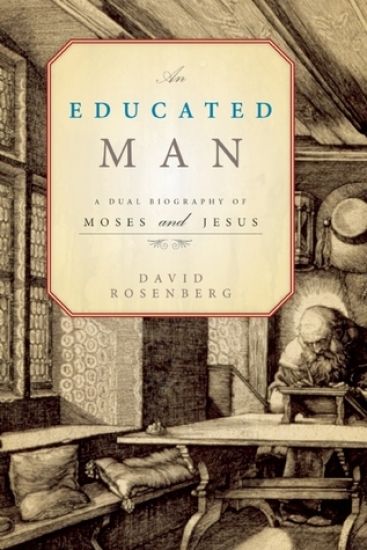
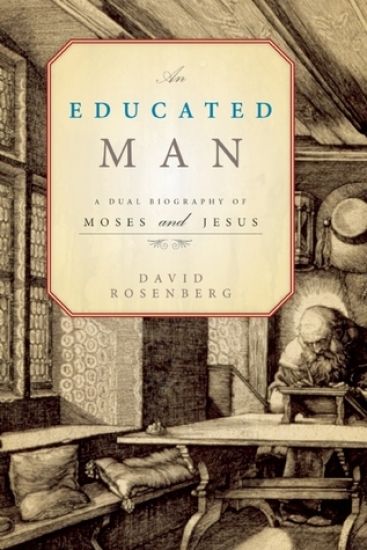
From this prize-winning and best-selling author comes a magisterial new project: a dual biography, weaving together the preeminent figures of Judeo-Christian civilization and overturning the conventional view of Moses and Jesus as humble men of faith. Rooting the biographies of Moses and Jesus in their historical contexts, Rosenberg reads their narratives as cultural rather than religious endeavors. He charges that both Moses and Jesus were  educated" men, steeped in the literature and scholarship of their day. There were no old or new testaments for them, but rather a long history of writing and writers. When professors quote Moses in university courses, or pastors quote Jesus in sermons, they routinely neglect to inform us that Jesus himself is quoting the Hebrew Bible, often in the manner that Moses once quoted Egyptian medical texts. The remarkable ability of both men to recall and transform a wide range of sources is overlooked. Where did they get these profound educations? Part biography, part critical analysis, An Educated Man further challenges us to envision what defines  an educated man or woman" today and how an understanding of our religious history is crucial to it.
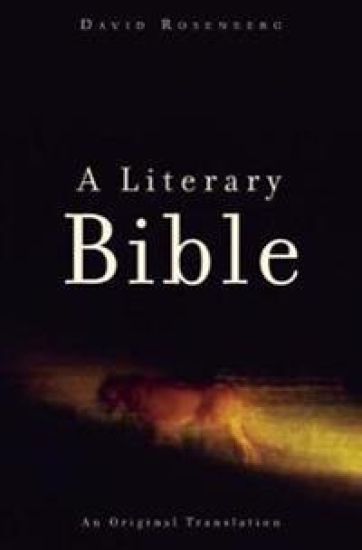
Whether rendering the Bible as wondrous or as strangely familiar, David Rosenberg's magisterial translation forces us to ask again and at last in literary terms why the Bible remains a crucial foundation of our culture.Until today, translators have presented a homogeneous Bible in uniform style even as the various books within it were written by different authors, in diverse genres and periods, stretching over many centuries. Now, Rosenberg's artful translation restores what has been left aside: the essence of imaginative creation in the Bible.In A Literary Bible, Rosenberg presents for the first time a synthesis of the literary aspects of the Hebrew Bible restoring a sense of the original authors and providing a literary revelation for the contemporary reader.Rosenberg himself brings a finely tuned ear to the original text. His penetrating scholarship allows the reader to encounter inspired biblical prose and verse, and to experience each book as if it were written for our time.
From this best-selling author comes a magisterial new project: a dual biography of the preeminent figures of Judeo-Christian civilization overturning conventional views of Moses and Jesus as humble men of faith. By reanimating the biographies of Moses and Jesus in their historical context, Rosenberg reads their narrative as a cultural rather than religious endeavor. He charges that Moses and Jesus were "educated" men, steeped in the literature and scholarship of their day. There were no old or new testaments for them, only a long history of writing and writers. When scholars and clergy quote Moses and Jesus, they routinely neglect to inform us that Jesus is quoting the Hebrew Bible, often in the manner that Moses quoted Egyptian medical texts. The remarkable ability of both men to recall and transform a wide range of sources is overlooked. Where did they get these profound educations? Part biography, part critical analysis, An Educated Man challenges us to envision what defines "an educated man or woman" today and how understanding religious history is crucial to it. Rosenberg offers a sympathetic approach to why we need Judeo-Christianity and ultimately convinces us that the life of Jesus is unthinkable without the model of Moses before him.
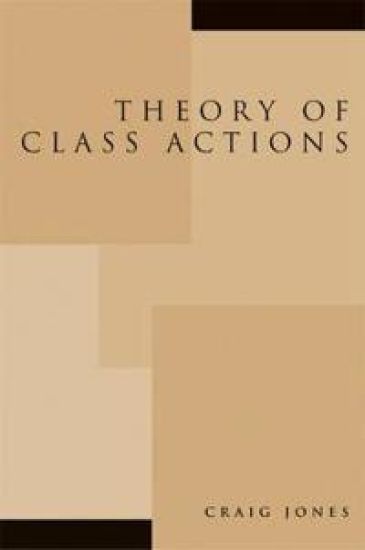
In "Theory of Class Actions," Craig Jones provides a complete and comprehensive defence of the use of the class action for the resolution of mass tort claims. He explodes several popular myths regarding class actions including the notions that they infringe on litigative autonomy, they "blackmail" defendants, they pay too much to lawyers, and they are only effective for numerous, low-value claims. Jones argues that legislatures', and more particularly courts', use of the device has been haphazard, unprincipled, and in large measure ineffective at realizing the principle functions of tort law--reduction of the overall costs of accidents through optimal deterrence and compensation. In response he sets out principles that might be followed by courts or legislatures in assessing the certification of proposed class actions, and in designing procedures to facilitate optimal realization of policy goals.
The Pocket Guide for the Textbook of Pharmacotherapy for Child and Adolescent Psychiatric Disorders is a quick reference guide for psychiatrists, therapists, social workers, and other practitioners to give them the bottom line about each group of medications. This guide, which discusses the use of psychiatric drugs in patients under 18, accompanies this author team's complete book, Textbook of Pharmacotherapy for Child and Adolescent Psychiatric Disorders. Clinical indications, dosage guidelines, side effects, common drug interactions and most tables are retained and updated in this new guide. In addition, the guide includes new research findings that have been published recently. This guide assumes the reader has done a complete assessment of all non-pharmacologic methods before treating the patient with medication. It also assumes that the reader has a working knowledge of the types of medication available for treating psychiatric illnesses. Once everything is taken into account, the practitioner can accurately determine the advantages and disadvantages of a specific treatment and relay that to the patient. Above all, the Pocket Guide for the Textbook of Pharmacotherapy for Child and Adolescent Psychiatric Disorders provides the reader with the practical guidelines to safely and effectively prescribe medication.
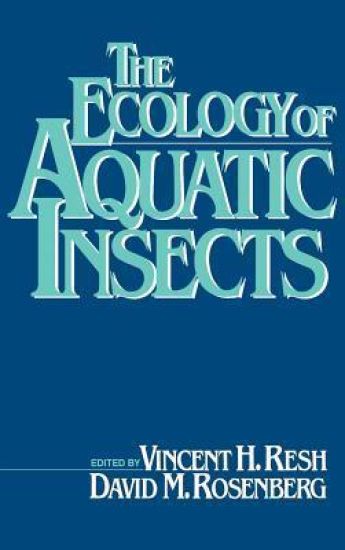
The internationally distinguished scientists contributing to this volume approach the subject from an ecological rather than taxonomic standpoint and present the basic biology of insects associated with streams, ponds, lakes, and marine habitats.