Kirjojen hintavertailu. Mukana 12 286 554 kirjaa ja 12 kauppaa.

Kirjailija

David Ross

Kirjat ja teokset yhdessä paikassa: 109 kirjaa, julkaisuja vuosilta 1988-2026, suosituimpien joukossa Challenging Assumptions Around Dementia. Vertaile teosten hintoja ja tarkista saatavuus suomalaisista kirjakaupoista.

109 kirjaa

Kirjojen julkaisuhaarukka 1988-2026.

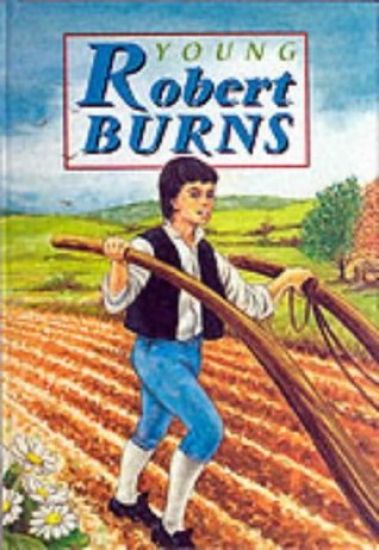
Young Robert Burns

Young Robert Burns

David Ross

Waverley Books Ltd
1999
sidottu
Robbie Burns, (Rabbie Burns) is called Scotland's favourite son, was a Scottish poet and lyricist. He is widely regarded as the national poet of Scotland and is celebrated worldwide. He is the best known of the poets who have written in the Scots language, and he is seen as a leader of the Romantic movement. After his death he was a source of inspiration to the founders of liberalism and socialism and today he is a cultural icon not just in Scotland. His work is taught in many countries such as Russia and Canada. He is regarded as one of the greatest Scots and known for world-famous songs such as Auld Lang Syne and the world-famous poem 'A Red, Red Rose' and 'Tam o' Shanter'.
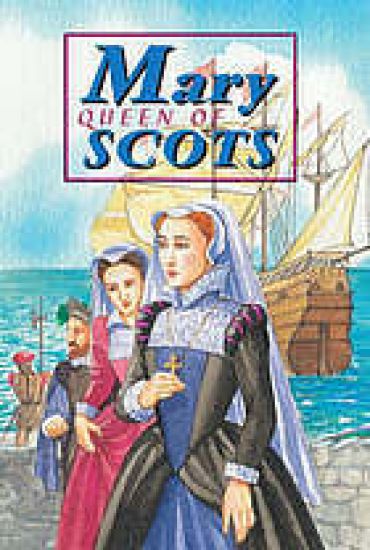
Mary Queen of Scots

Mary Queen of Scots

David Ross

Waverley Books
1998
sidottu
Mary, Queen of Scots is seen as one of Scotland's heroes. She was queen regnant of Scotland from 1542-1667 but was held in various houses for eighteen and a half years by Queen Elizabeth and beheaded for plotting to assassinate Elizabeth. This book explains simply and clearly who Mary was and her life and is told by her loyal servant, Mary Seton. She was born in 1542 and she died in 1587. She was queen regnant of Scotland from 1542 -1567. A queen regnant is a queen who rules in her own right. She was the only surviving legitimate child of King James V of Scotland, and was six days old when her father died and she acceded to the throne. She spent most of her childhood in France while Scotland was ruled by regents, and in 1558, she married the Dauphin of France, Francis. He ascended the French throne as King Francis II in 1559, and Mary briefly became queen consort of France, until his death on 5 December 1560. Widowed, Mary returned to Scotland, arriving in Leith on 19 August 1561. Four years later, she married her first cousin, Henry Stuart, Lord Darnley, but their union was unhappy. In February 1567, his residence was destroyed by an explosion, and Darnley was found murdered in the garden. James Hepburn, 4th Earl of Bothwell, was generally believed to have orchestrated Darnley's death, but he was acquitted of the charge in April 1567, and the following month he married Mary. Following an uprising against the couple, Mary was imprisoned in Loch Leven Castle. On 24 July 1567, she was forced to abdicate in favour of James, her one-year-old son by Darnley. After an unsuccessful attempt to regain the throne, she fled southwards seeking the protection of her first cousin once removed, Queen Elizabeth I of England. Mary had previously claimed Elizabeth's throne as her own and was considered the legitimate sovereign of England by many English Catholics, including participants in a rebellion known as the Rising of the North. Seen as a threat by Elizabeth, Mary was confined in various houses and after eighteen and a half years, she was found guilty of plotting to assassinate Elizabeth. She was beheaded.
A Tale of Two Cities

A Tale of Two Cities

David Ross; Charles Dickens

Samuel French Ltd
1993
pokkari
Dickens's novel of the French Revolution, A Tale of Two Cities, is brought vividly to life in this musical adaptation, which was successfully premi red at the Thameside Youth Theatre in January 1990.6 women, 13 men
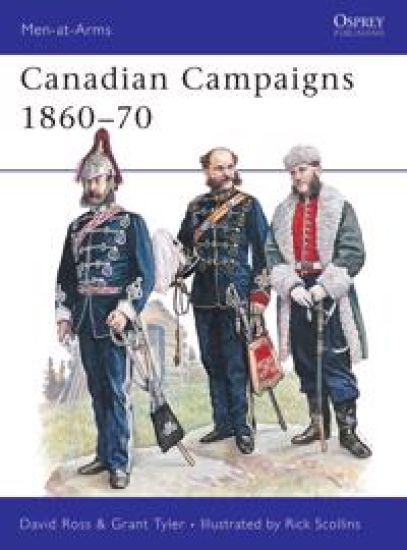
Canadian Campaigns 1860–70

Canadian Campaigns 1860–70

David Ross; Grant Tyler

Osprey Publishing
1992
nidottu
Although the US never attempted another invasion of British Canada after the war of 1812, during which British regulars and Canadian militia fought major pitched battles against US invaders, the threat lingered in the air for much of the 19th century. A series of brushfire wars disturbed Canada's peaceful development and in 1866 and again in 1870, large bodies of fanatical Irish-American volunteers attempted to stir up war between the two countries by mounting the "Fenian Raids" - serious campaigns, involving troops of brigade strength. In the later years of the decade, Louis Riel led two rebellions by Indians and French-Canadians which required considerable efforts to put them down. Significantly it was not British regulars but local Canadian troops that suppressed the last rebellion. This book details the rebel forces and the British force and fledgling Canadian army which fought them.
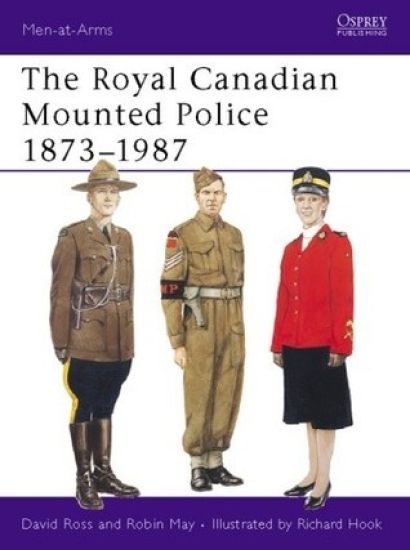
The Royal Canadian Mounted Police 1873–1987
In 1870, after completing a 1000-mile trek across Canada, Lt. W.F. Butler, an officer of the British Army, recommended the establishment of a 'well-equipped force from 100 to 150 men, one-third to be mounted' for the purpose of policing the North West; three years later, the North West Mounted Police was established. By the late 1980s, this force, now the Royal Canadian Mounted Police (RCMP), had grown to include 18,000 members, with a budget of more than $1 billion. This book outlines the origins and evolution of the RCMP, detailing its formation, tasks, uniforms and insignia.