Kirjojen hintavertailu. Mukana 12 595 353 kirjaa ja 12 kauppaa.

Kirjailija

David Salomon

Kirjat ja teokset yhdessä paikassa: 20 kirjaa, julkaisuja vuosilta 1995-2019, suosituimpien joukossa Curves and Surfaces for Computer Graphics. Vertaile teosten hintoja ja tarkista saatavuus suomalaisista kirjakaupoista.

20 kirjaa

Kirjojen julkaisuhaarukka 1995-2019.

Baby Panda Goes Wild!

Baby Panda Goes Wild!

David Salomon

Random House USA Children's Books
2019
nidottu
Panda lovers will enjoy following a giant panda and her cub in this engaging Science Reader from Step into Reading. This book's "up close and personal" photographs of pandas and its array of panda facts will captivate young nonfiction lovers. Readers will learn how one mother and her cub are being protected and raised in a Chinese panda reserve, which seeks to help this vulnerable species survive. In fact, ChiDa, the panda cub, is being prepared to be released into the wild--once she is old enough and has learned important life skills from her mom Young readers will find themselves rooting for ChiDa while decoding the simple text and gaining confidence in their reading. Great for proficient or reluctant readers. Step 3 Readers feature engaging characters in easy-to-follow plots about popular topics, for children who are ready to read on their own.
Penguins!

Penguins!

David Salomon

Random House Books for Young Readers
2017
pokkari
Penguin lovers and young nonfiction fans will enjoy following one penguin couple through their efforts to raise a family of chicks in this engaging Step into Reading Science Reader. Did you know that penguins have feathers but don't fly? Or that their eggs are guarded by the daddy penguin? Or that they dive in the ocean for their food? Discover these facts and more, along with brilliant photographs of chinstrap penguins in Antarctica, in this captivating nonfiction leveled reader. These unusual birds will waddle into children's hearts while they decode the simple text. Great for confident or reluctant readers. Step 2 Readers use basic vocabulary and short sentences to tell simple stories. For children who recognize familiar words and can sound out new words with help. -The Step into Reading series makes integrating reading into the curriculum so much easier. The nonfiction titles are perfect for teaching reading and language arts skills, while covering science and social studies content simultaneously - --Lisa Laake, second-grade Language Arts teacher
Computer Graphics and Geometric Modeling

Computer Graphics and Geometric Modeling

David Salomon

Springer-Verlag New York Inc.
2013
nidottu
Joseph-Louis Lagrange (1736-1813), one of the greatest mathematicians of the 18th century, made important contributions to the theory of numbers and to analytical and celestial mechanics. His most important work is Mecanique Analytique (1788), the textbook on which all subsequent work in this field is based. A contempo­ rary reader is surprised to find no diagrams or figures of any kind in this book on mechanics. This reflects one extreme approach to graphics, namely considering it unimportant or even detracting as a teaching tool and not using it. Today, of course, this approach is unthinkable. Graphics, especially computer graphics, is commonly used in texts, advertisements, and movies to illustrate concepts, to emphasize points being discussed, and to entertain. Our approach to graphics has been completely reversed since the days of La­ grange, and it seems that much of this change is due to the use of computers. Computer graphics today is a mature, successful, and growing field. Itis used by many people for many purposes and it is enjoyed by even more people. One criterion for the maturity of a field of study is its size. When a certain discipline becomes so big that no one person can keep all of it in their head, we say that that discipline has matured (or has come of age). This is what happened to computer graphics in the last decade or so.
Data Privacy and Security

Data Privacy and Security

David Salomon

Springer-Verlag New York Inc.
2011
nidottu
Covering classical cryptography, modern cryptography, and steganography, this volume details how data can be kept secure and private. Each topic is presented and explained by describing various methods, techniques, and algorithms. Moreover, there are numerous helpful examples to reinforce the reader's understanding and expertise with these techniques and methodologies. Features & Benefits: * Incorporates both data encryption and data hiding * Supplies a wealth of exercises and solutions to help readers readily understand the material * Presents information in an accessible, nonmathematical style * Concentrates on specific methodologies that readers can choose from and pursue, for their data-security needs and goals * Describes new topics, such as the advanced encryption standard (Rijndael), quantum cryptography, and elliptic-curve cryptography. The book, with its accessible style, is an essential companion for all security practitioners and professionals who need to understand and effectively use both information hiding and encryption to protect digital data and communications. It is also suitable for self-study in the areas of programming, software engineering, and security.
The Computer Graphics Manual

The Computer Graphics Manual

David Salomon

Springer London Ltd
2011
sidottu
This book presents a broad overview of computer graphics (CG), its history, and the hardware tools it employs. Covering a substantial number of concepts and algorithms, the text describes the techniques, approaches, and algorithms at the core of this field. Emphasis is placed on practical design and implementation, highlighting how graphics software works, and explaining how current CG can generate and display realistic-looking objects. The mathematics is non-rigorous, with the necessary mathematical background introduced in the Appendixes. Features: includes numerous figures, examples and solved exercises; discusses the key 2D and 3D transformations, and the main types of projections; presents an extensive selection of methods, algorithms, and techniques; examines advanced techniques in CG, including the nature and properties of light and color, graphics standards and file formats, and fractals; explores the principles of image compression; describes the important input/output graphics devices.
Curves and Surfaces for Computer Graphics

Curves and Surfaces for Computer Graphics

David Salomon

Springer-Verlag New York Inc.
2011
nidottu
Computer graphics is important in many areas including engineering design, architecture, education, and computer art and animation. This book examines a wide array of current methods used in creating real-looking objects in the computer, one of the main aims of computer graphics. Key features: - Good foundational mathematical introduction to curves and surfaces; no advanced math required - Topics organized by different interpolation/approximation techniques, each technique providing useful information about curves and surfaces - Exposition motivated by numerous examples and exercises sprinkled throughout, aiding the reader - Includes a gallery of color images, Mathematica code listings, and sections on curves and surfaces by refinement and on sweep surfaces - Web site maintained and updated by the author, providing readers with errata and auxiliary material This engaging text is geared to a broad and general readership of computer science/architecture engineers using computer graphics to design objects, programmers for computer gamemakers, applied mathematicians, and students majoring in computer graphics and its applications. It may be used in a classroom setting or as a general reference.
Coding for Data and Computer Communications

Coding for Data and Computer Communications

David Salomon

Springer-Verlag New York Inc.
2010
nidottu
Coding is a highly integral component of viable and efficient computer and data communications, yet the often heavy mathematics that form the basis of coding may prevent a serious and practical understanding of this important area.Coding for Data and Computer Communications avoids the complex mathematics, favoring the core concepts, principles, and methods of channel codes (for error correction), source codes (for compressing data), and secure codes (for data privacy). The most important approaches and techniques used to make the storage and transmission of information (data) fast, secure, and reliable are examined. This book is an essential resource for all security researchers and professionals who need to understand and effectively use coding employed in computers and data communications. Anchored by a clear, nonmathematical exposition, all the major topics, principles, and methods are presented in an accessible style suitable for professional specialists, nonspecialists, students, and individual self-study.
Foundations of Computer Security

Foundations of Computer Security

David Salomon

Springer London Ltd
2010
nidottu
Anyone with a computer has heard of viruses, had to deal with several, and has been struggling with spam, spyware, and disk crashes. This book is intended as a starting point for those familiar with basic concepts of computers and computations and who would like to extend their knowledge into the realm of computer and network security. Its comprehensive treatment of all the major areas of computer security aims to give readers a complete foundation in the field of Computer Security. Exercises are given throughout the book and are intended to strengthening the reader’s knowledge - answers are also provided. Written in a clear, easy to understand style, aimed towards advanced undergraduates and non-experts who want to know about the security problems confronting them everyday. The technical level of the book is low and requires no mathematics, and only a basic concept of computers and computations. Foundations of Computer Security will be an invaluable tool for students and professionals alike.
Elements of Computer Security

Elements of Computer Security

David Salomon

Springer London Ltd
2010
nidottu
As our society grows ever more reliant on computers, so it also becomes more vulnerable to computer crime. Cyber attacks have been plaguing computer users since the 1980s, and computer security experts are predicting that smart telephones and other mobile devices will also become the targets of cyber security threats in the future. Developed from the author's successful Springer guide to Foundations of Computer Security, this accessible textbook/reference is fully updated and enhanced with resources for students and tutors. Topics and features: examines the physical security of computer hardware, networks, and digital data; introduces the different forms of rogue software (or malware), discusses methods for preventing and defending against malware, and describes a selection of viruses, worms and Trojans in detail; investigates the important threats to network security, and explores the subjects of authentication, spyware, and identity theft; discusses issues of privacy and trust in the online world, including children's privacy and safety; includes appendices which discuss the definition, meaning, and history of the term hacker, introduce the language of "l33t Speak", and provide a detailed virus timeline; provides numerous exercises and examples throughout the text, in addition to a Glossary of terms used in the book; supplies additional resources at the associated website, http://www.DavidSalomon.name/, including an introduction to cryptography, and answers to the exercises. Clearly and engagingly written, this concise textbook is an ideal resource for undergraduate classes on computer security. The book is mostly non-mathematical, and is suitable for anyone familiar with the basic concepts of computers and computations.
Handbook of Data Compression

Handbook of Data Compression

David Salomon; Giovanni Motta

Springer London Ltd
2009
sidottu
Data compression is one of the most important fields and tools in modern computing. From archiving data, to CD-ROMs, and from coding theory to image analysis, many facets of modern computing rely upon data compression. This book provides a comprehensive reference for the many different types and methods of compression. Included are a detailed and helpful taxonomy, analysis of most common methods, and discussions on the use and comparative benefits of methods and description of "how to" use them. Detailed descriptions and explanations of the most well-known and frequently used compression methods are covered in a self-contained fashion, with an accessible style and technical level for specialists and non-specialists.
A Concise Introduction to Data Compression

A Concise Introduction to Data Compression

David Salomon

Springer London Ltd
2008
nidottu
Compression is an option naturally selected when faced with problems of high costs or restricted space. This book offers readers a succinct and reader-friendly foundation to the most important topics in the field of data compression. Divided into two parts, Part I presents the basic approaches to data compression and describes a few popular techniques and methods that are commonly used to compress data. The reader discovers essential concepts, such as variable-length and prefix codes, statistical distribution and run-length codes. Part II concentrates on advanced techniques, such as arithmetic coding, orthogonal transforms, subband transforms and Burrows-Wheeler transform. Complete and clear, this book will be the perfect reference for advanced undergraduates in computer science and requires a minimum of mathematics. An author-maintained website provides readers with errata and auxiliary material.
Variable-length Codes for Data Compression

Variable-length Codes for Data Compression

David Salomon

Springer London Ltd
2007
nidottu
Most data compression methods that are based on variable-length codes employ the Huffman or Golomb codes. However, there are a large number of less-known codes that have useful properties - such as those containing certain bit patterns, or which are robust - and these can be useful. This book brings this large set of codes to the attention of workers in the field and of students of computer science. David Salomon’s crystal clear style of writing and presentation, which has been familiar to readers for many years now allows easy access to the topic. Readers are only required to have a general familiarity with computer methods and essentially an understanding of the representation of data in bits and files. Computer scientists, electrical engineers and students majoring in computer science or electrical engineering will find this volume an invaluable resource, as will those readers in various physical sciences and mathematics.
Transformations and Projections in Computer Graphics
It is probably a coincidence that the three main terms discussed in this book, namely transformations, projections,and perspective, are ambiguous. Here is what the dict- nary has to say about these terms. Transformation (a) The act or an instance of transforming. (b) The state of being transformed. A marked change, as in appearance or character, usually for the better. Mathematical transformation. (a) Replacing a variable in an expression by its value. (b) Mapping a mathematical space onto another or onto itself. In geometry. Moving, rotating, re?ecting, or otherwise systematically deforming a geometric ?gure (discussed in this book). In linguistics. (a) A rule to convert a syntactic form into another. (b) A sentence or sentential form derived by such a rule; a transform. In genetics. (a) The change undergone by a cell upon infection by a cancer-causing virus. (b) The alteration of a bacterial cell caused by the transfer of DNA from another bacterial cell, especially a pathogen. Projection The act of projecting or the condition of being projected. (a) An object or part thereof that extends outward. (b) Spiky projections on top of a fence. (c) A projection of land along the coast. A prediction or an estimate of a future situation, based on current data or trends. (a) The process of projecting a recorded image onto a viewing surface. (b) An image so projected.
Foundations of Computer Security

Foundations of Computer Security

David Salomon

Springer London Ltd
2005
sidottu
Anyone with a computer has heard of viruses, had to deal with several, and has been struggling with spam, spyware, and disk crashes. This book is intended as a starting point for those familiar with basic concepts of computers and computations and who would like to extend their knowledge into the realm of computer and network security. Its comprehensive treatment of all the major areas of computer security aims to give readers a complete foundation in the field of Computer Security. Exercises are given throughout the book and are intended to strengthening the reader’s knowledge - answers are also provided. Written in a clear, easy to understand style, aimed towards advanced undergraduates and non-experts who want to know about the security problems confronting them everyday. The technical level of the book is low and requires no mathematics, and only a basic concept of computers and computations. Foundations of Computer Security will be an invaluable tool for students and professionals alike.
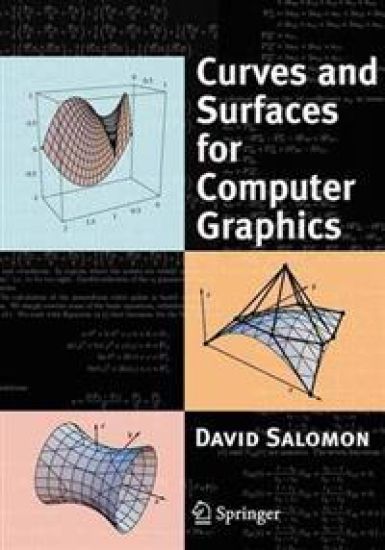
Curves and Surfaces for Computer Graphics

Curves and Surfaces for Computer Graphics

David Salomon

Springer-Verlag New York Inc.
2005
sidottu
Computer graphics is important in many areas including engineering design, architecture, education, and computer art and animation. This book examines a wide array of current methods used in creating real-looking objects in the computer, one of the main aims of computer graphics. Key features: - Good foundational mathematical introduction to curves and surfaces; no advanced math required - Topics organized by different interpolation/approximation techniques, each technique providing useful information about curves and surfaces - Exposition motivated by numerous examples and exercises sprinkled throughout, aiding the reader - Includes a gallery of color images, Mathematica code listings, and sections on curves and surfaces by refinement and on sweep surfaces - Web site maintained and updated by the author, providing readers with errata and auxiliary material This engaging text is geared to a broad and general readership of computer science/architecture engineers using computer graphics to design objects, programmers for computer gamemakers, applied mathematicians, and students majoring in computer graphics and its applications. It may be used in a classroom setting or as a general reference.
Coding for Data and Computer Communications

Coding for Data and Computer Communications

David Salomon

Springer-Verlag New York Inc.
2005
sidottu
Coding is a highly integral component of viable and efficient computer and data communications, yet the often heavy mathematics that form the basis of coding may prevent a serious and practical understanding of this important area.Coding for Data and Computer Communications avoids the complex mathematics, favoring the core concepts, principles, and methods of channel codes (for error correction), source codes (for compressing data), and secure codes (for data privacy). The most important approaches and techniques used to make the storage and transmission of information (data) fast, secure, and reliable are examined. This book is an essential resource for all security researchers and professionals who need to understand and effectively use coding employed in computers and data communications. Anchored by a clear, nonmathematical exposition, all the major topics, principles, and methods are presented in an accessible style suitable for professional specialists, nonspecialists, students, and individual self-study.
A Guide to Data Compression Methods

A Guide to Data Compression Methods

David Salomon

Springer-Verlag New York Inc.
2002
nidottu
In 1829, Louis Braille, a young organist in a Paris church, blind since age 3, invented the well-known code for the blind, still in common use today all over the world and named after him. Braille himself modified his code in 1834, and there have been several modifications since. However, the basic design of this code, where each character is represented by a group of 3 x 2 dots, has remained intact. The dots are embossed on thick paper and each can be raised or flat (i. e. , present or absent). Each dot is therefore equivalent to one bit of information. As a result, the Braille code (Figure 1) is a 6-bit code and can therefore represent 64 symbols (the code of six flat dots indicates a blank space). Braille's followers extended the capabilities of his code in several ways. One im­ portant extension is contractions. These are letters that, when they stand alone, mean words. For example, the letter "b" standing alone (or with punctuation) means the word "but," the letter "e" standing alone means "every," and "p" means "people. " Another extension is short-form words. These are combinations of two or more codes that mean an entire word (short-form words may contain contractions). For example, "ab" means "about," "rcv" means "receive," and "(the)mvs" means "themselves. " (The "the" in parentheses is a contraction, dots 2-3-4-6. ) Figure 2 shows some examples of these special codes.
The Advanced TEXbook

The Advanced TEXbook

David Salomon

Springer-Verlag New York Inc.
1995
nidottu
"Why is 'lEX so hard to use?" is the most frequent comment/complaint made by (frustrated) 'lEX users. The answer: Because it is programmable (has many features commonly found in programming languages), because it pays attention to detail, and because its creator has developed it for his own use (perhaps also his administrative assistant's) and not for general use. The material presented here is a direct result of this complaint and is an attempt to make it easier for inexperienced users to get the kind of high-quality typesetting that is possible with 'lEX. The material is based on classes taught since 1985, and on the author's personal experience with 'lEX, which includes writing three books and numerous articles, handouts, and letters. Both introductory and advanced material is included here. There are many examples as well as a detailed discussion of topics, such as \ valign and \emergencystretch, that are only briefly touched upon in The TpJXbook. Chapter 20 describes the macros used to typeset this book; it also lists the METAFONT programs for the special characters used.