Kirjojen hintavertailu. Mukana 12 657 676 kirjaa ja 12 kauppaa.

Kirjailija

David Schenck

Kirjat ja teokset yhdessä paikassa: 11 kirjaa, julkaisuja vuosilta 2007-2023, suosituimpien joukossa North Carolina, 1780-81. Vertaile teosten hintoja ja tarkista saatavuus suomalaisista kirjakaupoista.

11 kirjaa

Kirjojen julkaisuhaarukka 2007-2023.

Into the Field of Suffering

Into the Field of Suffering

David Schenck; Scott Neely

OXFORD UNIVERSITY PRESS INC
2023
sidottu
Healthcare providers are constantly confronted with illness and injury, and the challenges of healing. Yet this very work, the relief of suffering, inflicts on healthcare providers suffering of their own that is often crippling. The most common terms for the pain caregivers and healers suffer from are burnout and moral distress. These common terms are, however, often used judgmentally--as if those trying to heal others have failed themselves, their colleagues, and their patients. The net result is that much discussion of burnout and moral distress, and the interventions they underwrite, have served only to worsen the crisis. Into the Field of Suffering: Finding the Other Side of Burnout provides a much-needed reframing of burnout and moral distress. These depleting experiences are approached as trials virtually inevitable in the course of the healer's vocation. The challenge medical professionals and caregivers face is not avoiding them, but meeting them directly with insight into the role of moral distress and burnout in the development of their vocation. Into the Field of Suffering presents a set of analytical frameworks and awareness skills, which have the potential to transform the work of healers and caregivers. There is a growing body of academic literature on these topics, and many memoirs recounting distressing situations and wounding traumas. Into the Field of Suffering takes its place alongside these works, while offering a distinctly different approach that treats as essential the spiritual dimension of the healing vocation. Practices, teachings and dialogues to assist in the cultivation of compassion and gratitude are key components in this presentation. Schenck and Neely address their readers in a direct voice, speaking to the sense of failure and discouragement so many healthcare professionals and caregivers experience on a daily basis. This is a book that carries a mentor's voice and presence, born out of experience with burnout and moral distress, and grounded in hundreds of conversations, de-briefings and interviews with healthcare workers and caregivers, patients and families.
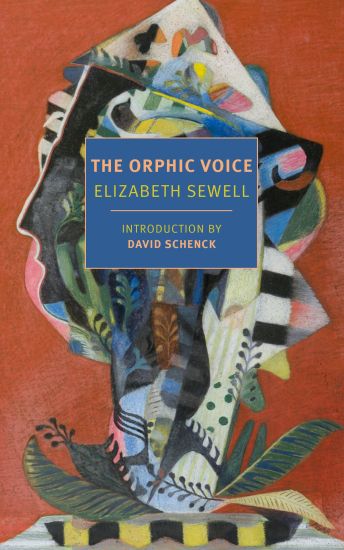
The Orphic Voice

The Orphic Voice

Elizabeth Sewell; David Schenck

New York Review Books
2022
nidottu
A wondrously written book of literary criticism and philosophy that maps the relationship between poetry and natural history, connecting verse from poets such as Shakespeare and Rainer Maria Rilke to the work of scientists and theorists like Francis Bacon and Michael Polanyi. The Orphic Voice is a book about the relationship between poetry and our place in and knowledge of the natural world, written by one of the most original, distinguished, and visionary literary thinkers of the late twentieth century. Taking its bearings from the Greek myth of Orpheus, whose singing had the power to move rocks and trees and to quiet animals, The Orphic Voice is an exercise in what Elizabeth Sewell calls mythic thinking. Myth is not, she argues, mere fable; it is instead a way of configuring our fundamental bonds to the living universe, and mythic thinking represents an ancient and vital form of reflection, uniting great poets like Shakespeare and Wordsworth and Rilke to remarkable thinkers and scientists such as Francis Bacon, Giambattista Vico, and Michael Polanyi. The members of this Orphic company share a common perception that "discovery, in science and poetry, is a mythological situation in which the mind unites with a figure of its own devising as a means toward understanding the world." Sewell's visionary book, first published in 1960, offers transformative readings of A Midsummer Night's Dream, The Prelude, and Sonnets to Orpheus, among other masterpieces, while deepening our understanding not only of literature but of our biological and sexual being and bond to nature as a whole.
North Carolina, 1780-81

North Carolina, 1780-81

David Schenck

Alpha Edition
2019
pokkari
This book has been considered by academicians and scholars of great significance and value to literature. This forms a part of the knowledge base for future generations. We have represented this book in the same form as it was first published. Hence any marks seen are left intentionally to preserve its true nature.
North Carolina, 1780-'81

North Carolina, 1780-'81

David Schenck

Hansebooks
2017
pokkari
North Carolina, 1780-'81 - Being a History of the Invasion of the Carolinas by the British Army.... is an unchanged, high-quality reprint of the original edition of 1889. Hansebooks is editor of the literature on different topic areas such as research and science, travel and expeditions, cooking and nutrition, medicine, and other genres. As a publisher we focus on the preservation of historical literature. Many works of historical writers and scientists are available today as antiques only. Hansebooks newly publishes these books and contributes to the preservation of literature which has become rare and historical knowledge for the future.
Healers

Healers

David Schenck; Larry Churchill

Oxford University Press Inc
2016
nidottu
In this groundbreaking volume, David Schenck and Larry Churchill present the results of fifty interviews with practitioners identified by their peers as "healers," exploring in depth the things that the best clinicians do. They focus on specific actions that exceptional healers perform to improve their relationships with their patients and, subsequently, improve their patients' overall health. The authors analyze the ritual structure and spiritual meaning of these healing skills, as well as their scientific basis, and offer a new, more holistic interpretation of the "placebo effect." Recognizing that the best healers are also people who know how to care for themselves, the authors describe activities that these clinicians have chosen to promote wellness, wholeness and healing in their own lives. The final chapter explores the deep connections between the mastery of healing skills and the mastery of what the authors call the "skills of ethics." They argue that ethics should be considered a healing art, alongside the art of medicine.
What Patients Teach

What Patients Teach

Larry R. Churchill; Joseph B. Fanning; David Schenck

Oxford University Press Inc
2016
nidottu
Being a patient is a unique interpersonal experience but it is also a universal human experience. The relationships formed when we are patients can also teach some of life's most important lessons, and these relationships provide a special window into ethics, especially the ethics of healthcare professionals. This book answers two basic questions: As patients see it, what things allow relationships with healthcare providers to become therapeutic? What can this teach us about healthcare ethics? This volume presents detailed descriptions and analyses of 50 interviews with 58 patients, representing a wide spectrum of illnesses and clinician specialties. The authors argue that the structure, rhythm, and horizon of routine patient care are ultimately grounded in patient vulnerability and clinician responsiveness. From the short interview segments, the longer vignettes and the full patient stories presented here emerge the neglected dimensions of healthcare and healthcare ethics. What becomes visible is an ethics of everyday interdependence, with mutual responsibilities that follow from this moral symbiosis. Both professional expressions of healthcare ethics and the field of bioethics need to be informed and reformed by this distinctive, more patient-centered, turn in how we understand both patient care as a whole and the ethics of care more specifically. The final chapters present revised codes of ethics for health professionals, as well as the implications for medical and health professions education.
What Patients Teach

What Patients Teach

Larry R. Churchill; Joseph B. Fanning; David Schenck

Oxford University Press Inc
2013
sidottu
Being a patient is a unique interpersonal experience but it is also a universal human experience. The relationships formed when we are patients can also teach some of life's most important lessons, and these relationships provide a special window into ethics, especially the ethics of healthcare professionals. This book answers two basic questions: As patients see it, what things allow relationships with healthcare providers to become therapeutic? What can this teach us about healthcare ethics? This volume presents detailed descriptions and analyses of 50 interviews with 58 patients, representing a wide spectrum of illnesses and clinician specialties. The authors argue that the structure, rhythm, and horizon of routine patient care are ultimately grounded in patient vulnerability and clinician responsiveness. From the short interview segments, the longer vignettes and the full patient stories presented here emerge the neglected dimensions of healthcare and healthcare ethics. What becomes visible is an ethics of everyday interdependence, with mutual responsibilities that follow from this moral symbiosis. Both professional expressions of healthcare ethics and the field of bioethics need to be informed and reformed by this distinctive, more patient-centered, turn in how we understand both patient care as a whole and the ethics of care more specifically. The final chapters present revised codes of ethics for health professionals, as well as the implications for medical and health professions education.
Healers

Healers

David Schenck; Larry Churchill

Oxford University Press Inc
2011
sidottu
In addition to the treatments and prescriptions they receive, most people hope for relationships with their clinicians that will themselves be healing. Yet few scholars have taken to time to understand just how relationships with healthcare providers can help patients get well. In this volume Schenck and Churchill synthesize the results of fifty interviews with practitioners identified by their peers as "healers." This book explores in depth the things that the best clinicians do. The focus is not on the many theories of healing, but on the specific actions that exceptional clinicians perform to improve their interaction with their patients, and subsequently improve their patients' overall health. The authors analyze the ritual structure and spiritual meaning of these healing skills, as well as their scientific basis. They offer a new, more holistic interpretation of the "placebo effect," and provide recommendations that will promote relational competence, as well as technical competence, in their students. Recognizing that the best healers are also people who know how to care for themselves, the authors examine responses to the question: "What activities that promote wellness, wholeness and healing do you personally engage in?" These responses will be of particular value to healthcare professionals. The final chapter explores the deep connections between the mastery of healing skills for patient care and the mastery of what the authors call the "skills of ethics." Being a good health care professional and being a good person are intimately related. Schenck and Churchill argue further that ethics should be considered a healing art, alongside the art of medicine. This book has relevance for everyone who is or will be a patient, everyone for whom relationships with healthcare providers make a difference-in short, all of us.