Kirjojen hintavertailu. Mukana 12 390 323 kirjaa ja 12 kauppaa.

Kirjailija

David Sedik

Kirjat ja teokset yhdessä paikassa: 9 kirjaa, julkaisuja vuosilta 2007-2024, suosituimpien joukossa La arquitectura del control de la seguridad alimentaria en Eurasia. Vertaile teosten hintoja ja tarkista saatavuus suomalaisista kirjakaupoista.

9 kirjaa

Kirjojen julkaisuhaarukka 2007-2024.

L'architettura del controllo della sicurezza alimentare in Eurasia

L'architettura del controllo della sicurezza alimentare in Eurasia

David Sedik; Carl Ulbricht; Nuritdin Dzhamankulov

Edizioni Sapienza
2024
pokkari
Questo libro analizza il modo in cui le due principali unioni economiche del continente eurasiatico hanno cercato di realizzare un mercato unico per la libera circolazione delle merci tra i loro Stati membri, con particolare attenzione ai mercati dei prodotti alimentari e agricoli. L'"architettura" del controllo della sicurezza alimentare nell'Unione Europea (UE) e nell'Unione Economica Eurasiatica (EAEU) il sistema di supervisione, ispezione e regolamentazione della sicurezza alimentare che consente il funzionamento del mercato unico degli alimenti in queste due unioni economiche. Il libro confronta le leggi, le istituzioni e la governance delle questioni di sicurezza alimentare nelle due unioni a livello centrale o sovranazionale, descrive e confronta i sistemi di sicurezza alimentare a livello nazionale in entrambe le unioni e fornisce una conclusione che riporta le nostre scoperte sulle principali differenze tra il controllo della sicurezza alimentare nell'Unione europea e nell'Unione economica eurasiatica.
L'architecture du contrôle de la sécurité alimentaire en Eurasie

L'architecture du contrôle de la sécurité alimentaire en Eurasie

David Sedik; Carl Ulbricht; Nuritdin Dzhamankulov

Editions Notre Savoir
2024
pokkari
Ce livre est une analyse de la mani re dont les deux principales unions conomiques du continent eurasien ont tent de r aliser un march unique dans la libre circulation des marchandises entre leurs tats membres, en mettant l'accent sur les march s des denr es alimentaires et des produits agricoles. L'"architecture" du contr le de la s curit alimentaire dans l'Union europ enne (UE) et l'Union conomique eurasienne (EAEU) est le syst me de supervision, d'inspection et de r glementation de la s curit alimentaire qui permet le fonctionnement du march unique des denr es alimentaires dans ces deux unions conomiques. L'ouvrage compare les lois, les institutions et la gouvernance des questions de s curit alimentaire dans les deux unions au niveau central ou supranational, d crit et compare les syst mes de s curit alimentaire au niveau national dans les deux unions et fournit une conclusion qui rapporte nos conclusions sur les principales diff rences entre le contr le de la s curit alimentaire dans l'Union europ enne et l'Union conomique eurasienne.
Die Architektur der Lebensmittelsicherheit in ganz Eurasien

Die Architektur der Lebensmittelsicherheit in ganz Eurasien

David Sedik; Carl Ulbricht; Nuritdin Dzhamankulov

Verlag Unser Wissen
2024
pokkari
In diesem Buch wird analysiert, wie die beiden gro en Wirtschaftsunionen auf dem eurasischen Kontinent versucht haben, einen einheitlichen Markt f r den freien Warenverkehr zwischen ihren Mitgliedstaaten zu schaffen, wobei der Schwerpunkt auf den M rkten f r Lebensmittel und landwirtschaftliche Erzeugnisse liegt. Die "Architektur" der Lebensmittelsicherheitskontrolle in der Europ ischen Union (EU) und der Eurasischen Wirtschaftsunion (EAEU) ist das System der berwachung, Inspektion und Regulierung der Lebensmittelsicherheit, das das Funktionieren des Binnenmarktes f r Lebensmittel in diesen beiden Wirtschaftsunionen erm glicht. Das Buch vergleicht Gesetze, Institutionen und die Verwaltung von Lebensmittelsicherheitsfragen in den beiden Unionen auf zentraler oder supranationaler Ebene, beschreibt und vergleicht die Lebensmittelsicherheitssysteme auf L nderebene in beiden Unionen und enth lt eine Schlussfolgerung, die unsere Erkenntnisse ber die wichtigsten Unterschiede zwischen der Lebensmittelsicherheitskontrolle in der Europ ischen Union und der Eurasischen Wirtschaftsunion wiedergibt.
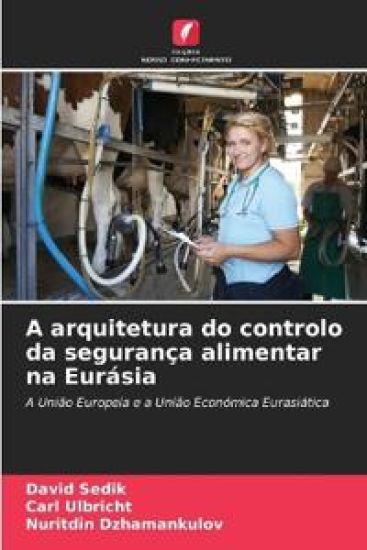
A arquitetura do controlo da segurança alimentar na Eurásia

A arquitetura do controlo da segurança alimentar na Eurásia

David Sedik; Carl Ulbricht; Nuritdin Dzhamankulov

Edicoes Nosso Conhecimento
2024
pokkari
Este livro uma an lise da forma como as duas principais uni es econ micas do continente euro-asi tico tentaram realizar um mercado nico na livre circula o de mercadorias entre os seus Estados-Membros, com destaque para os mercados de produtos alimentares e agr colas. A "arquitetura" do controlo da seguran a alimentar na Uni o Europeia (UE) e na Uni o Econ mica Eurasi tica (UEEA) o sistema de supervis o, inspe o e regulamenta o da seguran a alimentar que permite o funcionamento do mercado nico alimentar nestas duas uni es econ micas. O livro compara leis, institui es e a governa o das quest es de seguran a alimentar nas duas uni es a n vel central ou supranacional, descreve e compara os sistemas de seguran a alimentar a n vel nacional em ambas as uni es e apresenta uma conclus o que relata as nossas conclus es sobre as principais diferen as entre o controlo da seguran a alimentar na Uni o Europeia e na Uni o Econ mica Eurasi tica.
Rural Transition in Azerbaijan

Rural Transition in Azerbaijan

Zvi Lerman; David Sedik

Lexington Books
2010
sidottu
In 1995–96 the President of Azerbaijan, Heydar Alieyev, launched a program of agrarian reforms that caused a sweeping and irreversible shift from Soviet-style collective agriculture to individual farming in his country. These reforms led to an impressive recovery and substantial productivity improvements in agriculture. The agrarian transition in Azerbaijan contrasts with that in Russia, Ukraine, and Kazakhstan, where land privatization has been accompanied by policies encouraging the persistence of large corporate farms and where agricultural recovery has been much less impressive. For this reason Azerbaijan is today viewed as one of the few examples of successful land reform in the former Soviet Union. The impact of the Aliyev agrarian reforms went far beyond the recovery of agricultural production. The new policies had a significant impact on rural poverty and they were instrumental in increasing the incomes of Azerbaijan's large rural population, which relies on agriculture for a substantial part of the family budget. To understand the successes and limitations of land reform, Rural Transition in Azerbaijan evaluates the record of rural reforms, focusing on policy change, farm level performance, and the impact of reforms on rural incomes and rural family well-being-issues that today are at the core of the agenda in many international organizations.
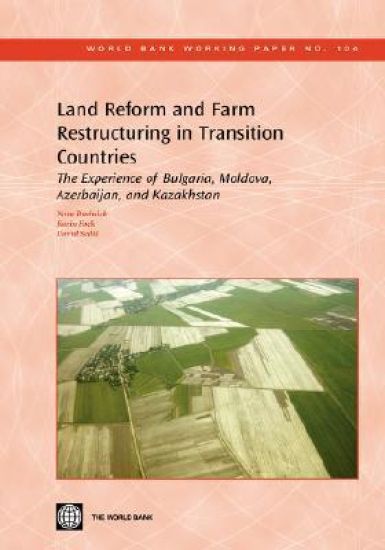
Land Reform and Farm Restructuring in Transition Countries

Land Reform and Farm Restructuring in Transition Countries

Karin Fock; David Sedik

World Bank Publications
2007
nidottu
In the past fifteen years, most countries of Central and Eastern Europe and the Commonwealth of Independent States have shifted from predominantly collective to more individualized agriculture. These years also have witnessed the largest fall in agricultural production, yields, and rural employment on record, while the deterioration and dissolution of collective and state farms have been accompanied by a significant drop in rural public services. Land Reform and Farm Restructuring provides a structured and comparative review of important aspects of land reform and documents important differences in policies between countries to examine why the reforms have not yet lived up to their potential. It is based on data from farm and household surveys and interviews conducted in 2003 and 2004. Case studies from Bulgaria, Moldova, Azerbaijan, and Kazakhstan - countries that have had particular difficulties in land reform, farm restructuring, farm performance, or rural poverty - each highlight a central conundrum about land reform and farm restructuring. The paper concludes with some implications for policy.