Kirjailija
David Silverman
Kirjat ja teokset yhdessä paikassa: 21 kirjaa, julkaisuja vuosilta 1996-2024, suosituimpien joukossa Typo. Vertaile teosten hintoja ja tarkista saatavuus suomalaisista kirjakaupoista.
21 kirjaa
Kirjojen julkaisuhaarukka 1996-2024.
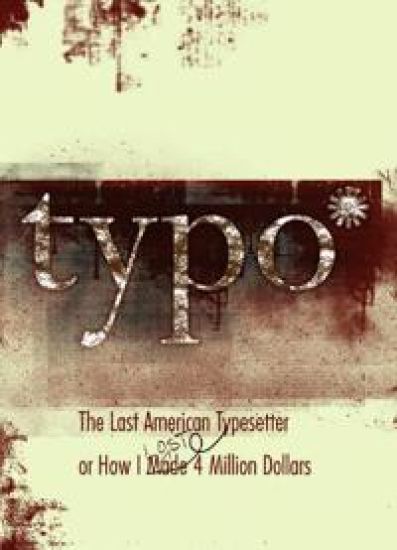
Two months before David Silverman s32nd birthday, hevisited the Charles Schwab branch in the basement of the World Trade Center to wire his father s life savingstowards the purchase of the Clarinda Typesetting company in Clarinda, Iowa. Typo tells the true story of the Clarinda company s last rise and fall and with it one entrepreneur s story of what it means to take on, run, and ultimately lose an entire life s work. This book is an American dream run aground, told with humordespite moments of tragedy. The story reveals the impact of losing part of an entire industry and answers questions abouthow thatimpacts American business. The reader sees in Clarinda s fate the potential peril faced by every company, and the lessons learned are applicable to anyone who wants torun his or her own business, succeed in a large corporation, and notbe stranded by the reality of shifting markets, outsourcing, and, ultimately, capitalism itself."
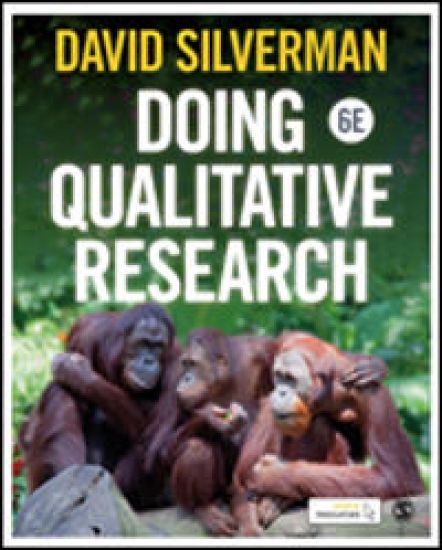
In his signature pragmatic and friendly style, David Silverman acts as your stand-in supervisor in the seventh edition of this book, taking you step-by-step through different methods for making sense of qualitative data. Whether you are interested in analysing visual images, interviews, focus groups or online data, this book provides a clear framework for using qualitative data to answer your research questions. The book provides: • A strong grounding in research design principles so you can embed best practice into your research project. • Diverse real-world examples so you can see how principles are applied in practice. • Coverage of new developments in qualitative research including working with online data. If you are new to qualitative research or conducting your first research project in the social sciences, this book gives you the practical grounding in qualitative methods you need to get started.
Since the year 2000, banks have been fined almost a third of a trillion dollars. Yet, every year billions more are imposed. Why? This book explains why banks break the law (it's not just the money), explains the challenges facing Compliance functions, considers that the majority of financiers don't want to do wrong, and puts forth a proposal to stop banks from harming customers.The lessons in this book are applicable to any business where profit motives can conflict with customer benefit–in short, every business. (And if you're interested in cryptocurrency, this book's for you too!)
Need practical advice on how to do your first qualitative research project? This book will guide you through each step of the research process: from brainstorming ideas and working with your supervisor to navigating the field to writing up your results. Driven by examples from other students’ projects, the book features discussions on translating social problems into research topics, collecting data in the wake of a pandemic, and guidance from Qualitative Data Analysis Software expert Christian Schmieder to help you summarise, categorise, and review qualitative data. A new chapter on how much data you need answers the age-old question: ‘how many interviews or case studies are enough?’ It also includes: - Articles and websites to build your bibliography - Questions to test your knowledge - Videos from world-leading qualitative experts - Activities to dig deeper into key concepts and think critically about research - Lessons-learned discussions with other researchers - Exercises to help you choose the right path for your project. Key features: in addition to the online Silverman Workshops, the book includes top tips, end-of-chapter checklists to test your understanding, and annotated further reading so you can develop your knowledge further.
In preparation for a talk I was to give in my synagogue on the first section of Genesis--the one in which God creates the world in 6 days, including Adam and Eve, and rests on the seventh--I printed out a scholarly essay entitled, And God Created Humans.My printer, however, is very old and with every exertion, wheezes like a coal miner might after 40 years in the mine, which seems like something I could say about myself, climbing a staircase or running to catch a bus, though I can't remember the last time I took a bus. But I'm straying from the point, which is the ink did not transfer smoothly to the paper and the resulting smear and shadow obscured some of the words, such that it appeared the title of the essay was no longer, And God Created Humans. Rather, it read, And God Created Hummus.
Problems of Reflexivity and Dialectics in Sociological Inquiry (RLE Social Theory)
Barry Sandywell; David Silverman; Maurice Roche; Paul Filmer; Michael Phillipson
Routledge
2017
nidottu
This is a work of social theory and philosophy which seeks to make the constitution of social theory a ‘social’ activity. It is essentially a collaborative text, by five authors, committed to a re-awakening of some of the forgotten dimensions of social theorizing. The collaborative work was originally occasioned by an attempt to analyse the notion of social stratification and its treatment in the sociological tradition. The authors’ main concern here is with the nature of social theorizing, and in particular the ‘difference’ between Self and Other, being and beings, Language and Speech. The papers in the book focus on themes that are fundamental to the sense of inquiry and tradition which they are concerned to display. The themes discussed include speech, Language, Identity, Difference, Critical Tradition, Community, Metaphor, Dialectics, Observing and Reading.
Team of Teams
General Stanley McChrystal; David Silverman; Tantum Collins; Chris Fussell
Penguin Books Ltd
2015
pokkari
What if you could combine the agility, adaptability, and cohesion of a small team with the power and resources of a giant organization?When General Stanley McChrystal took command of the Joint Special Operations Task Force in Iraq in 2003, he quickly realized that conventional military tactics were failing. The allied forces had a huge advantage in numbers, equipment and training - but none of the enemy's speed and flexibility.McChrystal and his colleagues discarded a century of conventional wisdom to create a 'team of teams' that combined extremely transparent communication with decentralized decision-making authority. Faster, flatter and more flexible, the task force beat back al-Qaeda.In this powerful book, McChrystal and his colleagues show how the challenges they faced in Iraq can be relevant to any leader. Through compelling examples, the authors demonstrate that the 'team of teams' strategy has worked everywhere from hospital emergency rooms to NASA and has the potential to transform organizations large and small.'A bold argument that leaders can help teams become greater than the sum of their parts' Charles Duhigg, author of The Power of Habit'An indispensable guide to organizational change' Walter Isaacson, author of Steve Jobs
Team of Teams
General Stanley McChrystal; David Silverman; Collins Tantum; Chris Fussell; Fussell Chris
Penguin Books Ltd
2015
sidottu
As commander of Joint Special Operations Command (JSOC), General Stanley McChrystal discarded a century of management wisdom and pivoted from a pursuit of mechanical efficiency to organic adaptability. In this book, he shows how any organization can make the same transition to act like a team of teams - where small groups combine the freedom to experiment with a relentless drive to share their experience.Drawing on a wealth of evidence from his military career and sources as diverse as hospital emergency rooms and NASA's space program, McChrystal frames the existential challenge facing today's organizations, and presents a compelling, effective solution.
Carlos Castaneda’s accounts of his meeting with the Yaqui Indian magician Don Juan are well known to sociologists both in Britain and in America. Using material largely from Castaneda’s The Teachings of Don Juan, David Silverman here seeks to introduce the student of Sociology to some of the central epistemological concerns of social science. First published in 1975, the title assumes no previous knowledge of Castaneda but instead uses his work as a springboard to wider issues, in particular making sense of our reality and understanding each other by using language and communication. This is an interesting reissue, which will be of particular value to students of the sociology of language and communication, as well as Communication Studies more generally.
Problems of Reflexivity and Dialectics in Sociological Inquiry (RLE Social Theory)
Barry Sandywell; David Silverman; Maurice Roche; Paul Filmer; Michael Phillipson
Routledge
2014
sidottu
This is a work of social theory and philosophy which seeks to make the constitution of social theory a ‘social’ activity. It is essentially a collaborative text, by five authors, committed to a re-awakening of some of the forgotten dimensions of social theorizing. The collaborative work was originally occasioned by an attempt to analyse the notion of social stratification and its treatment in the sociological tradition. The authors’ main concern here is with the nature of social theorizing, and in particular the ‘difference’ between Self and Other, being and beings, Language and Speech. The papers in the book focus on themes that are fundamental to the sense of inquiry and tradition which they are concerned to display. The themes discussed include speech, Language, Identity, Difference, Critical Tradition, Community, Metaphor, Dialectics, Observing and Reading.
Carlos Castaneda’s accounts of his meeting with the Yaqui Indian magician Don Juan are well known to sociologists both in Britain and in America. Using material largely from Castaneda’s The Teachings of Don Juan, David Silverman here seeks to introduce the student of Sociology to some of the central epistemological concerns of social science. First published in 1975, the title assumes no previous knowledge of Castaneda but instead uses his work as a springboard to wider issues, in particular making sense of our reality and understanding each other by using language and communication. This is an interesting reissue, which will be of particular value to students of the sociology of language and communication, as well as Communication Studies more generally.
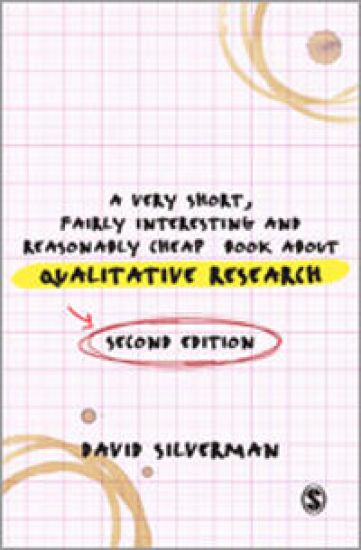
A Very Short, Fairly Interesting and Reasonably Cheap Book about Qualitative Research
David Silverman
SAGE Publications Ltd
2013
sidottu
The Second Edition of Qualitative Research provides a refreshing introduction to doing and debating qualitative research. The author uses updated content, ranging from photographs to novels and newspaper stories, to demonstrate how getting to grips with qualitative methods means asking ourselves fundamental questions about how we are influenced by contemporary culture. Conceived by Chris Grey as an antidote to conventional textbooks, each book in the ‘Very Short, Fairly Interesting and Reasonably Cheap’ series takes a core area of the curriculum and turns it on its head by providing a critical and sophisticated overview of the key issues and debates in an informal, conversational and often humorous way. Suitable for Undergraduate students who are new to qualitative research and even Postgraduates and Practitioners who want re-assess their current understanding of the field.
A Very Short, Fairly Interesting and Reasonably Cheap Book about Qualitative Research
David Silverman
SAGE Publications Ltd
2013
nidottu
The Second Edition of Qualitative Research provides a refreshing introduction to doing and debating qualitative research. The author uses updated content, ranging from photographs to novels and newspaper stories, to demonstrate how getting to grips with qualitative methods means asking ourselves fundamental questions about how we are influenced by contemporary culture. Conceived by Chris Grey as an antidote to conventional textbooks, each book in the ‘Very Short, Fairly Interesting and Reasonably Cheap’ series takes a core area of the curriculum and turns it on its head by providing a critical and sophisticated overview of the key issues and debates in an informal, conversational and often humorous way. Suitable for Undergraduate students who are new to qualitative research and even Postgraduates and Practitioners who want re-assess their current understanding of the field.
First published in 1980, this reissue is a study of the sociology of language, which aims to bridge the gap between textbook and monograph by alternating chapters of explication and analysis. A chapter outlining a particular theory and suggesting general criticisms is followed by a chapter offering an original application of that theory. The aim of the authors is to treat text and talk as the site of specific practices which sustain or subvert particular relations between appearance and reality.
Harvey Sacks's early death in 1975 robbed the social sciences of one of its most original thinkers. Although he published relatively little in his lifetime, his lectures and papers were enormously influential in sociology and sociolinguistics and they played a major role in the development of ethnomethodology and conversation analysis. The recent publication of Sacks's Lectures on Conversation has provided an excellent opportunity for a wide-ranging reassessment of his contribution. In this new book, David Silverman provides a clear introduction to Sack's work and reassesses its value for sociology, linguistics, anthropology and psychology. Using a variety of examples, he explains Sacks's ideas on method, language and talk-in-interaction. He argues that Sacks's work offers a highly original perspective on language and social life and raises fundamental questions for the social sciences - questions which, after more than twenty years, remain vitally important and largely unanswered. Written in a lively and accessible way, this book will be of particular interest to students of sociology, sociolinguistics, social theory and method, but it will also be of interest to students and researchers in anthropology, psychology and related disciplines.
In this book, David Silverman offers a fully researched and analytically sensitive account of how counselling, as a process, is dynamically constructed through the interaction of counsellor and client. Drawing on research on counselling of clients undergoing an HIV test, the author explores the ways in which conversations between counsellors and clients reflect, embody and subtly alter assumptions about the purpose, method and practice of counselling. This critical appreciation of the modes of engagement between counsellor and client will be of interest to researchers and students of counselling, psychotherapy and associated helping professions. Practitioners - particularly those involved in HIV and other health counselling - will be stimulated to reflect on and respond to Silverman's analysis in their own practice. The book will also be essential reading for researchers and students in the traditions of sociological work on interactionism, conversation analysis and ethnomethodology, applying these approaches in a sophisticated manner to the interactionist and conversational strategies adopted in a health promotion environment.