Kirjojen hintavertailu. Mukana 12 207 522 kirjaa ja 12 kauppaa.

Kirjailija

David Spiegelhalter

Kirjat ja teokset yhdessä paikassa: 11 kirjaa, julkaisuja vuosilta 2014-2026, suosituimpien joukossa The Art of Uncertainty: How to Navigate Chance, Ignorance, Risk and Luck. Vertaile teosten hintoja ja tarkista saatavuus suomalaisista kirjakaupoista.

11 kirjaa

Kirjojen julkaisuhaarukka 2014-2026.

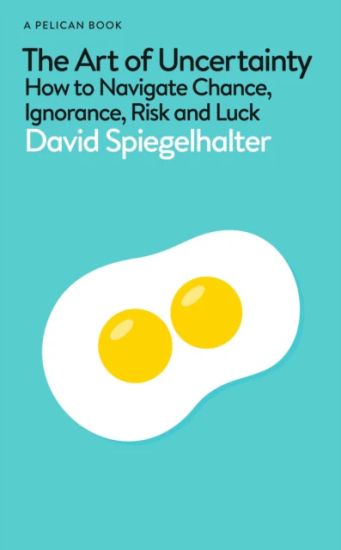
The Art of Uncertainty: How to Navigate Chance, Ignorance, Risk and Luck
How dangerous is our diet? How much of sports falls into the realm of luck? When authorities categorize a given event as "highly likely"--how likely is that, really? Whether we're trying to decide if the benefits of a new medication are worth the chance of side effects or if artificial intelligence truly threatens humanity, our lives are riddled with uncertainties both everyday and existential--yet it can be difficult to know how to properly weigh all those unknowns. Luckily for us, renowned statistician David Spiegelhalter has spent his career dissecting data to resolve the apparently random and decode the many decisions we face with imperfect information. In The Art of Uncertainty, he shows how we can become better at dealing with what we don't know to make smarter choices in a world so full of puzzling variables. In lucid, lively prose, Spiegelhalter guides us through the principles of probability, illustrating how they can help us think more analytically about everything from medical advice to sports to climate change forecasts. He demonstrates how taking a mathematical approach to phenomena we might otherwise attribute to fate or luck can help us sort hidden patterns from mere coincidences, better evaluate cause and effect, and predict what's likely to happen in the future. Along the way, we learn how a misinterpretation of a probability contributed to the infamous Bay of Pigs fiasco, why a ship twice the size of the Titanic sank without a trace, and why we can be so confident that no two properly shuffled decks of cards have ever been in the same order. Sparkling with wit and fascinating real-world examples, this is an essential guide to navigating uncertainty while also retaining the humility to admit what we don't, or simply cannot, know.
The Art of Uncertainty

The Art of Uncertainty

David Spiegelhalter

PENGUIN BOOKS LTD
2025
nidottu
‘Probably the UK’s greatest living statistician’ TelegraphFrom the UK’s ‘statistical national treasure’, a clever and data-driven guide to how we can live with risk and uncertaintyWe live in a world where uncertainty is inevitable. How should we deal with what we don’t know? And what role do chance, luck and coincidence play in our lives?David Spiegelhalter has spent his career dissecting data in order to understand risks and assess the chances of what might happen in the future. In The Art of Uncertainty, he gives readers a window onto how we can all do this better.In engaging, crystal-clear prose, he takes us through the principles of probability, showing how it can help us think more analytically about everything from medical advice to pandemics and climate change forecasts, and explores how we can update our beliefs about the future in the face of constantly changing experience. Along the way, he explains why roughly 40% of football results come down to luck rather than talent, how the National Risk Register assesses near-term risks to the United Kingdom, and why we can be so confident that two properly shuffled packs of cards have never, ever been in the exact same order.Drawing on a wide range of captivating real-world examples, this is an essential guide to navigating uncertainty while also having the humility to admit what we do not know
The Art of Uncertainty: How to Navigate Chance, Ignorance, Risk and Luck
How dangerous is our diet? How much of sports falls into the realm of luck? When authorities categorize a given event as "highly likely"--how likely is that, really? Whether we're trying to decide if the benefits of a new medication are worth the chance of side effects or if artificial intelligence truly threatens humanity, our lives are riddled with uncertainties both everyday and existential--yet it can be difficult to know how to properly weigh all those unknowns. Luckily for us, renowned statistician David Spiegelhalter has spent his career dissecting data to resolve the apparently random and decode the many decisions we face with imperfect information. In The Art of Uncertainty, he shows how we can become better at dealing with what we don't know to make smarter choices in a world so full of puzzling variables.In lucid, lively prose, Spiegelhalter guides us through the principles of probability, illustrating how they can help us think more analytically about everything from medical advice to sports to climate change forecasts. He demonstrates how taking a mathematical approach to phenomena we might otherwise attribute to fate or luck can help us sort hidden patterns from mere coincidences, better evaluate cause and effect, and predict what's likely to happen in the future. Along the way, we learn how a misinterpretation of a probability contributed to the infamous Bay of Pigs fiasco, why a ship twice the size of the Titanic sank without a trace, and why we can be so confident that no two properly shuffled decks of cards have ever been in the same order.Sparkling with wit and fascinating real-world examples, this is an essential guide to navigating uncertainty while also retaining the humility to admit what we don't, or simply cannot, know.

The Art of Uncertainty

The Art of Uncertainty

David Spiegelhalter

PENGUIN BOOKS LTD
2024
sidottu
‘Probably the UK’s greatest living statistician’ TelegraphFrom the UK’s ‘statistical national treasure’, a clever and data-driven guide to how we can live with risk and uncertaintyWe live in a world where uncertainty is inevitable. How should we deal with what we don’t know? And what role do chance, luck and coincidence play in our lives?David Spiegelhalter has spent his career dissecting data in order to understand risks and assess the chances of what might happen in the future. In The Art of Uncertainty, he gives readers a window onto how we can all do this better.In engaging, crystal-clear prose, he takes us through the principles of probability, showing how it can help us think more analytically about everything from medical advice to pandemics and climate change forecasts, and explores how we can update our beliefs about the future in the face of constantly changing experience. Along the way, he explains why roughly 40% of football results come down to luck rather than talent, how the National Risk Register assesses near-term risks to the United Kingdom, and why we can be so confident that two properly shuffled packs of cards have never, ever been in the exact same order.Drawing on a wide range of captivating real-world examples, this is an essential guide to navigating uncertainty while also having the humility to admit what we do not know
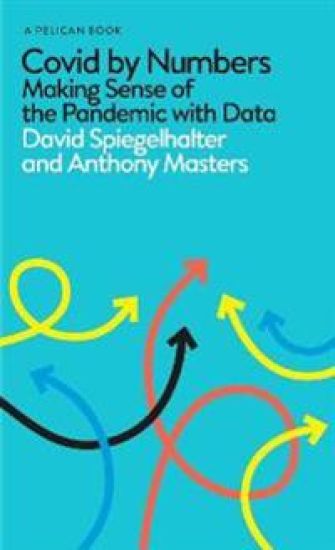
Covid By Numbers

Covid By Numbers

David Spiegelhalter; Anthony Masters

Pelican
2021
sidottu
'I couldn't imagine a better guidebook for making sense of a tragic and momentous time in our lives. Covid by Numbers is comprehensive yet concise, impeccably clear and always humane' Tim HarfordHow many people have died because of COVID-19? Which countries have been hit hardest by the virus? What are the benefits and harms of different vaccines? How does COVID-19 compare to the Spanish flu? How have the lockdown measures affected the economy, mental health and crime?This year we have been bombarded by statistics - seven day rolling averages, rates of infection, excess deaths. Never have numbers been more central to our national conversation, and never has it been more important that we think about them clearly. In the media and in their Observer column, Professor Sir David Spiegelhalter and RSS Statistical Ambassador Anthony Masters have interpreted these statistics, offering a vital public service by giving us the tools we need to make sense of the virus for ourselves and holding the government to account.In Covid by Numbers, they crunch the data on a year like no other, exposing the leading misconceptions about the virus and the vaccine, and answering our essential questions. This timely, concise and approachable book offers a rare depth of insight into one of the greatest upheavals in history, and a trustworthy guide to these most uncertain of times.
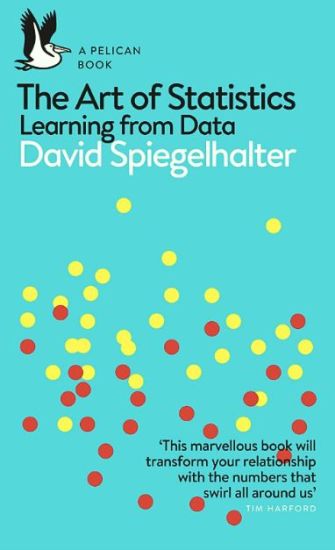
The Art of Statistics: How to Learn from Data

The Art of Statistics: How to Learn from Data

David Spiegelhalter

BASIC BOOKS
2021
nidottu
In this "important and comprehensive" guide to statistical thinking (New Yorker), discover how you can use data and mathematics to gain a better understanding of life's biggest problems. The age of big data has made statistical literacy more important than ever. In The Art of Statistics, David Spiegelhalter shows how to apply statistical reasoning to real-world problems. Whether we're analyzing preventative medical screening or the terrible crime sprees of serial killers, Spiegelhalter teaches us how to clarify questions, assumptions, and expectations and, most importantly, how to interpret the answers we receive. Combining the incomparable insight of an expert with the playful enthusiasm of an aficionado, The Art of Statistics is the definitive guide to the power of data. "A call to arms for greater societal data literacy . . . a reminder that there are passionate, self-aware statisticians who can argue eloquently that their discipline is needed now more than ever." -- Financial Times
Art of Statistics

Art of Statistics

David Spiegelhalter

Penguin Books Ltd.
2020
pokkari
Statistics has played a leading role in our scientific understanding of the world for centuries, yet we are all familiar with the way statistical claims can be sensationalised, particularly in the media. In the age of big data, as data science becomes established as a discipline, a basic grasp of statistical literacy is more important than ever.In The Art of Statistics, David Spiegelhalter guides the reader through the essential principles we need in order to derive knowledge from data. Drawing on real world problems to introduce conceptual issues, he shows us how statistics can help us determine the luckiest passenger on the Titanic, whether serial killer Harold Shipman could have been caught earlier, and if screening for ovarian cancer is beneficial.How many trees are there on the planet? Do busier hospitals have higher survival rates? Why do old men have big ears? Spiegelhalter reveals the answers to these and many other questions - questions that can only be addressed using statistical science.
Teaching Probability

Teaching Probability

Jenny Gage; David Spiegelhalter

Cambridge University Press
2016
pokkari
Written by leading subject specialists, Teaching Probability is designed to support teaching concepts in probability by providing a new approach to this difficult subject from a perspective not limited by a syllabus, giving teachers both theoretical and practical knowledge of an innovative way of teaching probability. This alternative approach to teaching probability focuses on the methods that teachers can apply to help their students engage with the topic using experiments and mathematical models to solve problems, considering how to overcome common misconceptions and the way in which probability can be communicated.
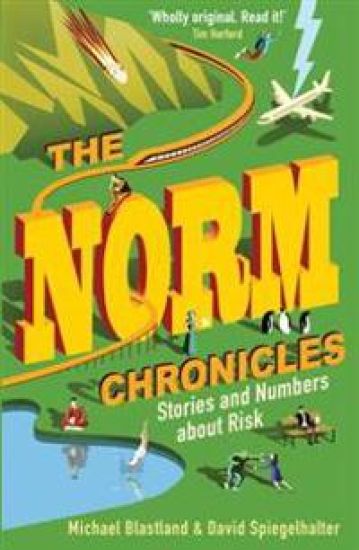
The Norm Chronicles

The Norm Chronicles

David Spiegelhalter; Michael Blastland

Profile Books Ltd
2014
pokkari
Meet Norm. He's 31, 5'9", just over 13 stone, and works a 39 hour week. He likes a drink, doesn't do enough exercise and occasionally treats himself to a bar of chocolate (milk). He's a pretty average kind of guy. In fact, he is the average guy in this clever and unusual take on statistical risk, chance, and how these two factors affect our everyday choices. Watch as Norm (who, like all average specimens, feels himself to be uniquely special), and his friends careful Prudence and reckless Kelvin, turns to statistics to help him in life's endless series of choices - should I fly or take the train? Have a baby? Another drink? Or another sausage? Do a charity skydive or get a lift on a motorbike? Because chance and risk aren't just about numbers - it's about what we believe, who we trust and how we feel about the world around us. From a world expert in risk and the bestselling author of The Tiger That Isn't (and creator of BBC Radio 4's More or Less), this is a commonsense (and wildly entertaining) guide to personal risk and decoding the statistics that represent it.
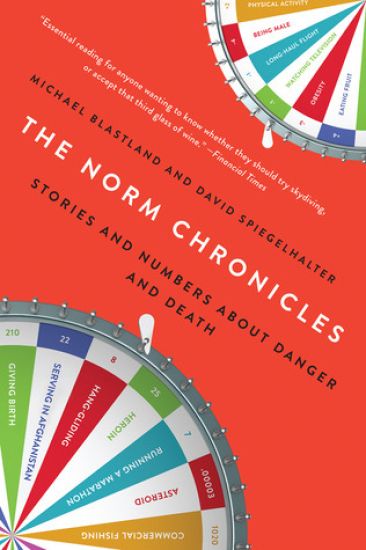
The Norm Chronicles: Stories and Numbers about Danger and Death

The Norm Chronicles: Stories and Numbers about Danger and Death

Michael Blastland; David Spiegelhalter

BASIC BOOKS
2014
nidottu
Is it safer to fly or take the train? How dangerous is skydiving? And is eating that extra sausage going to kill you? We've all heard the statistics for risky activities, but what do they mean in the real world? In The Norm Chronicles, journalist Michael Blastland and risk expert David Spiegelhalter explore these questions through the stories of average Norm and an ingenious measurement called the MicroMort-a one in a million chance of dying. They reveal why general anesthesia is as dangerous as a parachute jump, giving birth in the US is nearly twice as risky as in the UK, and that the radiation from eating a banana shaves 3 seconds off your life. An entertaining guide to the statistics of personal risk, The Norm Chronicles will enlighten anyone who has ever worried about the dangers we encounter in our daily lives.