Kirjojen hintavertailu. Mukana 12 595 353 kirjaa ja 12 kauppaa.

Kirjailija

David Stack

Kirjat ja teokset yhdessä paikassa: 2 kirjaa, julkaisuja vuosilta 1997-2008, suosituimpien joukossa Queen Victoria's Skull. Vertaile teosten hintoja ja tarkista saatavuus suomalaisista kirjakaupoista.

2 kirjaa

Kirjojen julkaisuhaarukka 1997-2008.

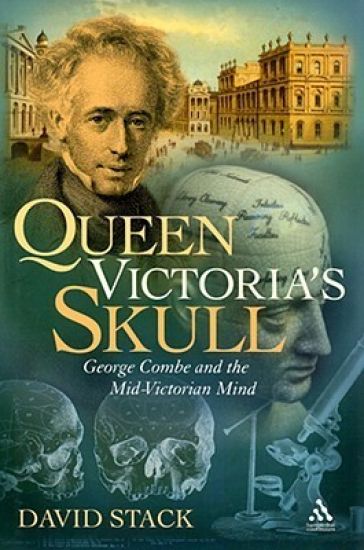
Queen Victoria's Skull

Queen Victoria's Skull

David Stack

Hambledon Continuum
2008
sidottu
This is a hugely entertaining study that goes beyond biography to vividly portray Victorian life in a wider framework."Queen Victoria's Skull" explores the life and thinking of the Edinburgh phrenologist George Combe. Phrenology is a theory which claims to be able to detect personality traits, character and predisposition to criminality on the basis of the shape of the skull. Now dismissed as risible, it was treated with reverence by many Victorians.George Combe was the author of "The Constitution of Man", an ethical treatise that sold over 100,000 copies in Britain and 200,000 copies in America by 1900. The quirkiness of his life and work, and the fact that he befriended and influenced many public figures - from Prince Albert to George Eliot - make for an engaging story. "Queen Victoria's Skull", however, does more than tell the tale of one idiosyncratic individual. By tracing the development of Combe's intellectual interests it provides a prism through which to view Victorian culture, science and politics, covering themes of class, religion, sex, crime, art and the theatre. David Stack has written an entertaining and erudite study of an important, and now neglected, Victorian figure.
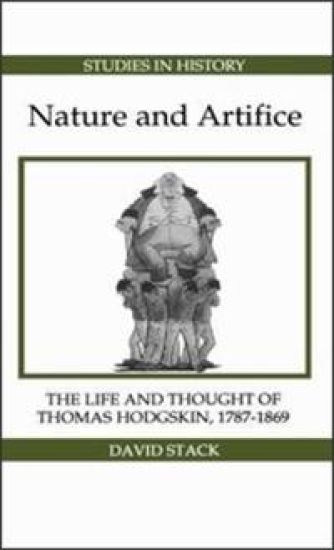
Nature and Artifice

Nature and Artifice

David Stack

Royal Historical Society
1997
sidottu
Thomas Hodgskin (1787-1869), radical thinker, is the subject of this study, and he is presented here as a forerunner of New Right ideology rather than as `early English socialist'. Thomas Hodgskin was one of the most significant thinkers of nineteenth-century radicalism. An active writer for over fifty years and an associate of Bentham and James Mill amongst others, his life provides a paradigm for understanding the evolution of radicalism from Waterloo to the Second Reform Act. This study rescues him from his marginalisation and mis-casting as an "early English socialist": far from being a socialist, many of his views seem to mark him out as a forerunner of New Right or neo-liberal ideology. Drawing on a range of new sources and reassessing Hodgskin's life and work, Dr Stack argues that the crux of Hodgskin's thought was the essentially theological distinction he drew between nature and artifice. Throughout, he makes plain the centrality of providentialism to nineteenth-century radicalism. Dr DAVID STACK teaches in the Department of History at Queen Mary and Westfield College at the University of London.