Kirjojen hintavertailu. Mukana 12 390 323 kirjaa ja 12 kauppaa.

Kirjailija

David Stacton

Kirjat ja teokset yhdessä paikassa: 13 kirjaa, julkaisuja vuosilta 2012-2020, suosituimpien joukossa Navarro. Vertaile teosten hintoja ja tarkista saatavuus suomalaisista kirjakaupoista.

13 kirjaa

Kirjojen julkaisuhaarukka 2012-2020.

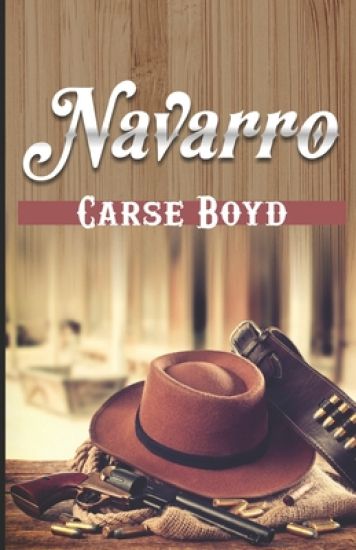
Navarro

Navarro

David Stacton; Carse Boyd

Cutting Edge
2020
nidottu
"The characters are boldly drawn and interesting, and Boyd writes with real style. One of the best westerns of the year. " Daily OklahomanIn the mid-1800s, banditos swarmed into Arizona and Texas from Mexico, driven by the poverty and despair of a divided country, and terrorized homesteaders, ranchers and Indians, looting, burning, raping and killing. Navarro and his band were the worst of the banditos. No ranch, gringo or Indian was safe from his savage cruelty. But that changes when Navarro brutalizes and kills Sis Henshaw. Now her furious brothers are chasing after him, hell-bent on violent and total retribution....and Navarro is discovering what real terror feels like. "For those who like them fast-moving and brutal. It's excellent " San Angelo Times"Carse Boyd" was a pseudonym for David Derek Stacton (1923-1968), an acclaimed American poet and author, under various names, of literary fiction, historical novels, and soft-core gay porn. He was a two-time recipient of a Guggenheim Fellowship and also received a Literature Fellowship from the National Endowment for the Arts. His work ranged from lurid tales like D is for Delinquent to a non-fiction book about the fall of Constantinople. His books under his own name include The Bonapartes, The Judges of the Secret Order, A Signal Victory and People of the Book: A Novel of the Thirty Years War. He died in Denmark in 1968.PRAISE FOR DAVID STACTON (aka CARSE BOYD): "A stylistic virtuoso, matching on the typewriter the lightning flashes of such musical masters as Paganini on the violin," The Chicago Tribune"John Banville comes to mind as an author who so easily switches gears from fustian to fetid...it is fascinating to watch Stacton working out in the noirs the kind of novelist he would become. From the beginning, Stacton is drawn to a certain kind of person, the kind who is the 'victim of the propulsive force of his own character.'" Los Angeles Review of Books"The prose of David Stacton is like that of no other writer. It suggests a corridor in a dark Gothic tower, ill-lit by tapers, at one end of which a gong sounds incessantly."Time Magazaine "The most unjustly neglected American novelist of the post-war years, David Stacton's ambitious high style and melodrama have seen him banished. It's time for a return to favour. Few writers have managed more fully than Stacton to bear out Gore Vidal's maxim that writers shouldn't 'write what they know' but, rather, what they imagine or suspect.'... and yet, Stacton himself can be seen to hide in plain sight behind everything he wrote." The Guardian (London)"His prose reveals great cultural depth and breadth. He uses language lovingly. Almost every sentence contains a striking metaphor or simile. Aphorisms sparkle from paragraph to paragraph." Fort Worth Star-Telegram"David Stacton is a major writer who has the approval of critics but so far lacks the consent of readers at large. In short, it's the story of literary virtue unrewarded...his novels are enjoyable as well as admirable." Oakland Tribune
Kaliyuga

Kaliyuga

David Stacton

Faber Faber
2015
pokkari
The last of the three trilogies authored by David Stacton (1923-68) was described by the author as 'an intermezzo designed to deal with sexual relations'. After Old Acquaintance (1962) and Sir William (1963) came Kaliyuga (1965), described by Stacton as 'the story of the relations of Siva and Kali, lightly told'.Its chief figures are Charlie and Denise, an American couple in Switzerland, prone to domestic spats. After one such set-to Charlie finds himself wishing men were gods, so to be spared the banality of life's cyclical little dramas. But he knows not of what he speaks or wants. In Hindu mythology the gods go round and round as we do, making the same mistakes - as Charlie and Denise will discover.
Sir William

Sir William

David Stacton

Faber Faber
2014
pokkari
Sir William (1963) was the second entry in David Stacton's triptych of novels on the theme of 'The Sexes', for which he chose to fictionalise one of history's great love affairs.'David Stacton's novel of the notorious ménage à trois between the fetching Lady Hamilton, her husband Sir William, and her lover, Lord Nelson, is a scintillating piece of historical fiction.' New York World-Telegram'Stacton's best book... written with epigrammatic wit and grace.' Kirkus Reviews'A sweeping luxuriant romp through the pre-Trafalgar life of Lady Hamilton. Her Pygmalion rescue from whoredom by the ineffable Charles Greville is wickedly told.' Sunday Times'Stacton is a magnificent storyteller.' Book Week
Tom Fool

Tom Fool

David Stacton

Faber Faber
2014
nidottu
'Yes, it was a crusade. But just what was it the people out there feared and hated so much? Not surely the candidate. He was a decent man. Or was that it?'With Tom Fool (1962) David Stacton concluded a triptych of novels drawn from the history of America. For this final panel he turned his eye on politics. The titular protagonist is a fictional rendering of Wendell Wilkie, unlikely Republican challenger to Franklin D. Roosevelt in the presidential election of 1940. As 'Tom Fool' endures an epic campaigning tour of thirty-one states - assisted (or dogged) by his political advisor 'Sideboard' and husband-and-wife PR consultants the Pattersons - he finds himself uncomfortably reminded that America, in its vastness and contradictions, is more than one country, and a unique conundrum to one who would be President.
Old Acquaintance

Old Acquaintance

David Stacton

Faber Faber
2014
nidottu
With Old Acquaintance (1962) David Stacton embarked upon his third literary triptych, this one on the theme of 'The Sexes'.'Even in these one-worldly days of cultural colonies and jet-setters, most US authors trying to depict European sophistication seem indefinably out of their league, like children sashaying around in grown-up shoes. Not so David Stacton, who here recounts with relish and delight a nostalgic encounter between two Old World celebrities at an international film festival.' Time'The old acquaintances are Charlie, a successful novelist with four wives and a succession of young men in his past, and Lotte, a German singer and movie star, now American. Their acquaintanceship dates back thirty years to their youth in Berlin... David Stacton has a spectacular, erudite way with the fun and games...' Kirkus Reviews
A Signal Victory

A Signal Victory

David Stacton

Faber Faber
2014
pokkari
First published in 1960, A Signal Victory was David Stacton's eighth novel, and the first in what he envisaged as an 'American Triptych.' In this opening panel Stacton paints a vivid picture of the impact of two great civilisations upon each other.Guerrero was a Spanish soldier, shipwrecked on the shores of Yucatan. Years later the Spaniards came as conquerors - but by this time Guerrero was a prince, had married a king's daughter, and would be a spearhead of resistance to the white-skinned invaders from the west. A Signal Victory is Guerrero's story - that of a man who found where his true loyalties lay, and pursued them to their inevitable end.'A strange, outlandish, fearsomely intelligent novel: it has absorbed into its texture some of the hieratic society which it depicts with such brilliance.' Telegraph
People of the Book

People of the Book

David Stacton

Faber Faber
2013
pokkari
'People of the Book is set in the Thirty Years' War, which began and still shapes our present system of world order. David Stacton's incomparable prose reveals how the treatises of scholars and the tactics of commanders so rarely comprehend the vagaries of the human condition. A book to put on the shelf with Thucydides' Peloponnesian War and Tolstoy's War and Peace.'Professor Charles Hill (author of Grand Strategies: Literature, Statecraft, and World Order)'A troubling and fantastic book... Stacton sets up a duel plot. One follows the fortunes of the Swedish King Gustavus Adolphus, the other recounts the fate of an orphaned boy and his little sister who try to make their way across Germany from their ruined home to refuge with an imagined uncle.' Life'[An] extraordinary evocation of the whole spiritual climate of the time; the very vapours of Teutonic mists seem to rise from its pages.' Frederic Raphael, Sunday Times
A Dancer in Darkness

A Dancer in Darkness

David Stacton

Faber Faber
2012
pokkari
'Dancer in Darkness is a unique three-way collaboration - the tragic tale of the murdered Giovanna d'Aragona, Duchess of Amalfi, as told in Renaissance Italian sources, then in The Duchess of Malfi, John Webster's masterpiece of Jacobean revenge and fate, and now here by David Stacton, the literally incomparable American historical novelist. Black as stage velvet, Stacton's version is as full of chilling insights and dreadful doings as Webster's, but at bottom all his own.' John Crowley (Little, Big, Engine Summer)'The prose of David Stacton is like that of no other writer. It suggests a corridor in a dark Gothic tower, ill-lit by tapers, at one end of which a gong sounds incessantly. Stacton's gong clashes are malevolent aphorisms, asides spoken to Nemesis, hard little explanations of motive.' Time
Segaki

Segaki

David Stacton

Faber Faber
2012
pokkari
'Segaki is the story of two men, a woman, a dog, and a handful of snails. It is a very simple story. But like most simple stories, it is also a parable... It is the third volume of three novels concerned with various aspects of the religious experience... Segaki deals with [the] getting of wisdom, or insight, and deals with it, moreover, entirely in terms of Zen... Zen cannot be explained. It can only be embodied, and in that form, shown to people who will not see it unless they were accustomed to seeing it there anyway.' David Stacton, 1958 'I am enormously impressed by [Segaki]... I haven't read such an electrifying work in ages. [Stacton] sounds not only like a magnificent poet but an initiate as well. And he seems to know Japan (the everlasting one) better than most Japanese.' Henry Miller, 1959
On a Balcony

On a Balcony

David Stacton

Faber Faber
2012
pokkari
'On A Balcony is devoted to the 14th century [B.C.] and the Pharaoh Ikhnaton, his sister-wife Nefertiti, the sculptor Tutmose, and the rivalry his religion of Aton brought to Egypt and its then current cult of Amon... presenting Ikhnaton's imposition of a new religion upon those who look on him as a god.' Kirkus Review'A fascinating study in royal neuroticism.' John Davenport, Observer 'A weird, subtle and compelling novel.' Time & Tide'What is important about Mr Stacton is his originality. We cannot guess how his book is going to develop. We cannot trace influences on his writing or fit him into any preconceived literary scheme...There is a self-confidence about his writing that has no trace of vanity.' Times Literary Supplement.
Remember Me

Remember Me

David Stacton

Faber Faber
2012
pokkari
'King Ludwig has fascinated me ever since I was a child, yet fascination is not quite the right word. Fellow-feeling would be the proper phrase...' David Stacton, 1957With his fourth published novel - and his first on historical themes and personages - David Stacton's writing career took a decisive turn. Remember Me, over which he laboured for four years, is an extraordinarily vivid and felt portrait of the infamous Ludwig II of Bavaria, evoking with assurance the strange and poetic landscape that shaped him. Stacton described the book in genesis to his editor as 'a study in madness, of the regal temperament and its reflexes, pushed to that point when it has nothing but the past to govern.' 'A tour de force...An extraordinary feat of dreamlike identification. The compression is masterly.' Observer'[Stacton's] prose, alternating... between stabbing vigour and florid ornament, powerfully suggests the frustrations of that unhappy spirit.' Times Literary Supplement
A Fox Inside

A Fox Inside

David Stacton

Faber Faber
2012
pokkari
On a chill Northern Californian evening, high on a cliff in the lagoon township of Bolinas, a woman is running, barefoot, toward her open convertible. Behind her in the dark is the summer house where her reclusive husband now lies dead. She will drive to San Francisco, there to break the news to her domineering mother, since she has nowhere else to go. A scandal is in the offing - and even if it can be averted, a horde of family secrets are about to hauled into light. First published in 1955, "A Fox Inside" was David Stacton's second novel. "Mysterious and absorbing ...as a mystery story with marked psychological perceptions this one grips and pleases". (V.S. Pritchett, "Bookman"). "The concentration of a Mauriac applied to the fringes of San Francisco". ("Sunday Times"). "A taut well-planned thriller". ("Books" and "Bookmen").
The Self-Enchanted

The Self-Enchanted

David Stacton

Faber Faber
2012
pokkari
'Christopher's house stood out on its cliff like stages of lunar madness. It was the night of the first storm, not of winter, but of that week before winter which is the last warning to all creatures to dig themselves in...' Christopher Barocco is a self-made man of considerable means who decrees the building of a house in his image, to be carved out of a wild and treacherous Californian hillside in the Sierra Nevada valleys. However, as those who are drawn into his grand design soon discover, Barocco is also a man with a shadowy past; and the house is not destined to be a place where he will find peace but, rather, a catalyst for passion, violence, and death. First published in 1956, The Self-Enchanted was David Stacton's third novel. 'A Gothic extravaganza... [Stacton] seems to participate with so much fervour in the fantasies he describes.' Times Literary Supplement