Kirjojen hintavertailu. Mukana 12 595 353 kirjaa ja 12 kauppaa.

Kirjailija

David Sterritt

Kirjat ja teokset yhdessä paikassa: 16 kirjaa, julkaisuja vuosilta 1993-2026, suosituimpien joukossa The Films of Alfred Hitchcock. Vertaile teosten hintoja ja tarkista saatavuus suomalaisista kirjakaupoista.

16 kirjaa

Kirjojen julkaisuhaarukka 1993-2026.

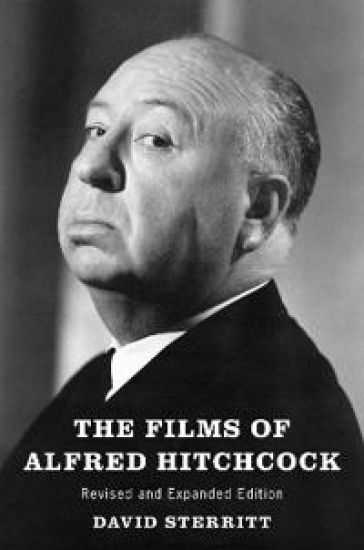
The Films of Alfred Hitchcock

The Films of Alfred Hitchcock

David Sterritt

Columbia University Press
2026
pokkari
Long renowned as the “master of suspense,” Alfred Hitchcock is one of the rare filmmakers to achieve both a critical reputation for cinematic artistry and enduring popularity with everyday moviegoers around the world. His distinctive public image brought together a serious, even tormented artist and a mischievous magician with a penchant for practical jokes. This book presents an engaging overview of Hitchcock’s life and work along with close studies of ten films spanning nearly five decades of his remarkable career. David Sterritt examines the fundamental themes that recur throughout Hitchcock’s films, including the ambiguities of reality and illusion, the blurred boundaries between guilt and innocence, the lures and perils of voyeurism, and the many ways in which the act of seeing can either reveal essential truths or lead to deception and danger. He highlights the director’s sophistication as an audiovisual stylist and audacity as a technical innovator while also exploring the religious undertones of key works. Sterritt considers films ranging from Blackmail (1929), the first talkie made in England, to Family Plot (1976), the director’s last completed movie. He analyzes canonized masterpieces such as Vertigo (1958) and Psycho (1960) alongside overlooked works including Rope (1948) and Under Capricorn (1949). Spotlighting the director’s extraordinary artistic range and thematic depth, The Films of Alfred Hitchcock offers new insights for both cinephiles and casual viewers.

The Films of Alfred Hitchcock

The Films of Alfred Hitchcock

David Sterritt

Columbia University Press
2026
sidottu
Long renowned as the “master of suspense,” Alfred Hitchcock is one of the rare filmmakers to achieve both a critical reputation for cinematic artistry and enduring popularity with everyday moviegoers around the world. His distinctive public image brought together a serious, even tormented artist and a mischievous magician with a penchant for practical jokes. This book presents an engaging overview of Hitchcock’s life and work along with close studies of ten films spanning nearly five decades of his remarkable career. David Sterritt examines the fundamental themes that recur throughout Hitchcock’s films, including the ambiguities of reality and illusion, the blurred boundaries between guilt and innocence, the lures and perils of voyeurism, and the many ways in which the act of seeing can either reveal essential truths or lead to deception and danger. He highlights the director’s sophistication as an audiovisual stylist and audacity as a technical innovator while also exploring the religious undertones of key works. Sterritt considers films ranging from Blackmail (1929), the first talkie made in England, to Family Plot (1976), the director’s last completed movie. He analyzes canonized masterpieces such as Vertigo (1958) and Psycho (1960) alongside overlooked works including Rope (1948) and Under Capricorn (1949). Spotlighting the director’s extraordinary artistic range and thematic depth, The Films of Alfred Hitchcock offers new insights for both cinephiles and casual viewers.
Rock 'n' Roll Movies

Rock 'n' Roll Movies

David Sterritt

Rutgers University Press
2017
sidottu
Rock ‘n’ Roll Movies presents an eclectic look at the many manifestations of rock in motion pictures, from teen-oriented B-movies to Hollywood blockbusters to avant-garde meditations to reverent biopics to animated shorts to performance documentaries. Acclaimed film critic David Sterritt considers the diverse ways that filmmakers have regarded rock ‘n’ roll, some cynically cashing in on its popularity and others responding to the music as sincere fans, some depicting rock as harmless fun and others representing it as an open challenge to mainstream norms.
Rock 'n' Roll Movies

Rock 'n' Roll Movies

David Sterritt

Rutgers University Press
2017
nidottu
Rock ‘n’ Roll Movies presents an eclectic look at the many manifestations of rock in motion pictures, from teen-oriented B-movies to Hollywood blockbusters to avant-garde meditations to reverent biopics to animated shorts to performance documentaries. Acclaimed film critic David Sterritt considers the diverse ways that filmmakers have regarded rock ‘n’ roll, some cynically cashing in on its popularity and others responding to the music as sincere fans, some depicting rock as harmless fun and others representing it as an open challenge to mainstream norms.
The Cinema of Clint Eastwood

The Cinema of Clint Eastwood

David Sterritt

Wallflower Press
2014
sidottu
He became a movie star playing The Man With No Name, and today his name is known around the world. Measured by longevity, productivity, and profits, Clint Eastwood is the most successful actor-director-producer in American film history. This book examines the major elements of his career, focusing primarily on his work as a director but also exploring the evolution of his acting style, his long association with screen violence, his interest in jazz, and the political views - sometimes hotly controversial - reflected in his films and public statements. Especially fascinating is the pivotal question that divides critics and moviegoers to this day: is Eastwood a capable director with a photogenic face, a modest acting talent, and a flair for marketing his image? Or is he a true cinematic auteur with a distinctive vision of America's history, traditions, and values? From A Fistful of Dollars and Dirty Harry to Million Dollar Baby and beyond, The Cinema of Clint Eastwood takes a close-up look at one of the screen's most influential and charismatic stars.
The Cinema of Clint Eastwood

The Cinema of Clint Eastwood

David Sterritt

Wallflower Press
2014
pokkari
He became a movie star playing The Man With No Name, and today his name is known around the world. Measured by longevity, productivity, and profits, Clint Eastwood is the most successful actor-director-producer in American film history. This book examines the major elements of his career, focusing primarily on his work as a director but also exploring the evolution of his acting style, his long association with screen violence, his interest in jazz, and the political views - sometimes hotly controversial - reflected in his films and public statements. Especially fascinating is the pivotal question that divides critics and moviegoers to this day: is Eastwood a capable director with a photogenic face, a modest acting talent, and a flair for marketing his image? Or is he a true cinematic auteur with a distinctive vision of America's history, traditions, and values? From A Fistful of Dollars and Dirty Harry to Million Dollar Baby and beyond, The Cinema of Clint Eastwood takes a close-up look at one of the screen's most influential and charismatic stars.
The Beats

The Beats

David Sterritt

Oxford University Press Inc
2013
nidottu
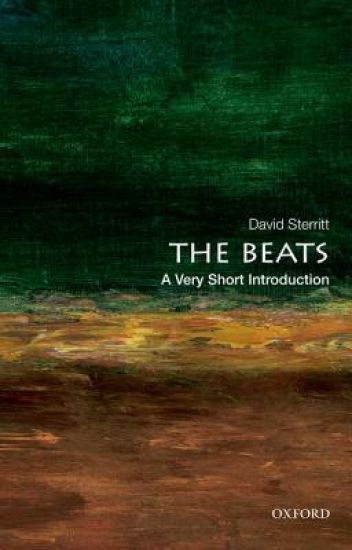
In the late 1950s and early 1960s, the Beat Generation writers revolutionized American literature with their iconoclastic approach to language and their angry assault on the conformity and conservatism of postwar society. They and their followers took aim at the hypocrisy and taboos of their time--particularly those involving sex, race, and class - in such provocative works as Jack Kerouac's On the Road (1957), Allen Ginsberg's Howl (1956), and William S. Burroughs's Naked Lunch (1959). This volume offers a concise overview of the social, cultural, and aesthetic sensibilities of the Beats, bringing out the similarities that connected them and also the many differences that made them a loosely knit collective rather than an organized movement. Principal figures in the saga include Neal Cassady, Gregory Corso, Lawrence Ferlinghetti, John Clellon Holmes, Carolyn Cassady, and Gary Snyder; locations range from Greenwich Village and San Francisco to Mexico, western Europe, and North Africa; topics include Beat approaches to literature, drugs, sexuality, art, music, and religion. Members of the Beat Generation hoped that their radical rejection of materialism, consumerism, and regimentation would inspire others to purify their lives and souls as well; yet they urged the remaking of consciousness on a profoundly inward-looking basis, cultivating "the unspeakable visions of the individual," in Kerouac's phrase. The idea was to revolutionize society by revolutionizing thought, not the other way around. This book explains how the Beats used their drastic visions and radical styles to challenge dominant values, fending off absorption into mainstream culture while preparing ground for the larger, more explosive social upheavals of the 1960s. More than half a century later, the Beats' impact can still be felt in literature, cinema, music, theater, and the visual arts. ABOUT THE SERIES: The Very Short Introductions series from Oxford University Press contains hundreds of titles in almost every subject area. These pocket-sized books are the perfect way to get ahead in a new subject quickly. Our expert authors combine facts, analysis, perspective, new ideas, and enthusiasm to make interesting and challenging topics highly readable.
Spike Lee's America

Spike Lee's America

David Sterritt

Polity Press
2012
nidottu
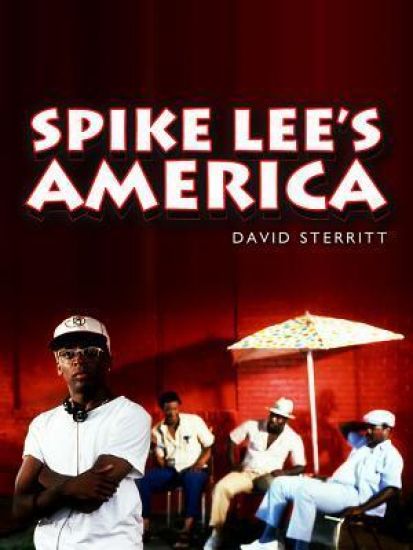
Spike Lee has directed, written, produced, and acted in dozens of films that present an expansive, nuanced, proudly opinionated, and richly multifaceted portrait of American society. As the only African-American filmmaker ever to establish a world-class career, Lee has paid acute attention to the experiences of racial and ethnic minorities. But white men and women also play important roles in his movies, and his interest in class, race, and urban life hasn’t prevented his films from ranging over broad swaths of the American scene in stories as diverse as the audiences who view them. His defining trait is a willingness to raise hard questions about contemporary America without pretending to have easy answers; his pictures are designed to challenge and provoke us, not ease our minds or pacify our emotions. The opening words of his 1989 masterpiece Do the Right Thing present his core message in two emphatic syllables: “Wake up!” Spike Lee’s America is a vibrant and provocative engagement not only with the work of a great filmmaker, but also with American society and politics.
Spike Lee's America

Spike Lee's America

David Sterritt

Polity Press
2012
sidottu
Spike Lee has directed, written, produced, and acted in dozens of films that present an expansive, nuanced, proudly opinionated, and richly multifaceted portrait of American society. As the only African-American filmmaker ever to establish a world-class career, Lee has paid acute attention to the experiences of racial and ethnic minorities. But white men and women also play important roles in his movies, and his interest in class, race, and urban life hasn’t prevented his films from ranging over broad swaths of the American scene in stories as diverse as the audiences who view them. His defining trait is a willingness to raise hard questions about contemporary America without pretending to have easy answers; his pictures are designed to challenge and provoke us, not ease our minds or pacify our emotions. The opening words of his 1989 masterpiece Do the Right Thing present his core message in two emphatic syllables: “Wake up!” Spike Lee’s America is a vibrant and provocative engagement not only with the work of a great filmmaker, but also with American society and politics.
The B List

The B List

John Anderson; David Sterritt

Da Capo Press Inc
2008
pokkari
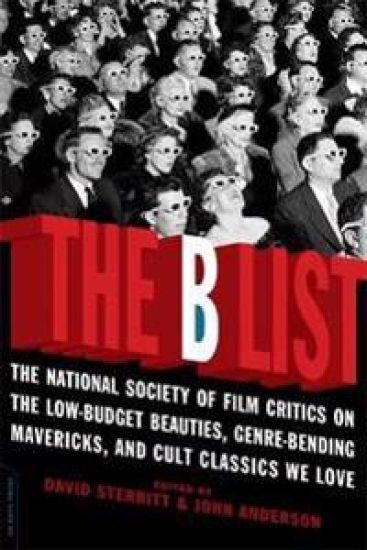
What kind of collection could possibly find common ground among The Son of Kong , Platoon , and Pink Flamingos ? What kind of fevered minds could conceive of such a list? What are the unheard-of qualities that tie them all together? The answers: This book. The National Society of Film Critics. And the far-reaching enticements of the B movie itself. Once the B movie was the Hollywood stepchild, the underbelly of the double feature. Today it is a more inclusive category, embracing films that fall outside the mainstream by dint of their budgets, their visions, their grit, and occasionally- sometimes essentially- their lack of what the culture cops call"good taste.” The films in The B List are offbeat, unpredictable, and decidedly idiosyncratic. And that's why we love them.
Screening the Beats

Screening the Beats

David Sterritt

Southern Illinois University Press
2004
sidottu
Screening the Beats: Media Culture and Beat Sensibility showcases the social and aesthetic viewpoints of lynchpin Beat writers Jack Kerouac, William S. Burroughs, and Allen Ginsberg, juxtaposing their artistry with 1950s cinema, bebop jazz, and Three Stooges farce. In clear prose, film critic David Sterritt captures the raw energy of the Beats and joins in their celebration of aesthetic freakishness. Tapping into the diversified spirit of the Beat Generation and its nuanced relationship with postwar American culture, he considers how the Beats variously fore-ground, challenge, and illuminate major issues in Hollywood and avant-garde film, critical and cultural theory, and aspects of music in the mass-media age. Sterritt engages the creative and spiritual facets of the Beats, emulating their desire to evoke ephemeral aspects of human existence. Dealing with high and low cultures, he highlights the complementary contributions made by these works. Screening the Beats grapples with the Beat conflict between spiritual purity and secular connectedness, which often materialized in beatific bebop spontaneity, Zen-like transcendentalism, and plain old hipster smarts that characterized the writings of Kerouac, Burroughs, and Ginsberg. Deftly threading literary, musical, and cinematic works with a colorful array of critical theories, this book illuminates the relationship between American culture and the imaginative forces of the Beat Generation.
The Films of Jean-Luc Godard

The Films of Jean-Luc Godard

David Sterritt

Cambridge University Press
1999
sidottu
The Films of Jean-Luc Godard examines the work of one of the most versatile and influential filmmakers in the history of cinema. With a career ranging from France's New Wave movement in the early 1960s to a period of political experimentation in the late 1960s and 70s, and, currently, a contemplative period in which Godard has explored issues of spirituality, sexuality, and the aesthetics of sound, image, and montage, the filmmaker's work defies easy categorization. In this study, David Sterritt offers an introductory overview of Godard's work as a filmmaker, critic, and video artist. In subsequent chapters, he traces Godard's visionary ideas through six of his key films, including Breathless, My Life to Live, Weekend, Numéro deux, Hail Mary, and Nouvelle Vague formats. Linking Godard's works to key social and cultural developments, The Films of Jean-Luc Godard explains their importance in modernist and postmodernist art of the last half century.
The Films of Jean-Luc Godard

The Films of Jean-Luc Godard

David Sterritt

Cambridge University Press
1999
pokkari
The Films of Jean-Luc Godard examines the work of one of the most versatile and influential filmmakers in the history of cinema. With a career ranging from France’s New Wave movement in the early 1960s to a period of political experimentation in the late 1960s and 70s, and, currently, a contemplative period in which Godard has explored issues of spirituality, sexuality, and the aesthetics of sound, image, and montage, the filmmaker’s work defies easy categorization. In this study, David Sterritt offers an introductory overview of Godard’s work as a filmmaker, critic, and video artist. In subsequent chapters, he traces Godard’s visionary ideas through six of his key films, including Breathless, My Life to Live, Weekend, Numéro deux, Hail Mary, and Nouvelle Vague formats. Linking Godard’s works to key social and cultural developments, The Films of Jean-Luc Godard explains their importance in modernist and postmodernist art of the last half century.
Mad to be Saved

Mad to be Saved

David Sterritt

Southern Illinois University Press
1998
sidottu
Film critic David Sterritt presents an interdisciplinary exploration of the Beat Generation, its intersections with mainstream and experimental film, and the interactions of all of these with American society and the culture of the 1950s. Sterritt balances the Beat countercultural goal of rebellion through both artistic creation and everyday behaviour against the mainstream values of conformity and conservatism, growing worry over cold-war hostilities, and the ""rat race"" toward material success. After an introductory overview of the Beat Generation, its history, its antecedents and its influences, Sterritt shows the importance of ""visual thinking"" in the lives and works of major Beat authors, most notably Jack Kerouac, Allen Ginsberg and William S. Burroughs. He turns to Mikhail Bakhtin's dialogic theory to portray the Beat writers - who were inspired by jazz and other liberating influences - as carnivalesque rebels against what they perceived as a rigid and stifling social order. Showing the Beats as social critics, Sterritt looks at the work of 1950s photographers Robert Frank and William Klein; the attack against Beat culture in the pictures and prose of ""Life"" magazine; and the counterattack in Frank's film ""Pull My Daisy"", featuring key Beat personalities. He further explores expressions of rebelliousness in ""film noir"", the melodrama of director Douglas Sirk, and other Hollywood films. Finally, Sterritt shows the changing attitudes toward the Beat sensibility in Beat-related Hollywood movies like ""A Bucket of Blood"" and ""The Beat Generation""; television programes like ""Route 66"" and ""The Many Loves of Dobie Gillis""; nonstudio films like John Cassavetes's improvisational ""Shadows"" and Shirley Clarke's experimental ""The Connection""; and radically avant-garde works by such doggedly independent screen artists as Stan Brakhage, Ron Rice, Bruce Connor and Ken Jacobs, drawing connections between their achievements and the most subversive products of their Beat contemporaries.
The Films of Alfred Hitchcock

The Films of Alfred Hitchcock

David Sterritt

Cambridge University Press
1993
sidottu
The introduction gives an overview of Hitchcock's long career, with special attention to the varied influences on his work; themes that run through many of his films, from the 'transference of guilt', to the connection between knowledge and danger; the overlooked importance of his presence within his films, including his famous cameo appearances and characters who represent him within the story; his fascination with performance and the ambiguities of illusion and reality; the question of viewing him and his work through the auteur theory; and other issues. Also discussed is the relationship between Hitchcock as a serious, even tormented artist and Hitchcock as a magician with a weakness for cinematic practical jokes. Six chapters then provide in-depth examinations of key films: Blackmail, his first talkie; Shadow of a Doubt, one of his personal favourites; The Wrong Man, which questions the nature of guilt and innocence; Vertigo, arguably his most profound work; Psycho, his most savage look at the nature of evil; and The Birds, his last masterpiece and one of his most widely misunderstood works.