Kirjojen hintavertailu. Mukana 12 595 353 kirjaa ja 12 kauppaa.

Kirjailija

David Stuart

Kirjat ja teokset yhdessä paikassa: 25 kirjaa, julkaisuja vuosilta 1983-2026, suosituimpien joukossa The Memory of Bones. Vertaile teosten hintoja ja tarkista saatavuus suomalaisista kirjakaupoista.

25 kirjaa

Kirjojen julkaisuhaarukka 1983-2026.

The Memory of Bones

The Memory of Bones

Stephen D. Houston; David Stuart; Karl Taube

University of Texas Press
2006
pokkari
All of human experience flows from bodies that feel, express emotion, and think about what such experiences mean. But is it possible for us, embodied as we are in a particular time and place, to know how people of long ago thought about the body and its experiences? In this groundbreaking book, three leading experts on the Classic Maya (ca. AD 250 to 850) marshal a vast array of evidence from Maya iconography and hieroglyphic writing, as well as archaeological findings, to argue that the Classic Maya developed a coherent approach to the human body that we can recover and understand today.The authors open with a cartography of the Maya body, its parts and their meanings, as depicted in imagery and texts. They go on to explore such issues as how the body was replicated in portraiture; how it experienced the world through ingestion, the senses, and the emotions; how the body experienced war and sacrifice and the pain and sexuality that were intimately bound up in these domains; how words, often heaven-sent, could be embodied; and how bodies could be blurred through spirit possession.From these investigations, the authors convincingly demonstrate that the Maya conceptualized the body in varying roles, as a metaphor of time, as a gendered, sexualized being, in distinct stages of life, as an instrument of honor and dishonor, as a vehicle for communication and consumption, as an exemplification of beauty and ugliness, and as a dancer and song-maker. Their findings open a new avenue for empathetically understanding the ancient Maya as living human beings who experienced the world as we do, through the body.
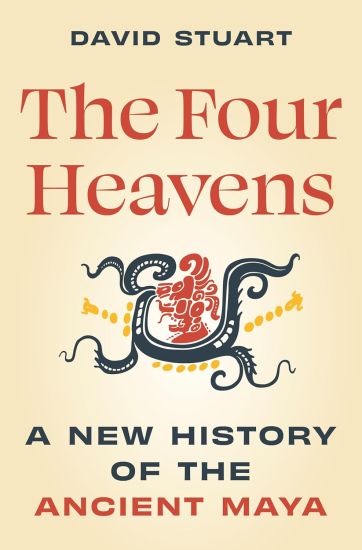
The Four Heavens

The Four Heavens

David Stuart

PRINCETON UNIVERSITY PRESS
2026
sidottu
From the world-leading expert on the Maya, a monumental history of a flourishing civilization across three millennia The Four Heavens brings to life the cultural and visual splendor of the ancient Maya, drawing on the oldest indigenous texts of the Americas and the latest archaeological discoveries to present an entirely new history of this spectacular civilization. Renowned historian and archaeologist David Stuart, who has made groundbreaking contributions to the decipherment of Maya hieroglyphics, shows how there was no single rise and fall of the Maya but a series of births and collapses over a breathtaking span of nearly three millennia. Maya history was seemingly lost forever when the first Europeans encountered the great ruins of ancient cities in what is today Mexico and Central America. Today, with the recent decipherment of their ancient writings, the story of the Maya can now be told from their perspective. Stuart traces the rapid emergence of permanent settlements in the rainforest, which gave rise to monumental architecture and a flourishing urbanism and ushered in the Classic period of Maya civilization beginning in the mid-second century CE. He reveals a world of majestic royal courts tightly bound together by marriages, shifting alliances, and warfare, much of it driven by the ambitions of two major dynasties, the Kanuls and Mutuls. Stuart describes how the long-standing rivalry between these two great houses shaped the fates of the surrounding kingdoms and may have set the stage for “the Great Rupture” of the nineth century, when the royal courts buckled under the weight of internal strife, social unrest, and environmental crisis, transforming Maya civilization yet again. With stunning illustrations, including many of Stuart’s own drawings and images, The Four Heavens is a work of momentous historical sweep, one that paints an unforgettable portrait of the Maya and the richly complex social, political, and cosmological worlds in which they lived. Available in Spanish from our partners at Grupo Planeta
A Celebration of Anglo-Scottish Footballers

A Celebration of Anglo-Scottish Footballers

Robert Marshall; David Stuart

PITCH PUBLISHING LTD
2025
sidottu
Scottish football authors David Stuart and Robert Marshall cross the border to salute the contributions and successes of their fellow countrymen and women who have displayed their skills in the English football leagues – from the end of the Second World War to the present day.They take a celebratory look at great Scots – Law, Mackay, Bremner, Dalglish, Gemmill, Strachan, McAllister and other – who have played their part in era-defining teams crafted by the likes of Bill Nicholson, Don Revie, Brian Clough and Bob Paisley, plus Scots managers Matt Busby, Bill Shankly and Alex Ferguson.As well as celebrating the top-notchers, the book pays tribute to various lesser lights – Caledonian cult heroes who’ve been immortalised in England’s green and pleasant land, including Jim McNichol (Torquay United), Willie Carr (Coventry City) and Ted MacDougall (Bournemouth).These riveting tales of Anglo-Scottish players are brought to life by stunning colour images of trading cards, matchday programmes and magazines.
Web Metrics for Library and Information Professionals
Library and information professionals increasingly need to create, manage, and monitor a wide range of online content, from a library’s social media account and web sites to the new and traditional research outputs that funders expect to be made available openly online. It is important that they understand the new opportunities that web metrics provide for measuring the impact of an individual or an organisation’s content. This book provides an up-to-date introduction to a wide range of web metrics, with practical examples of how they can be best put to use.The book will begin with a wider discussion on the role of metrics, and how web metrics overlap with associated concepts with a longer library and information science history such as scientometrics and bibliometrics. It will explore the latest tools that are available, many of which have changed since the publication of the first edition, as well as how we can expect the field to change in the future with machine intelligence and artificial intelligence becoming more widely available.This new edition has been extended and updated throughout to reflect the rapidly changing nature of the field. As well as updates to the user-friendly tools and resources, there is a greater emphasis on the programming libraries that are available, as library and information professionals are increasingly willing to start engaging with data that is available programmatically. After reading the book the information professional will not only be better placed to adopt web metrics in their workplace, but also be critical of the misuse of web metrics.
Web Metrics for Library and Information Professionals
Library and information professionals increasingly need to create, manage, and monitor a wide range of online content, from a library’s social media account and web sites to the new and traditional research outputs that funders expect to be made available openly online. It is important that they understand the new opportunities that web metrics provide for measuring the impact of an individual or an organisation’s content. This book provides an up-to-date introduction to a wide range of web metrics, with practical examples of how they can be best put to use.The book will begin with a wider discussion on the role of metrics, and how web metrics overlap with associated concepts with a longer library and information science history such as scientometrics and bibliometrics. It will explore the latest tools that are available, many of which have changed since the publication of the first edition, as well as how we can expect the field to change in the future with machine intelligence and artificial intelligence becoming more widely available.This new edition has been extended and updated throughout to reflect the rapidly changing nature of the field. As well as updates to the user-friendly tools and resources, there is a greater emphasis on the programming libraries that are available, as library and information professionals are increasingly willing to start engaging with data that is available programmatically. After reading the book the information professional will not only be better placed to adopt web metrics in their workplace, but also be critical of the misuse of web metrics.
Scottish Football

Scottish Football

David Stuart; Robert Marshall

Pitch Publishing Ltd
2021
sidottu
Scottish Football: Souvenirs from the Golden Years - 1946 to 1986 takes a nostalgic look at Scottish football and mementoes from four decades when the game was at its (almost) egalitarian and entertaining best. It was a period with a wide spread of trophy winners: eight different league champions, 14 clubs sharing the two main domestic cup competitions, plus trophy successes in Europe for Celtic, Rangers and Aberdeen, and semi-final near-misses for Dundee, Dundee United, Dunfermline Athletic, Hibs and Kilmarnock. This fascinating book also spotlights the British Championship, the Summer, Drybrough and Texaco Cups plus a host of cult heroes, lost stadia - and Quiz Ball! Alongside this colourful history are collectable treasures. It was a time when programmes were succinct sought-after souvenirs and not bloated corporate catalogues, when trading cards were useful and informative. Annuals, magazines and club handbooks also added to our wisdom. We'll never see an era like '46 to '86 again, so here's your chance to savour it once more.
Practical Data Science for Information Professionals
Practical Data Science for Information Professionals provides an accessible introduction to a potentially complex field, providing readers with an overview of data science and a framework for its application. It provides detailed examples and analysis on real data sets to explore the basics of the subject in three principle areas: clustering and social network analysis; predictions and forecasts; and text analysis and mining.As well as highlighting a wealth of user-friendly data science tools, the book also includes some example code in two of the most popular programming languages (R and Python) to demonstrate the ease with which the information professional can move beyond the graphical user interface and achieve significant analysis with just a few lines of code. After reading, readers will understand:· the growing importance of data science · the role of the information professional in data science · some of the most important tools and methods that information professionals can use.Bringing together the growing importance of data science and the increasing role of information professionals in the management and use of data, Practical Data Science for Information Professionals will provide a practical introduction to the topic specifically designed for the information community. It will appeal to librarians and information professionals all around the world, from large academic libraries to small research libraries. By focusing on the application of open source software, it aims to reduce barriers for readers to use the lessons learned within.
Practical Data Science for Information Professionals
Practical Data Science for Information Professionals provides an accessible introduction to a potentially complex field, providing readers with an overview of data science and a framework for its application. It provides detailed examples and analysis on real data sets to explore the basics of the subject in three principle areas: clustering and social network analysis; predictions and forecasts; and text analysis and mining.As well as highlighting a wealth of user-friendly data science tools, the book also includes some example code in two of the most popular programming languages (R and Python) to demonstrate the ease with which the information professional can move beyond the graphical user interface and achieve significant analysis with just a few lines of code. After reading, readers will understand:· the growing importance of data science · the role of the information professional in data science · some of the most important tools and methods that information professionals can use.Bringing together the growing importance of data science and the increasing role of information professionals in the management and use of data, Practical Data Science for Information Professionals will provide a practical introduction to the topic specifically designed for the information community. It will appeal to librarians and information professionals all around the world, from large academic libraries to small research libraries. By focusing on the application of open source software, it aims to reduce barriers for readers to use the lessons learned within.
Scotland: Club; Country & Collectables

Scotland: Club; Country & Collectables

David Stuart; Robert Marshall

Pitch Publishing Ltd
2019
sidottu
Scotland: Club, Country, Collectables continues the authors' offbeat look at the issues and idiosyncrasies associated with Scottish international football. It's a celebration of the good, the bad and the mementoes treasured by fans irrespective of results. There's a flavour of the contributions made by our clubs - the players who became legends, those who tried hard, and others who merely tried our patience. A sideways look at Scottish football culture includes opposition teams and past tournaments, statistical overviews and memories full of typical Scottish weltschmerz and schadenfreude. The Road to Euro 2020 is covered, with clues offered as to whether Scotland can qualify for our first 'finals' in over 20 years - or will we achieve the rare distinction of being a host that fails to make it to our own party? While some Scotland supporters may only have tears for souvenirs, Club, Country, Collectables has everything from match programmes and trading cards to badges and beer labels, postcards, postage stamps and replica jerseys.
Scotland - Glory; Tears & Souvenirs

Scotland - Glory; Tears & Souvenirs

Robert Marshall; David Stuart

Pitch Publishing Ltd
2017
sidottu
Scotland - Glory, Tears & Souvenirs is an offbeat collection of memories, mementos, rants and aspirations relating to Scotland's national football team. A 'look back in hunger' on the post-war era, with emphasis on the 1970s to date. A reminder of the way football was, the way it is now and the way we'd like it to be! There's Switzerland 54, Denis Law, trading cards, match programmes, Archie Gemmill, Argentina 78, beermats, Kenny Dalglish, vinyl records, Spain 82, Ally McCoist, the Tartan Army, Italia 90, the Kirin Cup, Jimmy Hill, France 98, Panini stickers and James McFadden. Nostalgia and a warped sense of humour are what gets Scotland supporters through in a nightmare world where all our near-neighbours now get to 'go to the ball' - France 2016, at least - while we await the arrival of a Fairy Godmother and a defence that doesn't leak goals. There's no room for wallowing in self-pity, though. Read this therapeutic comfort blanket of a book, cheer at the good bits and laugh at the bad. We shall overcome...
Web Metrics for Library and Information Professionals
A practical guide to using web metrics to measure impact and demonstrate value. The web provides an opportunity to collect a host of different metrics, from those associated with social media accounts and websites to more traditional research outputs. This book is a clear guide for library and information professionals as to what web metrics are available and how to assess and use them to make informed decisions and demonstrate value. As individuals and organizations increasingly use the web in addition to traditional publishing avenues and formats, this book provides the tools to unlock web metrics and evaluate the impact of this content. Key topics covered include:Introduction to web metricsBibliometrics, webometrics and web metricsData collection toolsEvaluating impact on the webEvaluating social media impactInvestigating relationships between actorsExploring traditional publications in a new environmentWeb metrics and the web of dataThe future of web metrics and the library and information professional. Readership: This book will provide a practical introduction to web metrics for a wide range of library and information professionals, from the bibliometrician wanting to demonstrate the wider impact of a researcher’s work than can be demonstrated through traditional citations databases, to the reference librarian wanting to measure how successfully they are engaging with their users on Twitter. It will be a valuable tool for anyone who wants to not only understand the impact of content, but demonstrate this impact to others within the organization and beyond.
Practical Ontologies for Information Professionals
Practical Ontologies for Information Professionals provides an accessible introduction and exploration of ontologies and demonstrates their value to information professionals. More data and information is being created than ever before. Ontologies, formal representations of knowledge with rich semantic relationships, have become increasingly important in the context of today’s information overload and data deluge. The publishing and sharing of explicit explanations for a wide variety of conceptualizations, in a machine readable format, has the power to both improve information retrieval and discover new knowledge. Information professionals are key contributors to the development of new, and increasingly useful, ontologies. Practical Ontologies for Information Professionals provides an accessible introduction to the following:defining the concept of ontologies and why they are increasingly important to information professionalsontologies and the semantic webexisting ontologies, such as RDF, RDFS, SKOS, and OWL2adopting and building ontologies, showing how to avoid repetition of work and how to build a simple ontologyinterrogating ontologies for reusethe future of ontologies and the role of the information professional in their development and use.This book will be useful reading for information professionals in libraries and other cultural heritage institutions who work with digitalization projects, cataloguing and classification and information retrieval. It will also be useful to LIS students who are new to the field.
Practical Ontologies for Information Professionals
Practical Ontologies for Information Professionals provides an accessible introduction and exploration of ontologies and demonstrates their value to information professionals. More data and information is being created than ever before. Ontologies, formal representations of knowledge with rich semantic relationships, have become increasingly important in the context of today’s information overload and data deluge. The publishing and sharing of explicit explanations for a wide variety of conceptualizations, in a machine readable format, has the power to both improve information retrieval and discover new knowledge. Information professionals are key contributors to the development of new, and increasingly useful, ontologies. Practical Ontologies for Information Professionals provides an accessible introduction to the following:defining the concept of ontologies and why they are increasingly important to information professionalsontologies and the semantic webexisting ontologies, such as RDF, RDFS, SKOS, and OWL2adopting and building ontologies, showing how to avoid repetition of work and how to build a simple ontologyinterrogating ontologies for reusethe future of ontologies and the role of the information professional in their development and use.This book will be useful reading for information professionals in libraries and other cultural heritage institutions who work with digitalization projects, cataloguing and classification and information retrieval. It will also be useful to LIS students who are new to the field.
The Order of Days

The Order of Days

David Stuart

Three Rivers Press
2012
pokkari
The world's foremost expert on Maya culture looks at 2012 hysteria and explains the truth about what the Maya meant and what we want to believe. "Apocalypse 2012: An Investigation into Civilizations End. The World Cataclysm in 2012. 2012: The return of Quetzalcoatl." According to many of these alarmingly titled books, the ancient Maya not only had a keen insight into the mystical workings of our planet and the cosmos, but they were also able to predict that the world will end in the year 2012. David Stuart, the foremost scholar of the Maya and recipient of numerous awards for his work, takes a hard look at the frenzy over 2012 and offers a fascination (and accurate) trip through Mayan culture and belief. Stuart shows how the idea that the "end of the Mayan calendar," which supposedly heralds the end of our own existence, says far more about our culture than about the ancient Maya. "The Order of Days "explores how the real intellectual achievement of ancient Maya timekeeping and worldview is far more impressive and remarkable than any of the popular, and often outrageous, claims about this advanced civilization.As someone who has studied the Maya for nearly all of his life and who specializes in reading their ancient texts, Stuart sees the 2012 hubbub as the most recent in a long chain of related ideas about Mesoamericans, the Maya in particular, that depicts them as somehow oddball, not "of this world," or as having some strong mystical link to other realms.Because the year 2012 has no prominent role in anything the ancient Maya ever actually wrote, Stuart takes a wider look at the Maya concepts of time and their underlying philosophy as we can best understand them. The ancient Maya, Stuart contends, were worthy of study and admiration not because they were strange but because they were altogether human, and they developed a compelling vision of time unlike any other civilization before or since. "From the Hardcover edition."