

Kirjailija
David Swift
Kirjat ja teokset yhdessä paikassa: 9 kirjaa, julkaisuja vuosilta 2009-2026, suosituimpien joukossa Honk! If You Love the NHS. Vertaile teosten hintoja ja tarkista saatavuus suomalaisista kirjakaupoista.
9 kirjaa
Kirjojen julkaisuhaarukka 2009-2026.


'Liverpool beguiles, Liverpool bewilders. Swift's superb analysis gets to the scarred heart of this troubled, beautiful and spirited city' Paul Du Noyer'[Swift] has a terrific eye for the telling detail . . . You should read this book' Guardian'Fascinating, funny and full of great stories - just like the city itself' Alywn Turner'Deftly blends a sweeping, multi-century history of the city's rising and fading fortunes with the cultural vignettes of Beatlemania and Merseybeat, the figure of the "scally" and Liverpool's "birds", and the emergence of football casual culture which began on Anfield and Goodison Park's terraces' New StatesmanLiverpool is a unique city within the United Kingdom; its dialect, hedonism, friendliness, rejection of 'Englishness' and, most pertinently, its politics, all make for a rich cultural landscape. Yet, many of the things that make Liverpool the city it is today were not always at the fore. Furthermore, the complexity of the city, and an investigation into all aspects of its past, has not been readily available - until now.In Scouse Republic, David Swift expertly tracks the city's transformation from a humble village to a central component of the transatlantic slave trade and one of the most important ports in the world; from a stronghold of working-class Toryism to a bastion of left-wing politics, and analyses how the two manifest today. Swift interrogates the myths surrounding the city, offering a fully rounded perspective that considers both Liverpool's triumphs and tragedies, cleverly demonstrating how its remarkable evolution has added to the city's distinctive status. After all, in order to understand Liverpool, we need to understand its idiosyncrasies - all of which are key to comprehending modern Britain today, particularly in relation to racism, empire, deindustrialisation, immigration, popular culture and more.Interspersed with personal anecdotes from Swift, who was born and bred in Liverpool, Scouse Republic is the untold history of one of the UK's most iconic cities. Brilliantly researched and deeply compelling, it illustrates that there is far more to Liverpool than meets the eye.
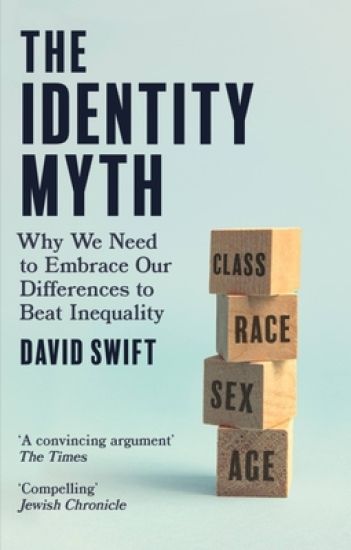
We are in crisis. As a society we have never been less connected. The internet and globalisation fuel ignorance and anger, while the disconnect between people's reality and perceived identities has never been greater. Karl Marx outlined the idea of a material 'base' and politico-cultural 'superstructure'. According to this formula, a material reality - wealth, income, occupation - determined your politics, leisure habits, tastes, and how you made sense of the world. Today, the importance of material deprivation, in terms of threats to life, health and prosperity, are as acute as ever. But the identities apparently generated by these realities are increasingly detached from material circumstances. At the same time, different identities are needlessly conflated through a process of reeling off a list of -isms and -phobias, and are lumped together, as though these groups all somehow have something in common with one another. Th is process is not just inappropriate but obscures the specific nature of problems being faced. In The Identity Myth, David Swift covers the four different kinds of identity most susceptible to this trend - class, race, sex and age. He considers how the boundaries of identities are policed and how diverse versions of the same identity can be deployed to different ends. Ultimately, it is not that identities are simply more 'complex' than they appear but that there are more important commonalities. In a powerful call to arms, Swift argues that we must unite against these identity myths and embrace our differences to beat inequality.
We are in crisis.As a society we have never been less connected.The internet and globalisation fuel ignorance and anger, while the disconnect between people's reality and perceived identities has never been greater.Karl Marx outlined the idea of a material 'base' and politico-cultural 'superstructure'. According to this formula, a material reality - wealth, income, occupation - determined your politics, leisure habits, tastes, and how you made sense of the world. Today, the importance of material deprivation, in terms of threats to life, health and prosperity, are as acute as ever. But the identities apparently generated by these realities are increasingly detached from material circumstances. At the same time, different identities are needlessly conflated through a process of reeling off a list of -isms and -phobias, and are lumped together, as though these groups all somehow have something in common with one another. Th is process is not just inappropriate but obscures the specific nature of problems being faced.In The Identity Myth, David Swift covers the four different kinds of identity most susceptible to this trend - class, race, sex and age. He considers how the boundaries of identities are policed and how diverse versions of the same identity can be deployed to different ends. Ultimately, it is not that identities are simply more 'complex' than they appear but that there are more important commonalities.In a powerful call to arms, Swift argues that we must unite against these identity myths and embrace our differences to beat inequality.

In the first full length analysis of the rise of left-wing hobbyists, performative radicals and the 'Identity Left', A Left for Itself interrogates the connection between socio-economic realities and politico-cultural views and boldly asks what is a worthy politics, one for the follower count or one for effecting change. 'In the sometimes febrile environment of contemporary left politics, this book is a measured and evaluative contribution. David Swift cuts through the rhetoric of often violent and divisive exchanges to uncover the roots, motivations, diverse character and strengths and weaknesses of the current phenomenon of so-called `identity politics'.' Dr Stephen Meredith

The First World War has often suffered from comparison to the Second, in terms of both public interest and the significance ascribed to it by scholars in the shaping of modern Britain. This is especially so for the relationship between the Left and these two wars. For the Left, the Second World War can be seen as a time of triumph: a united stand against fascism followed by a landslide election win and a radical, reforming Labour government. The First World War is more complex. Given the gratuitous cost in lives, the failure of a ‘fit country for heroes to live in’ to materialise, the deep recessions and unemployment of the inter-war years, and the botched peace settlements which served only to precipitate another war, the Left has tended to view the conflict as an unmitigated disaster and unpardonable waste. This has led to a tendency on the Left to see the later conflict as the ‘good’ war, fought against an obvious evil, and the earlier conflict as an imperialist blunder; the result of backroom scheming, secret pacts and a thirst for colonies. This book hopes to move away from a concentration on machinations at the elite levels of the labour movement, on events inside Parliament and intellectual developments; there is a focus on less well-visited material.
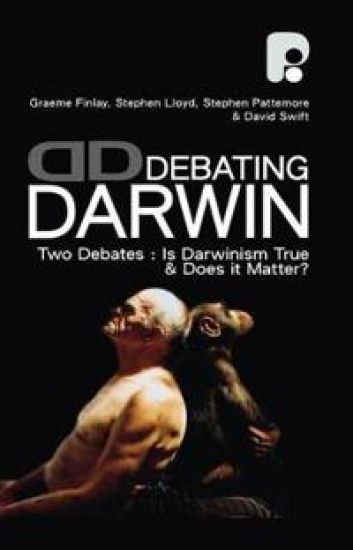
Debating Darwin
Graeme Finlay; Stephen Lloyd; Stephen Pattemore; David Swift
Paternoster Press
2009
nidottu
Is Darwin a tool of Satan or a voice of reason? 2009 is the 150th anniversary of the publication of The Origin of Species and Christians continue to disagree about whether Darwinism should be baptized into our theology or rejected as a tool of Satan. Debating Darwin:Two Debates-is Darwinism True and Does it Matter? is aimed at Christians on both sides of the debate and hopes to further discussion. In this book two distinct questions are under the microscope 1. Is Darwinism compatible with orthodox Christian faith? 2. Does the scientific evidence support Darwinism? The book begins with a simple explanation of the neo-Darwinian theory of evolution. Stephen Lloyd then opens the first debate by making a theological and biblical case against Darwinism. He is met in battle by Graeme Finlay and Stephen Pattemore who argue that Christian Scripture and theology are compatible with Darwinism. This book will not tell readers what to think but it will inform the more intelligent debate.