
Kirjailija
David T. Canon
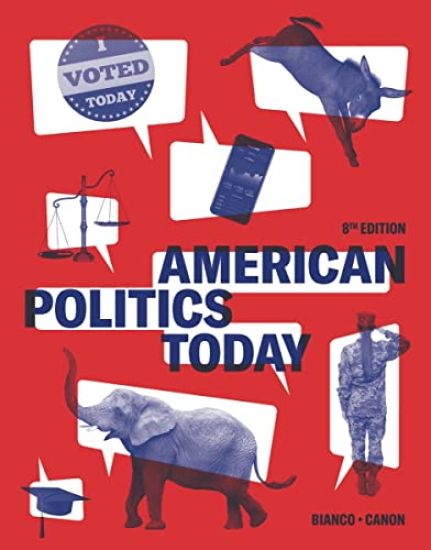
Kirjat ja teokset yhdessä paikassa: 8 kirjaa, julkaisuja vuosilta 1990-2022, suosituimpien joukossa American Politics Today. Vertaile teosten hintoja ja tarkista saatavuus suomalaisista kirjakaupoista.
Mukana myös kirjoitusasut: David T Canon
8 kirjaa
Kirjojen julkaisuhaarukka 1990-2022.
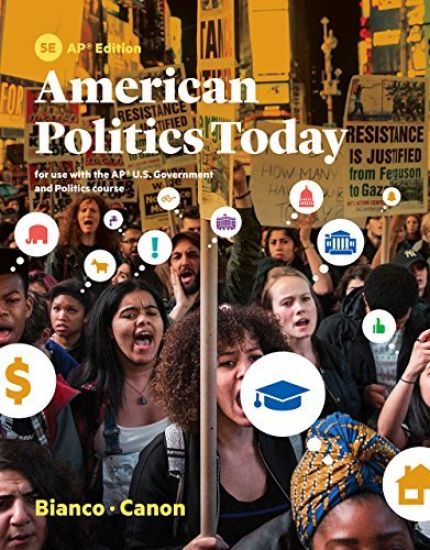
American Politics Today, Fifth AP® Edition, is designed to show students the reality of politics today and how it connects to their own lives. New features—from chapter opening cases that address the kinds of questions students ask, to full-page graphics that illustrate key political processes—show students how politics works and why it matters. All components of the learning package—textbook, InQuizitive adaptive learning tool, and coursepack are organized around specific chapter learning goals to ensure that students learn the nuts and bolts of American government. AP® is a trademark registered and/or owned by the College Board, which was not involved in the production of, and does not endorse, this product.

This book introduces students to an argument using rational choice theories to explain what happens when individuals come together to make collective decisions, emphasising on the collective dilemma concept that provides a framework for thinking about how reform proposals would affect Congress.
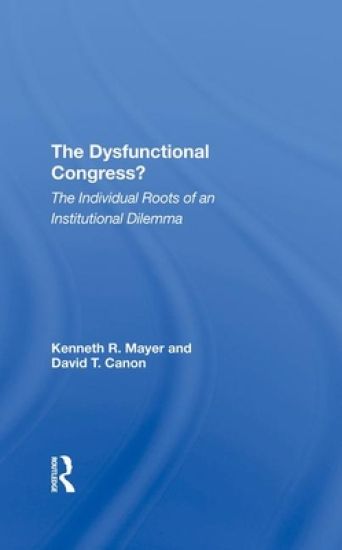
This book introduces students to an argument using rational choice theories to explain what happens when individuals come together to make collective decisions, emphasising on the collective dilemma concept that provides a framework for thinking about how reform proposals would affect Congress.
Since the creation of minority-dominated congressional districts in 1991, the Supreme Court has condemned the move as akin to "political apartheid", while many African-American leaders argue that such districts are required for authentic representation. In this treatment of the subject, David Canon shows that the unintended consequences of black majority districts actually contradict the common wisdom that whites will not be adequately represented in these areas. Not only do black candidates need white votes to win, but this crucial "swing" vote often decides the race. And, once elected, even the black members who appeal primarily to black voters usually do a better job than white members of walking the racial tightrope, balancing the needs of their diverse constituents. Ultimately, Canon contends, minority districting is good for the country as a whole. These districts not only give African Americans a greater voice in the political process, they promote a politics of commonality - a biracial politics - rather than a politics of difference.

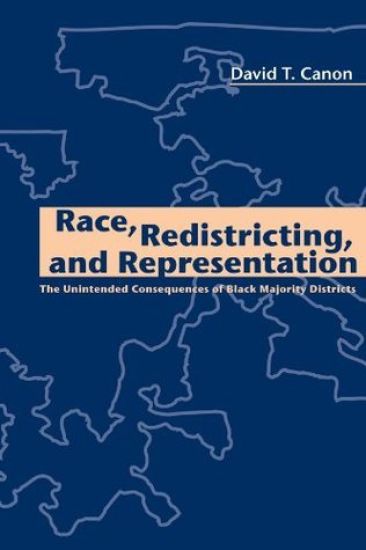
Since the creation of minority-dominated congressional districts in 1991, the Supreme Court has condemned the move as akin to "political apartheid", while many African-American leaders argue that such districts are required for authentic representation. In this treatment of the subject, David Canon shows that the unintended consequences of black majority districts actually contradict the common wisdom that whites will not be adequately represented in these areas. Not only do black candidates need white votes to win, but this crucial "swing" vote often decides the race. And, once elected, even the black members who appeal primarily to black voters usually do a better job than white members of walking the racial tightrope, balancing the needs of their diverse constituents. Ultimately, Canon contends, minority districting is good for the country as a whole. These districts not only give African Americans a greater voice in the political process, they promote a politics of commonality - a biracial politics - rather than a politics of difference.
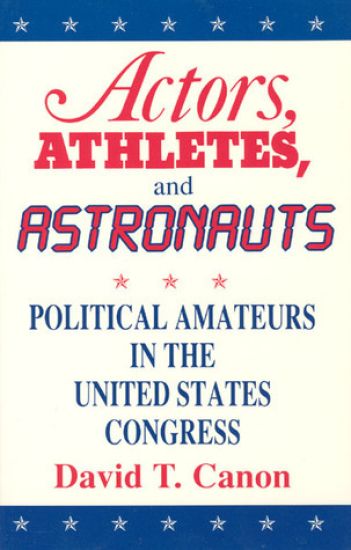
The U.S. Congress is typically seen as an institution filled with career politicians who have been seasoned by experience in lower levels of political office. In fact, political amateurs have comprised roughly one quarter of the House of Representatives since 1930. The effect of amateurs' inexperience on their political careers, roles in Congress, and impact on the political system has never been analyzed in detail. Written in a lucid style accessible to the nonspecialist, David T. Canon's Actors, Athletes, and Astronauts is a definitive study of political amateurs in elections and in Congress. Canon examines the political conditions that prompt amateurs to run for office, why they win or lose, and whether elected amateurs behave differently from their experienced counterparts. Challenging previous work which presumed stable career structures and progressively ambitious candidates, his study reveals that amateurs are disproportionately elected in periods of high political opportunity, such as the 1930s for Democrats and 1980s for Republicans. Canon's detailed findings call for significant revision of our prevailing understanding of ambition theory and disarm monolithic interpretations of political amateurs. His unique typology of amateurism differentiates among policy-oriented, "hopeless," or ambitious amateurs. The latter resemble their professional counterparts; "hopeless" amateurs are swept into office by strong partisan motivations and decision-making styles of each type vary, affecting their degree of success, but each type of amateur provides a necessary electoral balance by defeating entrenched incumbents rarely challenged by more experienced politicians.
The U.S. Congress is typically seen as an institution filled with career politicians who have been seasoned by experience in lower levels of political office. In fact, political amateurs have comprised roughly one quarter of the House of Representatives since 1930. The effect of amateurs' inexperience on their political careers, roles in Congress, and impact on the political system has never been analyzed in detail. Written in a lucid style accessible to the nonspecialist, David T. Canon's Actors, Athletes, and Astronauts is a definitive study of political amateurs in elections and in Congress. Canon examines the political conditions that prompt amateurs to run for office, why they win or lose, and whether elected amateurs behave differently from their experienced counterparts. Challenging previous work which presumed stable career structures and progressively ambitious candidates, his study reveals that amateurs are disproportionately elected in periods of high political opportunity, such as the 1930s for Democrats and 1980s for Republicans. Canon's detailed findings call for significant revision of our prevailing understanding of ambition theory and disarm monolithic interpretations of political amateurs. His unique typology of amateurism differentiates among policy-oriented, "hopeless," or ambitious amateurs. The latter resemble their professional counterparts; "hopeless" amateurs are swept into office by strong partisan motivations and decision-making styles of each type vary, affecting their degree of success, but each type of amateur provides a necessary electoral balance by defeating entrenched incumbents rarely challenged by more experienced politicians.