Kirjojen hintavertailu. Mukana 12 390 323 kirjaa ja 12 kauppaa.

Kirjailija

David T. McNab

Kirjat ja teokset yhdessä paikassa: 4 kirjaa, julkaisuja vuosilta 1999-2009, suosituimpien joukossa Canada's First Nations. Vertaile teosten hintoja ja tarkista saatavuus suomalaisista kirjakaupoista.

4 kirjaa

Kirjojen julkaisuhaarukka 1999-2009.

Canada's First Nations

Canada's First Nations

Olive Dickason; David T. McNab

Oxford University Press, Canada
2008
nidottu
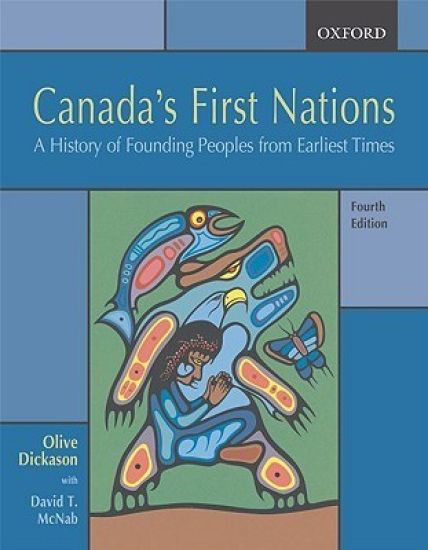
Canada's First Nations uses an interdisciplinary approach-drawing on research in archaeology, anthropology, biology, sociology, political science, and history-to give an account of Canada's past. Olive Dickason's widely acclaimed history of Canada's founding peoples is augmented by David McNab's updates and in-depth examination of recent events, including the Ipperwash inquiry and global warming's effect on Innu of Canada's the north. This text describes how Canada's Aboriginal peoples were radically altered by the arrival of Europeans. They fought as allies beside the French and English during the battles of the eighteenth and nineteenth centuries; they were hunted to the point of extermination in Newfoundland; and their numbers were decimated by European diseases. In the nineteenth and early twentieth centuries Canada tried to legislate Aboriginal cultures out of existence, as the official assumption remained that assimilation would bring an end to any Indian 'Problem'. From Nescambiouit and Potiac, to Pound Maker, Abe Okpik, and Elijah Harper, Amerindians and Inuit have responded to persistent colonial pressure in various ways, including attempts at co-operation, episodes of resistances, and politically sophisticated efforts to preserve their territoriy and culture. The revitalization of today's Aboriginal communities-dramatically expressed by the Mohawk at Oka in 1990 and by members of the six nations in Caledonia in 2005-reminds us that accurate perception of the past is essential to a just shaping of Canada's future.
No Place for Fairness

No Place for Fairness

David T. McNab

McGill-Queen's University Press
2009
nidottu
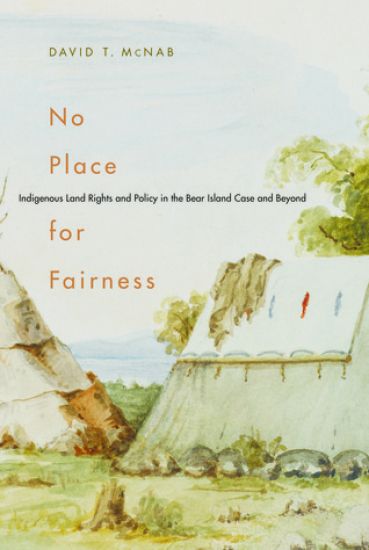
Aboriginal policy and claims negotiation in Canada is seen to be a murky and perplexing world that has become an important public issue and has significant policy implications for government spending. Aboriginal land policy in Canada began as an Aboriginal initiative. In No Place for Fairness, David McNab - a long time advisor on land and treaty rights for both government and First Nations groups - looks at the Bear Island Indigenous rights case, initiated by the Teme-Augama Anishinabe, to explore why governments fail to deal effectively with Aboriginal land claims. The book, divided into two sections, includes a survey of the historical background of the Bear Island claim followed by a more personal series of reflections about what happened as the claim encountered decades of policy hurdles, court cases, public protests, and above all resistance by the Temagami First Nation. McNab provides details of how ministers and their senior officials resisted real efforts to resolve problems as well as examples of field staff resisting government attempts at resolution. He also shows that government entities such as the Indian Commission of Ontario and the Native Affairs Directorate were largely used as "mailboxes" where successive federal and provincial governments sent things they wanted to bury. No Place for Fairness is the story of what happens when Aboriginal peoples' political rights are crammed into the Euro-Canadian legal system. McNab makes a clear case that a legalistic approach to these problems is wholly inadequate and that more important things - like fairness - must be recognized as paramount if a just and lasting Aboriginal land policy is to be created.
No Place for Fairness

No Place for Fairness

David T. McNab

McGill-Queen's University Press
2009
sidottu
Aboriginal policy and claims negotiation in Canada is seen to be a murky and perplexing world that has become an important public issue and has significant policy implications for government spending. Aboriginal land policy in Canada began as an Aboriginal initiative. In "No Place for Fairness", David McNab - a long time adviser on land and treaty rights for both government and First Nations groups - looks at the Bear Island Indigenous rights case, initiated by the Teme-Augama Anishinabe, to explore why governments fail to deal effectively with Aboriginal land claims. The book, divided into two sections, includes a survey of the historical background of the Bear Island claim followed by a more personal series of reflections about what happened as the claim encountered decades of policy hurdles, court cases, public protests, and above all resistance by the Temagami First Nation. McNab provides details of how ministers and their senior officials resisted real efforts to resolve problems as well as examples of field staff resisting government attempts at resolution. He also shows that government entities such as the Indian Commission of Ontario and the Native Affairs Directorate were largely used as 'mailboxes' where successive federal and provincial governments sent things they wanted to bury. "No Place for Fairness" is the story of what happens when Aboriginal people's political rights are crammed into the Euro-Canadian legal system. McNab makes a clear case that a legalistic approach to these problems is wholly inadequate and that more important things - like fairness - must be recognized as paramount if a just and lasting Aboriginal land policy is to be created.
Circles of Time

Circles of Time

David T. McNab

Wilfrid Laurier University Press
1999
nidottu
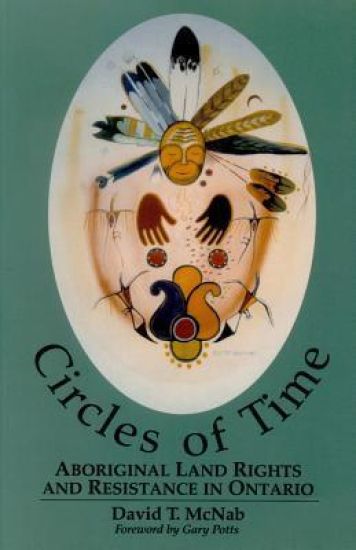
The origin of the events during the summer of 1990 in a little-known area of Quebec lies deep within the history of Canada. Resistance to government's handling of land claims is not new, but the extreme and violent form of the response at Oka heralded a new approach by First Nations to the resolution of Aboriginal land and treaty rights in Canada. Circles of Time documents the experiences of Aboriginal people, their history and recent negotiations in Ontario, and provides insight into the historiography of the treaty-making process, particularly in the last quarter-century. Controversial decisions such as the Temagami case and Oka are detailed, and McNab, who draws on archival sources that support oral history, provides a new perspective on land claims issues. Such compelling background information will be invaluable to anyone endeavoring to understand the origin and the current controversies surrounding Aboriginal land and treaty rights, and will clarify the reasons for resistance. Above all, this book will remind us we must never forget that this history belongs to Aboriginal people. Turtle Island is their place, and their oral history can no longer be ignored.