Kirjojen hintavertailu. Mukana 12 595 353 kirjaa ja 12 kauppaa.

Kirjailija

David T. Mitchell

Kirjat ja teokset yhdessä paikassa: 5 kirjaa, julkaisuja vuosilta 2001-2015, suosituimpien joukossa Cultural Locations of Disability. Vertaile teosten hintoja ja tarkista saatavuus suomalaisista kirjakaupoista.

5 kirjaa

Kirjojen julkaisuhaarukka 2001-2015.

The Biopolitics of Disability

The Biopolitics of Disability

David T. Mitchell

The University of Michigan Press
2015
nidottu
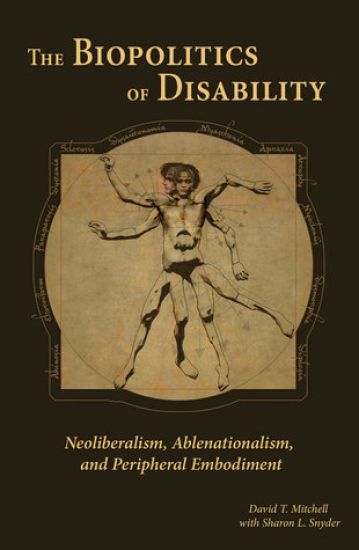
In the neoliberal era, when human worth is measured by its relative utility within global consumer culture, selected disabled people have been able to gain entrance into late capitalist culture. The Biopolitics of Disability terms this phenomenon “ablenationalism” and asserts that “inclusion” becomes meaningful only if disability is recognized as providing modes of living that are alternatives to governing norms of productivity and independence. Thus, the book pushes beyond questions of impairment to explore how disability subjectivities create new forms of embodied knowledge and collective consciousness. The focus is on the emergence of new crip/queer subjectivities at work in disability arts, disability studies pedagogy, independent and mainstream disability cinema (e.g., Midnight Cowboy), internet-based medical user groups, anti-normative novels of embodiment (e.g., Richard Powers’s The Echo-Maker) and, finally, the labor of living in “non-productive” bodies within late capitalism.
The Biopolitics of Disability

The Biopolitics of Disability

David T. Mitchell

The University of Michigan Press
2015
sidottu
In the neoliberal era, when human worth is measured by its relative utility within global consumer culture, selected disabled people have been able to gain entrance into late capitalist culture. The Biopolitics of Disability terms this phenomenon “ablenationalism” and asserts that “inclusion” becomes meaningful only if disability is recognized as providing modes of living that are alternatives to governing norms of productivity and independence. Thus, the book pushes beyond questions of impairment to explore how disability subjectivities create new forms of embodied knowledge and collective consciousness. The focus is on the emergence of new crip/queer subjectivities at work in disability arts, disability studies pedagogy, independent and mainstream disability cinema (e.g., Midnight Cowboy), internet-based medical user groups, anti-normative novels of embodiment (e.g., Richard Powers’s The Echo-Maker) and, finally, the labor of living in “non-productive” bodies within late capitalism.
Cultural Locations of Disability

Cultural Locations of Disability

Sharon L. Snyder; David T. Mitchell

University of Chicago Press
2005
nidottu
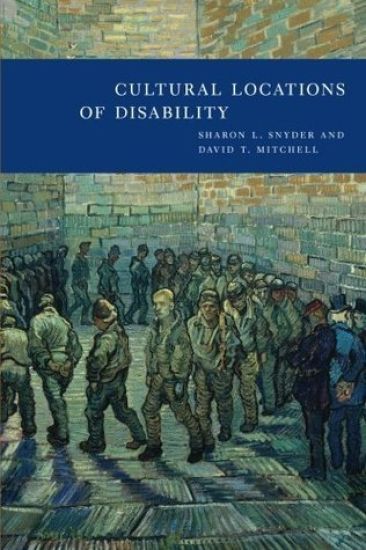
In "Cultural Locations of Disability", Sharon L. Snyder and David T. Mitchell trace how disabled people came to be viewed as biologically deviant. The eugenics era pioneered techniques that managed "defectives" through the application of therapies, invasive case histories, and acute surveillance techniques, turning disabled persons into subjects for a readily available research pool. In its pursuit of normalization, eugenics implemented disability regulations that included charity systems, marriage laws, sterilization, institutionalization, and even extermination. Enacted in enclosed disability locations, these practices ultimately resulted in expectations of segregation from the mainstream, leaving today's disability politics to focus on reintegration, visibility, inclusion, and the right of meaningful public participation. Snyder and Mitchell reveal cracks in the social production of human variation as aberrancy. From our modern obsessions with tidiness and cleanliness to our desire to attain perfect bodies, notions of disabilities as examples of human insufficiency proliferate. These disability practices infuse more general modes of social obedience at work today. Consequently, this important study explains how disabled people are instrumental to charting the passage from a disciplinary society to one based upon regulation of the self.
Cultural Locations of Disability

Cultural Locations of Disability

Sharon L. Snyder; David T. Mitchell

University of Chicago Press
2005
sidottu
In "Cultural Locations of Disability", Sharon L. Snyder and David T. Mitchell trace how disabled people came to be viewed as biologically deviant. The eugenics era pioneered techniques that managed "defectives" through the application of therapies, invasive case histories, and acute surveillance techniques, turning disabled persons into subjects for a readily available research pool. In its pursuit of normalization, eugenics implemented disability regulations that included charity systems, marriage laws, sterilization, institutionalization, and even extermination. Enacted in enclosed disability locations, these practices ultimately resulted in expectations of segregation from the mainstream, leaving today's disability politics to focus on reintegration, visibility, inclusion, and the right of meaningful public participation. Snyder and Mitchell reveal cracks in the social production of human variation as aberrancy. From our modern obsessions with tidiness and cleanliness to our desire to attain perfect bodies, notions of disabilities as examples of human insufficiency proliferate. These disability practices infuse more general modes of social obedience at work today. Consequently, this important study explains how disabled people are instrumental to charting the passage from a disciplinary society to one based upon regulation of the self.
Narrative Prosthesis

Narrative Prosthesis

David T. Mitchell; Sharon L. Snyder

The University of Michigan Press
2001
nidottu
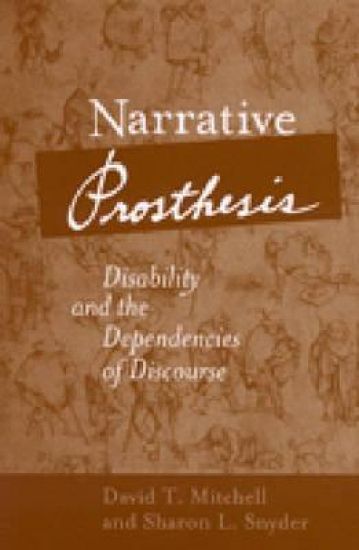
Narrative Prosthesis: Disability and the Dependencies of Discourse develops a narrative theory of the pervasive use of disability as a device of characterization in literature and film. It argues that, while other marginalized identities have suffered cultural exclusion due to a dearth of images reflecting their experience, the marginality of disabled people has occurred in the midst of the perpetual circulation of images of disability in print and visual media. The manuscript's six chapters offer comparative readings of key texts in the history of disability representation, including the tin soldier and lame Oedipus, Montaigne's "infinities of forms" and Nietzsche's "higher men," the performance history of Shakespeare's Richard III, Melville's Captain Ahab, the small town grotesques of Sherwood Anderson's Winesburg, Ohio and Katherine Dunn's self-induced freaks in Geek Love.David T. Mitchell is Associate Professor of Literature and Cultural Studies, Northern Michigan University. Sharon L. Snyder is Assistant Professor of Film and Literature, Northern Michigan University.