Kirjojen hintavertailu. Mukana 12 311 155 kirjaa ja 12 kauppaa.

Kirjailija

David Thomas

Kirjat ja teokset yhdessä paikassa: 94 kirjaa, julkaisuja vuosilta 1963-2025, suosituimpien joukossa Art Forms from the Abyss. Vertaile teosten hintoja ja tarkista saatavuus suomalaisista kirjakaupoista.

94 kirjaa

Kirjojen julkaisuhaarukka 1963-2025.

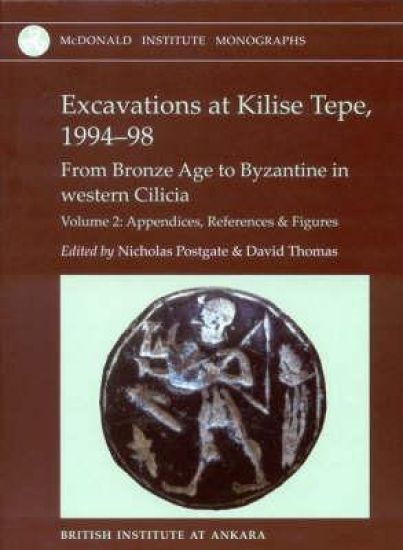
Excavations at Kilise Tepe, 1994-98

Excavations at Kilise Tepe, 1994-98

David Thomas

McDonald Institute for Archaeological Research
2007
sidottu
These two volumes report on five season's excavation and four millennia of occupation at Kilise Tepe, from the Early Bronze Age through the rise and fall of the Hittite Empire and into the Byzantine era when the mound was crowned by a substantial church. The site takes its importance from its position guarding the Göksu Valley, one of the two main routes from the interior of Anatolia to the Mediterranean opposite Cyprus, so that it gives a record of relations between the interior and the seaboard. Of particular interest are the sequence from the Hittite Empire through the end of the Bronze Age and into the classical world, and the Byzantine levels associated with the church. The multi-authored report gives a full account of the stratigraphy and architecture, the ceramics and other artefacts, and various environmental studies.
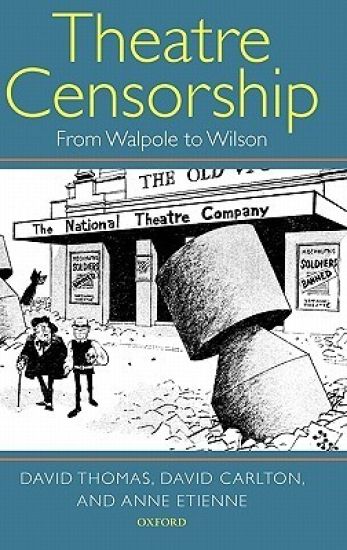
Theatre Censorship

Theatre Censorship

David Thomas; David Carlton; Anne Etienne

Oxford University Press
2007
sidottu
Using previously unpublished material from the National Archives, David Thomas, David Carlton, and Anne Etienne provide a new perspective on British cultural history. Statutory censorship was first introduced in Britain by Sir Robert Walpole with his Licensing Act of 1737. Previously theatre censorship was exercised under the Royal Prerogative. By giving the Lord Chamberlain statutory powers of theatre censorship, Walpole ensured that confusion over the relationship between the Royal Prerogative and statute law would prevent any serious challenge to theatre censorship in Parliament until the twentieth century. The authors place theatre censorship legislation and its attempted reform in their wider political context. Sections outlining the political history of key periods explain why theatre censorship legislation was introduced in 1737, why attempts to reform the legislation failed in 1832, 1909, and 1949, and finally succeeded in 1968. Opposition from Edward VII helped to prevent the abolition of theatre censorship in 1909. In 1968, theatre censorship was abolished despite opposition from Elizabeth II, Lord Cobbold (her Lord Chamberlain) and Harold Wilson (her Prime Minister). There was strong support for theatre censorship on the part of commercial theatre managers who saw censorship as offering protection from vexatious prosecution. A policy of inertia and deliberate obfuscation on the part of Home Office officials helped to prevent the abolition of theatre censorship legislation until 1968. It was only when playwrights, directors, critics, audiences, and politicians (notably Roy Jenkins) applied combined pressure that theatre censorship was finally abolished. The volume concludes by exploring whether new forms of covert censorship have replaced the statutory theatre censorship abolished with the 1968 Theatres Act.
The Bible in Arab Christianity
The contributions to this volume, which come from the Fifth Mingana Symposium, survey the use of the Bible and attitudes towards it in the early and classical Islamic periods. The authors explore such themes as early Christian translations of the Bible into Arabic, the use of verses from it to defend the truth of Christianity, to interpret the significance of Islam and to prove its error, Muslim accusations of corruption of the Bible, and the influences that affected production of Bibles in Muslims lands. The volume illustrates the centrality of the Bible to Arab Christians as a source of authority and information about their experiences under Islam, and the importance of upholding its authenticity in the face of Muslim criticisms.Contributors include: Samir Arbache, Mark Beaumont, Emmanouela Grypeou, Lucy-Anne Hunt, Juan Pedro Monferrer Sala, Said Gabriel Reynolds, Barbara Roggema, Harald Suermann and Mark Swanson.
Working with People with Learning Disabilities

Working with People with Learning Disabilities

Honor Woods; David Thomas

Jessica Kingsley Publishers
2003
pokkari
A comprehensive introduction to working with people with learning disabilities, this guide provides the theoretical understanding needed to inform good practice and to help improve the quality of life of people within this group. Using accessible language and case examples, the authors discuss both psychological and practical theories, including:* person-centred and behavioural approaches* anti-discriminatory and anti-oppressive approaches* systems theory* task centred approach* role theory.Emphasising empowerment and inclusion of those with learning disabilities, they relate theory to issues such as loss and bereavement, sexuality and social stigma. They also provide guidance for practitioners on social policy and legislation and explore crisis intervention, values and ethics, advocacy and joint agency work, making this an extremely useful resource for social workers, nurses, teachers care workers and others working with people with learning disabilities.
Camborne

Camborne

David Thomas

The History Press Ltd
1997
nidottu
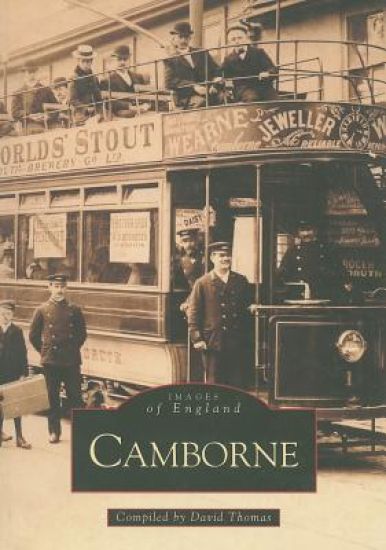
This book of over 230 old photographs features the parish of Camborne and district from Victorian times to more recent scenes. The work of many local talented Camborne photographers is featured in this book including W.J. Bennetts, J.C. Burrow, E.A. Bragg, E.J. Champion and W.J. Sandry. The Camborne of today is essentially the product of a thriving nineteenth-century mining community in the heart of the chief industrial area of west Cornwall. Some of Camborne's important industries are featured in the book including the great Dolcoath Mine and Holman Brothers Ltd. The parish is replete with places of worship of every size, type and denomination which are also documented, as well as memorable events, formative years at school and a community in moments of leisure. Some of Camborne's best known individuals are captured too, including William Quintrell the Camborne poet, Organ Joe a familiar character in Edwardian Camborne and Mr A. Edward Dunn, the Liberal candidate in the 1906 General Election. This book will be enjoyed by all who know and love this Cornish town and would enjoy a trip into its past.
Introduct Technology Bk 2 Int Edn

Introduct Technology Bk 2 Int Edn

David Thomas; Lynne Anne Asker

Macmillan Education
1993
nidottu
This second of three book aims to provide a basis for further vocational training and technical literacy for day-to-day life. It has been developed to meet the growing need for a broad-based technological education in Junior Secondary schools. A broad range of both natural and synthetic materials are covered, including woods, metals, plastics and ceramics. The various tools, machines, energy systems and processes are also covered in detail, including the relevant step-by-step procedures for undertaking the various technological tasks. This course of three books should also be of interest to pupils involved in industrial arts or craft, design and technology subjects, and related courses. The approach has been to present the subject simply, and to illustrate applications through a range of examples and practical investigations, without having to use expensive equipment.
Introduct Technology Bk1 Int Edn

Introduct Technology Bk1 Int Edn

David Thomas; Lynne Anne Asker

Macmillan Education
1993
nidottu
This first of three book aims to provide a basis for further vocational training and technical literacy for day-to-day life. It has been developed to meet the growing need for a broad-based technological education in Junior Secondary schools. A broad range of both natural and synthetic materials are covered, including woods, metals, plastics and ceramics. The various tools, machines, energy systems and processes are also covered in detail, including the relevant step-by-step procedures for undertaking the various technological tasks. This course of three books should also be of interest to pupils involved in industrial arts or craft, design and technology subjects, and related courses. The approach has been to present the subject simply, and to illustrate applications through a range of examples and practical investigations, without having to use expensive equipment.
Naturalism and Social Science

Naturalism and Social Science

David Thomas

Cambridge University Press
1980
sidottu
This 1979 text addresses the ways in which the dominant theories in large areas of Western social science have been subject to strong criticisms, particularly of their supposed philosophical deficiencies. In the philosophy of science, this resulted in empiricist views being replaced by an emphasis on the potential obstinacy of theory in the face of the empirical world. After introducing this contemporary philosophy of science, Dr Thomas uses it to argue that social study can both retain the natural scientific commitment to the constraint of the external world and assimilate the sorts of philosophical criticisms that were made of the old social scientific theories. In particular, he shows that social study understood in terms of the new philosophy of science can give an account of the former's distinctive concerns with issues of the meaning and value of social life. Dr Thomas supports his abstract arguments by detailed case studies.
Naturalism and Social Science

Naturalism and Social Science

David Thomas

Cambridge University Press
1980
pokkari
This 1979 text addresses the ways in which the dominant theories in large areas of Western social science have been subject to strong criticisms, particularly of their supposed philosophical deficiencies. In the philosophy of science, this resulted in empiricist views being replaced by an emphasis on the potential obstinacy of theory in the face of the empirical world. After introducing this contemporary philosophy of science, Dr Thomas uses it to argue that social study can both retain the natural scientific commitment to the constraint of the external world and assimilate the sorts of philosophical criticisms that were made of the old social scientific theories. In particular, he shows that social study understood in terms of the new philosophy of science can give an account of the former's distinctive concerns with issues of the meaning and value of social life. Dr Thomas supports his abstract arguments by detailed case studies.
The epistrategos in Ptolemaic and Roman Egypt
It is over sixty years since the office of epistrategos in Roman Egypt was subjected to a detailed examination and in the interverring years a great deal of new papyrological and epigraphic material has come to light. It was my original intention to write a study of the office in this period with, by way of introduction, a brief sketch of the epistrategos in Ptolemaic Egypt. It soon became apparent, however, that a much more fundamental study of the Ptolemaic epistrategos was desirable, which would attempt to answer, or at least to clarify, the various problems connected with the office in this period. In this book I have tried to present a comprehensive up-to-date picture of our knowledge of the Ptolemaic epistrategos. I am far from claiming to have successfully answered all the questions raised -in particular the fundamental problern of the nature of the office remains an enigm- but I hope that I have at any rate provided a basis on which others can build. As the Ptolemaic and Roman epistrategoi did not have a great deal in common apart from their titles, an examination of the office falls naturally into two parts. It therefore seemed not inappropriate to publish separately the first half of this work dealing with the Ptolemaic epistrategos, without waiting for the completion of the second part which will deal with the Roman epistrategos. It is hoped that this second part will follow without undue delay.