Kirjojen hintavertailu. Mukana 12 595 353 kirjaa ja 12 kauppaa.

Kirjailija

David Thomson

Kirjat ja teokset yhdessä paikassa: 69 kirjaa, julkaisuja vuosilta 1988-2026, suosituimpien joukossa Liberties Journal of Culture and Politics. Vertaile teosten hintoja ja tarkista saatavuus suomalaisista kirjakaupoista.

69 kirjaa

Kirjojen julkaisuhaarukka 1988-2026.

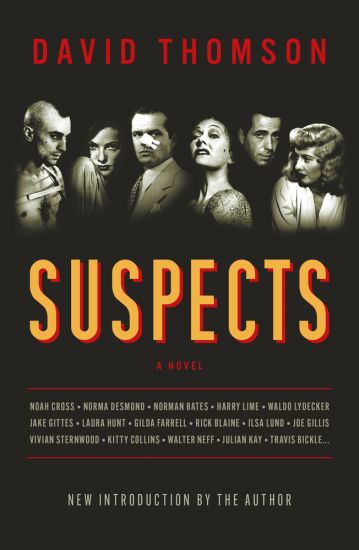
Suspects

Suspects

David Thomson

OLDCASTLE BOOKS LTD
2022
pokkari
Noah Cross, Norma Desmond, Norman Bates, Harry Lime - these are a few of nearly a hundred names that inhabit the mind of the narrator as he starts to compose short biographies of some of the most famous characters in the history of film noir. He sketches in whole lives, lives as intense as the dreams put up on the screen. Then these characters start to meet each other outside the films as if they were real people with real needs and passions. The book is becoming a novel. The names and faces are familiar to us - Jake Gittes from Chinatown, Laura Hunt and Waldo Lydecker from Laura, Rick and Ilsa from Casablanca - but is it true that Noah Cross and Norma Desmond were lovers in the twenties, that she and Joe Gillis had a son who grew up to be Julian Kay in American Gigolo? For the narrator is not merely the author. Married to the sister of Laura Hunt, he has a mission to carry out, a lost family link to find, a thread to pull so that nearly all these disparate characters come together to form a kind of society. Suspects is the most inspired of commentaries on film noir and the forms of Hollywood story-telling. It is in its way a biographical dictionary, but it is also a dazzlingly original work of fiction, so full of America, of an old man's dread of loss and failure, and of a simultaneous love and rage for these movies that you may find its impossible world as real and as touching as any you have ever inhabited. Ultimately an examination on how movies affect the way we think and how film not only shapes our perceptions and our memories but in some ways comes to stand in for them, Suspects can be read as an unsettling examination of identity and the construction of self through the medium of narratives, or simply as a fascinating take on movie fandom. Either way, it's fabulous.
Silver Light

Silver Light

David Thomson

OLDCASTLE BOOKS LTD
2022
pokkari
From 1865 to 1950, the multi-faceted world of the American West, its rich, colorful characters, and its many faces - historical, mythic, and cinematic - are captured in the story of a reclusive, elderly photographer and her friend, a writer of Western comic books. Two characters dominate the novel's foreground: a Georgia O'Keeffe-like figure, photographer Susan Garth, shrewd, cantankerous, reclusive, and still self-reliant at 80, and her longtime friend Bark Blaylock, a western writer/filmmaker who may be Wyatt Earp's son. A subplot involves James Averill, a wealthy Easterner who sees his philandering as a frontiersman's quest for knowledge. As the time frame shuttles between 1950 and the late 1800s, we meet Susan's father, a gentlemanly cattle rancher who reads Thomas Hardy, and serves as a springboard to the Old West of Bat Masterson, Geronimo and Billy the Kid. The cast includes Willa Cather, Montgomery Clift, Charles Ives, Judge Roy Bean and numerous characters smuggled in from such movies as The Man Who Shot Liberty Valance and McCabe and Mrs. Miller. Silver Light artfully juxtaposes the brimming frontier of legend against a construct of the West as a constricted wilderness of the soul.
Disaster Mon Amour

Disaster Mon Amour

David Thomson

Yale University Press
2022
sidottu
A deep—and darkly comic—dive into the nature of disasters, and the ways they shape how we think about ourselves in the world “In this brilliant book, David Thomson tells the story of how we came to make disaster and catastrophe our best friends—how we let terror cocoon and take over our imaginations to avoid seeing the things that really frighten us. Riveting and totally original.”—Adam Curtis, BBC filmmaker and political journalist “Erudite. . . . Engaging. . . . A cri de coeur about art’s struggle to keep up with reality.”—Kirkus Reviews Audiences swell with the scale of disaster; humans have always been drawn to the rumors of our own demise. In this searching treatment, noted film historian David Thomson examines iconic disasters, both real and fictional, exposing the slippage between what occurs and what we observe. With reportage, film commentary, speculation, and a liberating sense of humor, Thomson shows how digital culture commodifies disaster and sates our desire to witness chaos while suffering none of its aftereffects. Ranging from Laurel and Hardy and Battleship Potemkin to Cormac McCarthy’s The Road, and from the epic San Andreas to the intimate Don’t Look Now, Thomson pulls back the curtain to reveal why we love watching disaster unfold—but only if it happens to others.
Liberties Journal of Culture and Politics

Liberties Journal of Culture and Politics

Mamtimin Ala; Richard Thompson Ford; Jaroslaw Anders; Sean Wilentz; Ange Mlinko; Benjamin Moser; Jonathan Zimmerman; Leonard Cohen; Cass R. Sunstein; Mark Lilla; Helen Vendler; Holly Brewer; Shaul Tchernikhovsky; David Thomson

Liberties Journal Foundation
2021
pokkari
“A Meteor of Intelligent Substance”“Something was Missing in our Culture, and Here It Is”"Liberties is THE place to be. Change starts in the mind."Liberties, a journal of Culture and Politics, is essential reading for those engaged in the cultural and political issues and causes of our time. Liberties features serious, independent, stylish, and controversial essays by significant writers and leaders throughout the world; new poetry; and, introduces the next generation of writers and voices to inspire and impact the intellectual and creative lifeblood of today’s culture and politics.This issue of Liberties includes: new work from Nobel Prize winner Mario Vargas Llosa; drawings by Leonard Cohen published for the first time; Mamtimin Ala’s essay on China’s genocide of the Uyghurs; Jaroslaw Anders’ analysis of the crisis in Belarus; Cass R. Sunstein on liberalism inebriated; Richard Thompson Ford on what slavery does and does not explain; Sean Wilentz on the historical strategy of the Republican Party; Benjamin Moser writes about translation as a form of tourism in literary life; Jonathan Zimmerman on the scandal of college teaching; Mark Lilla on cults of innocence and their victims; Helen Vendler on Adrienne Rich; Holly Brewer on race and enlightenment; David Thomson asks, What shall we watch now?; Celeste Marcus (managing editor) on the legend of Alice Neel; Leon Wieseltier (editor) on Zionism’s beautiful stubbornness of survival; and new poetry from Ange Mlinko and Shaul Tchernikhovsky, translated by Robert Alter.
A Light in the Dark: A History of Movie Directors

A Light in the Dark: A History of Movie Directors

David Thomson

Knopf Publishing Group
2021
sidottu
From the celebrated film critic and author of The Biographical Dictionary of Film--an essential work on the preeminent, indispensable movie directors and the ways in which their work has forged, and continues to forge, the landscape of modern film. Directors operate behind the scenes, managing actors, establishing a cohesive creative vision, at times literally guiding our eyes with the eye of the camera. But we are often so dazzled by the visions on-screen that it is easy to forget the individual who is off-screen orchestrating the entire production--to say nothing of their having marshaled a script, a studio, and other people's money. David Thomson, in his usual brilliantly insightful way, shines a light on the visionary directors who have shaped modern cinema and, through their work, studies the very nature of film direction. With his customary candor about his own delights and disappointments, Thomson analyzes both landmark works and forgotten films from classic directors such as Orson Welles, Alfred Hitchcock, Jean Renoir, and Jean-Luc Godard, as well as contemporary powerhouses such as Jane Campion, Spike Lee, and Quentin Tarantino. He shrewdly interrogates their professional legacies and influence in the industry, while simultaneously assessing the critical impact of an artist's personal life on his or her work. He explores the male directors' dominance of the past, and describes how diversity can change the landscape. Judicious, vivid, and witty, A Light in the Dark is yet another required Thomson text for every movie lover's shelf.
Peter Weir

Peter Weir

David Thomson

University Press of Mississippi
2021
nidottu
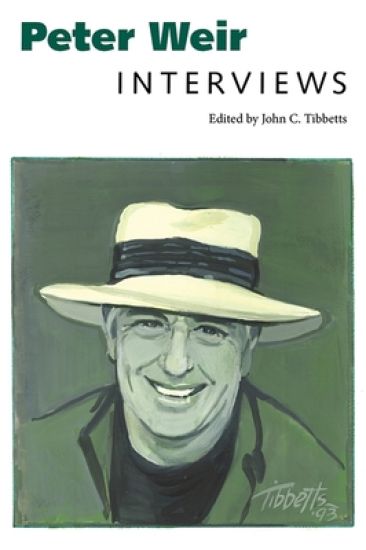
Peter Weir: Interviews is the first volume of interviews to be published on the esteemed Australian director. Although Weir (b. 1944) has acquired a reputation of being guarded about his life and work, these interviews by archivists, journalists, historians, and colleagues reveal him to be a most amiable and forthcoming subject. He talks about “the precious desperation of the art, the madness, the willingness to experiment” in all his films; the adaptation process from novel to film, when he tells a scriptwriter, “I'm going to eat your script; it's going to be part of my blood!”; and his self-assessment as “merely a jester, with cap and bells, going from court to court. ” He is encouraged, even provoked to tell his own story, from his childhood in a Sydney suburb in the 1950s, to his apprenticeship in the Australian television industry in the 1960s, his preparations to shoot his first features in the early 1970s, his international celebrity in Australia and Hollywood. An extensive new interview details his current plans for a new film.Interviews discuss Weir's diverse and impressive range of work—his earlier films Picnic at Hanging Rock, The Last Wave, Gallipoli, and The Year of Living Dangerously, as well as Academy Award-nominated Witness, Dead Poets Society, Green Card, The Truman Show, and Master and Commander. This book confirms that the trajectory of Weir's life and work parallels and embodies Australia's own quest to define and express a historical and cultural identity.
The Big Sleep

The Big Sleep

David Thomson

Bloomsbury Publishing PLC
2020
nidottu
The Big Sleep: Marlowe and Vivian practising kissing; General Sternwood shivering in a hothouse full of orchids; a screenplay, co-written by Faulkner, famously mysterious and difficult to solve. Released in 1946, Howard Hawks' adaptation of Raymond Chandler reunited Bogart and Bacall and gave them two of their most famous roles. The mercurial but ever-manipulative Hawks dredged humour and happiness out of film noir. 'Give him a story about more murders than anyone can keep up with, or explain,' David Thomson writes in his compelling study of the film, 'and somehow he made a paradise.'When it was first shown to a military audience The Big Sleep was coldly received. So, as Thomson reveals, Hawks shot extra scenes, 'fun' scenes, to replace one in which the film's murders had been explained, and in so doing left the plot unresolved. Thomson argues that, if this was accidental, it also signalled a change in the nature of Hollywood cinema: 'The Big Sleep inaugurates a post-modern, camp, satirical view of movies being about other movies that extends to the New Wave and Pulp Fiction.'
Murder and the Movies

Murder and the Movies

David Thomson

Yale University Press
2020
sidottu
A renowned movie critic on film’s treatment of one of mankind’s darkest behaviors: murder “[Thomson’s] analysis of death in Hitchcock movies is gorgeous. His restlessness is palpable. There is an anxiety in this brief, hurried book that suits these political and medical times.”—Lisa Schwarzbaum, New York Times Book Review Included in the New York Times Book Review’s “Best Books to Give” holiday list, 2020 How many acts of murder have each of us followed on a screen? What does that say about us? Do we remain law-abiding citizens who wouldn’t hurt a fly? Film historian David Thomson, known for wit and subversiveness, leads us into this very delicate subject. While unpacking classics such as Seven, Kind Hearts and Coronets, Strangers on a Train, The Conformist, The Godfather, and The Shining, he offers a disconcerting sense of how the form of movies makes us accomplices in this sinister narrative process. By turns seductive and astringent, very serious and suddenly hilarious, Murder and the Movies admits us into what Thomson calls “a warped triangle”: the creator working out a compelling death; the killer doing his and her best; and the entranced reader and spectator trying to cling to life and a proper sense of decency.
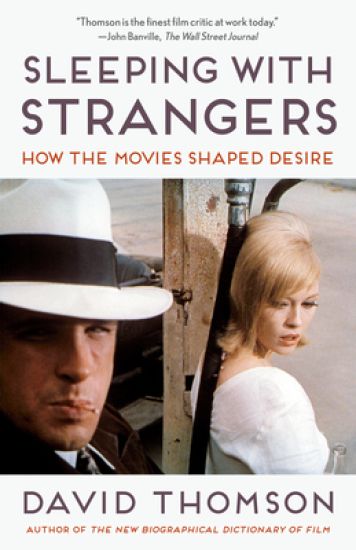
Sleeping with Strangers

Sleeping with Strangers

David Thomson

Vintage Books
2020
nidottu
From the celebrated film critic and author of The Biographical Dictionary of Film, an original, seductive account of sexuality in the movies, and of how actors and actresses on screen feed our desire. Movies can make us want what we cannot have. But, while sometimes rapturous, the interaction of onscreen beauty and private desire speaks to a crisis in American culture, one that pits delusions of male supremacy against feminist awakening and the spirit of gay resistance. Combining criticism, his encyclopedic knowledge of film history, and memoir, David Thomson examines how film has found the fault lines in traditional masculinity and helped to point the way toward a more nuanced understanding of what it means to be a person desiring others. Ranging from advertising to pornography, Rudolph Valentino to Moonlight, Rock Hudson to Call Me By Your Name, Katharine Hepburn and Cary Grant to Phantom Thread, Sleeping With Strangers shows us the art and the artists we love under a new light. Here Thomson illuminates the way in which film as art, entertainment, and business has been a polite cover for a kind of erotic s ance. And he makes us see how the way we watch our movies is a kind of training for how we try to live.
Warner Bros

Warner Bros

David Thomson

Yale University Press
2019
pokkari
Behind the scenes at the legendary Warner Brothers film studio, where four immigrant brothers transformed themselves into the moguls and masters of American fantasyWarner Bros charts the rise of an unpromising film studio from its shaky beginnings in the early twentieth century through its ascent to the pinnacle of Hollywood influence and popularity. The Warner Brothers—Harry, Albert, Sam, and Jack—arrived in America as unschooled Jewish immigrants, yet they founded a studio that became the smartest, toughest, and most radical in all of Hollywood. David Thomson provides fascinating and original interpretations of Warner Brothers pictures from the pioneering talkie The Jazz Singer through black-and-white musicals, gangster movies, and such dramatic romances as Casablanca, East of Eden, and Bonnie and Clyde. He recounts the storied exploits of the studio’s larger-than-life stars, among them Al Jolson, James Cagney, Bette Davis, Errol Flynn, Humphrey Bogart, James Dean, Doris Day, and Bugs Bunny. The Warner brothers’ cultural impact was so profound, Thomson writes, that their studio became “one of the enterprises that helped us see there might be an American dream out there.”
The Returned

The Returned

David Thomson

Polity Press
2018
nidottu
Since 2012, hundreds of men and women have left Western countries to join jihadist groups fighting in Syria. Many are still there, many have been killed, but some have chosen to return to their countries of origin. French Journalist David Thomson met some of those who came back. Bilel, Yassin, Zoubeir, Lena, each has a different profile and story. Some have returned disgusted by the violence of the Syrian battlefields, or the terrorist attacks that have struck across Europe; they try to become forgotten, living under extreme surveillance. Others return seriously wounded or psychologically destroyed. Others still are in jail, a breeding ground for broader radicalization. And some have come back to continue to carry out jihad in Europe. In utmost secrecy, David Thomson gathered their testimonies and recounts them in this remarkable and revealing book. With ISIS losing ground on all fronts, the steady flow of jihadists returning to Europe represents one of the greatest challenges facing countries across the continent. This nuanced analysis of the social, religious, political, familial and psychological factors that push people to violent extremism is more necessary now than ever. It will be essential reading for all those seeking to understand how we might address this threat.
The Returned

The Returned

David Thomson

Polity Press
2018
sidottu
Since 2012, hundreds of men and women have left Western countries to join jihadist groups fighting in Syria. Many are still there, many have been killed, but some have chosen to return to their countries of origin. French Journalist David Thomson met some of those who came back. Bilel, Yassin, Zoubeir, Lena, each has a different profile and story. Some have returned disgusted by the violence of the Syrian battlefields, or the terrorist attacks that have struck across Europe; they try to become forgotten, living under extreme surveillance. Others return seriously wounded or psychologically destroyed. Others still are in jail, a breeding ground for broader radicalization. And some have come back to continue to carry out jihad in Europe. In utmost secrecy, David Thomson gathered their testimonies and recounts them in this remarkable and revealing book. With ISIS losing ground on all fronts, the steady flow of jihadists returning to Europe represents one of the greatest challenges facing countries across the continent. This nuanced analysis of the social, religious, political, familial and psychological factors that push people to violent extremism is more necessary now than ever. It will be essential reading for all those seeking to understand how we might address this threat.
Musings among the Heather

Musings among the Heather

David Thomson

Hansebooks
2017
pokkari
Musings among the Heather - Being Poems chiefly in the Scottish Dialect is an unchanged, high-quality reprint of the original edition of 1881. Hansebooks is editor of the literature on different topic areas such as research and science, travel and expeditions, cooking and nutrition, medicine, and other genres. As a publisher we focus on the preservation of historical literature. Many works of historical writers and scientists are available today as antiques only. Hansebooks newly publishes these books and contributes to the preservation of literature which has become rare and historical knowledge for the future.
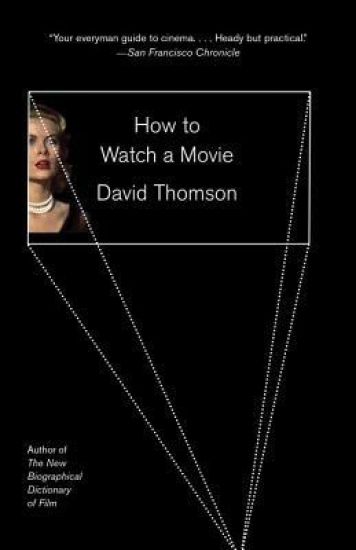
How to Watch a Movie

How to Watch a Movie

David Thomson

VINTAGE
2017
nidottu
In his most inventive exploration of the medium yet, David Thomson--one of our most provocative authorities on all things cinema--shows us how to get more out of watching any movie. Guiding us through each element of the viewing experience, considering the significance of everything from what we see and hear on-screen--actors, shots, cuts, dialogue, music--to the specifics of how, where, and with whom we do the viewing, Thomson explicates the movie watching experience with his customary candor and wit. Delivering keen analyses of films ranging from Citizen Kane to 12 Years a Slave, in How to Watch a Movie, Thomson shows moviegoers how to more deeply appreciate both the artistry and the manipulation of film--and in so doing enriches our viewing experience immensely.
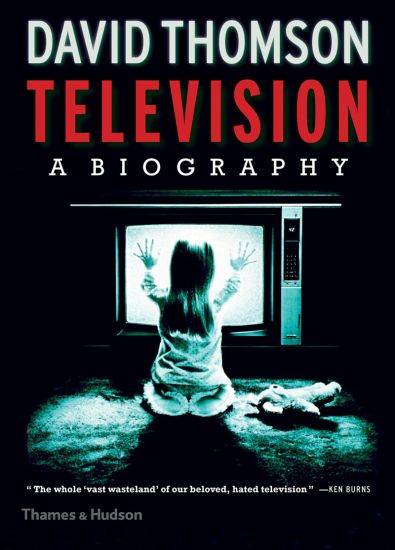
Television

Television

David Thomson

Thames Hudson Ltd
2016
sidottu
In just a few years, what used to be an immobile piece of living room furniture, which one had to sit in front of at appointed times in order to watch sponsored programming on a finite number of channels, morphed into a glowing cloud of screens with access to a near-endless supply of content available when and how viewers want it. With this phenomenon now a common cultural theme, a writer of David Thomson's stature delivering a critical history, or biography of the six-decade television era, will be a significant event which could not be more timely. With Television, the critic and film historian, who wrote what Sight and Sound's readers called the most important film book of the last 50 years, has finally turned his unique powers of observation to the medium that has swallowed film whole. Over 22 thematically organized chapters, Thomson brings his provocatively insightful and unique voice to the life of what was television. David Thomson surveying a Boschian landscape, illuminated by that singular glow always on and peopled by everyone from Donna Reed to Dennis Potter, will be the first complete history of the defining medium of our time.
How to Watch a Movie

How to Watch a Movie

David Thomson

Profile Books Ltd
2016
pokkari
From one of the most admired critics of our time, brilliant insights into the act of watching movies and an enlightening discussion about how to derive more from any film experience. Since first publishing his landmark Biographical Dictionary of Film in 1975 (now in its sixth edition), David Thomson has been one of the most trusted authorities on all things cinema. Now, he offers his most inventive exploration of the medium yet: guiding us through each element of the viewing experience, considering the significance of everything from what we see and hear on screen - actors, shots, cuts, dialogue, music - to the specifics of how, where, and with whom we do the viewing. With customary candour and wit, Thomson delivers keen analyses of a range of films from classics such as Psycho and Citizen Kane to contemporary fare such as 12 Years a Slave and All Is Lost, revealing how to more deeply appreciate both the artistry and manipulation of film, and how watching movies approaches something like watching life itself. Discerning, funny and utterly unique, How to Watch a Movie is a welcome twist on the classic proverb: Give a movie fan a film, she'll be entertained for an hour or two; teach a movie fan to watch, her experience will be enriched forever.