

Kirjailija
David Thorpe
Kirjat ja teokset yhdessä paikassa: 28 kirjaa, julkaisuja vuosilta 1997-2023, suosituimpien joukossa How Burnout Stops. Vertaile teosten hintoja ja tarkista saatavuus suomalaisista kirjakaupoista.
28 kirjaa
Kirjojen julkaisuhaarukka 1997-2023.

Gerrards Cross, known for its open common and picturesque Latchmore Pond, had been a place of resort ever since the 1790s. Genteel houses sprang up, attracting enough wealthy visitors that it began to be known as the ‘Brighton of Bucks.’ The opening of the Great Western and Great Central Joint Railway in 1906, with a station at Gerrards Cross, gave hundreds of Londoners the opportunity to live in ‘Beechy Bucks.’Gerrards Cross: A History celebrates the energy and imagination of the pioneer architects, builders and estate agents who ensured that Gerrards Cross became a high-class residential area, both socially and architecturally. It also applauds the entrepreneurs who opened their new shops and services when the commuter houses were still on the drawing board, and the brave newcomers who brought their families to live in the country, but depended utterly on their reliable train service to London.

Texting Women - Phone Number To Date Every Time is the only book you need when it comes to texting and messaging women. A fully comprehensive guidebook for the dating man, the book teaches the winning structure to messaging women, The Texting Ladder. The Texting Ladder is a fail-safe, universal structure that you can follow when texting so know how to consistently go from taking her number to going on that hot date with the woman of your dreams.
The role of the energy manager has evolved significantly as the task of cutting greenhouse gas emissions from buildings has become increasingly important. Managers are now technical experts, negotiators, construction project managers, procurement specialists, efficiency advocates and often provide energy services to others. This comprehensive book covers how to:• conduct an energy audit• plan a monitoring and verification strategy• make any energy-saving campaign successful• evaluate and make the financial case for energy-saving measures• make use of free energy for lighting and managing heat loss and gain.It also contains special chapters on:• ventilation, heating and cooling• demand management through automated systems• lighting• most requirements of industrial facilities• regulatory requirements in Britain, Europe and the United States• the use of smart meters and monitoring• how to achieve zero energy buildings• the use of renewable energy.For all professional energy, building and facilities managers, energy consultants, students, trainees and academics. It takes the reader from basic concepts to the latest advanced thinking, with principles applicable anywhere in the world and in any climate.

Solar energy is free, abundant and sustainable, with many methods existing to harness it. This guide is the essential introduction to the subject, explaining how the technologies work, how best they should be employed, and the costs and benefits of using them. It provides detailed yet accessible coverage of:passive solar building solar water heating solar space heating other solar thermal applications (such as cooling and desalination) grid-connected photovoltaics stand-alone photovoltaics.It also introduces the reader to larger scale applications such as concentrating solar power. Highly illustrated in full colour, this is the perfect primer for anyone who wants to work with or simply learn more about solar technologies.
A retro-fit offers many benefits: cutting electricity and heating bills, increasing the resale value of homes, slashing carbon emissions and creating a healthier place to live. This book is the guide to making it happen. It looks at: draught-proofing, insulation and damp ventilation, heating and cooling electrical efficiency and renewable energy water use and re-use materials' life cycles and incorporating nature protection from climate change impacts - modelling energy flows and embodied energy how we can meet the need to cut carbon emissions from dwellings by eighty percent by 2050.Projects can apply to apartment blocks, recent builds and older, solid-walled properties. Enlivened with helpful diagrams and photographs, plus plenty of pointers for further information, it provides a comprehensive resource handbook for any building professional and contractor, students – or any homeowner serious about efficiency (cash and carbon) savings.
Energy demand reduction is fast becoming a business activity for all companies and organisations because it can increase profits regardless of the nature of their core activity. The International Energy Agency believes that industry could improve its energy efficiency and reduce carbon dioxide emissions by almost a third using the best available practices and technologies.This guide looks at the many ways available to energy managers to achieve or even exceed this level of performance, including: base-lining consumption planning a monitoring and verification strategy metering (including smart, wireless metering) energy supply management motors and drives compressed air and process controls. Uniquely, it includes a whole chapter on greening data centres. It also looks at topics covered in greater detail in its companion volume, Energy Management in Buildings: insulation, lighting, renewable heating, cooling and HVAC systems. Further chapters examine minimising water use and how to make the financial case, both to prioritise measures for cost effectiveness, and to get management on board.This title is aimed at all professional energy, industry and facilities managers, energy consultants, students, trainees and academics and can be read alongside training for ISO 50001 - Energy Management Systems. It takes the reader from basic concepts to the latest advanced thinking, with principles applicable anywhere in the world and in any climate.

The Panasonic S1 and S1R are Panasonic's first foray into the world of the mirrorless full frame camera. They are high end cameras with a wealth of technical features and capabilities and of necessity complex cameras. As with any digital camera the heart of the machine is the menu system, consisting of nearly 200 entries, many with their own sub menus offering many hundred of options.It is no surprise then that even experienced users can find themselves scratching their heads as they wade through the mass of options.. This book goes through each and every every menu choice and explains what it does and why you might want to do it. It doesn't try to teach you photography. You wouldn't have chosen an S1/S1R if you didn't already have some expertise. What my books aims to do is to familiarise yourself with your S1/S1R and learn to tailor it to your own taste and needs. Having done that, you I think you will find using the big Panasonic not only a pleasure but inspiring as well.
This book addresses the crucial question of how the essential needs of the growing human population can be met without breaking the Earth's already-stretched life-support system. With four out of five people predicted to be urban dwellers by 2080, ‘One Planet’ Cities proposes a pathway to genuine sustainability for cities and neighbourhoods, using an approach based on contraction and convergence. Utilising interviews with key players, including the Global Footprint Network, World Future Council, WWF, mayors and government officials, and case studies from across the globe, including Europe, North and South America, Australia, South Africa, China and India, David Thorpe examines all aspects of modern society from food provision to neighbourhood design, via industry, the circular economy, energy and transport through the critical lens of the ecological footprint and relevant supporting international standards and indicators. Recommendations on managing supply chains and impacts, how the transition to a world within limits might be financed, and a deep examination of the Welsh Government's pioneering efforts follow. It concludes with an imagined vision of what a genuinely sustainable future might be like, and an appeal for 'one planeteers' everywhere to step up to the challenge.This book will be of great interest to practitioners and policymakers involved in governance, administration, urban environments and sustainability, alongside students of the built environment, urban planning, environmental policy and energy.
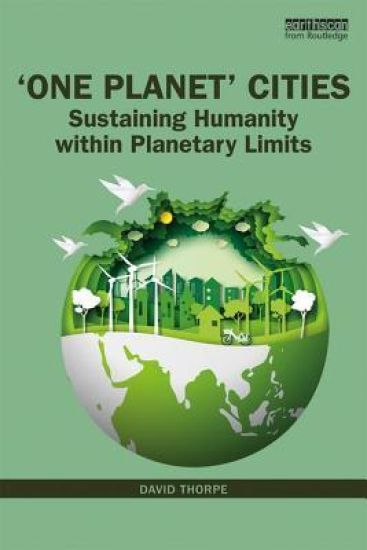
This book addresses the crucial question of how the essential needs of the growing human population can be met without breaking the Earth's already-stretched life-support system. With four out of five people predicted to be urban dwellers by 2080, ‘One Planet’ Cities proposes a pathway to genuine sustainability for cities and neighbourhoods, using an approach based on contraction and convergence. Utilising interviews with key players, including the Global Footprint Network, World Future Council, WWF, mayors and government officials, and case studies from across the globe, including Europe, North and South America, Australia, South Africa, China and India, David Thorpe examines all aspects of modern society from food provision to neighbourhood design, via industry, the circular economy, energy and transport through the critical lens of the ecological footprint and relevant supporting international standards and indicators. Recommendations on managing supply chains and impacts, how the transition to a world within limits might be financed, and a deep examination of the Welsh Government's pioneering efforts follow. It concludes with an imagined vision of what a genuinely sustainable future might be like, and an appeal for 'one planeteers' everywhere to step up to the challenge.This book will be of great interest to practitioners and policymakers involved in governance, administration, urban environments and sustainability, alongside students of the built environment, urban planning, environmental policy and energy.

The E-M10 MkIII is Olympus's smallest EVF equipped Micro Four Thirds camera body Don't let its small size fool you though, for packed in that little frame is most of the technology present in its larger stablemates. Like any digital camera, at its heart is a complex menu system with more than 130 entries, many with their own sub-menus.This book goes through each and every every menu choice and explains what it does and why you might want to do it. What my books aims to do is to familiarise your with your E-M10 MkIII and learn to tailor it to your own taste and needs. Having done that, you I think you will find using the camera not only a pleasure but inspiring as well.
The G9 is Panasonic's first top of the line camera specifically designed for stills rather than being a stills/ video hybrid. With 60fps burst shooting, class leading stabilization, a user configurable menu system, 80Mp High Resolution mode and many other high end features it is of necessity a complex camera. As with any digital camera the heart of the machine is the menu system, consisting of around 180 entries, many with their own sub menus offering many hundred of options.It is no surprise then that even experienced users can find themselves scratching their heads as they wade through the mass of options.. This book goes through each and every every menu choice and explains what it does and why you might want to do it. It doesn't try to teach you photography. You wouldn't have chosen a G9 if you didn't already have some expertise. What my books aims to do is to familiarise yourself with the G9 and learn to tailor it to your own taste and needs. Having done that, you I think you will find using the G9 not only a pleasure but inspiring as well.
This handy pocket reference provides a wealth of practical information relating to solar energy and solar energy technologies. Topics covered include solar radiation and its detailed measurement, the emissivity and absorption properties of materials, solar thermal energy collection and storage, photovoltaics (both at all scales), solar cooling, and the use of solar energy for desalination and drying. The book also includes conversion factors, standards and constants and is peppered throughout with helpful illustrations, equations and explanations, as well as a chapter making the business case for solar power.Anyone with an interest in solar energy, including energy professionals and consultants, engineers, architects, academic researchers and students, will find a host of answers in this book – a practical assimilation of fundamentals, data, technologies and guidelines for application.
This handy pocket reference contains a wealth of information on a range of topics including the principles of passive solar building and passive house, a ten-step design and build strategy, calculating solar irradiance, factors affecting the choice of building materials, passive heating and cooling principles and techniques in different climates, the Passivhaus Standard and natural and augmented lighting and notes on technology and building occupation. The book also includes conversion factors, standards, resources and is peppered throughout with helpful illustrations, equations, explanations, and links to further online resources.Ideal for practitioners, architects, designers, consultants, planners, home builders, students and academics, and those working in development contexts, the book is intended to act as an aide memoir, a reference supplement, a resource and an overview of the field. Rich in background detail, the book also includes at-a-glance tables and diagrams, equations and key definitions.

This handy pocket reference contains a wealth of information on a range of topics including the principles of passive solar building and passive house, a ten-step design and build strategy, calculating solar irradiance, factors affecting the choice of building materials, passive heating and cooling principles and techniques in different climates, the Passivhaus Standard and natural and augmented lighting and notes on technology and building occupation. The book also includes conversion factors, standards, resources and is peppered throughout with helpful illustrations, equations, explanations, and links to further online resources.Ideal for practitioners, architects, designers, consultants, planners, home builders, students and academics, and those working in development contexts, the book is intended to act as an aide memoir, a reference supplement, a resource and an overview of the field. Rich in background detail, the book also includes at-a-glance tables and diagrams, equations and key definitions.
This handy pocket reference provides a wealth of practical information relating to solar energy and solar energy technologies. Topics covered include solar radiation and its detailed measurement, the emissivity and absorption properties of materials, solar thermal energy collection and storage, photovoltaics (both at all scales), solar cooling, and the use of solar energy for desalination and drying. The book also includes conversion factors, standards and constants and is peppered throughout with helpful illustrations, equations and explanations, as well as a chapter making the business case for solar power.Anyone with an interest in solar energy, including energy professionals and consultants, engineers, architects, academic researchers and students, will find a host of answers in this book – a practical assimilation of fundamentals, data, technologies and guidelines for application.
The One Planet Life demonstrates a path for everyone towards a way of life in which we don’t act as if we had more than one planet Earth. The difference between this approach and others is that it uses ecological footprint analysis to help to determine how effective our efforts are. Much of the book is a manual – with examples – on how to live the 'good life' and supply over 65% of your livelihood from your land with mostly positive impacts upon the environment.It examines the pioneering Welsh policy, One Planet Development, then considers efforts towards one planet living in urban areas. After a foreword by BioRegional/One Planet Living co-founder Pooran Desai and an introduction by former Welsh environment minister Jane Davidson, the book contains: An essay arguing that our attitude to planning, land and development needs to change to enable truly sustainable development. Guidelines on finding land, finance, and creating a personal plan for one planet living. Detailed guides on: sustainable building, supplying your own food, generating renewable energy, reducing carbon emissions from travel, land management, water supply and waste treatment. 20 exemplary examples at all scales – from micro-businesses to suburbs – followed by Jane Davidson’s Afterword. The book will interest anyone seeking to find out how a sustainable lifestyle can be achieved. It is also key reading for rural and built environment practitioners and policy makers keen to support low impact initiatives, and for students studying aspects of planning, geography, governance, sustainability and renewable energy.

The One Planet Life demonstrates a path for everyone towards a way of life in which we don’t act as if we had more than one planet Earth. The difference between this approach and others is that it uses ecological footprint analysis to help to determine how effective our efforts are. Much of the book is a manual – with examples – on how to live the 'good life' and supply over 65% of your livelihood from your land with mostly positive impacts upon the environment.It examines the pioneering Welsh policy, One Planet Development, then considers efforts towards one planet living in urban areas. After a foreword by BioRegional/One Planet Living co-founder Pooran Desai and an introduction by former Welsh environment minister Jane Davidson, the book contains: An essay arguing that our attitude to planning, land and development needs to change to enable truly sustainable development. Guidelines on finding land, finance, and creating a personal plan for one planet living. Detailed guides on: sustainable building, supplying your own food, generating renewable energy, reducing carbon emissions from travel, land management, water supply and waste treatment. 20 exemplary examples at all scales – from micro-businesses to suburbs – followed by Jane Davidson’s Afterword. The book will interest anyone seeking to find out how a sustainable lifestyle can be achieved. It is also key reading for rural and built environment practitioners and policy makers keen to support low impact initiatives, and for students studying aspects of planning, geography, governance, sustainability and renewable energy.
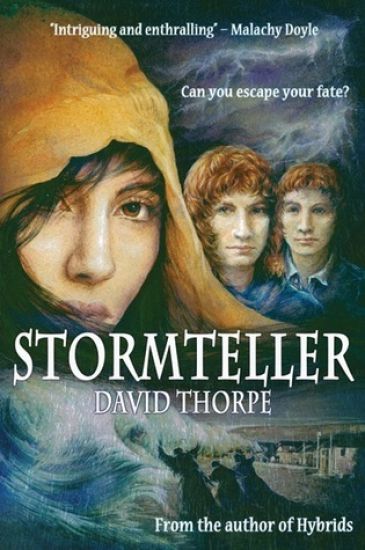
This bewitching drama for young adults set in the very near future entwines Celtic myth and climate-changed destinies to answer the fundamental question. Can we escape our apparent fate? If our lives are governed by forces outside our control, where can we find hope? When a storm surge destroys Tomos' luxury home and his parents die, and Bryn's eco-home is torched and his parents killed by starving marauders, these two rivals for the same girl, Eira are forced to rely upon each other for survival in the wild uplands of Wales. One of them will die, but not before they discover the astonishing bond that joins them together. And none of these three teenagers are aware that they are living out an ancient rivalry between fabulous beings - such as Ceridwen, the Welsh Goddess of Inspiration - who are seeking to rewrite the endings of their own stories.