Kirjojen hintavertailu. Mukana 12 262 861 kirjaa ja 12 kauppaa.

Kirjailija

David Torrance

Kirjat ja teokset yhdessä paikassa: 16 kirjaa, julkaisuja vuosilta 2014-2026, suosituimpien joukossa A History of the Scottish Labour Party. Vertaile teosten hintoja ja tarkista saatavuus suomalaisista kirjakaupoista.

16 kirjaa

Kirjojen julkaisuhaarukka 2014-2026.

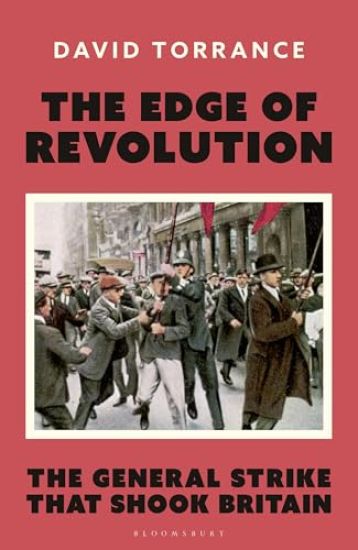
The Edge of Revolution

The Edge of Revolution

David Torrance

BLOOMSBURY PUBLISHING PLC
2026
sidottu
Author of the critically acclaimed The Wild Men, David Torrance explores another tumultuous and era-defining moment in British political history. On Tuesday 4 May 1926, two million workers downed tools in the only nationwide all-hands strike ever held in Britain. The General Strike had begun, and the country braced itself for what many believed was a moment akin to the Russian Revolution, which had shaken the world only a decade earlier. Industry was deprived of gas and electricity; the buses, trains and trams all stopped; newspapers ceased publication; and workers abandoned mines and iron, steel and chemical works around the country. The General Strike has entered our national mythology. Even though it lasted only nine days, it left a legacy of bitterness that has had a profound impact on politics. Now, a century on, Torrance tells this dramatic story from the perspective of everyone involved, drawing on extensive archival research to recreate those nine days through the accounts of those who lived and breathed it. The result is an absorbing and comprehensive analysis of this unique episode in British history.
A History of the Scottish Labour Party

A History of the Scottish Labour Party

David Torrance

EDINBURGH UNIVERSITY PRESS
2026
nidottu
The Scottish Labour Party – or rather the Labour Party in Scotland – was the dominant political party in Scotland from the 1950s until the early twenty-first century. It won the largest share of the vote at every UK general election between 1964 and 2010. While its electoral fortunes declined with the rise of the Scottish National Party during the 2000s, the Party has remained a significant force in Scottish politics. This book provides an overview of the early decades of Scottish Labour politics, studying the party’s origins in late nineteenth-century working class politics and trade unionism. It also traces the party’s organisation, ideology, personnel and electoral performance over the past century. The book also analyses the party’s often surprisingly limited membership, its links with trade unions and the role of women’s organisations.
A History of the Scottish Labour Party

A History of the Scottish Labour Party

David Torrance

EDINBURGH UNIVERSITY PRESS
2026
sidottu
The Scottish Labour Party – or rather the Labour Party in Scotland – was the dominant political party in Scotland from the 1950s until the early twenty-first century. It won the largest share of the vote at every UK general election between 1964 and 2010. While its electoral fortunes declined with the rise of the Scottish National Party during the 2000s, the Party has remained a significant force in Scottish politics. This book provides an overview of the early decades of Scottish Labour politics, studying the party’s origins in late nineteenth-century working class politics and trade unionism. It also traces the party’s organisation, ideology, personnel and electoral performance over the past century. The book also analyses the party’s often surprisingly limited membership, its links with trade unions and the role of women’s organisations.
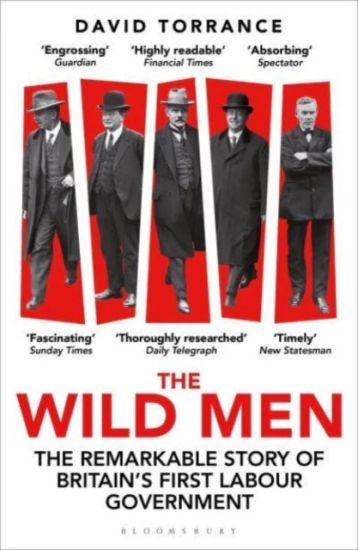
The Wild Men

The Wild Men

David Torrance

BLOOMSBURY PUBLISHING PLC
2025
nidottu
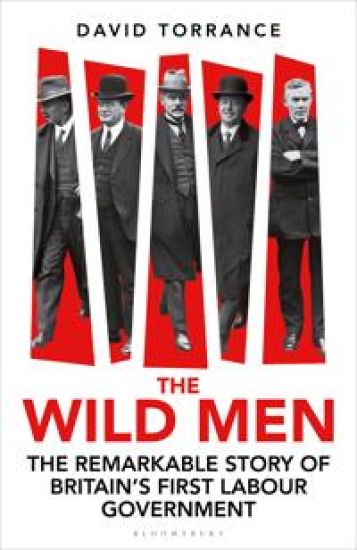
A WATERSTONES BOOK OF THE YEAR 2024A century ago, a Labour government took power for the first time. Meet the "Wild Men" who led the way...'Superb' -- New Statesman 'Fascinating' -- The Sunday Times.In 1923, the passing of the Act which gave all men the vote opened the door for a radically different sort of government: men from working-class backgrounds who had never before occupied the corridors of power at Westminster. Who were these ‘wild men’? Ramsay MacDonald, their leader and Labour’s first Prime Minster, was the illegitimate son of a Scottish farm labourer; Arthur Henderson was a Scottish iron moulder; J. H. Thomas, a Welsh railwayman; John Wheatley, an Irish-born miner and publican; and William Adamson, a Fife coal miner.The Wild Men - this new edition with a fully updated preface - tells the story of that first Labour administration – its unexpected birth, fraught existence, and controversial downfall – through the eyes of those who found themselves in the House of Commons, running the country for the people. Blending biography and history into a compelling narrative, David Torrance reassesses the UK’s first Labour government a century after it shook up a British establishment still reeling from the War – and how the establishment eventually fought back.This is an extraordinary period in British political history which echoes down the years to our current politics and laid the foundations for the Britain of today.
The Wild Men

The Wild Men

David Torrance

BLOOMSBURY PUBLISHING PLC
2024
sidottu
A WATERSTONES BOOK OF THE YEAR 2024A century ago, a Labour government took power for the first time. Meet the "Wild Men" who led the way...'Superb' -- New Statesman 'Fascinating' -- The Sunday Times.In 1923, five short years since the end of the First World War, and after the passing of the Act which gave all men the vote, an inconclusive election result and the prospect of a constitutional crisis opened the door for a radically different sort of government: men from working-class backgrounds who had never before occupied the corridors of power at Westminster. Who were these ‘wild men’? Ramsay MacDonald, their leader and Labour’s first Prime Minster, was the illegitimate son of a Scottish farm labourer; Arthur Henderson was a Scottish iron moulder; J. H. Thomas, a Welsh railwayman; John Wheatley, an Irish-born miner and publican; and William Adamson, a Fife coal miner.The Wild Men tells the story of that first Labour administration – its unexpected birth, fraught existence, and controversial downfall – through the eyes of those who found themselves in the House of Commons, running the country for the people. Blending biography and history into a compelling narrative, David Torrance reassesses the UK’s first Labour government a century after it shook up a British establishment still reeling from the War – and how the establishment eventually fought back.This is an extraordinary period in British political history which echoes down the years to our current politics and laid the foundations for the Britain of today.
A History of the Scottish Conservative and Unionist Parties

A History of the Scottish Conservative and Unionist Parties

David Torrance

EDINBURGH UNIVERSITY PRESS
2024
sidottu
The Scottish Unionist Party was the dominant party of inter-war Scotland, and while its electoral fortunes declined with the rise of the Labour and Scottish National parties during the 1960s, it remained a significant force in Scotland after its 1965 rebranding as the Scottish Conservative Party. More recently, it experienced a modest electoral revival under the leadership of Ruth Davidson (2011-19). Yet while aspects of the party's history have received attention from historians and political scientists, it remains relatively neglected, with most publications either out of print or out of date. Strikingly, there exists no up-to-date, accessible single-volume history of the party from its origins in the late nineteenth century until present. Furthermore, a lot of Scottish Conservative history is coloured by mythology and political prejudice. This volume, the second in a series of Scottish party histories, plugs this significant gap in the literature.
A History of the Scottish Conservative and Unionist Parties

A History of the Scottish Conservative and Unionist Parties

David Torrance

EDINBURGH UNIVERSITY PRESS
2023
nidottu
How have the Scottish Conservatives influenced Scottish politics? Only single-volume history of the party over nearly two centuries Draws on extensive research including archival sources Plugs a major gap in the literature Examines the party's rising popularity in between the 1920s and 1950s as well as its decline The Scottish Unionist Party was the dominant party of inter-war Scotland, and while its electoral fortunes declined with the rise of the Labour and Scottish National parties during the 1960s, it remained a significant force in Scotland after its 1965 rebranding as the Scottish Conservative Party. More recently, it experienced a modest electoral revival under the leadership of Ruth Davidson (2011-19). Yet while aspects of the party's history have received attention from historians and political scientists, it remains relatively neglected, with most publications either out of print or out of date. Strikingly, there exists no up-to-date, accessible single-volume history of the party from its origins in the late nineteenth century until present. Furthermore, a lot of Scottish Conservative history is coloured by mythology and political prejudice. This volume, the second in a series of Scottish party histories, plugs this significant gap in the literature.
A History of the Scottish Liberals and Liberal Democrats

A History of the Scottish Liberals and Liberal Democrats

David Torrance

EDINBURGH UNIVERSITY PRESS
2022
sidottu
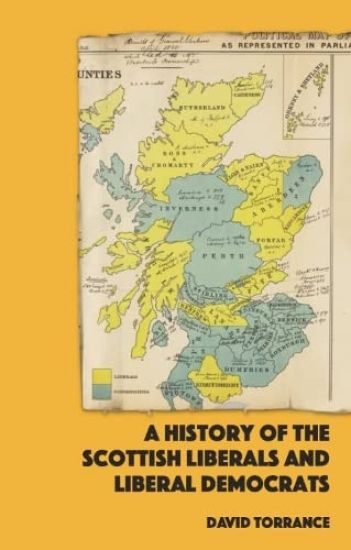
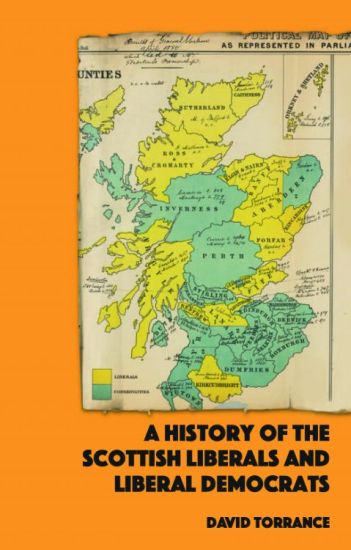
The Scottish Liberal Party was the dominant party of Victorian Scotland. While its electoral fortunes declined with the rise of the Labour and (Scottish) Unionist parties during the 1920s, it remained a significant 'third' force in an increasingly crowded 'Scottish political system', particularly during the latter half of the 20th century. This was especially true following its 1988 merger with the Social Democratic Party to form the Scottish Liberal Democrats, when it helped shape the modern devolution settlement via the Scottish Constitutional Convention. This book examines both parties via a chronological presentation of their histories. Each chapter includes themes such as organisation, relations between the Scottish and UK parties, the deployment of 'nationalist' arguments and rhetoric, and strategic approaches (after 1922) to recover electorally and pursue certain constitutional aims including devolution for Scotland. It also presents a detailed examination of the party's record in devolved and Westminster government after 1999.
A History of the Scottish Liberals and Liberal Democrats

A History of the Scottish Liberals and Liberal Democrats

David Torrance

EDINBURGH UNIVERSITY PRESS
2022
nidottu
The Scottish Liberal Party was the dominant party of Victorian Scotland. While its electoral fortunes declined with the rise of the Labour and (Scottish) Unionist parties during the 1920s, it remained a significant 'third' force in an increasingly crowded 'Scottish political system', particularly during the latter half of the 20th century. This was especially true following its 1988 merger with the Social Democratic Party to form the Scottish Liberal Democrats, when it helped shape the modern devolution settlement via the Scottish Constitutional Convention. This book examines both parties via a chronological presentation of their histories. Each chapter includes themes such as organisation, relations between the Scottish and UK parties, the deployment of 'nationalist' arguments and rhetoric, and strategic approaches (after 1922) to recover electorally and pursue certain constitutional aims including devolution for Scotland. It also presents a detailed examination of the party's record in devolved and Westminster government after 1999.
Standing Up for Scotland

Standing Up for Scotland

David Torrance

EDINBURGH UNIVERSITY PRESS
2022
nidottu
This book reassesses the relationship between 'nationalism' and 'unionism' in Scottish politics, challenging a binary reading of the two ideologies with the concept of 'nationalist unionism'. Scottish nationalism did not begin with the SNP in 1934, nor was it confined to political parties which desired independent statehood. Rather it was more dispersed, with the Liberal, Conservative and Labour parties all attempting to harness Scottish national identity and nationalism between 1884 and 2014, often with the paradoxical goal of strengthening rather than ending the Union. The book combines nationalist theory with empirical historical and archival research to argue that these conceptions of Scottish nationhood had much more in common with each other than is commonly accepted.
Standing Up for Scotland

Standing Up for Scotland

David Torrance

Edinburgh University Press
2020
sidottu
David Torrance reassesses the relationship between 'nationalism' and 'unionism' in Scottish politics, challenging a binary reading of the two ideologies with the concept of 'nationalist unionism'. Scottish nationalism did not begin with the SNP in 1934, nor was it confined to political parties that desired independent statehood. Rather, it was more dispersed, with the Liberal, Conservative and Labour parties all attempting to harness Scottish national identity and nationalism between 1884 and 2014, often with the paradoxical goal of strengthening rather than ending the Union. The book combines nationalist theory with empirical historical and archival research to argue that these conceptions of Scottish nationhood had much more in common with each other than is commonly accepted.
General Election 2015

General Election 2015

David Torrance

Luath Press Ltd
2015
pokkari
The 2015 General Election is just two months away and whilst the debates are heating up, experts are unanimous on one thing: that this is set to be the most important and unpredictable election since World War Two. So who’s who in the current landscape of UK party politics? Who most represents your views? What would a country governed by that party look like? Co-author of Scotland’s Referendum: A Guide for Voters and author of 100 Days of Hope and Fear, David Torrance is here to give you all the information you need to make your vote count. This pocket-sized guide features a chapter on Labour, the Conservatives, the Liberal Democrats, the Green Party, the SNP and UKIP, and another dedicated to the other parties contesting seats. The guide is rounded off with a prediction of possible outcomes and an overview of the constitutional implications the election has for Scotland.
Britain Rebooted

Britain Rebooted

David Torrance

Luath Press Ltd
2015
pokkari
Great Britain, (abbreviation: UK) England, Wales and Scotland considered as a unit. The name is also often used loosely to refer to the United Kingdom.reboot, ri-bu:t , verb to restart or revive… give fresh impetus to…federal, fed ar-al, adj. having or relating to a system of government in which several states form a unity but remain independent in internal affairs.Would federalism work in the UK?Wouldn’t England dominate a British federation?How would powers be distributed between federal and home Nation level?What about the House of Lords?In the run up to the historic referendum on Scottish independence there has been a plethora of tracts, articles and books arguing for and against, but there remains a gap in the literature: the case for Scotland becoming part of a ‘rebooted’ federal Union. It is an old, usually Liberal, dream, but one still worth fighting for.It is often assumed that federalism is somehow ‘alien’ to the Scottish and British constitutional tradition but in this short book journalist David Torrance argues that not only has the UK already become a quasi-federal state but that formal federation is the best way of squaring the competing demands of Nationalists and Unionists.He also uses Scotland’s place within a federal UK to examine other potential reforms with a view to tackling ever-increasing inequality across the British Isles and create a more equal, successful and constitutionally coherent country.
100 Days of Hope and Fear

100 Days of Hope and Fear

David Torrance

Luath Press Ltd
2014
pokkari
Scotland’s independence referendum on 18 September 2014 was the most significant democratic event in Scotland’s history. The 100 days up to 18 September was the official campaign period and the world’s media was watching. David Torrance was there throughout, in front of the cameras, on the radio, in the newspapers, at the debates and gatherings, privy to some of the behind-the-scenes manoeuvrings.A passionate federalist at heart, described disparagingly by the outgoing First Minister as ‘Tory-leaning’, Torrance made a valiant attempt to remain ‘professionally neutral’ throughout. His commentary and analysis as the campaign went through its many twists and turns was always insightful, if not always popular.Was it simply a victory for fear over hope?How did the Better Together campaign come so close to losing it? How did the Yes campaign come so close to winning it? What can the people of Scotland – and other aspirant nations – learn from this seismic democratic event?Reading this diary back during the editing process it was clear that, like [Nate] Silver [the US polling guru whose view was that the Yes campaign had virtually no chance of victory], I got a lot of things wrong (including the likely margin of victory) but also many things broadly correct. At least I can plead, as journalists often do, that I was probably right at the time.David Torrance has emerged as one of the campaign's most important commentators... [his] unauthorised biography of Alex Salmond, Against the Odds, has become the prescribed text for the flying columns of English-based and overseas journalists converging on Scotland in this our hour of destiny.KEVIN McKENNA, Scottish Review of BooksTorrance has secured himself a prominent position in the referendum debate, partly through the strategic use of nice jumpers and expertly crafted hair, but largely on merit … [he deserves] far better than the lazy impossibilist critiques to which [his federalist] proposals have been subjected.RORY SCOTHORNE on Britain RebootedDavid went to university & knows how to argue anything well whether he believes it or not David’s lifelong SNP activist father, on being asked on BBC Radio 4’s Today Programme about his son’s political viewsF*** sake... David Torrance on again. Is the greasy weasel never aff the telly?CALUM FINDLAY [on Twitter]
On Being A Man

On Being A Man

David Torrance; Sandy Campbell; John Carnochan; Pete Seaman; Gerry Hassan

Luath Press Ltd
2014
pokkari
What does ‘masculinity’ mean today?On Being a Man brings together four men to consider the condition of Scottish men, reflect on their own backgrounds and experiences, and confront some of the most difficult issues men face. These include the changing roles of men in Scottish society, the role of work and employment.What it means to be a man is very different from forty years ago: in terms of expectations, relationships, how men relate to partners, bring up children and what constitutes a modern family. However, there is a dark side of Scottish masculinity – seen in the drinking, violent, abusive behaviour of some Scots men, and this book addresses this directly, getting into issues many of us often shy away from confronting.Draws on the wide-ranging voices of: journalist, writer and broadcaster, David Torrance; founder of a youth employment and mentoring charity, Sandy Campbell; public health researcher, Pete Seaman; and former policeman and head of the violence reduction unit, John Carnochan.