
Kirjailija
David Tracy
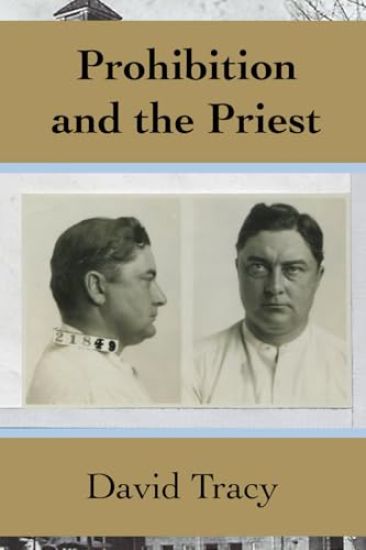
Kirjat ja teokset yhdessä paikassa: 17 kirjaa, julkaisuja vuosilta 1994-2025, suosituimpien joukossa Prohibition and the Priest. Vertaile teosten hintoja ja tarkista saatavuus suomalaisista kirjakaupoista.
17 kirjaa
Kirjojen julkaisuhaarukka 1994-2025.

In the summer of 1993, about 400,000 youth from around the world came to Denver, Colorado to attend World Youth Day. Like a Dead Head Concert, the main attraction for those young people was a 73-year-old spiritual rock star - Pope John Paul II. Years prior to World Youth Day, a number of cults - what the Catholic Church terms "Movements of the Spirit" - began their own magnetic draw on youth all over the world. Hardly known to the vast majority of Catholics, the founders of these cults were every bit as cunning, domineering, and dangerous as Jim Jones, David Koresh, Marshall Applewhite, and L. Ron Hubbard. The World Youth Day Murders is the story of a young Denver detective and his efforts to track down and stop a serial killer hidden deep within the bowels of a Catholic cult - the Focolare movement which continues to operate today. As in his previous book, The ROMEOs - The Parable of the Prodigal, David Tracy pens this fictional story based upon historical abuses which the Catholic Church chose to, and continues to hide. On a deeper level, Tracy is quick to point out that in many ways, the excesses of these Catholic cults are often mirrored in the more mainstream Catholic Church, and exemplified by the financial and sexual abuses that persist. Whether it be the actions of the mainstream Catholic Church or that of one of its cults, The World Youth Day Murders illustrates what deadly events can happen when good people allow strong personalities to do their thinking for them and what can happen when the Gospel is replaced by the whims of a compromised hierarchy. Once again, in The World Youth Day Murders, David Tracy exhibits a Quentin Tarantino take on the Catholic Church and its "Pulp Fiction" type of cults. Tracy's book is not only entertaining but thought-provoking. It presumes to offer the Catholic bishops, so preoccupied with status, money, and power an opportunity to reflect upon the need for them to reinvent their ministries as guided by the Gospels, and to become true shepherd servants to their flocks. In this, his third book, David Tracy develops a new genre of murder, mystery, and suspense. Written in a style reminiscent of Malachai Martin and Larry McMurtry, Tracy masterfully mixes history with fantasy and moves his characters around like lethal chess pieces.

Can mercy overcome vengeance, can forgiveness conquer retribution, can accountability stand in for judgment, can a misdiagnosed Alzheimer's patient solve the case? A Church divided like the two brothers in the parable of the Prodigal Son must return "home" - to the Gospel of Jesus. Four retired friends masquerade as residents in an Alzheimer's facility, all to get a free lunch - until the plan goes awry. One of them is admitted while the actual patient wanders away. Learn how the friends return both home while living the Parable. In The ROMEOs, even the neighbourhood squirrels are trying to get home
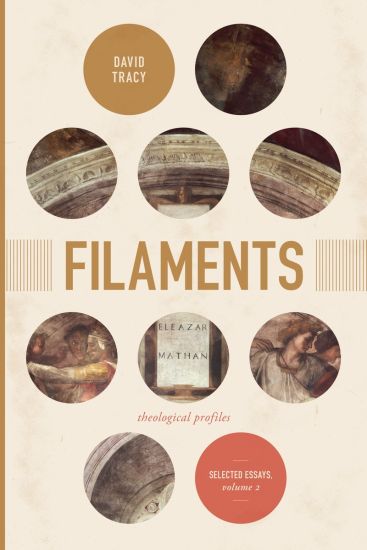
In the second volume of his two-volume collection of essays from the 1980s to 2018, renowned Catholic theologian David Tracy gathers profiles of significant theologians, philosophers, and religious thinkers. These essays, he suggests, can be thought of in terms of Walt Whitman's "filaments," which are thrown out from the speaking self to others--ancient, medieval, modern, and contemporary--in order to be caught elsewhere. Filaments arranges its subjects in rough chronological order, from choices in ancient theology, such as Augustine, through the likes of William of St. Thierry in the medieval period and Martin Luther in the early modern, and finally to modern and contemporary thinkers including Bernard Lonergan, Karl Rahner, Reinhold Niebuhr, and Paul Tillich. Taken together, these essays can be understood as a partial initiation into a history of Christian theology defined by Tracy's key virtues of plurality and ambiguity. Marked by Tracy's surprising insights and connections, Filaments brings the work of one of North America's most important religious thinkers once again to the forefront to be celebrated by long-time readers and new ones alike.
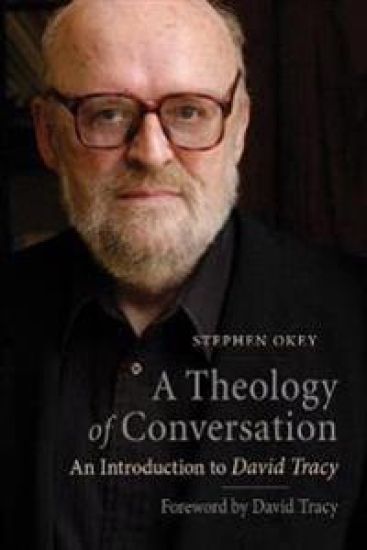
Sometimes described as “a theologian’s theologian,” David Tracy’s scholarship has impacted countless thinkers around the globe. The complexity of his thought, however, has often made engaging his work into a daunting challenge. Combining analysis of the most influential features of Tracy’s theology (theological method, the religious classic, public theology) with a retrieval of his more overlooked interests (Christology, God), Stephen Okey presents the essential themes of Tracy’s career in accessible and insightful prose.


In a series of conversations, Jean-Luc Marion reconstructs a career's path in the history of philosophy, theology, and phenomenology. Discussing such concepts as the event, the gift, and the saturated phenomenon, Marion elaborates the rigor displayed by the things themselves. He discusses the major stages of his work and offers his views on the forces that have driven his thought. The conversation ranges from Marion's engagement with Descartes, to phenomenology and theology, to Marion's intellectual and biographical backgrounds, concluding with illuminating insights on the state of the Catholic Church today and on Judeo-Christian dialogue. Marion also reflects on the relationship of philosophy to history, theology, aesthetics, and literature. At the same time, the book provides an account of French intellectual life in the late twentieth century. In these interviews, Marion's language is more conversational than in his formal writing, but it remains serious and substantive. The book serves as an excellent and comprehensive introduction to Marion's thought and work.

In a series of conversations, Jean-Luc Marion reconstructs a career’s path in the history of philosophy, theology, and phenomenology. Discussing such concepts as the event, the gift, and the saturated phenomenon, Marion elaborates the rigor displayed by the things themselves. He discusses the major stages of his work and offers his views on the forces that have driven his thought. The conversation ranges from Marion’s engagement with Descartes, to phenomenology and theology, to Marion’s intellectual and biographical backgrounds, concluding with illuminating insights on the state of the Catholic Church today and on Judeo-Christian dialogue. Marion also reflects on the relationship of philosophy to history, theology, aesthetics, and literature. At the same time, the book provides an account of French intellectual life in the late twentieth century. In these interviews, Marion’s language is more conversational than in his formal writing, but it remains serious and substantive. The book serves as an excellent and comprehensive introduction to Marion’s thought and work.
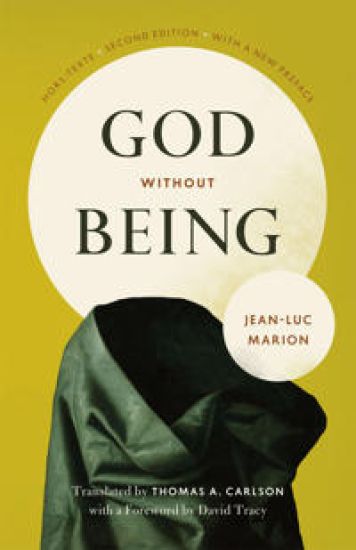
Jean-Luc Marion is one of the world's foremost philosophers of religion as well as one of the leading Catholic thinkers of modern times. In "God Without Being", Marion challenges a fundamental premise of traditional philosophy, theology, and metaphysics: that God, before all else, must be. Taking a characteristically postmodern stance and engaging in passionate dialogue with Heidegger, he locates a "God without Being" in the realm of agape, or Christian charity and love. If God is love, Marion contends, then God loves before he actually is. First translated into English in 1991, "God Without Being" continues to be a key book for discussions of the nature of God. This second edition contains a new preface by Marion as well as his 2003 essay on Thomas Aquinas. Offering a controversial, contemporary perspective, "God Without Being" will remain essential reading for scholars and students of philosophy and religion.

Creative Systems Engineering and Small Business R&D Project Management
David Tracy
AuthorHouse
2008
pokkari

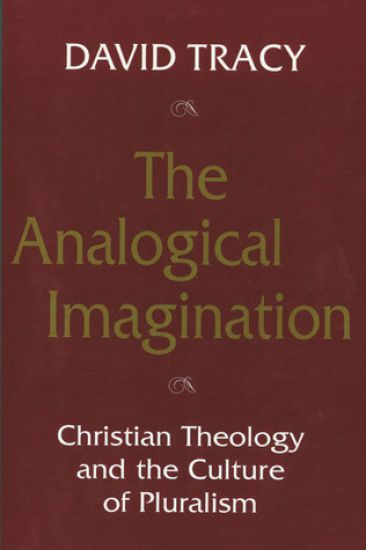
An essential addition to any serious theological library. David Tracy introduces his influential concept of the ""classic,"" as well as his idea of the difference between analogical and other ways of viewing the life of faith. He looks at the culture of pluralism, examining the main differences in the world's theological doctrines.
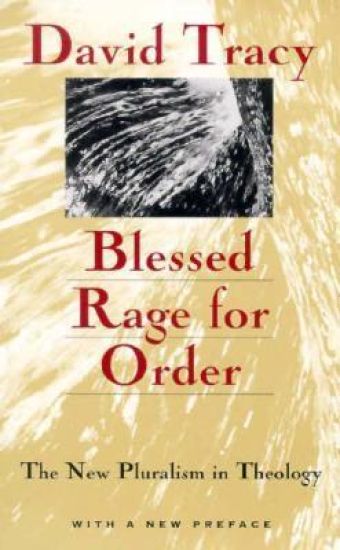
Blessed Rage for Order – The New Pluralism in Theology
David Tracy
University of Chicago Press
1996
nidottu
In Blessed Rage for Order, David Tracy examines the cultural context in which theological pluralism emerged. Analyzing orthodox, liberal, neo-orthodox, and radical models of theology, Tracy formulates a new 'revisionist' model. He considers which methods promise the most certain results for a revisionist theology and applies his model to the principal questions in contemporary theology, including the meanings of religion, theism, and of christology.
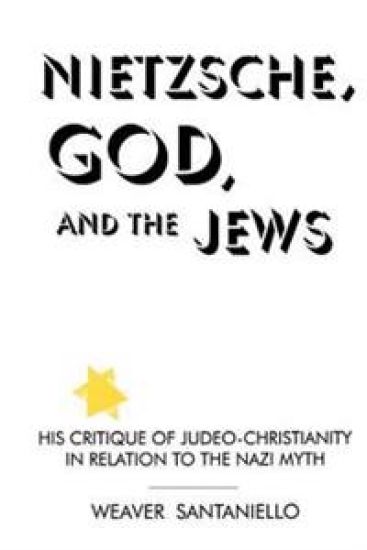
Nietzsche, God, and the Jews
Weaver Santaniello; David Tracy
State University of New York Press
1994
pokkari
Combining biography and a careful analysis of Nietzsche's writings from 1844-1900, this book explores Nietzsche's critique of Christianity, Judaism, and antisemitism. The first part of the book is concerned with psychological aspects and biographical elements. Part Two focuses on the ethical and political aspects of Nietzsche's views as presented in his mature writings: Thus Spoke Zarathustra, Toward the Genealogy of Morals, and the Antichrist.
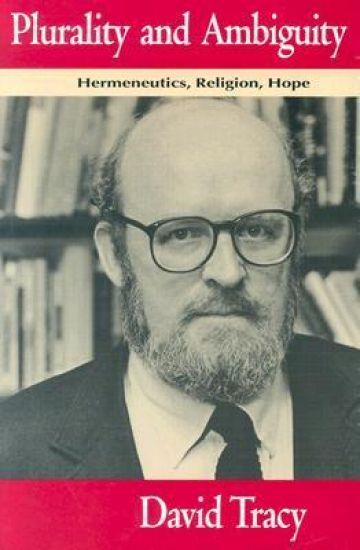
Plurality and Ambiguity: Hermeneutics, Religion, Hope
David Tracy
University of Chicago Press
1994
nidottu
In Plurality and Ambiguity, David Tracy lays the philosophical groundwork for a practical application of hermeneutics, while constructing an innovative model of theological interpretation developed out of the notions of conversation and argument. He concludes with an appraisal of the religious significance of hope in an age of radically different voices and constantly shifting meanings.