Kirjailija
David Turner
Kirjat ja teokset yhdessä paikassa: 47 kirjaa, julkaisuja vuosilta 1985-2026, suosituimpien joukossa Eugene. Vertaile teosten hintoja ja tarkista saatavuus suomalaisista kirjakaupoista.
47 kirjaa
Kirjojen julkaisuhaarukka 1985-2026.
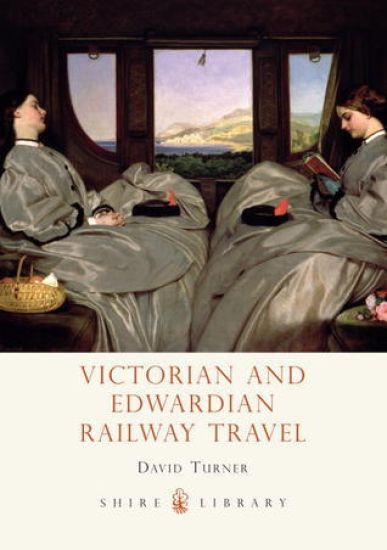
The railway was one of the main modes of long distance travel for Victorian Britons, and its processes – checking the timetable, buying a ticket, taking a seat – were central to both the industry and leisure of the period. David Turner here tells the story of travelling by rail between 1830 and the First World War: the development of stations, passenger carriages, waiting rooms and tickets; less familiar phenomena such as smoking and 'ladies only' compartments, and excursion trains; and the danger of accidents. This introduction to the Victorian and Edwardian railways shows the face of an era reflected in its new method of travel, and will allow the reader to note fascinating similarities between travel in that period and our own.
The characters are not naturalistic portraits but rather caricatures of contemporary types. As in the older comedies their names suggest their identities (Midway, Makepiece, Freeman, etc). The model Midland householder, Fred Midway, sedulously climbing the business and social ladders, self-educated by correspondence courses, with his material yardstick, his oratory, self-knowledge and pathetic faith in himself, provides a brilliant centre to a highly entertaining and satiricial play.4 women, 5 men
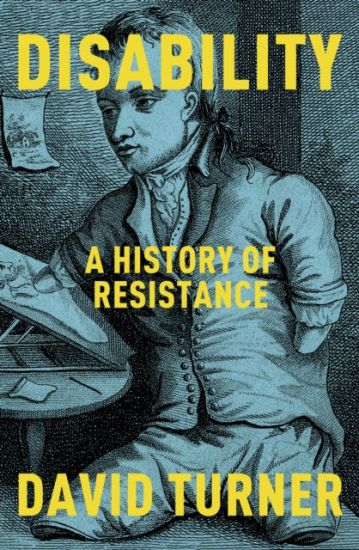
A ground-breaking history of modern Britain that brings disabled experiences to the fore for the first time. Notable medical developments, technological breakthroughs, increased visibility in popular culture and greater political representation all suggest that disabled people in Britain today are better off than those in centuries past. Or so we like to believe. Spanning over 500 years of British history and unearthing countless untold tales and voices, David Turner shows how attitudes in the past were often more open than we assume. And where they were not, we see how disabled people and their allies have always demanded just treatment; whether petitioning for better community support in the sixteenth century, campaigning for integrated education in the nineteenth, or protesting inaccessible transport in the twenty-first, the fight for equality has deep historical roots. Turning the spotlight on disabled people's histories - and appreciating their stories as ones of resistance, resourcefulness and resilience as well as suffering and hardship - has never been more urgent. Disability reveals the realities of disabled life in Britain across time so that we can fully understand our past - and the work we must do for a truly inclusive society moving forward.
Pearson Edexcel IG Mathematics A Student Book 2 w/code
David Turner; Ian Potts
PEARSON EDUCATION LIMITED
2025
muu
Pearson Edexcel IG Mathematics A Student Book 1 w/code
David Turner; Ian Potts
PEARSON EDUCATION LIMITED
2025
muu
The Teaching Improvement Agenda
David Lynch; Richard Smith; David Turner; Barnett Berry; Jake Madden; David Spendlove; Megan Lee
TAYLOR FRANCIS LTD
2024
nidottu
Drawing on ten years of research into whole-of-school teaching improvement, this engaging text explains what teaching improvement requires, how it is achieved, and how to maintain it in your classroom and school.Based on studies involving real schools and real teachers, The Teaching Improvement Agenda is focused on what really matters for teachers and leaders in today’s schools. The book begins with an examination of the education field to identify the fundamental elements which inform and generate teaching improvement. This lays the foundations for an instructive set of innovative, research-informed strategies which have been designed to empower the teacher and school leader to improve teaching across the whole school. The book closes with a series of case studies that demonstrate these approaches in action.Answering the "what?" and "how?" questions of teaching improvement, this book is an essential guide for school leaders and teachers, as well as instructors and students in initial teacher education.
The Teaching Improvement Agenda
David Lynch; Richard Smith; David Turner; Barnett Berry; Jake Madden; David Spendlove; Megan Lee
TAYLOR FRANCIS LTD
2024
sidottu
Drawing on ten years of research into whole-of-school teaching improvement, this engaging text explains what teaching improvement requires, how it is achieved, and how to maintain it in your classroom and school.Based on studies involving real schools and real teachers, The Teaching Improvement Agenda is focused on what really matters for teachers and leaders in today’s schools. The book begins with an examination of the education field to identify the fundamental elements which inform and generate teaching improvement. This lays the foundations for an instructive set of innovative, research-informed strategies which have been designed to empower the teacher and school leader to improve teaching across the whole school. The book closes with a series of case studies that demonstrate these approaches in action.Answering the "what?" and "how?" questions of teaching improvement, this book is an essential guide for school leaders and teachers, as well as instructors and students in initial teacher education.
In this poignant memoir, anthropologist and author David Turner tells of how he played the yiraga --- a musical instrument played by the aboriginal peoples of Australia --- for his friend and former partner Alexa, following her death in 2020. Turner describes the meaning of the yiraga within Australian aboriginal culture, and how he learned to play the instrument over the course of several decades living with and learning from indigenous peoples on Australia's Groote Eylandt archipelago. The result is a profound meditation on the meaning of life and death.FROM THE BOOK: "Grief might prove debilitating at first and serve to clear the mind of all thoughts and distractions in preparation, except that the act of playing the yiraga induces a becalming state of mind/being in which only the sense of breathing remains. This is effected by the repetitive rhythms of the mouth-sound tempos (which there is no need to sound to oneself once one becomes adept at playing), of which there are three: degul degul, quick; degul-degula-gula, medium; and degula degula, slow. It is in a becalmed but empty state of mind/being that one potentially enters a mediating zone between the "real" and the "transcendent" and is able to open a portal for the departed in their journey." Illustrated with more than 40 full-colour images
In this updated edition of a brief yet remarkable book, David Turner draws on a lifetime of experience to explore the beliefs of the Indigenous peoples of Australia. Those beliefs, he observes, form the foundation for a pan-continental way of life based not on the principle of unity but on a complex inter-relationship of interdependent parts. And that worldview has much to offer the rest of the human world as it searches for a path to a sustainable and secure future. As the author writes in the preface to the book: In February of 1969 my wife Ruth and I first set foot on a remote island in north Australia to research the way of life of the local Aboriginal people, just as mining was commencing on their land-a couple from Canada via London, England, and Perth, Western Australia, myself enrolled as a Ph.D. student at the University of Western Australia, sent to Groote Eylandt in the Northern Territory by my professor, Ronald M. Berndt. A tent in the middle of the Aboriginal camp at Angurugu for day-time work, a "staging house" across the Angurugu River as living quarters: spiders, snakes, a river to cross every evening with the risk of salt-water crocs swimming upstream. A wet season that's too wet and hot, a dry season that's too dry and hot, infection from even the slightest cut. Trying to learn Anindilyaugwa, one of the most complex languages in the world. Missionaries, mining. The whole gamut. All this time, all those revisits in between, articles and books published, working to come to an understanding of what makes these Aboriginal people and their way of life tick. But what better way to understand something than to become part of it yourself? And what better way to express a basic understanding than in just a few words, leaving the rest to the readers' experiences in their own environment? After all, we're all the same kind of people. Aren't we? Capable of the same experiences. Hopefully.
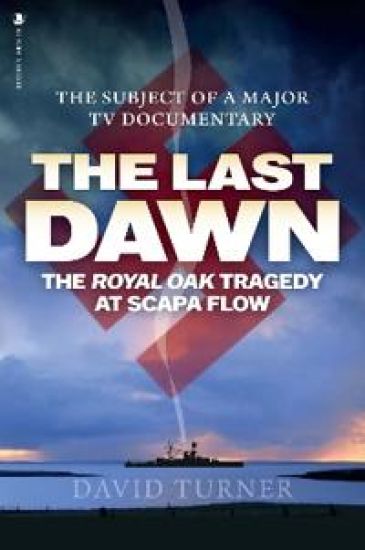
On 14 October 1939, HMS Royal Oak, one of the British navy’s top battleships, was destroyed at the Royal Navy’s main anchorage at Scapa Flow, Orkney. The audacious attack, by a German U-boat, was the first major blow against Britain of the Second World War. Over 800 lives were lost, including sailors as young as 14. This book is a revealing account of the tragedy. Told through declassified photographs and naval records, as well as statements from survivors, it is a dramatic and moving reassessment of one of the most shattering events in British naval history.
Comparative Education: A Field in Discussion is a personal reflection on the field of comparative education from the perspective of one scholar who has been active in the field since the 1980s. In the 1960s and 1970s many scholars attempted to develop a science of comparative education, and those diverse efforts formed the backdrop to the study of comparative education in the 1980s. In this volume, the author, who was originally educated as a physical scientist, draws upon those earlier attempts, at the same time introducing new insights from the complexity of science and systems theory. David Turner argues that these new insights should lead us away from a positivist vision of science, largely based on nineteenth century ideas of scientific method, and challenge us to accept that concepts are fluid, change over time, and are frequently contested. Nonetheless, those same concepts are essential to the way that we think of ourselves, our environment and the institutions that we inhabit. Caught between the generalisations that our concepts force on us, and our wish to capture the specificity of each personal history, the activity that we engage in is comparative education.
Love Arsenal?Prove It At the heart of the Amazing Arsenal Quiz are 603 specially selected questions, each with four possible correct answers in the style of Who Wants to be a Millionaire?The Amazing Arsenal Quiz can give you- Great knowledge about the club you love- A moment of calm and tranquillity as you focus your mind on this enjoyable activity- Relief from stress- A stronger memory- A healthier brain- A better chance of staving off dementia and Alzheimer's- Better performance in education- Possible increased IQ- Hours of fun and excitement (either on your own or with family and friends)Who will be the Arsenal Mastermind?Pick up your copy of the Amazing Arsenal Quiz Today.
Handbooks for New Testament Exegesis, 4–Volume Set
John Harvey; David Turner; Herbert W. Bateman Iv; C. Marvin Pate
Kregel Publications,U.S.
2019
nidottu
It was fifty years ago in February of 1969 that my wife Ruth and I first set foot on a remote island in north Australia to research the way of life of the local Aboriginal people, just as mining was commencing on their land--a couple from Canada via London, England, and Perth, Western Australia, myself enrolled as a Ph.D. student at the University of Western Australia, sent to Groote Eylandt in the Northern Territory by my professor, Ronald M. Berndt. A tent in the middle of the Aboriginal camp at Angurugu for day-time work, a "staging house" across the Angurugu River as living quarters: spiders, snakes, a river to cross every evening with the risk of salt-water crocs swimming upstream. A wet season that's too wet and hot, a dry season that's too dry and hot, infection from even the slightest cut. Trying to learn Anindilyaugwa, one of the most complex languages in the world. Missionaries, mining. The whole gamut.All this time, all those revisits in between, articles and books published, working to come to an understanding of what makes these Aboriginal people and their way of life tick. But what better way to understand something than to become part of it yourself? And what better way to express a basic understanding than in just a few words, leaving the rest to the readers' experiences in their own environment? After all, we're all the same kind of people. Aren't we? Capable of the same experiences. Hopefully.There was continuity in my experience of their world until the beginning of this century when my situation changed dramatically: a child, a detour to the Arctic, the death of my mentor, Nagulaba: na (Gula) Lalara. So, for 16 years all that knowledge and experience has lain dormant apart from keeping in touch with Jabeni through Jenny in Darwin. Jenny was married to Warren, Jabeni's na: nigama (in our terms, "younger brother," but much more and less in theirs). Then circumstances I could not ignore arose and all of a sudden it rushed to the surface, all bundled up in a quite compact and summary form. It had been integrating itself without my help all this time.Professor Berndt once said that he thought Aborigines had seen signs of Divine Intent in the world and acted upon them. With all due respect, I agree that they saw signs of intent in the world from somewhere, but I don't think they emanated from a Divinity. --from the Preface
Interpreting the Gospels and Acts – An Exegetical Handbook
David Turner; John Harvey
Kregel Publications,U.S.
2019
nidottu
America, the Jews, and the Holocaust: It Can't Happen Here?
David Turner; K. David Turner
Independently Published
2019
nidottu
In a dramatic challenge to traditional politics Donald J. Trump lost the vote by three-million votes and was declared president of the United States by the Electoral College. Riding the wave of despair within rural and rust-belt America the real estate tycoon and billionaire ran as a "populist," a "man of the people" whose nationalism resonated strongly with fringe social elements seeking simple solutions to including white supremacists. Seven months after taking office this fringe of social and religious racists, exercising their democratic rights, held a celebratory rally on the streets of Charlottesville, Virginia leaving one counterdemonstrator dead and dozens injured. Months later the Tree of Life Synagogue in Pittsburgh was attacked and thirteen Jews at Shabbat prayer were murdered. Jews in America consider themselves secure, their homeland exceptional in the Diaspora. "Almost all periods of great violence... have caught the Jews by surprise and found them unprepared... the persecutions began with particular severity and intensity especially when the Jews position was so secure... that there was no thought of attacks and major violence-at least not in their country, their house." (Alex Bein, 1990, The Jewish Question)"You understand in your bones... There is really only one absolute guarantee, and that's the state of Israel." (Vice President Joseph Biden, 2014)" A] perfect storm of antisemitism is not just brewing, but is upon us, and too many people in the Jewish community are woefully unprepared or unwilling to address it honestly." (Deborah Lipstadt, 2019)"Thank you, President Trump, for your honesty & courage to tell the truth about Charlottesville " (David Duke, Former Grand Wizard of the Ku Klux Klan) Charlottesville is a wakeup call to America's Jewish community.