Kirjojen hintavertailu. Mukana 12 116 125 kirjaa ja 12 kauppaa.

Kirjailija

David Unwin

Kirjat ja teokset yhdessä paikassa: 7 kirjaa, julkaisuja vuosilta 2001-2026, suosituimpien joukossa Virtual Reality in Geography. Vertaile teosten hintoja ja tarkista saatavuus suomalaisista kirjakaupoista.

7 kirjaa

Kirjojen julkaisuhaarukka 2001-2026.

Introductory Spatial Analysis

Introductory Spatial Analysis

David Unwin

TAYLOR FRANCIS LTD
2026
nidottu
First published in 1981, Introductory Spatial Analysis uses ideas from dimensional analysis and stochastic process theory to provide a consistent, logical framework for map analysis. ‘Geography is about maps’, so the saying goes, yet there is no other textbook for geography students that combines the discussion of maps with a treatment of quantitative methods of map analysis. This book differs from most other quantitative or cartographic geography texts in three respects: first it is a geography, not a statistics book, and therefore problems are examined by looking at the types of data used and the varieties of maps drawn and then at the analytical procedures that may be used to detect significant spatial patterns; second, no attempt is made to introduce tests that treat data without reference to their spatial location; and third, no advice is offered on specifically cartographic questions of map drawing and design. David Unwin’s text will serve as a valuable introduction to the techniques of spatial analysis that are so important in contemporary geographical study.
Introductory Spatial Analysis

Introductory Spatial Analysis

David Unwin

TAYLOR FRANCIS LTD
2024
sidottu
First published in 1981, Introductory Spatial Analysis uses ideas from dimensional analysis and stochastic process theory to provide a consistent, logical framework for map analysis. ‘Geography is about maps’, so the saying goes, yet there is no other textbook for geography students that combines the discussion of maps with a treatment of quantitative methods of map analysis. This book differs from most other quantitative or cartographic geography texts in three respects: first it is a geography, not a statistics book, and therefore problems are examined by looking at the types of data used and the varieties of maps drawn and then at the analytical procedures that may be used to detect significant spatial patterns; second, no attempt is made to introduce tests that treat data without reference to their spatial location; and third, no advice is offered on specifically cartographic questions of map drawing and design.David Unwin’s text will serve as a valuable introduction to the techniques of spatial analysis that are so important in contemporary geographical study.

Virtual Reality in Geography

Virtual Reality in Geography

Peter Fisher; David Unwin

CRC Press
2019
nidottu
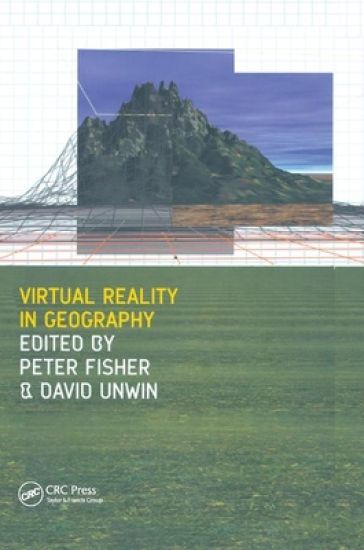
The ideas and techniques of virtual reality are now being made available for the creation of artificial or virtual geographies (a virtual geography refers to the creation of artificial geographies for use in research and teaching, using ideas and techniques from the field of virtual reality (VR)). Such virtual geographies are currently being constructed and used at a number of sites and include virtual cities, landscape visualization, visualizing past and future geographies, visualizing abstract concepts and taking people on virtual field courses. Virtual Reality in Geography covers 'through the window' VR systems, 'fully immersive' VR systems and hybrids of the two types. The authors examine the Virtual Reality Modeling Language approach, and explore its deficiencies when applied to real geographic environments. This book will be of great interest to geographers, computer scientists and all those interested in multimedia and computer graphics. There is an accompanying CD-ROM containing a rich selection of images and pieces of virtual reality software. This is a totally unique book covering an area of geography that is rapidly becoming used in all aspects of the field. It covers all the major uses and methods of virtual reality used by geographers and the lack of anything else written about the subject to date should ensure a wide readership. The authors have produced a CDROM that comes with the book of virtual reality images that will be a fascinating companion to the text.
Geographic Information Analysis

Geographic Information Analysis

David O'Sullivan; David Unwin

John Wiley Sons Inc
2010
sidottu
Clear, up-to-date coverage of methods for analyzing geographical information in a GIS context Geographic Information Analysis, Second Edition is fully updated to keep pace with the most recent developments of spatial analysis in a geographic information systems (GIS) environment. Still focusing on the universal aspects of this science, this revised edition includes new coverage on geovisualization and mapping as well as recent developments using local statistics. Building on the fundamentals, this book explores such key concepts as spatial processes, point patterns, and autocorrelation in area data, as well as in continuous fields. Also addressed are methods for combining maps and performing computationally intensive analysis. New chapters tackle mapping, geovisualization, and local statistics, including the Moran Scatterplot and Geographically Weighted Regression (GWR). An appendix provides a primer on linear algebra using matrices. Complete with chapter objectives, summaries, "thought exercises," explanatory diagrams, and a chapter-by-chapter bibliography, Geographic Information Analysis is a practical book for students, as well as a valuable resource for researchers and professionals in the industry.
Virtual Reality in Geography

Virtual Reality in Geography

Peter Fisher; David Unwin

Taylor Francis Ltd
2001
sidottu
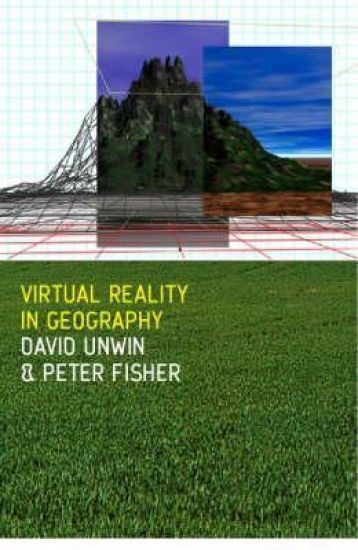
The ideas and techniques of virtual reality are now being made available for the creation of artificial or virtual geographies (a virtual geography refers to the creation of artificial geographies for use in research and teaching, using ideas and techniques from the field of virtual reality (VR)). Such virtual geographies are currently being constructed and used at a number of sites and include virtual cities, landscape visualization, visualizing past and future geographies, visualizing abstract concepts and taking people on virtual field courses. Virtual Reality in Geography covers 'through the window' VR systems, 'fully immersive' VR systems and hybrids of the two types. The authors examine the Virtual Reality Modeling Language approach, and explore its deficiencies when applied to real geographic environments. This book will be of great interest to geographers, computer scientists and all those interested in multimedia and computer graphics. There is an accompanying CD-ROM containing a rich selection of images and pieces of virtual reality software. This is a totally unique book covering an area of geography that is rapidly becoming used in all aspects of the field. It covers all the major uses and methods of virtual reality used by geographers and the lack of anything else written about the subject to date should ensure a wide readership. The authors have produced a CDROM that comes with the book of virtual reality images that will be a fascinating companion to the text.
Virtual Reality in Geography

Virtual Reality in Geography

Peter Fisher; David Unwin

TAYLOR FRANCIS INC
2001
irtolehti
Virtual Reality in Geography covers through the window VR systems, fully immersive VR systems, and hybrids of the two types. The authors examine the Virtual Reality Modeling Language approach and explore its deficiencies when applied to real geographic environments. This is a totally unique book covers all the major uses and methods of virtual reality used by geographers. The authors have produced a CDROM that comes with the book of virtual reality images that will be a fascinating companion to the text. This book will be of great interest to geographers, computer scientists and all those interested in multimedia and computer graphics.