Kirjojen hintavertailu. Mukana 12 459 402 kirjaa ja 12 kauppaa.

Kirjailija

David Vincent

Kirjat ja teokset yhdessä paikassa: 27 kirjaa, julkaisuja vuosilta 1993-2025, suosituimpien joukossa Waterloo. Vertaile teosten hintoja ja tarkista saatavuus suomalaisista kirjakaupoista.

27 kirjaa

Kirjojen julkaisuhaarukka 1993-2025.

Nose Art of the 5th Air Force

Nose Art of the 5th Air Force

David Vincent

SCHIFFER PUBLISHING LTD
2025
sidottu
More than 1,000 images of the boldest aircraft nose artworks of the 5th Air Force during WWII; includes contextual information on individual artists and specific planes. This massive volume includes more than 1,150 vintage images of WWII aircraft nose art. The artwork appears on American planes in the Pacific theater, specifically from the US 5th Air Force. Readers will see all kinds of aircraft, from bombers to fighters and cargo planes. The artists range from amateurs to professionals, and the subjects include both the famous female "pin-ups" and more-aggressive militaristic or animal designs. The bulk of the photos are sourced from the author's private collection and are previously unpublished. Text accompanying the images includes combat histories of specific aircraft and crews, along with biographical information on prolific artists.
Bread, Knowledge and Freedom

Bread, Knowledge and Freedom

David Vincent

TAYLOR FRANCIS LTD
2023
sidottu
First published in 1981, Bread, Knowledge and Freedom is a study of 142 working class autobiographies all of which cover some part of the period between 1790 and 1850. It is a full-scale examination of a form of source material that is significantly extensive. The book illustrates many aspects of ordinary working-class family life as well as the working-class pursuit of knowledge and literacy and the attempts of the middle-class educators to impose their notion of ‘useful knowledge.’ Dr. Vincent concludes with an assessment of the contribution of autobiography to nineteenth century working class history. This book will be of interest to students of history, sociology and literature.
The Fatal Breath

The Fatal Breath

David Vincent

JOHN WILEY AND SONS LTD
2023
sidottu
The Fatal Breath is the first full-scale history of the Covid-19 pandemic in Britain. Deploying a rich archive of personal testimonies together with a wide range of research reports and official data, it presents a moving and challenging account of the crisis that enveloped Britain (and the world) in the spring of 2020. With sensitivity, care, and an historian’s critical eye, David Vincent places the pandemic in context. While much contemporary commentary has assumed people were forced to develop entirely new ways of living and working during lockdown, Vincent reveals how the population was able to draw upon a wealth of resources and coping strategies already seen over the centuries, often reacting far more quickly and effectively than slow-moving authorities. He tells the stories of doctors’ and nurses’ time on the frontlines, reveals the true extent of supply shortages, conspiracy theories, and vaccine resistance, and explores individuals’ newfound appreciation of nature and community in lockdown. The Fatal Breath will appeal to anyone seeking to reflect on the past few years and how the pandemic has changed Britain – for better and for worse.
Istorija odinochestva

Istorija odinochestva

David Vincent

Novoe literaturnoe obozrenie
2022
sidottu
V period s XVIII po XXI vek otnoshenie k odinochestvu menjalos ne raz: v nem videli to istochnik blazhenstva i samopoznanija, to opasnuju patologiju, a v poslednie desjatiletija v nekotorykh stranakh stali s trevogoj govorit o nastupivshej "epidemii odinochestva". Chtoby ponjat istoricheskie predposylki dannogo sotsialnogo fenomena, istorik Devid Vinsent predlagaet vzgljanut na nego s kulturnoj i sotsiologicheskoj tochek zrenija. Chto takoe odinochestvo i chem ono otlichaetsja ot uedinenija? Kak tserkovnye i gosudarstvennye instituty pytalis vzjat ego pod svoj kontrol? Kakuju rol v formirovanii novykh predstavlenij ob odinochestve sygrali sekuljarizatsija obschestva i urbanizatsija? Kniga znakomit s istoriej mnogikh mest i praktik dobrovolnogo i vynuzhdennogo uedinenija - ot monastyrej do odinochnykh kamer, ot krugosvetnykh plavanij v odinochku do zamknutykh "puzyrej", v kotorye segodnja pogruzhajut cheloveka smartfony i naushniki... Devid Vinsent - istorik, PhD, prepodaet v Otkrytom universitete (OU) i universitete Kila.
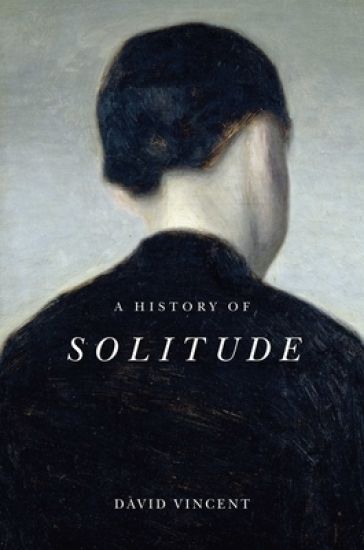
A History of Solitude

A History of Solitude

David Vincent

Polity Press
2021
nidottu
Solitude has always had an ambivalent status: the capacity to enjoy being alone can make sociability bearable, but those predisposed to solitude are often viewed with suspicion or pity. Drawing on a wide array of literary and historical sources, David Vincent explores how people have conducted themselves in the absence of company over the last three centuries. He argues that the ambivalent nature of solitude became a prominent concern in the modern era. For intellectuals in the romantic age, solitude gave respite to citizens living in ever more complex modern societies. But while the search for solitude was seen as a symptom of modern life, it was also viewed as a dangerous pathology: a perceived renunciation of the world, which could lead to psychological disorder and anti-social behaviour. Vincent explores the successive attempts of religious authorities and political institutions to manage solitude, taking readers from the monastery to the prisoner’s cell, and explains how western society’s increasing secularism, urbanization and prosperity led to the development of new solitary pastimes at the same time as it made traditional forms of solitary communion, with God and with a pristine nature, impossible. At the dawn of the digital age, solitude has taken on new meanings, as physical isolation and intense sociability have become possible as never before. With the advent of a so-called loneliness epidemic, a proper historical understanding of the natural human desire to disengage from the world is more important than ever. The first full-length account of its subject, A History of Solitude will appeal to a wide general readership.
A History of Solitude

A History of Solitude

David Vincent

Polity Press
2020
sidottu
Solitude has always had an ambivalent status: the capacity to enjoy being alone can make sociability bearable, but those predisposed to solitude are often viewed with suspicion or pity. Drawing on a wide array of literary and historical sources, David Vincent explores how people have conducted themselves in the absence of company over the last three centuries. He argues that the ambivalent nature of solitude became a prominent concern in the modern era. For intellectuals in the romantic age, solitude gave respite to citizens living in ever more complex modern societies. But while the search for solitude was seen as a symptom of modern life, it was also viewed as a dangerous pathology: a perceived renunciation of the world, which could lead to psychological disorder and anti-social behaviour. Vincent explores the successive attempts of religious authorities and political institutions to manage solitude, taking readers from the monastery to the prisoner’s cell, and explains how western society’s increasing secularism, urbanization and prosperity led to the development of new solitary pastimes at the same time as it made traditional forms of solitary communion, with God and with a pristine nature, impossible. At the dawn of the digital age, solitude has taken on new meanings, as physical isolation and intense sociability have become possible as never before. With the advent of a so-called loneliness epidemic, a proper historical understanding of the natural human desire to disengage from the world is more important than ever. The first full-length account of its subject, A History of Solitude will appeal to a wide general readership.
I Am Morbid

I Am Morbid

David Vincent; Joel McIver

Jawbone
2019
nidottu
I Am Morbid tells the astounding story of David Vincent, former bassist and singer with Morbid Angel, and now outlaw-country performer and leader of the I Am Morbid supergroup. Written with the bestselling author Joel McIver, it s an autobiography that transcends the heavy metal category by its very nature. Much more than a mere memoir, I Am Morbid is an instruction manual for life at the sharp end; a gathering of wisdom distilled into ten acute lessons for anyone interested in furthering their fortunes in life. Morbid Angel redefined the term pioneers. A band of heavy-metal-loving kids from all over America who broke through a host of music industry prejudices and went on to scale huge commercial heights, they introduced a whole new form of extreme music to the world. Formed in 1984, and breaking into the limelight in 1989 with their devastating first album, Altars Of Madness, the Florida death-metal legends became the first band of their genre to sign to a major label, from which point they came to dominate the worldwide metal scene for two decades and beyond. David left Morbid Angel in 1996, and again, following a reunion, in 2015. For the first time, I Am Morbid explores the reasons behind his departure, and the transformation of his life, career, and music in the years since. This is a classic but never predictable tale of a man who has fought convention every step of the way . . . and won.
Privacy

Privacy

David Vincent

Polity Press
2016
nidottu
Privacy: A Short History provides a vital historical account of an increasingly stressed sphere of human interaction. At a time when the death of privacy is widely proclaimed, distinguished historian, David Vincent, describes the evolution of the concept and practice of privacy from the Middle Ages to the present controversy over digital communication and state surveillance provoked by the revelations of Edward Snowden. Deploying a range of vivid primary material, he discusses the management of private information in the context of housing, outdoor spaces, religious observance, reading, diaries and autobiographies, correspondence, neighbours, gossip, surveillance, the public sphere and the state. Key developments, such as the nineteenth-century celebration of the enclosed and intimate middle-class household, are placed in the context of long-term development. The book surveys and challenges the main currents in the extensive secondary literature on the subject. It seeks to strike a new balance between the built environment and world beyond the threshold, between written and face-to-face communication, between anonymity and familiarity in towns and cities, between religion and secular meditation, between the state and the private sphere and, above all, between intimacy and individualism. Ranging from the fourteenth century to the twenty-first, this book shows that the history of privacy has been an arena of contested choices, and not simply a progression towards a settled ideal. Privacy: A Short History will be of interest to students and scholars of history, and all those interested in this topical subject.
Privacy

Privacy

David Vincent

Polity Press
2016
sidottu
Privacy: A Short History provides a vital historical account of an increasingly stressed sphere of human interaction. At a time when the death of privacy is widely proclaimed, distinguished historian, David Vincent, describes the evolution of the concept and practice of privacy from the Middle Ages to the present controversy over digital communication and state surveillance provoked by the revelations of Edward Snowden. Deploying a range of vivid primary material, he discusses the management of private information in the context of housing, outdoor spaces, religious observance, reading, diaries and autobiographies, correspondence, neighbours, gossip, surveillance, the public sphere and the state. Key developments, such as the nineteenth-century celebration of the enclosed and intimate middle-class household, are placed in the context of long-term development. The book surveys and challenges the main currents in the extensive secondary literature on the subject. It seeks to strike a new balance between the built environment and world beyond the threshold, between written and face-to-face communication, between anonymity and familiarity in towns and cities, between religion and secular meditation, between the state and the private sphere and, above all, between intimacy and individualism. Ranging from the fourteenth century to the twenty-first, this book shows that the history of privacy has been an arena of contested choices, and not simply a progression towards a settled ideal. Privacy: A Short History will be of interest to students and scholars of history, and all those interested in this topical subject.
2030: Your Children's Future in Islamic Britain: Europe's Great Immigration Disaster

2030: Your Children's Future in Islamic Britain: Europe's Great Immigration Disaster

David Vincent

Createspace Independent Publishing Platform
2015
nidottu
In 2015 a study produced by the Muslim Council of Britain (MCB) based on the 2011 census entitled British Muslims in Numbers revealed that between 2001 and 2011 Britain's Muslim population had increased by 75 per cent. It also revealed that 10 per cent of all children under-five in England and Wales are now Muslim.The Muslim birth-rate is not declining and the politicians who claimed that the birth-rates of Third World immigrants would eventually conform to the British average have been proved wrong. Because of political correctness and hate law legislation the welfare state is unable to record the true financial cost of resources used up by new migrants. Slowly at first but now with increasing rapidity every aspect of what we once viewed as our traditions and culture are being removed and replaced. Look around at those who now inhabit large areas of London, Liverpool, Manchester, Birmingham, Leeds, Bradford, Dewsbury and Rotherham and we see people who have no cultural or historic ties to Britain, many living in workless ghettos. Who decided that the British taxpayer would pay the bill for the Third World's poor and guarantee the human rights of the world's asylum seekers? Who decided our children had to be diversity brainwashed by the state school system in order to conform to foreign cultural norms? Where once the Labour Party said it could see no limit to the number of migrants it would be willing to allow into Britain it is now the European Left and the European Union (EU) that is facilitating a new wave of immigration from outside of Europe.The majority of the one million refugees now waiting to cross the Mediterranean from Libya into Italy and then on to the welfare states of Britain, Germany and Sweden are Islamic. Many of them could be terrorists intent on killing innocent citizens and yet they are encouraged to make the crossing with the help of the Royal Navy. How many millions more will continue to gain entry in reply to the open-ended invitation extended to all comers from the EU? What we have now is the next wave of open door refugee immigration into Europe from Asia and Africa, mandated by European bureaucrats. Can we remain safe in the land of our birth? That is the question all of us will want an answer to for the sake of our children and our children's children.
I Hope I Don't Intrude

I Hope I Don't Intrude

David Vincent

Oxford University Press
2015
sidottu
'I Hope I Don't Intrude' takes its title from the catch-phrase of the eponymous hero of the 1825 play Paul Pry, which was an immense success on the London stage and then rapidly in New York and around the English-speaking world. It tackles the complex, multi-faceted subject of privacy in nineteenth-century Britain by examining the way in which the tropes, language, and imagery of the play entered public discourse about privacy in the rest of the century. The volume is not just an account of a play, or of late Georgian and Victorian theatre. Rather it is a history of privacy, showing how the play resonated through Victorian society and revealed its concerns over personal and state secrecy, celebrity, gossip and scandal, postal espionage, virtual privacy, the idea of intimacy, and the evolution of public and private spheres. After 1825 the overly inquisitive figure of Paul Pry appeared everywhere - in songs, stories, and newspapers, and on everything from buttons and Staffordshire pottery to pubs, ships, and stagecoaches - and 'Paul-Prying' rapidly entered the language. 'I Hope I Don't Intrude' is an innovative kind of social history, using rich archival research to trace this cultural artefact through every aspect of its consumer context, and using its meanings to interrogate the largely hidden history of privacy in a period of major transformations in the role of the home, mass communication (particularly the new letter post, which delivered private messages through a public service), and the state. In vivid and entertaining detail, including many illustrations, David Vincent presents the most thorough account yet attempted of a recreational event in an era which saw a decisive shift in consumer markets. His study casts fresh light on the perennial tensions between curiosity and intrusion that were captured in Paul Pry and his catchphrase. Giving a new account of the communications revolution of the period, it re-evaluates the role of the state and the market in creating a new regime of privacy. And its critique of the concept and practice of surveillance looks forward to twenty-first-century concerns about the invasion of privacy through new technologies.
Home Run's Most Wanted

Home Run's Most Wanted

David Vincent

Potomac Books Inc
2009
pokkari
The home run has changed the game of baseball, moving it into a sport where might makes right and fans clamor for the clout. Home Run's Most Wanted™: The Top 10 Book of Monumental Dingers, Prodigious Swingers, and Everything Long-Ball celebrates all there is about the home run, from the folks that hit it, the guys that serve it up, and even the voices proclaiming, ?It's outta here!" David Vincent, called ?The Sultan of Swat Stats" by ESPN, brings it all to you in this fact-filled smorgasbord of home run knowledge. His detailed and varied top-ten lists include top home run totals position by position; players with the most homers against the Yankees; the youngest and oldest to ?go yard"; pitchers who surrendered the most homers; the states that have birthed the most top hitters; home run hitters with the longest last names; and even the top totals for players with the common last name of Williams. There's so much more, too. With a database of every single round-tripper ever hit, Vincent can present just about anything home run related you can imagine, and does so in this book. From the interesting and surprising to the humorous and just plain offbeat, Home Run's Most Wanted™ fills the bases with fun trivia about the longest ball of them all.