Kirjojen hintavertailu. Mukana 12 595 353 kirjaa ja 12 kauppaa.

Kirjailija

David W. Fagerberg

Kirjat ja teokset yhdessä paikassa: 13 kirjaa, julkaisuja vuosilta 2013-2024, suosituimpien joukossa Holy Eros. Vertaile teosten hintoja ja tarkista saatavuus suomalaisista kirjakaupoista.

Mukana myös kirjoitusasut: David W Fagerberg

13 kirjaa

Kirjojen julkaisuhaarukka 2013-2024.

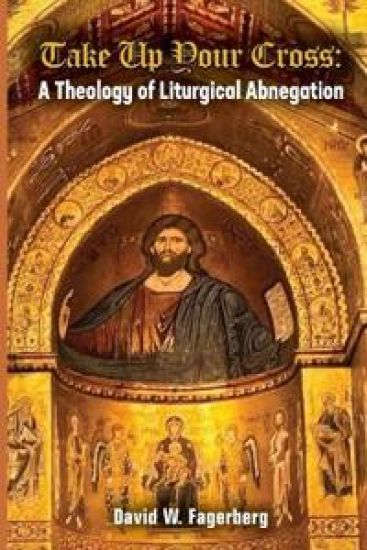
Take up Your Cross

Take up Your Cross

David W Fagerberg

Sensus Fidelium Press
2024
pokkari
This book looks at a number of key words in abnegation, but it is not exactly a word study. I'm not interested in counting up the words, or locating words, or comparing who uses which words. I am interested in how the authors use these words to make their point. I want, therefore, very much, to acquaint readers with quotations from primary texts. I do not apologize for the number of quotes because it is much better for the reader to encounter the original writers than to encounter me. My only contribution has been one of selection and organization, like the designer of a collage who glues their words to the page in order to make a picture. I find a passage to cause me to pause and reflect upon what liturgical abnegation is, and it would fulfill a hope if readers came to feel a kinship with some of the authors, and sought them out to read more for themselves. Biblical passages about the cross have been worn so smooth by familiarity that we hardly hear the words anymore, and are scarcely startled when Paul says that he has been crucified with Christ (Galatians 2:20), that he dies daily (1 Corinthians 15:31), that those who belong to Christ have crucified the flesh (Galatians 5:24), that our old self was crucified with Jesus (Romans 6:6), and that we must die with Christ (Romans 6:8). The overtones of asceticism and abnegation permeate the New Testament's entire description of the Christian life, but we have become insensitive to it. These spiritual writers try to remove the callous and let the words touch us again.
Desiring to Desire God

Desiring to Desire God

David W Fagerberg

Angelico Press
2024
sidottu
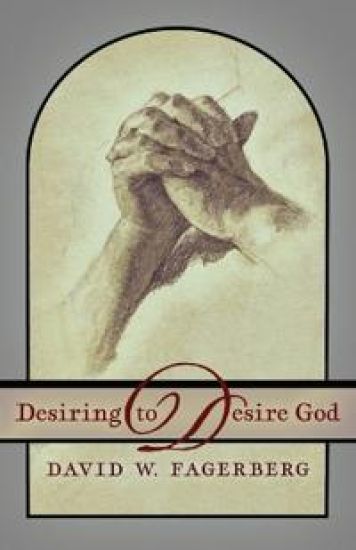
To pray is best; to want to pray is good; to want to want to pray is the first touch by God. A person who is in that last condition is the subject of this book, because it turns out that even desiring to desire can be an expression of love. All the authors quoted herein are Catholic spiritual writers from between the sixteenth and nineteenth centuries whom David Fagerberg categorizes as theologians of abnegation because they take seriously Jesus's words: "Deny yourself and follow me." That abnegation has both a negative and a positive face: it is the cure for a sickness unto death, but it is also uplifting because it rejoices in the charity of God. This book is about the latter face of abnegation, so often overlooked. And it turns out that this view of abnegation is accomplished by liturgical theology--the key that turns so many locks.
Desiring to Desire God

Desiring to Desire God

David W Fagerberg

Angelico Press
2024
pokkari
To pray is best; to want to pray is good; to want to want to pray is the first touch by God. A person who is in that last condition is the subject of this book, because it turns out that even desiring to desire can be an expression of love. All the authors quoted herein are Catholic spiritual writers from between the sixteenth and nineteenth centuries whom David Fagerberg categorizes as theologians of abnegation because they take seriously Jesus's words: "Deny yourself and follow me." That abnegation has both a negative and a positive face: it is the cure for a sickness unto death, but it is also uplifting because it rejoices in the charity of God. This book is about the latter face of abnegation, so often overlooked. And it turns out that this view of abnegation is accomplished by liturgical theology--the key that turns so many locks.
The Liturgical Cosmos

The Liturgical Cosmos

David W. Fagerberg

Emmaus Academic
2023
sidottu
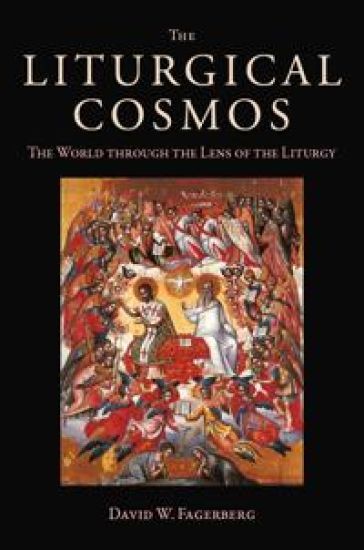
The Church's liturgy is an appropriate object for academic study, but it is first and foremost the object of the faithful's participation in divine worship, the site of humanity's deification by the Trinity. The liturgy is thus not just something that we can look at, but, like a window, it is also something we can look from, viewing other matters of Christian doctrine and practice - indeed, the entire created world - through the lens of the liturgy.In this collection of essays representing nearly two decades of writing and reflecting on liturgical theology, David Fagerberg sets out to explore the liturgical cosmos, attending to how the lex orandi of the liturgy illuminates and shapes the lex credendi of the Church's faith and the lex vivendi of the Christian moral life. Addressing such topics as asceticism, beauty, Scripture, spirituality, sacrifice, and social renewal, The Liturgical Cosmos directs our gaze to the ways in which the abundant life that Christ came to offer - a life communicated sacramentally and celebrated cultically - is a life lived daily, and liturgically, as the Holy Spirit refreshes our world and conforms us to Christ, the image of the Father.
Introduction to Sacramental Theology

Introduction to Sacramental Theology

Jose Granados; David W. Fagerberg

The Catholic University of America Press
2021
nidottu
Introduction to Sacramental Theology presents a complete overview of sacramental theology from the viewpoint of the body. This viewpoint is supported, in the first place, by Revelation, for which the sacraments are the place where we enter into contact with the body of the risen Jesus. It is a viewpoint, secondly, which is firmly rooted in our concrete human bodily experience, thus allowing for a strong connection between faith and life, creation and redemption.From this point of view, the treatise on the sacraments occupies a strategic role. For the sacraments appear, not as the last of a series of topics (after dealing with Creation, Christ, the Church), but as the original place in which to stand in order to contemplate the entire Christian mystery. This point of view of the body, which resonates with contemporary philosophy, sheds fruitful light on classical themes, such as the relationship of the sacraments with creation, the composition of the sacramental sign, the efficacy of the sacraments, the sacramental character, the role of the minister, or the relationship of the sacrament with the Church as a sacrament.As a result of this approach, the Eucharist takes on a central role, since this is the sacrament where the body of Jesus is made present. The rest of the sacraments are seen as prolongations of the eucharistic body, so as to fill all the time and space of the faithful. This foundation of the theology of the sacraments in eucharistic theology is supported by an analysis of the patristic and medieval tradition.In order to support its conclusions, Introduction to Sacramental Theology examines the doctrine of Scripture (especially St. John and St. Paul), the main patristic and medieval authors (St. Augustine, Hugh of St. Victor, St. Bonaventure, St. Thomas Aquinas...), the response of Trent to the protestant challenges, up to modern authors such as Scheeben, Rahner, Ratzinger, or Chauvet, including the teaching of Vatican II about the Church as a kind of sacrament.
Liturgical Mysticism

Liturgical Mysticism

David W. Fagerberg

Emmaus Academic
2019
sidottu
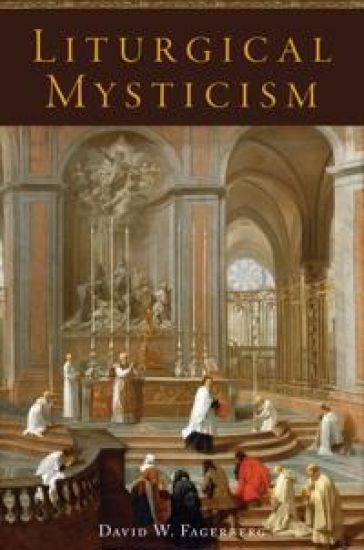
Some think that liturgy is formal, public, and for ordinary people, while mysticism is uncontrollable, private, and for extraordinary saints. Is there a connection between the two? In this volume, David Fagerberg proposes that mysticism is the normal crowning of the Christian life, and the Christian life is liturgical.We intuitively sense that liturgy and theology and mysticism have an affinity. Liturgical theology should reveal liturgy's mystical heart. Liturgical theology asks "What happens in liturgy?" and liturgical mysticism asks "What happens to us in liturgy?", and perfects our interior liturgy.In Liturgical Mysticism, Fagerberg directs the reader to look fixedly at Christ, who is the Mystery present in liturgy, and who bestows his resurrection power upon his adopted children.
Understanding the Diaconate

Understanding the Diaconate

W. Shawn McKnight; David W. Fagerberg

The Catholic University of America Press
2018
nidottu
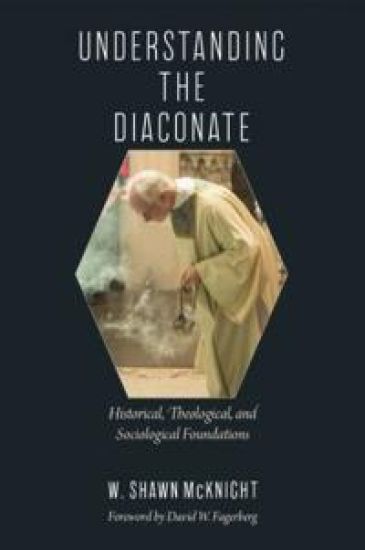
What is a deacon? More than fifty years since the restoration of the permanent diaconate by the Second Vatican Council, the office of deacon is still in need of greater specificity about its purpose and place within the mission and organizational structure of the Church.While the Church is more than a social reality, the Church nonetheless has a social reality. Our understanding of the diaconate therefore benefits from a theological discussion of the divine element of the Church and a sociological examination of the human element. Understanding the Diaconate adds the resources of sociology and anthropology to the theological sources of scripture, liturgy, patristic era texts, theologians, and magisterial teachings to conclude that the deacon can be understood as “social intermediary and symbol of communitas” who serves the participation of the laity in the life and mission of the Church. This research proposes the deacon as a servant of the bond of communion within the Church (facilitating the relationship between the bishop/priest and his people), and between the People of God and the individual in need. Thus authentic diaconal ministry includes a vast array of many concrete contexts of pastoral importance where one does more than simply serve at Mass.Understanding the Diaconate will undoubtedly be useful in the formation of permanent deacon candidates. But by shedding light on the unique ministry of deacons, the book also reveals how every member of the Church can be better supported and understood. Transitional deacons will come to understand the service-identity that lays the foundation for their future presbyteral character; the laity will appreciate their own vocational call in the world when they find a cleric accompanying them into the temporal sphere; the bishop will have the means to extend and enhance his care for his flock; and a world that is sick unto death will find the Church’s healing arm reaching out to it in word, liturgy, and charity. In these ways, W. Shawn McKnight makes clear the uniqueness of the deacon.
Consecrating the World

Consecrating the World

David W Fagerberg

Angelico Press
2016
sidottu
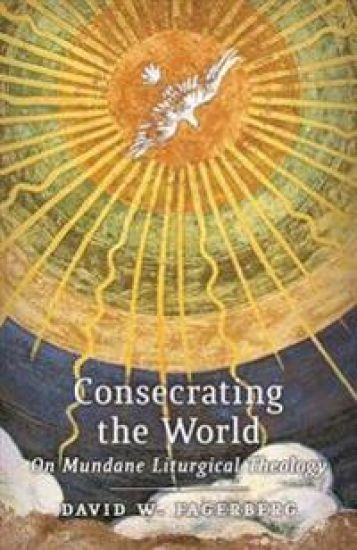
What has liturgy to do with life? The sacred with the secular? This study proposes that the liturgy calls us, in the words of Aidan Kavanagh, "to do the world as the world was meant to be done." The sacramental liturgy of the Church and the personal liturgy of our lives should be as a seamless garment.Consecrating the World continues David Fagerberg's exploration of the Church's lex orandi (law of prayer) by expanding two major themes. The first considers liturgy as the matrix wherein our encounter with God becomes an experience of primary theology. The second illustrates how a believer is made ready for this liturgy through asceticism in both its faces-the one negative (dealing with sin), the other positive (dealing with sanctification). This book turns these two themes outward to a liturgical theology of the cosmos-a mundane liturgical theology of the consecration of the world and the sanctification of our daily life."David Fagerberg invites us, with the urgency of the gospel, to see God the Trinity in every created thing, and to offer to God as a joyful sacrifice of praise the good things He has made, rather than cleaving egocentrically to these good things. When, through the Dove (the Spirit), Christ frees us to do the world in this way, we become the liturgical priest-kings we were meant to be; we learn how to live and die on the ascending path of Christ. Steeped in the spirituality of the Orthodox East and the Anglican West, enriched by the Catholic masters of Ressourcement, Fagerberg shares his vision in everyday language for all to hear. Just when it seemed that spiritual masters no longer roamed university hallways, God has raised up a true spiritual guide for our time. Open this book, awaken from spiritual slumber, read and rejoice."-MATTHEW LEVERING, Mundelein Seminary"Consecrating the World takes up where David Fagerberg's masterful On Liturgical Asceticism left off, providing a key to living the liturgy in every moment and aspect of human life. That this is indeed an everyday task takes nothing away from its divine content and sublime finality. Fagerberg is rightly regarded as one of the foremost liturgical theologians of our day. His engagement with the tradition is both fresh and fruitful. If we are to be 'thoroughly imbued with the spirit and power of the liturgy, ' we must grasp what the Sacred Liturgy in fact is. For this, Fagerberg is a worthy and rightly demanding guide."-DOM ALCUIN REID, Monast re Saint-Beno t, La Garde-Freinet, France"Consecrating the World is no ordinary book. It is a course in re-training the mind and the senses to perceive the world in a new way. Like the ancient Fathers, David Fagerberg sees all material things as sensible signs leading us to heavenly realities. Like Maximus and Dionysius, he shows us that the cosmos is itself a liturgy, calling us to consecrate ourselves and our work, our passions and the world to God-to sanctify the temporal order. This is a theology most visionary, joyful, and passionate."-SCOTT HAHN, Franciscan University of Steubenville"In David Fagerberg's new book, his trademark genius for integrating liturgical theology, ascetical theology, and the theology of creation is on full display, but here developed in a new, pneumatological direction that seems to lift it all up on the wings of the Holy Spirit. This book fully corroborates Fagerberg's reputation as one of the most creative and inspiring liturgical theologians of our time. It will have a wide readership both inside the academy, in seminaries, and in the hands of anyone interested in learning what is the deep connection between the sacred moments of the liturgy and the mundane moments of life in the world as we all must live it."-JOHN C. CAVADINI, University of Notre Dame
The Size of Chesterton's Catholicism

The Size of Chesterton's Catholicism

David W. Fagerberg

University of Notre Dame Press
2015
nidottu
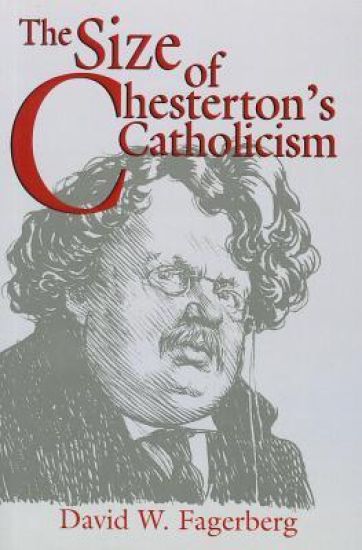
English writer Gilbert Keith Chesterton was widely known not only for his newspaper columns, novels, poetry, plays, and detective stories, but also for his theological and Catholic apologetical works. This celebration of Chesterton's passion for his faith builds on his own words to reveal the Catholic paradox he was so fond of exploring and which he articulated with zeal, wit, and total lack of animosity. David W. Fagerberg draws on Chesterton's theological writings—avoiding secondary sources so that the reader can encounter his thought as directly as possible—to show how Chesterton championed a Catholicism of great robustness accessible by a thousand doors. Through these doors, Fagerberg shows that Chesterton believed the Church to be a living institution that confounds its critics. He organizes Chesterton's material around seven themes, fashioning a mosaic from the illustrations and arguments found in these apolegetical works. We see how Chesterton responded to accusations that the Church avoids the world with his defense of ordinary life and to the allegation of blind obedience with a defense of doctrinal complexity. We explore his interest in paganism and ritual and learn his response to the objections of liberal Protestantism. Chesterton is shown to be an apologist for a "catholic" Catholicism and he saw in every heresy an effort to narrow the Church. Chesterton said about the Church "that it is not only larger than me, but larger then anything in the world; that it is indeed larger than the world." Fagerberg suggests that the ultimate apology Chesterton made for Catholicism is that it is capacious enough to accommodate the paradoxical combinations which reveal reality—that the Church is a trysting-place for all the truths in the world.
On Liturgical Asceticism

On Liturgical Asceticism

David W. Fagerberg

The Catholic University of America Press
2013
nidottu
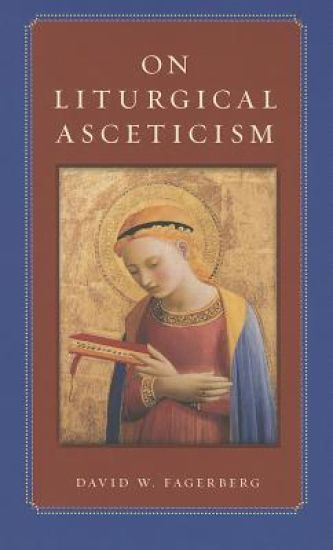
Drawing on the Eastern Orthodox tradition of asceticism and integrating it with recent Western thought on liturgy, David W. Fagerberg examines the interaction between the two and presents a powerful argument that asceticism is necessary for understanding liturgy as the foundation of theology. Asceticism may have been perfected in the sands of the desert, but it is demanded of every theologian and, indeed, every Christian. It grants the capacity for pondering liturgy and sharing the life of Christ. Fagerberg brings to light asceticism's essential importance in liturgical theology.Fagerberg's earlier work, Theologia Prima, understood liturgy as the foundation of theology. To that framework, he now adds the relevance of asceticism. Asceticism was understood to overcome the passions by cooperating with grace. It detailed how to train the life of grace and produce what the ancient church called a theologian. Fagerberg carries the wisdom of the earliest centuries forward. He develops a new framework called liturgical asceticism that combines discipline with sharing the life of Christ.