Kirjailija
David W Gill
Kirjat ja teokset yhdessä paikassa: 31 kirjaa, julkaisuja vuosilta 2007-2026, suosituimpien joukossa From Babel to Ai, Volume 2. Vertaile teosten hintoja ja tarkista saatavuus suomalaisista kirjakaupoista.
Mukana myös kirjoitusasut: David W. Gill
31 kirjaa
Kirjojen julkaisuhaarukka 2007-2026.
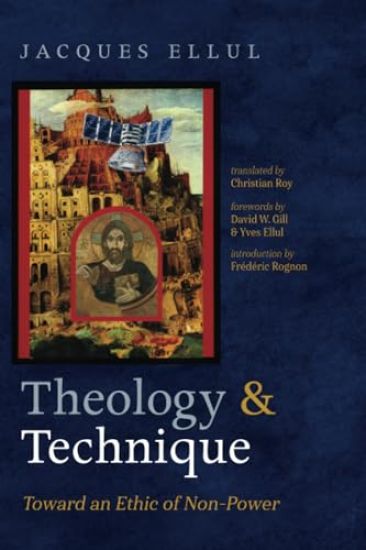
Theology and Technique is a posthumous, incomplete volume drafted in the 1970s that nevertheless constitutes a significant addition to the Ellul corpus. Working from Jacques Ellul's original outline, a collaborative team including three of Ellul's children, a grandson, and Ellul scholars has assembled previous partial publications that Ellul himself approved for eventual incorporation along with relevant unpublished essays and notes into a book which throws the relationship between Ellul's radical theology and sociological critique into fresh perspective. Frederic Rognon contributes an especially insightful general introduction. The translation by Christian Roy is a model of rendering the complexities of the French original into English. This latest Ellul publication will be essential to any serious attempt to appreciate the scope and depth of Ellul's Christian engagement with the challenges of the contemporary world.

This book is essential reading for those who are looking to expand their knowledge and for those who seek a more philosophical approach to this ancient craft. It starts as a journey of inquiry, reviewing the past and examining the present, objectively introducing to the reader the wider perspective of farriery; not just about ‘shoes on horses’ but as a benign manipulative therapy, which forms an integral part of the whole horse concept.
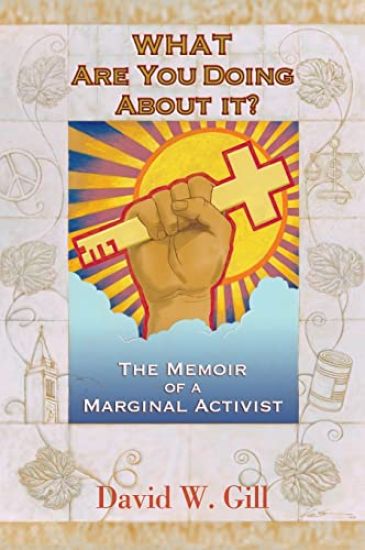
In his memoir, What Are You Doing About It?, ethicist and activist David W. Gill takes readers on an exciting inside tour of the academic, cultural, religious, and political landscape in which he has lived and worked for the past several decades. From Berkeley to Bordeaux, Chicago to Boston . . . from the business trenches and the local church to the seminary and the graduate school of business . . . from marching in the streets to the writer's study . . . from entrepreneurial leadership to institutional challenge . . . Gill never wavered in his mission to promote the ethical insights and values of Jesus and Scripture in the workplace as much as the churchplace. This is a story to inspire a new generation of thoughtful activists.

Becoming Good: Building Moral Character (2000) is a study of character--the kind of people we are, our habits, dispositions, inclinations, virtues, and vices. Without good character we do not have the strength or wisdom to fight off temptation and do the right thing, no matter how good our principles may be. For this study Jesus' Beatitudes are the primary guide, with Paul's faith, hope, and love a close second. Becoming Good digs deep into the biblical text and vocabulary, listens to the great biblical and ethical teaching of the past two millennia, and provides abundant contemporary illustrations and applications. Becoming Good works as a stand-alone study (the ethics of ""being,"" virtue ethics), but it is also the companion to Doing Right (the ethics of ""doing,"" decision and action).
Becoming Good: Building Moral Character (2000) is a study of character--the kind of people we are, our habits, dispositions, inclinations, virtues, and vices. Without good character we do not have the strength or wisdom to fight off temptation and do the right thing, no matter how good our principles may be. For this study Jesus' Beatitudes are the primary guide, with Paul's faith, hope, and love a close second. Becoming Good digs deep into the biblical text and vocabulary, listens to the great biblical and ethical teaching of the past two millennia, and provides abundant contemporary illustrations and applications. Becoming Good works as a stand-alone study (the ethics of being, virtue ethics), but it is also the companion to Doing Right (the ethics of doing, decision and action).
The Word of God in the Ethics of Jacques Ellul originated (1979) as one of the first PhD dissertations on the thought of French sociologist and theologian Jacques Ellul (1912-94), author of some sixty volumes on the nature and impact of modern technology and on Christian ethics. Ethicist David Gill studied with Ellul and devoted his own career to an exploration of how Jesus and Scripture can bring the Word of God to our contemporary world, especially to our work and technology. More recently Jacques Ellul and the Bible: Toward a Hermeneutic of Freedom, edited by Jacob Marques Rollison (Wipf & Stock, 2020), including an essay by David Gill, adds fresh insight to this critical topic.
Doing Right is a careful, thorough, readable introduction to a Christian ethics based on the Decalogue. Following the implications of Jesus' double ""Love Commandment,"" ten chapter-length studies show how each of the commandments guides our love for God, our love for our neighbors, our search for justice/righteousness, and our quest for life/freedom. As such, Christian ethics is not, despite first impressions, a catalog of ""thou shalt nots"" but rather a roadmap for a lifelong adventure guided by ""ten words"" on life, freedom, love, and justice. Doing Right draws deeply on the best Jewish and Christian scholarship over the centuries and then follows the ten principles wherever they lead, even into the thorny controversies of the present time. Doing Right works as a stand-alone study (of the ethics of principles and practices) but is also the companion to Gill's Becoming Good (on the ethics of character and virtue).
David Gill's writing of The Opening of the Christian Mind (1989) was prodded by the bestseller The Closing of the American Mind (1987) by cultural critic Allan Bloom. There should be no ""closed minds"" among the followers of Jesus Christ, insisted Gill, a Cal Berkeley grad of the late sixties with a PhD from the University of Southern California. But far from being reactive, Opening is a positive manifesto and guidebook for ""thinking Christianly,"" for developing authentic Christian minds, not just in the academy but the workplace, not just in pursuit of truth but of love and justice. Gill explores six characteristics of a Christian mind, its applications to study and work, and the curricula and strategy to achieve it.
David Gill's writing of The Opening of the Christian Mind (1989) was prodded by the bestseller The Closing of the American Mind (1987) by cultural critic Allan Bloom. There should be no ""closed minds"" among the followers of Jesus Christ, insisted Gill, a Cal Berkeley grad of the late sixties with a PhD from the University of Southern California. But far from being reactive, Opening is a positive manifesto and guidebook for ""thinking Christianly,"" for developing authentic Christian minds, not just in the academy but the workplace, not just in pursuit of truth but of love and justice. Gill explores six characteristics of a Christian mind, its applications to study and work, and the curricula and strategy to achieve it.

Doing Right is a careful, thorough, readable introduction to a Christian ethics based on the Decalogue. Following the implications of Jesus' double ""Love Commandment,"" ten chapter-length studies show how each of the commandments guides our love for God, our love for our neighbors, our search for justice/righteousness, and our quest for life/freedom. As such, Christian ethics is not, despite first impressions, a catalog of ""thou shalt nots"" but rather a roadmap for a lifelong adventure guided by ""ten words"" on life, freedom, love, and justice. Doing Right draws deeply on the best Jewish and Christian scholarship over the centuries and then follows the ten principles wherever they lead, even into the thorny controversies of the present time. Doing Right works as a stand-alone study (of the ethics of principles and practices) but is also the companion to Gill's Becoming Good (on the ethics of character and virtue).
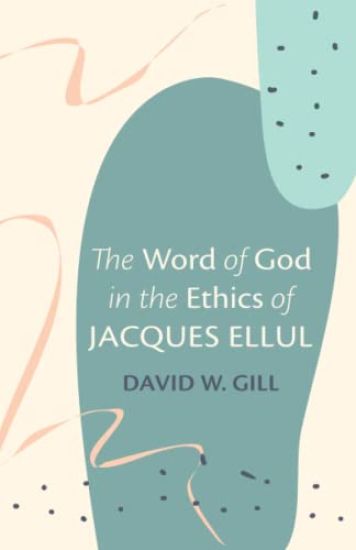
The Word of God in the Ethics of Jacques Ellul originated (1979) as one of the first PhD dissertations on the thought of French sociologist and theologian Jacques Ellul (1912-94), author of some sixty volumes on the nature and impact of modern technology and on Christian ethics. Ethicist David Gill studied with Ellul and devoted his own career to an exploration of how Jesus and Scripture can bring the Word of God to our contemporary world, especially to our work and technology. More recently Jacques Ellul and the Bible: Toward a Hermeneutic of Freedom, edited by Jacob Marques Rollison (Wipf & Stock, 2020), including an essay by David Gill, adds fresh insight to this critical topic.
Asking if there is humor in any religious text might seem blasphemous to many readers. Religious texts are there to instruct us, not entertain us. Religious texts are serious works, not frivolous. However, if part of being human entails having a sense of humor, then it would be more surprising indeed for Scripture not to have humor. Humor instructs us as much as it entertains us. God at the Improv seeks to show that being religious and being humorous are not opposites, but actually work in tandem to enhance and enliven our faith and practice.
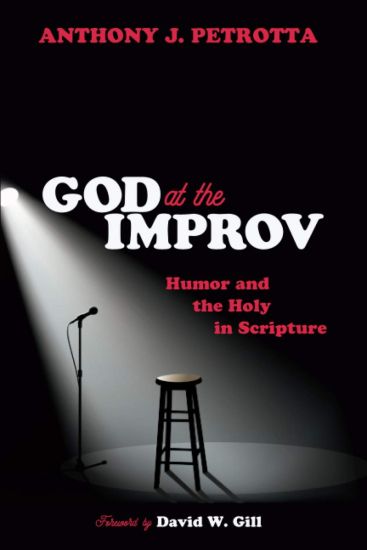
Asking if there is humor in any religious text might seem blasphemous to many readers. Religious texts are there to instruct us, not entertain us. Religious texts are serious works, not frivolous. However, if part of being human entails having a sense of humor, then it would be more surprising indeed for Scripture not to have humor. Humor instructs us as much as it entertains us. God at the Improv seeks to show that being religious and being humorous are not opposites, but actually work in tandem to enhance and enliven our faith and practice.
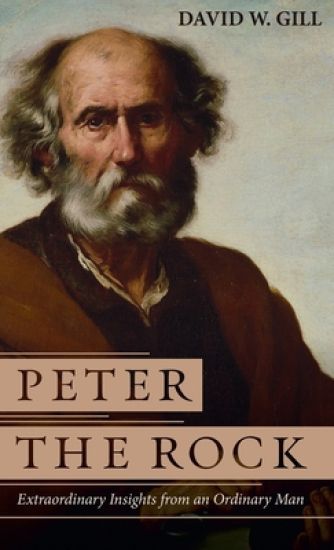
Peter the Rock is a series of studies of basic Christianity based on the New Testament accounts of Peter in the Gospels, Acts, and Letters. Because his stories are in all four Gospels, Acts, in Paul's Letters, and with First and Second Peter in the New Testament, Peter provides a fascinating avenue for lacing together the New Testament with all its variety. Conversion, discipleship, servanthood and leadership, failure and recovery . . . Simon Peter has lessons for us in each area. His story cuts across the New Testament more than any other figure except for Jesus Christ. He is far from perfect, an ordinary man in so many ways. We can relate. But God does extraordinary things through Peter. Uses: --great, widely-tested, proven material for adult education and small group study; good questions at end of each chapter --study resource for preachers and teachers --alternative perspectives for New Testament scholars to think about
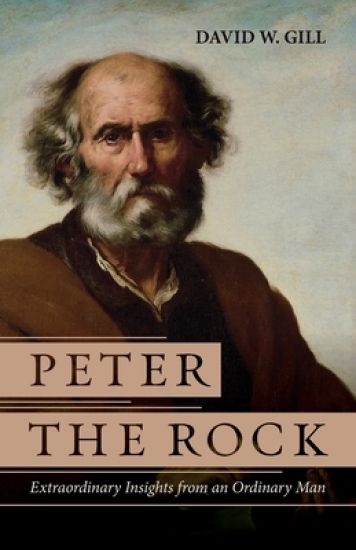
Peter the Rock is a series of studies of basic Christianity based on the New Testament accounts of Peter in the Gospels, Acts, and Letters. Because his stories are in all four Gospels, Acts, in Paul's Letters, and with First and Second Peter in the New Testament, Peter provides a fascinating avenue for lacing together the New Testament with all its variety. Conversion, discipleship, servanthood and leadership, failure and recovery . . . Simon Peter has lessons for us in each area. His story cuts across the New Testament more than any other figure except for Jesus Christ. He is far from perfect, an ordinary man in so many ways. We can relate. But God does extraordinary things through Peter. Uses: --great, widely-tested, proven material for adult education and small group study; good questions at end of each chapter --study resource for preachers and teachers --alternative perspectives for New Testament scholars to think about