Kirjojen hintavertailu. Mukana 12 558 209 kirjaa ja 12 kauppaa.

Kirjailija

David W. J. Gill

Kirjat ja teokset yhdessä paikassa: 6 kirjaa, julkaisuja vuosilta 2001-2024, suosituimpien joukossa Artwashing the Past. Vertaile teosten hintoja ja tarkista saatavuus suomalaisista kirjakaupoista.

Mukana myös kirjoitusasut: David W.J. Gill

6 kirjaa

Kirjojen julkaisuhaarukka 2001-2024.

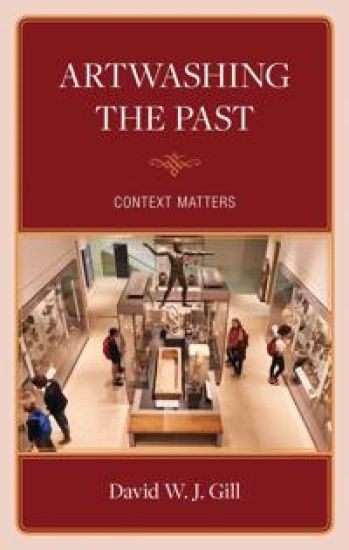
Artwashing the Past

Artwashing the Past

David W.J. Gill

BLOOMSBURY PUBLISHING PLC
2024
sidottu
Artwashing the Past: Context Matters contributes to the wider discussion about the appropriate due diligence process that should be conducted prior to the acquisition of cultural objects. The chapters were written as museums in Europe and North America were facing a series of claims on recently acquired objects in their collections in the light of the photographic dossiers that had been seized from dealers in Switzerland and Greece. They engage with some of the recent debates over cultural property that include the Ka Ka Nefer mummy mask currently in the St Louis Art Museum, and the Leutwitz Apollo acquired by the Cleveland Museum of Art. Two of the essays reflect on the recent and controversial metal-detecting finds in England, the so-called Crosby Garrett helmet and the Lenborough Hoard.
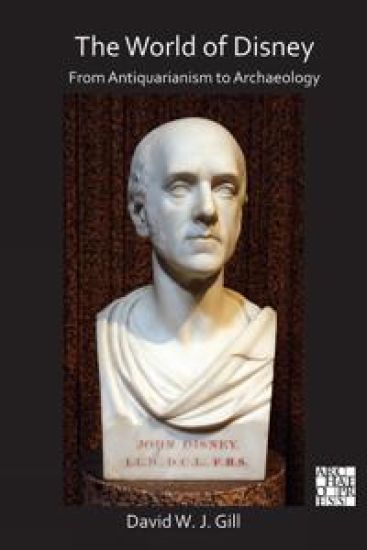
The World of Disney: From Antiquarianism to Archaeology
Dr John Disney (1779-1857) was the benefactor of the first chair in archaeology at a British university. He also donated his major collection to the University of Cambridge. The sculptures continue to be displayed in the Fitzwilliam Museum. The Disney family traced its origins back to the Norman invasion of England, and the family home was at Norton Disney in Lincolnshire. Disney’s father, the Reverend John Disney DD (1746-1816) left the Church of England to become a minister at the Unitarian Essex Street Chapel in London. A major sponsor of the chapel was Thomas Brand-Hollis of The Hyde, Essex, who bequeathed the house and his Grand Tour collection (formed with Thomas Hollis) on his death in 1804 to the Reverend John Disney. Disney inherited part of the classical collection of his uncle and father-in-law Lewis Disney-Ffytche, owner of the 18th century pleasure gardens, Le Désert de Retz, outside Paris. Disney’s brother-in-law was Sir William Hillary, founder of the RNLI. Disney was instrumental in the creation of the Chelmsford Museum through the Chelmsford Philosophical Society, and the formation of the Essex Archaeological Society.
Winifred Lamb: Aegean Prehistorian and Museum Curator
Winifred Lamb was a pioneering archaeologist in the Aegean and Anatolia. She studied classics at Newnham College, Cambridge, and subsequently served in naval intelligence alongside J. D. Beazley during the final stages of the First World War. As war drew to a close, Sydney Cockerell, Director of the Fitzwilliam Museum in Cambridge, invited Lamb to be the honorary keeper of Greek antiquities. Over the next 40 years she created a prehistoric gallery, marking the university’s contribution to excavations in the Aegean, and developed the museum’s holdings of classical bronzes and Athenian figure-decorated pottery. Lamb formed a parallel career excavating in the Aegean. She was admitted as a student of the British School at Athens and served as assistant director on the Mycenae excavations under Alan Wace and Carl Blegen. After further work at Sparta and on prehistoric mounds in Macedonia, Lamb identified and excavated a major Bronze Age site at Thermi on Lesbos. She conducted a brief excavation on Chios before directing a major project at Kusura in Turkey. She was recruited for the Turkish language section of the BBC during the Second World War, and after the cessation of hostilities took an active part in the creation of the British Institute of Archaeology at Ankara.
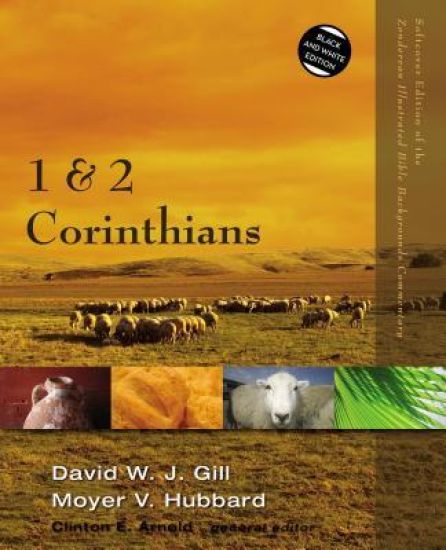
1 and 2 Corinthians

1 and 2 Corinthians

David W. J. Gill; Moyer V. Hubbard

Zondervan
2015
nidottu
Brimming with photos and graphics, the Zondervan Illustrated Bible Backgrounds Commentary walks you verse by verse through all the books of the New Testament. It’s like slipping on a set of glasses that lets you read the Bible through the eyes of a first-century reader! Discoveries await you that will snap the world of the New Testament into gripping immediacy. Things that seem mystifying, puzzling, or obscure will take on tremendous meaning when you view them in their ancient context. You'll deepen your understanding of the teachings of Jesus. You'll discover the close, sometimes startling interplay between God's kingdom and the practical affairs of the church. Best of all, you'll gain a deepened awareness of the Bible’s relevance for your life. Written in a clear, engaging style, this beautiful set provides a new and accessible approach that more technical expository and exegetical commentaries don't offer.
Sifting the soil of Greece. The early years of the British School at Athens (1886–1919) (BICS Supplement 111)
`...what we wanted was to connect ourselves directly with the heart of Hellenic culture so that its very lifeblood might flow through our veins, and this we should gain by the establishment of the school at Athens'(J.B. Lightfoot, Bishop of Durham)The British School at Athens opened in 1886 `to promote all researches and studies' which could `advance the knowledge of Hellenic history, literature, and art from the earliest age to the present day'. Over the next 30 years the School initiated a major programme of excavations, initially on Cyprus, then at Megalopolis, on Melos, and at Sparta. School students took part in the work of the Cretan Exploration Fund and in the major regional surveys of the Asia Minor Exploration Fund.Most of the students who were admitted to the School in this period had been educated at either Cambridge or Oxford. Women, mostly from Cambridge, took part in the School's activities including the excavations at Phylakopi. The students' research interests included Greek pottery, Aegean prehistory, and epigraphy. Their experience of Greece prepared the students for later work in British universities and other professions.