Kirjojen hintavertailu. Mukana 12 390 323 kirjaa ja 12 kauppaa.

Kirjailija

David W. Orr

Kirjat ja teokset yhdessä paikassa: 15 kirjaa, julkaisuja vuosilta 1979-2024, suosituimpien joukossa Design on the Edge. Vertaile teosten hintoja ja tarkista saatavuus suomalaisista kirjakaupoista.

15 kirjaa

Kirjojen julkaisuhaarukka 1979-2024.

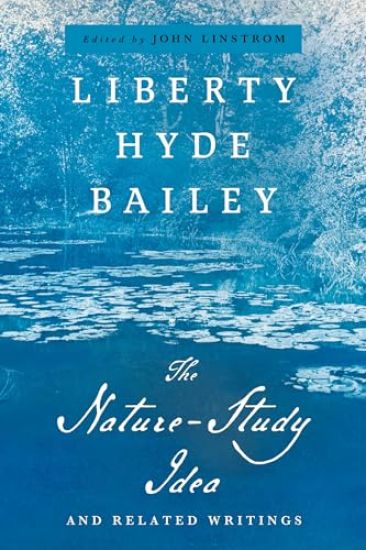
The Nature-Study Idea

The Nature-Study Idea

Liberty Hyde Bailey; David W. Orr

CORNELL UNIVERSITY PRESS
2024
pokkari
In The Nature-Study Idea, Liberty Hyde Bailey articulated the essence of a social movement, led by ordinary public-school teachers, that lifted education out of the classroom and placed it into firsthand contact with the natural world. The aim was simple but revolutionary: sympathy with nature to increase the joy of living and foster stewardship of the earth. With this definitive edition, John Linstrom reintroduces The Nature-Study Idea as an environmental classic for our time. It provides historical context through a wealth of related writings, and introductory essays relate Bailey's vision to current work in education and the intersection of climate change and culture. In this period of planetary turmoil, Bailey's ambition to cultivate wonder (in adults as well as children) and lead readers back into the natural world is more important than ever.
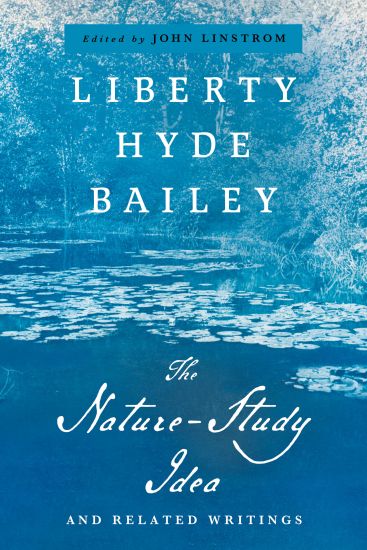
The Nature-Study Idea

The Nature-Study Idea

Liberty Hyde Bailey; David W. Orr

CORNELL UNIVERSITY PRESS
2024
sidottu
In The Nature-Study Idea, Liberty Hyde Bailey articulated the essence of a social movement, led by ordinary public-school teachers, that lifted education out of the classroom and placed it into firsthand contact with the natural world. The aim was simple but revolutionary: sympathy with nature to increase the joy of living and foster stewardship of the earth. With this definitive edition, John Linstrom reintroduces The Nature-Study Idea as an environmental classic for our time. It provides historical context through a wealth of related writings, and introductory essays relate Bailey's vision to current work in education and the intersection of climate change and culture. In this period of planetary turmoil, Bailey's ambition to cultivate wonder (in adults as well as children) and lead readers back into the natural world is more important than ever.
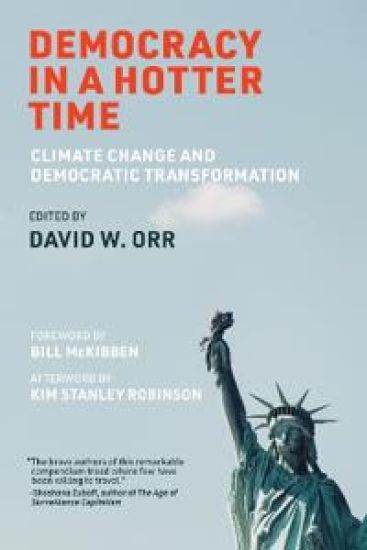
Democracy in a Hotter Time

Democracy in a Hotter Time

David W. Orr; Bill McKibben

MIT PRESS LTD
2023
nidottu
The first major book to deal with the dual crises of democracy and climate change as one interrelated threat to the human future and to identify a path forward.Democracy in a Hotter Time calls for reforming democratic institutions as a prerequisite for avoiding climate chaos and adapting governance to how Earth works as a physical system. To survive in the “long emergency” ahead, we must reform and strengthen democratic institutions, making them assets rather than liabilities. Edited by David W. Orr, this vital collection of essays proposes a new political order that will not only help humanity survive but also enable us to thrive in the transition to a post–fossil fuel world.Orr gathers leading scholars, public intellectuals, and political leaders to address the many problems confronting our current political systems. Few other books have taken a systems view of the effects of a rapidly destabilizing climate on our laws and governance or offered such a diversity of solutions. These thoughtful and incisive essays cover subjects from Constitutional reform to participatory urban design to education; together, they aim to invigorate the conversation about the human future in practical ways that will improve the effectiveness of democratic institutions and lay the foundation for a more durable and just democracy.ContributorsWilliam J. Barber III, JD, William S. Becker, Holly Jean Buck, Stan Cox, Michael M. Crow, William B. Dabars, Ann Florini, David H. Guston, Katrina Kuh, Gordon LaForge, Hélène Landemore, Frances Moore Lappé, Daniel Lindvall, Richard Louv, James R. May, Frederick W. Mayer, Bill McKibben, Michael Oppenheimer, David W. Orr, Wellington Reiter, Kim Stanley Robinson, Anne-Marie Slaughter
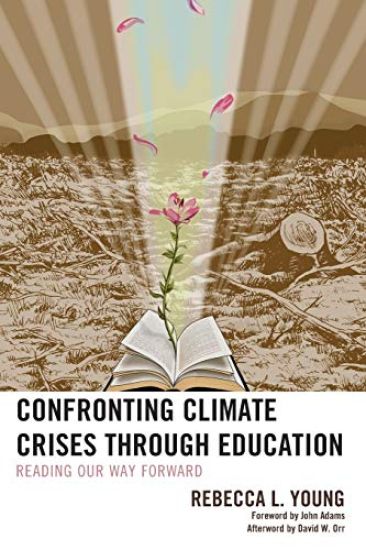
Confronting Climate Crises through Education

Confronting Climate Crises through Education

Rebecca L. Young; John Adams; David W. Orr

Lexington Books
2020
nidottu
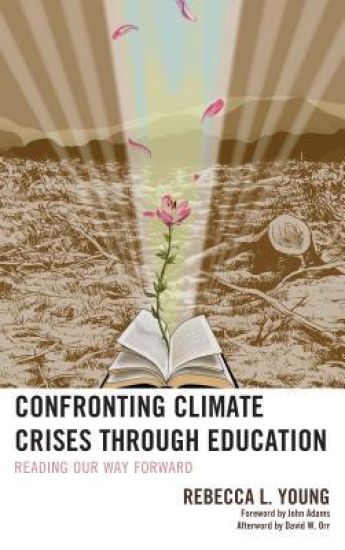
Confronting Climate Crises through Education: Reading Our Way Forward envisions the responsibility of public education to engage a citizenry more prepared to address the challenges of a changing world. Young advocates a paradigm shift that positions ecopedagogy as the central organizing principle of curriculum and assessment design. Each chapter outlines ways literature can serve as a cultural lens for examining the complex patterns of contexts behind our most pressing climate concerns, including potential solutions these patterns may illuminate. A focus on fiction and non-fiction exemplars that can provide such a lens illustrates practical steps educators can take to develop instruction around the immediately relevant environmental crises we are experiencing and to inspire more ecologically conscious, globally-minded problem-solvers prepared to confront them.
Confronting Climate Crises through Education

Confronting Climate Crises through Education

Rebecca L. Young; John Adams; David W. Orr

Lexington Books
2018
sidottu
Confronting Climate Crises through Education: Reading Our Way Forward envisions the responsibility of public education to engage a citizenry more prepared to address the challenges of a changing world. Young advocates a paradigm shift that positions ecopedagogy as the central organizing principle of curriculum and assessment design. Each chapter outlines ways literature can serve as a cultural lens for examining the complex patterns of contexts behind our most pressing climate concerns, including potential solutions these patterns may illuminate. A focus on fiction and non-fiction exemplars that can provide such a lens illustrates practical steps educators can take to develop instruction around the immediately relevant environmental crises we are experiencing and to inspire more ecologically conscious, globally-minded problem-solvers prepared to confront them.
Dangerous Years

Dangerous Years

David W. Orr

Yale University Press
2018
pokkari
A leading environmental thinker takes a hard look at the obstacles and possibilities on the long road to sustainability This gripping, deeply thoughtful book considers future of civilization in the light of what we know about climate change and related threats. David Orr, an award-winning, internationally recognized leader in the field of sustainability and environmental education, pulls no punches: even with the Paris Agreement of 2015, Earth systems will not reach a new equilibrium for centuries. Earth is becoming a different planet—more threadbare and less biologically diverse, with more acidic oceans and a hotter, more capricious climate. Furthermore, technology will not solve complex problems of sustainability. Yet we are not fated to destroy the Earth, Orr insists. He imagines sustainability as a quest and a transition built upon robust and durable democratic and economic institutions, as well as changes in heart and mindset. The transition, he writes, is beginning from the bottom up in communities and neighborhoods. He lays out specific principles and priorities to guide us toward enduring harmony between human and natural systems.
Designing Regenerative Cultures

Designing Regenerative Cultures

Daniel Christian Wahl; David W. Orr; Graham Leicester

Triarchy Press
2016
nidottu
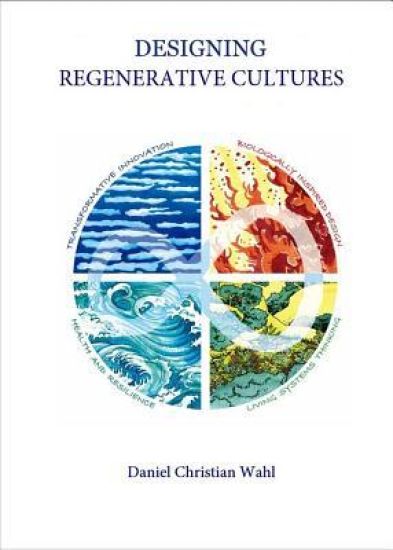
This is a 'Whole Earth Catalog' for the 21st century: an impressive and wide-ranging analysis of what's wrong with our societies, organizations, ideologies, worldviews and cultures - and how to put them right. The book covers the finance system, agriculture, design, ecology, economy, sustainability, organizations and society at large. In it, Daniel Wahl explores ways in which we can reframe and understand the crises that we currently face and explores how we can live our way into the future. Moving from patterns of thinking and believing to our practice of education, design and community living, he systematically shows how we can stop chasing the mirage of certainty and control in a complex and unpredictable world. The book asks how can we collaborate in the creation of diverse regenerative cultures adapted to the unique biocultural conditions of place? How can we create conditions conducive to life? "This book is a valuable contribution to the important discussion of the worldview and value system we need to redesign our businesses, economies, and technologies - in fact, our entire culture - so as to make them regenerative rather than destructive." Fritjof Capra, author of The Web of Life, coauthor of The Systems View of Life: A Unifying Vision. "This is an excellent addition to the literature on ecological design and it will certainly form a keystone in the foundations of the new MA in Ecological Design Thinking at Schumacher College, Devon. It not only contains a wealth of ideas on what Dr Wahl has termed 'Designing Regenerative Cultures' but what is probably more important, it provides some stimulating new ways of looking at persistent problems in our contemporary culture and hence opens up new ways of thinking and acting in the future." Seaton Baxter OBE, Professor in Ecological Design Thinking, Schumacher College, UK
Down to the Wire

Down to the Wire

David W. Orr

Oxford University Press Inc
2012
nidottu
Singled out as "one of the country's leading environmental thinkers" by Bill McKibben in the New York Review of Books, David W. Orr offers an exacting analysis of where we are in terms of climate change, how we got here, and what we must now do. Orr shows how political negligence, an economy based on the insatiable consumption of trivial goods, and a disdain for the well-being of future generations have brought us to the tipping point. We now face a long emergency of rising temperatures, rising sea-levels, and a host of other related problems that will increasingly undermine human civilization. Down to the Wire is a major wake-up call. But this is not a doomsday book. Orr offers a wide range of pragmatic, far-reaching proposals--some of which have already been adopted by the Obama administration--for how we might reconnect public policy with rigorous science, bring our economy into alignment with ecological realities, and begin to regard ourselves as planetary trustees for future generations.
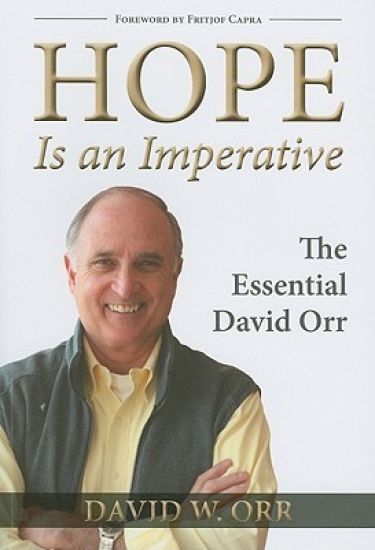
Hope Is an Imperative

Hope Is an Imperative

David W. Orr; Fritjof Capra

Island Press
2010
nidottu
For more than three decades, David Orr has been one of the leading voices of the environmental movement, championing the cause of ecological literacy in higher education, helping to establish and shape the field of ecological design, and working tirelessly to raise awareness of the threats to future generations posed by humanity's current unsustainable trajectory. "Hope Is an Imperative" brings together in a single volume Professor Orr's most important works, including classics such as "What Is Education For?" one of the most widely reprinted essays in the environmental literature, "The Campus and the Biosphere", which helped launch the green campus movement, and "Loving Children: A Design Problem", which renowned theologian and philosopher Thomas Berry called 'the most remarkable essay I've read in my whole life'. The book features thirty-three essays, along with an introductory section that considers the evolution of environmentalism, section introductions that place the essays into a larger context, and a foreword by physicist and author Fritjof Capra. "Hope Is an Imperative" is a comprehensive collection of works by one of the most important thinkers and writers of our time. It offers a complete introduction to the writings of David Orr for readers new to the field, and represents a welcome compendium of key essays for long-time fans. The book is a must-have volume for every environmentalist's bookshelf.
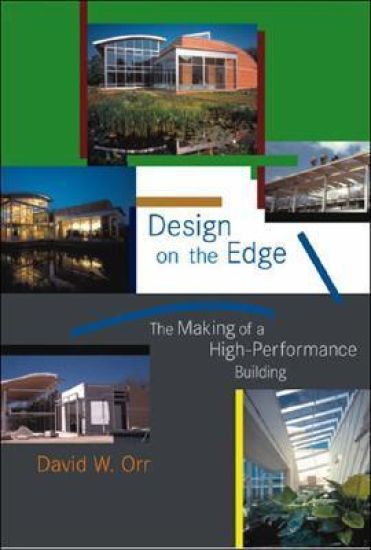
Design on the Edge

Design on the Edge

David W. Orr

MIT Press
2008
pokkari
The story of the building of the Adam Joseph Lewis Center at Oberlin College in the context of ecological design, institutional learning, and the green campus movement. The story of the Adam Joseph Lewis Center at Oberlin College-the first substantially green building to be built on a college campus-encompasses more than the particulars of one building. In Design on the Edge, David Orr writes about the planning and design of Oberlin's environmental studies building as part of a larger story about the art and science of ecological design and the ability of institutions of higher learning themselves to learn. The Lewis Center, which has attracted worldwide attention as a model of ecological design, operates according to environmental principles. It is powered entirely by solar energy, features landscaping with fruit trees and vegetable gardens, and houses a Living Machine, which processes all wastewater for reuse in the building or landscape. Orr puts the Lewis Center into historical design context and describes the obstacles and successes he encountered in obtaining funds and college approval, interweaving the particulars of the center with thoughts on the larger environmental and societal issues the building process illustrates. Equal parts analysis, personal reflection, and call to action, Design on the Edge illustrates the process of institutional change, institutional learning, and the political economy of design. It describes how the idea of the Lewis Center originated and was translated into reality with the help of such environmental visionaries as William McDonough and John Todd, and how the building has performed since its completion. College and university administrators will spend 17 billion dollars on new buildings over the next few years. Design on the Edge is essential reading for architects, planners, and environmentalists who need to sell the innovations of ecological design to wary institutions, and for educators and students whose profession is undermined by the very buildings they work in-and for anyone who has ever tried to change an organization for the better.
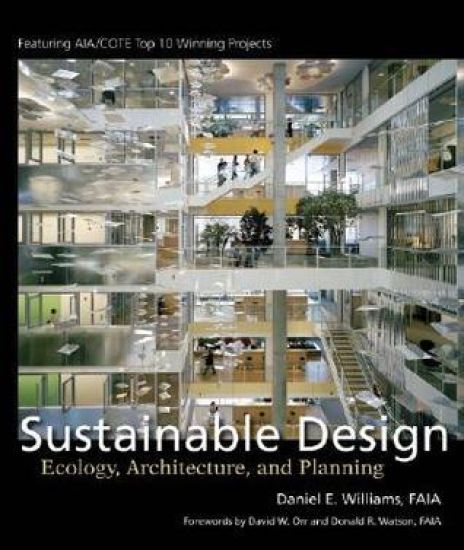
Sustainable Design

Sustainable Design

Daniel E. Williams; David W. Orr; Donald Watson

John Wiley Sons Inc
2007
sidottu
Meeting the Challenge of Sustainable Design "Daniel Williams's Sustainable Design is . . . a thoroughly practical call for the design professions to take the next steps toward transformation of the human prospect toward a future that is sustainable and sustaining of the best in human life lived in partnership not domination." --From the Foreword by David W. Orr, the Paul Sears Distinguished Professor of Environmental Studies and Politics and Chair of the Environmental Studies Program at Oberlin College "In this pioneering book, Daniel Williams provides the sort of intelligent, thoughtful, experienced insights that--if followed--will ensure that we make the right choices. It should be on the desk of every architect in the world." --Denis Hayes, president and CEO of the Bullitt Foundation and coordinator of the first Earth Day in 1970 Architects identify "sustainability" as the most important change in the future of their profession. Sustainable Design: Ecology, Architecture, and Planning is a practical, comprehensive guide to design and plan a built environment compatible with the region's economic, social, and ecological patterns. In this book, Daniel Williams challenges professionals to rethink architecture and to see their projects not as objects but as critical, connected pieces of the whole, essential to human health as well as to regional economy and ecology. Comprehensive in scope, Sustainable Design answers key questions such as: * How do I begin thinking and designing ecologically? * What is the difference between "green design" and "sustainable design"? * What are some examples of effective change I can make that will have the most impact for the least cost? Written for architects, planners, landscape architects, engineers, public officials, and change agent professionals, this important resource defines the issues of sustainable design, illustrates conceptual and case studies, and provides support for continued learning in this increasingly central focus of architects' and urban planners' work. Williams's book features winning projects from the first decade of the AIA's Committee on the Environment (COTE) Top Ten award program.
The Nature of Design

The Nature of Design

David W. Orr

Oxford University Press Inc
2004
nidottu
The environmental movement has often been accused of being overly negative--trying to stop "progress." The Nature of Design, on the other hand, is about starting things, specifically an ecological design revolution that changes how we provide food, shelter, energy, materials, and livelihood, and how we deal with waste. Ecological design is an emerging field that aims to recalibrate what humans do in the world according to how the world works as a biophysical system. Design in this sense is a large concept having to do as much with politics and ethics as with buildings and technology. The book begins by describing the scope of design, comparing it to the Enlightenment of the 18th century. Subsequent chapters describe barriers to a design revolution inherent in our misuse of language, the clockspeed of technological society, and shortsighted politics. Orr goes on to describe the critical role educational institutions might play in fostering design intelligence and what he calls "a higher order of heroism." Appropriately, the book ends on themes of charity, wilderness, and the rights of children. Astute yet broadly appealing, The Nature of Design combines theory, practicality, and a call to action.
Earth in Mind

Earth in Mind

David W. Orr

Island Press
2004
nidottu
In Earth in Mind, noted environmental educator David W. Orr focuses not on problems in education, but on the problem of education. Much of what has gone wrong with the world, he argues, is the result of inadequate and misdirected education that: alienates us from life in the name of human domination; causes students to worry about how to make a living before they know who they are; overemphasizes success and careers; separates feeling from intellect and the practical from the theoretical; deadens the sense of wonder for the created world. The crisis we face, Orr explains, is one of mind, perception, and values. It is, first and foremost, an educational challenge. The author begins by establishing the grounds for a debate about education and knowledge. He describes the problems of education from an ecological perspective, and challenges the "terrible simplifiers" who wish to substitute numbers for values. He follows with a presentation of principles for re-creating education in the broadest way possible, discussing topics such as biophilia, the disciplinary structure of knowledge, the architecture of educational buildings, and the idea of ecological intelligence. Orr concludes by presenting concrete proposals for reorganizing the curriculum to draw out our affinity for life.
Ecological Literacy

Ecological Literacy

David W. Orr

State University of New York Press
1991
pokkari
The most important discoveries of the 20th century exist not in the realm of science, medicine, or technology, but rather in the dawning awareness of the earth's limits and how those limits will affect human evolution. Humanity has reached a crossroad where various ecological catastrophes meet what some call sustainable development. While a great deal of attention has been given to what governments, corporations, utilities, international agencies, and private citizens can do to help in the transition to sustainability, little thought has been given to what schools, colleges, and universities can do. Ecological Literacy asks how the discovery of finiteness affects the content and substance of education. Given the limits of the earth, what should people know and how should they learn it?
The Global Predicament

The Global Predicament

Marvin S. Soroos; David W. Orr

The University of North Carolina Press
1979
nidottu
These eighteen essays present innovative perspectives on global policies by introducing new concepts and by redefining others within the ecological framework. The authors explore a variety of ecological issues: food supply, oceanic pollution, climate disruption, and the more general need for equitable resource management. The relationship of environmental issues to other priorities in world politics is also examined, and a foundation is laid for creative reevaluation of international relations.Originally published in 1979.A UNC Press Enduring Edition -- UNC Press Enduring Editions use the latest in digital technology to make available again books from our distinguished backlist that were previously out of print. These editions are published unaltered from the original, and are presented in affordable paperback formats, bringing readers both historical and cultural value.