Kirjojen hintavertailu. Mukana 12 595 353 kirjaa ja 12 kauppaa.

Kirjailija

David Wallace

Kirjat ja teokset yhdessä paikassa: 34 kirjaa, julkaisuja vuosilta 1985-2026, suosituimpien joukossa Sustain the Fight: From Support to Force Multiplier. Vertaile teosten hintoja ja tarkista saatavuus suomalaisista kirjakaupoista.

34 kirjaa

Kirjojen julkaisuhaarukka 1985-2026.

The Emergent Multiverse

The Emergent Multiverse

David Wallace

Oxford University Press
2014
nidottu
The Emergent Multiverse presents a striking new account of the 'many worlds' approach to quantum theory. The point of science, it is generally accepted, is to tell us how the world works and what it is like. But quantum theory seems to fail to do this: taken literally as a theory of the world, it seems to make crazy claims: particles are in two places at once; cats are alive and dead at the same time. So physicists and philosophers have often been led either to give up on the idea that quantum theory describes reality, or to modify or augment the theory. The Everett interpretation of quantum mechanics takes the apparent craziness seriously, and asks, 'what would it be like if particles really were in two places at once, if cats really were alive and dead at the same time'? The answer, it turns out, is that if the world were like that--if it were as quantum theory claims--it would be a world that, at the macroscopic level, was constantly branching into copies--hence the more sensationalist name for the Everett interpretation, the 'many worlds theory'. But really, the interpretation is not sensationalist at all: it simply takes quantum theory seriously, literally, as a description of the world. Once dismissed as absurd, it is now accepted by many physicists as the best way to make coherent sense of quantum theory. David Wallace offers a clear and up-to-date survey of work on the Everett interpretation in physics and in philosophy of science, and at the same time provides a self-contained and thoroughly modern account of it--an account which is accessible to readers who have previously studied quantum theory at undergraduate level, and which will shape the future direction of research by leading experts in the field.
Medieval Literature

Medieval Literature

David Wallace

Wiley-Blackwell (an imprint of John Wiley Sons Ltd)
2013
nidottu
This volume is an introduction to Medieval literature for undergraduates, graduate students and general readers in both Britain and North America.Ra ther than assuming a defensive or reactive posture vis-a-vis the Renaissance (the period that coins the terms "Medieval" and "Middle Ages" and defines their pejorative connotations), the book celebrates all that is singular and vibrant in this formative, pre-print period. Discussion concentrates on writing in Middle English - particularly as developed between 1375 and 1400, one of the greatest phases of English literary creativity - but reference are also made to continental texts forming part of the greater European milieu. Particular attention is paid to the distinctive and precarious conditions of textual transmission in a manuscript culture; struggles to fashion a distinct identity as a writer; the relationship of women to Medieval writing; the erosion of feudal paradigms (through newly complex divisions of labour); and the magical enchantment of the Medieval countryside.
Medieval Literature

Medieval Literature

David Wallace

Wiley-Blackwell (an imprint of John Wiley Sons Ltd)
2013
sidottu
This is an introduction to Medieval literature for undergraduates, graduate students and general readers. Rather than assuming a defensive or reactive posture vis-a-vis the Renaissance (the period that coins the terms "Medieval" and "Middle Ages", and defines their pejorative connotations), it celebrates all that is singular and vibrant in this formative, pre-print period. Discussion is concentrated on writing in Middle English - particularly as developed between 1375 and 1400, one of the greatest phases of English literary creativity, but reference is also necessarily made to continental texts forming part of the greater European milieu.
Strong Women

Strong Women

David Wallace

Oxford University Press
2012
nidottu
It takes a strong woman to secure bookish remembrance in future times; to see her life becoming a life. David Wallace explores the lives of four Catholic women - Dorothea of Montau (1347-1394) and Margery Kempe of Lynn (c. 1373-c. 1440); Mary Ward of Yorkshire (1585-1645) and Elizabeth Cary of Drury Lane (c. 1585-1639) and and the fate of their writings. All four shock, surprise, and court historical danger. Dorothea of Montau punishes her body and spends all day in church; eight of her nine neglected children die. Kempe, mother of fourteen, empties whole churches with a piercing cry learned at Jerusalem. Ward, living holily but un-immured, is denounced as an Amazon, a chattering hussy, an Apostolic Virago, and a galloping girl. Cary, having left her husband torturing Catholics in Dublin castle, converts to Roman Catholicism in Irish stables in London. Each of these women is mulier fortis, a strong woman: had she been otherwise, Wallace argues, her life would never have been written. The earliest texts of these lives are mostly near-contemporaneous with the women they represent, but their public reappearances have been partial and episodic, with their own complex histories. The lives of these strong women continue to be rewritten long after this premodern period. Incipient European war determines what Kempe must represent between her first discovery in 1934 and full publication in 1940. Dorothea of Montau, first promoted to counter eastern paganism, becomes a bastion against Bolshevism in the 1930s; her cult's meaning is fought out between Günter Grass and Josef Ratzinger. Cary's Catholic daughters, Benedictine nuns, must write of their mother as if she were a saint. Ward's work is not yet done: her followers, having won the right not to be enclosed, must now enter the closed spaces of Roman clerical power.
The Emergent Multiverse

The Emergent Multiverse

David Wallace

Oxford University Press
2012
sidottu
The Emergent Multiverse presents a striking new account of the 'many worlds' approach to quantum theory. The point of science, it is generally accepted, is to tell us how the world works and what it is like. But quantum theory seems to fail to do this: taken literally as a theory of the world, it seems to make crazy claims: particles are in two places at once; cats are alive and dead at the same time. So physicists and philosophers have often been led either to give up on the idea that quantum theory describes reality, or to modify or augment the theory. The Everett interpretation of quantum mechanics takes the apparent craziness seriously, and asks, 'what would it be like if particles really were in two places at once, if cats really were alive and dead at the same time'? The answer, it turns out, is that if the world were like that--if it were as quantum theory claims--it would be a world that, at the macroscopic level, was constantly branching into copies--hence the more sensationalist name for the Everett interpretation, the 'many worlds theory'. But really, the interpretation is not sensationalist at all: it simply takes quantum theory seriously, literally, as a description of the world. Once dismissed as absurd, it is now accepted by many physicists as the best way to make coherent sense of quantum theory. David Wallace offers a clear and up-to-date survey of work on the Everett interpretation in physics and in philosophy of science, and at the same time provides a self-contained and thoroughly modern account of it--an account which is accessible to readers who have previously studied quantum theory at undergraduate level, and which will shape the future direction of research by leading experts in the field.
Fate, Time, and Language

Fate, Time, and Language

David Wallace; Jay L. Garfield

Columbia University Press
2010
pokkari
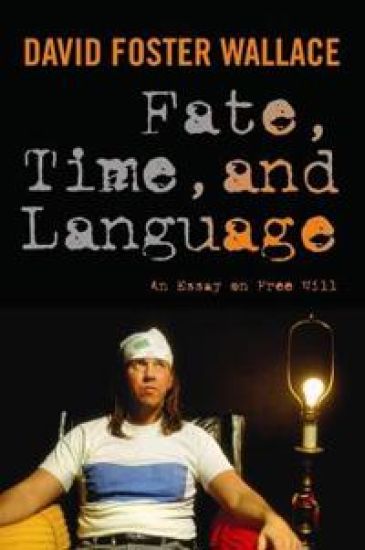
In 1962, the philosopher Richard Taylor used six commonly accepted presuppositions to imply that human beings have no control over the future. David Foster Wallace not only took issue with Taylor's method, which, according to him, scrambled the relations of logic, language, and the physical world, but also noted a semantic trick at the heart of Taylor's argument. Fate, Time, and Language presents Wallace's brilliant critique of Taylor's work. Written long before the publication of his fiction and essays, Wallace's thesis reveals his great skepticism of abstract thinking made to function as a negation of something more genuine and real. He was especially suspicious of certain paradigms of thought-the cerebral aestheticism of modernism, the clever gimmickry of postmodernism-that abandoned "the very old traditional human verities that have to do with spirituality and emotion and community." As Wallace rises to meet the challenge to free will presented by Taylor, we witness the developing perspective of this major novelist, along with his struggle to establish solid logical ground for his convictions. This volume, edited by Steven M. Cahn and Maureen Eckert, reproduces Taylor's original article and other works on fatalism cited by Wallace. James Ryerson's introduction connects Wallace's early philosophical work to the themes and explorations of his later fiction, and Jay Garfield supplies a critical biographical epilogue.
Fate, Time, and Language

Fate, Time, and Language

David Wallace; Jay L. Garfield

Columbia University Press
2010
sidottu
In 1962, the philosopher Richard Taylor used six commonly accepted presuppositions to imply that human beings have no control over the future. David Foster Wallace not only took issue with Taylor's method, which, according to him, scrambled the relations of logic, language, and the physical world, but also noted a semantic trick at the heart of Taylor's argument. Fate, Time, and Language presents Wallace's brilliant critique of Taylor's work. Written long before the publication of his fiction and essays, Wallace's thesis reveals his great skepticism of abstract thinking made to function as a negation of something more genuine and real. He was especially suspicious of certain paradigms of thought-the cerebral aestheticism of modernism, the clever gimmickry of postmodernism-that abandoned "the very old traditional human verities that have to do with spirituality and emotion and community." As Wallace rises to meet the challenge to free will presented by Taylor, we witness the developing perspective of this major novelist, along with his struggle to establish solid logical ground for his convictions. This volume, edited by Steven M. Cahn and Maureen Eckert, reproduces Taylor's original article and other works on fatalism cited by Wallace. James Ryerson's introduction connects Wallace's early philosophical work to the themes and explorations of his later fiction, and Jay Garfield supplies a critical biographical epilogue.
Premodern Places

Premodern Places

David Wallace

Wiley-Blackwell (an imprint of John Wiley Sons Ltd)
2006
nidottu
This book recovers places appearing in the mental mapping of medieval and Renaissance writers, from Chaucer to Aphra Behn. A highly original work, which recovers the places that figure powerfully in premodern imagining. Recreates places that appear in the works of Langland, Chaucer, Dante, Petrarch, Spenser, Shakespeare, Aphra Behn, and many others. Begins with Calais – peopled by the English from 1347 to 1558 and ends with Surinam – traded for Manhattan by the English in 1667. Other particular locations discussed include Flanders, Somerset, Genoa, and the Fortunate Islands (Canary Islands). Includes fascinating anecdotes, such as the story of an English merchant learning love songs in Calais. Provides insights into major historical narratives, such as race and slavery in Renaissance Europe. Crosses the traditional divide between the medieval and Renaissance periods.
Exiles in Hollywood

Exiles in Hollywood

David Wallace

Limelight Editions
2006
pokkari
World War II saw the greatest ever flight of cultural and intellectual talent from Europe. This mass escape from the Nazi regime saw legends such as Greta Garbo and Igor Stravinsky leave their homelands and settle in America. Their presence - in Hollywood especially - enabled the evolution of film noir, and changed movie-making forever. In "Exiles in Hollywood", David Wallace profiles many of the refugees, including the filmmakers, Billy Wilder and Alfred Hitchcock, writers like Thomas Mann, and actors such as Garbo and Charles Laughton. The result is a rich, page-turning look at an era, its triumphs and tragedies, its gossip and hidden facts, and its colourful personalities.
Premodern Places

Premodern Places

David Wallace

Wiley-Blackwell (an imprint of John Wiley Sons Ltd)
2004
sidottu
This book recovers places appearing in the mental mapping of medieval and Renaissance writers, from Chaucer to Aphra Behn. A highly original work, which recovers the places that figure powerfully in premodern imagining. Recreates places that appear in the works of Langland, Chaucer, Dante, Petrarch, Spenser, Shakespeare, Aphra Behn, and many others. Begins with Calais – peopled by the English from 1347 to 1558 and ends with Surinam – traded for Manhattan by the English in 1667. Other particular locations discussed include Flanders, Somerset, Genoa, and the Fortunate Islands (Canary Islands). Includes fascinating anecdotes, such as the story of an English merchant learning love songs in Calais. Provides insights into major historical narratives, such as race and slavery in Renaissance Europe. Crosses the traditional divide between the medieval and Renaissance periods.
Chaucer and the Early Writings of Boccaccio
David Wallace's examination of the aims and literary affiliations of Boccaccio's early writings provides an indispensable preface to and context for an informed appraisal of Chaucer's usage of Boccaccio. Previous studies of the relationship between the work of the two poets have tended to consider Chaucer's borrowings without making a thorough study of the traditions which shaped the Italian writer's work. Wallace argues that Boccaccio was not primarily concerned with winning recognition at the Angevin court, but was chiefly concerned with fashioning an identity for himself as an illustrious vernacular author. Chaucer recognised that both the Filostrato and Teseida derived their basic narrative capabilities from popular tradition analogous to that of the English tail-rhyme romance. Following a detailed analysis of Chaucer's translation practice in Troilus and Criseyde, Wallace concludesthat it was Boccaccio's attempt to develop a narrative art occupying the middle ground between popular and illustrious, domestic and European traditions that Chaucer found so uniquely congenial and instructive.