Kirjojen hintavertailu. Mukana 12 390 323 kirjaa ja 12 kauppaa.

Kirjailija

David Wasserman

Kirjat ja teokset yhdessä paikassa: 5 kirjaa, julkaisuja vuosilta 1990-2019, suosituimpien joukossa Tiny Footcrunch. Vertaile teosten hintoja ja tarkista saatavuus suomalaisista kirjakaupoista.

5 kirjaa

Kirjojen julkaisuhaarukka 1990-2019.

Dealing

Dealing

David Wasserman

Unsolicited Press
2019
pokkari
We are all dealing with something.This book deals with interpreting the Tarot. Poet David Wasserman (Tiny Footcrunch) deals with the positives and negatives of each card through small, haiku-length poems. Artist and Project Runway All-Star Helen Castillo deals with exploring the Major Arcana through beautiful and haunting illustrations. This potent combination of poet and artist delivers a fresh approach to reading both the Tarot and poetry. Dealing invites you to find the perfect combination of poem and illustration to help you deal with your current state. Just as you would meditate and reflect upon cards drawn from a Tarot deck, trust your intuition and grow from the words and pictures within. A portion of the proceeds will be proudly donated to New York City non-profit Literacy, INC.
Tiny Footcrunch

Tiny Footcrunch

David Wasserman

Unsolicited Press
2018
pokkari
Tiny Footcrunch was born out of emotions and sharpened by society's waning attention span. It delivers vast thoughts through tiny poems. Ten universal emotions. Sadness. Joy. Anger. Kindness. Fear. Love. Confusion. Humor. Curiosity. Hope. Ten petite poems carefully crafted and shepherded into each bloodline. This collection speaks to the era of texting tweeting twittering fast-paced visually digestible media we live in every day. Literature has changed. Long-form storytelling through print is falling out of favor while comments, posts and captions increasingly become the new narrative. These tiny poems bridge that divide. Savor suck snack stay on them - they are not meant to be devoured as if bite-size chocolates. Rather, bravely peel each poem back and reveal the many layers provided by each word, each line, each thought that pops into your head right at that pivotal moment when you have a raw wild running whipping racing through the forest visceral reaction to these . . . words on a page.
Debating Procreation

Debating Procreation

David Benatar; David Wasserman

Oxford University Press Inc
2015
nidottu
While procreation is ubiquitous, attention to the ethical issues involved in creating children is relatively rare. In Debating Procreation, David Benatar and David Wasserman take opposing views on this important question. David Benatar argues for the anti-natalist view that it is always wrong to bring new people into existence. He argues that coming into existence is always a serious harm and that even if it were not always so, the risk of serious harm is sufficiently great to make procreation wrong. In addition to these "philanthropic" arguments, he advances the "misanthropic" one that because humans are so defective and cause vast amounts of harm, it is wrong to create more of them. David Wasserman defends procreation against the anti-natalist challenge. He outlines a variety of moderate pro-natalist positions, which all see procreation as often permissible but never required. After criticizing the main anti-natalist arguments, he reviews those pronatalist positions. He argues that constraints on procreation are best understood in terms of the role morality of prospective parents, considers different views of that role morality, and argues for one that imposes only limited constraints based on the well-being of the future child. He then argues that the expected good of a future child and of the parent-child relationship can provide a strong justification for procreation in the face of expected adversities without giving individuals any moral reason to procreate
Debating Procreation

Debating Procreation

David Benatar; David Wasserman

Oxford University Press Inc
2015
sidottu
While procreation is ubiquitous, attention to the ethical issues involved in creating children is relatively rare. In Debating Procreation, David Benatar and David Wasserman take opposing views on this important question. David Benatar argues for the anti-natalist view that it is always wrong to bring new people into existence. He argues that coming into existence is always a serious harm and that even if it were not always so, the risk of serious harm is sufficiently great to make procreation wrong. In addition to these "philanthropic" arguments, he advances the "misanthropic" one that because humans are so defective and cause vast amounts of harm, it is wrong to create more of them. David Wasserman defends procreation against the anti-natalist challenge. He outlines a variety of moderate pro-natalist positions, which all see procreation as often permissible but never required. After criticizing the main anti-natalist arguments, he reviews those pronatalist positions. He argues that constraints on procreation are best understood in terms of the role morality of prospective parents, considers different views of that role morality, and argues for one that imposes only limited constraints based on the well-being of the future child. He then argues that the expected good of a future child and of the parent-child relationship can provide a strong justification for procreation in the face of expected adversities without giving individuals any moral reason to procreate
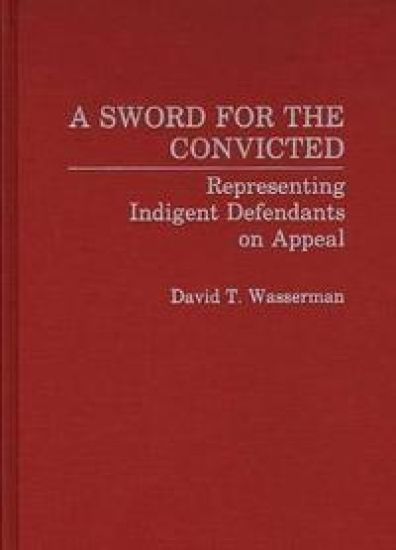
A Sword for the Convicted

A Sword for the Convicted

David Wasserman

Praeger Publishers Inc
1990
sidottu
Using New York City as a research model, this study explores the organizational, tactical, and ethical challenges of providing zealous advocacy for every convicted indigent wishing to appeal. David Wasserman, a former staff attorney with New York's Legal Aid Society, examines the unique form of representation that has emerged since the Supreme Court recognized the right to free appellate counsel, and details the conflict between the role of assigned appellate counsel and the demands of an overcrowded and underfunded criminal justice system. As the first study of indigent criminal appellate representation in the United States, this work brings a neglected form of legal service into the mainstream of criminal justice policy analysis.The book is divided into three parts. Through the use of existing research and commentary, Part I analyzes the impact of the Supreme Court's Douglas v. California decision on the appellate courts and representation and on the organization of defense services. Part II offers an empirical study of criminal appeals in New York City, addressing such issues as the quality and impact of appellate defenders and the division of the indigent caseload. In Part III, Wasserman discusses the implications of this research in relation to the analysis of indigent defense developed in Part I, and considers measures for improving the quality of assigned appellate counsel. The work concludes with an appendix listing suggestions for further reading. This study, which provides the only available information on criminal appellate dispositions in New York City, will be an important resource for courses in law and social science, criminal justice, and appellate or trial practice. It will also be useful to the criminal justice community, particularly to public defender and legal aid groups, and appellate judges and their staffs.