Kirjojen hintavertailu. Mukana 12 168 097 kirjaa ja 12 kauppaa.

Kirjailija

David Weissman

Kirjat ja teokset yhdessä paikassa: 13 kirjaa, julkaisuja vuosilta 1989-2025, suosituimpien joukossa Community. Vertaile teosten hintoja ja tarkista saatavuus suomalaisista kirjakaupoista.

13 kirjaa

Kirjojen julkaisuhaarukka 1989-2025.

Community

Community

David Weissman

STATE UNIVERSITY OF NEW YORK PRESS
2025
pokkari
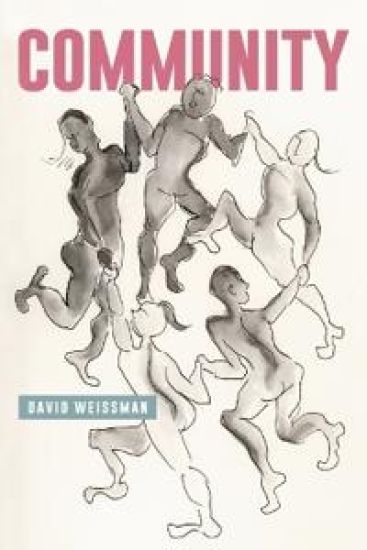
Communities are vital to personal and social well-being because collaboration is required where skills and resources are scarce; their pathologies—anonymity and isolation, tribalism and murder—defeat us. Community is often invoked respectfully but without a clear referent. The word is said to be used ninety-four ways, evidence that its sense is diffuse. Community clarifies the word's principal expressions and the alternative ideological spaces-holistic and hierarchical or open and tolerant-in which communities form. Members bind in the interest of utility-jobs or schools-or because home and friendship are the focus of feeling and significance. These binders are social glue: they explain our dedication to communal aims and loyalty to fellow members. Autonomy in their context is socialized; its bases are the information, attitudes, and skills acquired when families and schools prepare us for roles in communities inherited or chosen. Yet community is fraught. Holistic societies are repressive; open societies are vulnerable. The members of successful communities-families, businesses, and schools-often thrive. Those excluded for want of luck or skill are abandoned and anonymous. Their isolation is one of an open society's two pathologies: collaboration is a social necessity when resources, space, and skills are scarce; competition turned visceral and murderous is a vice.

Community

Community

David Weissman

STATE UNIVERSITY OF NEW YORK PRESS
2025
sidottu
Communities are vital to personal and social well-being because collaboration is required where skills and resources are scarce; their pathologies—anonymity and isolation, tribalism and murder—defeat us. Community is often invoked respectfully but without a clear referent. The word is said to be used ninety-four ways, evidence that its sense is diffuse. Community clarifies the word's principal expressions and the alternative ideological spaces-holistic and hierarchical or open and tolerant-in which communities form. Members bind in the interest of utility-jobs or schools-or because home and friendship are the focus of feeling and significance. These binders are social glue: they explain our dedication to communal aims and loyalty to fellow members. Autonomy in their context is socialized; its bases are the information, attitudes, and skills acquired when families and schools prepare us for roles in communities inherited or chosen. Yet community is fraught. Holistic societies are repressive; open societies are vulnerable. The members of successful communities-families, businesses, and schools-often thrive. Those excluded for want of luck or skill are abandoned and anonymous. Their isolation is one of an open society's two pathologies: collaboration is a social necessity when resources, space, and skills are scarce; competition turned visceral and murderous is a vice.
Agency

Agency

David Weissman

Open Book Publishers
2020
pokkari
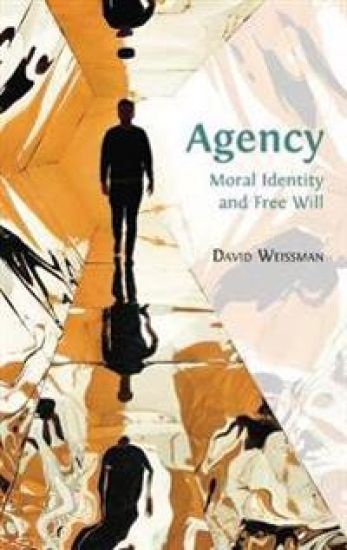
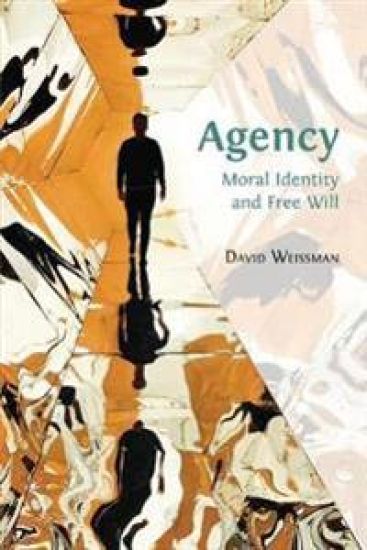
There is agency in all we do: thinking, doing, or making. We invent a tune, play, or use it to celebrate an occasion. Or we make a conceptual leap and ask more abstract questions about the conditions for agency. They include autonomy and self-appraisal, each contested by arguments immersing us in circumstances we don't control. But can it be true we that have no personal responsibility for all we think and do? Agency: Moral Identity and Free Will proposes that deliberation, choice, and free will emerged within the evolutionary history of animals with a physical advantage: organisms having cell walls or exoskeletons had an internal space within which to protect themselves from external threats or encounters. This defense was both structural and active: such organisms could ignore intrusions or inhibit risky behavior. Their capacities evolved with time: inhibition became the power to deliberate and choose the manner of one's responses. Hence the ability of humans and some other animals to determine their reactions to problematic situations or to information that alters values and choices. This is free will as a material power, not as the conclusion to a conceptual argument. Having it makes us morally responsible for much we do. It prefigures moral identity. Closely argued but plainly written, Agency: Moral Identity and Free Will speaks for autonomy and responsibility when both are eclipsed by ideas that embed us in history or tradition. Our sense of moral choice and freedom is accurate. We are not altogether the creatures of our circumstances.
Agency

Agency

David Weissman

Open Book Publishers
2020
sidottu
There is agency in all we do: thinking, doing, or making. We invent a tune, play, or use it to celebrate an occasion. Or we make a conceptual leap and ask more abstract questions about the conditions for agency. They include autonomy and self-appraisal, each contested by arguments immersing us in circumstances we don't control. But can it be true we that have no personal responsibility for all we think and do? Agency: Moral Identity and Free Will proposes that deliberation, choice, and free will emerged within the evolutionary history of animals with a physical advantage: organisms having cell walls or exoskeletons had an internal space within which to protect themselves from external threats or encounters. This defense was both structural and active: such organisms could ignore intrusions or inhibit risky behavior. Their capacities evolved with time: inhibition became the power to deliberate and choose the manner of one's responses. Hence the ability of humans and some other animals to determine their reactions to problematic situations or to information that alters values and choices. This is free will as a material power, not as the conclusion to a conceptual argument. Having it makes us morally responsible for much we do. It prefigures moral identity. Closely argued but plainly written, Agency: Moral Identity and Free Will speaks for autonomy and responsibility when both are eclipsed by ideas that embed us in history or tradition. Our sense of moral choice and freedom is accurate. We are not altogether the creatures of our circumstances.
Spinoza’s Dream

Spinoza’s Dream

David Weissman

De Gruyter
2016
sidottu
Meaning (significance) and nature are this book’s principal topics. They seem an odd couple, like raisins and numbers, though they elide when meanings of a global sort—ideologies and religions, for example—promote ontologies that subordinate nature. Setting one against the other makes reality contentious. It signifies workmates and a coal face to miners, gluons to physicists, prayer and redemption to priests. Are there many realities, or many perspectives on one? The answer I prefer is the comprehensive naturalism anticipated by Aristotle and Spinoza: "natura naturans, natura naturata." Nature naturing is an array of mutually conditioning material processes in spacetime. Each structure or event—storm clouds forming, nature natured—is self-differentiating, self-stabilizing, and sometimes self-disassembling; each alters or transforms a pre-existing state of affairs. This surmise anticipated discoveries and analyses to which neither thinker had access, though physics and biology confirm their hypothesis beyond reasonable doubt. Hence the question this book considers: Is reality divided:nature vrs. lived experience? Or is experience, with all its meanings and values, the complex expression of natural processes?
Zone Morality

Zone Morality

David Weissman

De Gruyter
2014
sidottu
Traditional moral theory usually has either of two emphases: virtuous moral character or principles for distributing duties and goods. Zone Morality introduces a third focus: families and businesses are systems created by the causal reciprocities of their members. These relations embody the duties and permissions of a system’s moral code. Core systems satisfy basic interests and needs; we move easily among them hardly noticing that moral demands vary from system to system. Moral conflicts arise because of discord within or among systems but also because morality has three competing sites: self-assertive, self-regarding people; the moral codes of systems; and regulative principles that enhance social cohesion. Each wants authority to control the other two. Their struggles make governance fragile. A strong church or authoritarian government reduces conflict by imposing its rules, but democracy resists that solution. Procedural democracy is a default position. Its laws and equitable procedures defend people or systems having diverse interests when society fails to create a public that would govern for the common interest.
A Social Ontology

A Social Ontology

David Weissman

Yale University Press
2013
pokkari
Moral and social philosophers often assume that humans beings are and ought to be autonomous. This tradition of individualism, or atomism, underlies many of our assumptions about ethics and law; it provides a legitimating framework for liberal democracy and free market capitalism. In this powerful book, David Weissman argues against atomistic ontologies, affirming instead that all of reality is social. Every particular is a system created by the reciprocal causal relations of its parts, he explains. Weissman formulates an original metaphysics of nature that remains true to what is known through the empirical sciences, and he applies his hypothesis to a range of topics in psychology, morals, sociology, and politics. The author contends that systems are sometimes mutually independent, but many systems—human ones especially—are joined in higher order systems, such as families, friendships, businesses, and states, that are overlapping or nested. Weissman tests this schematic claim with empirical examples in chapters on persons, sociality, and value. He also considers how the scheme applies to particular issues related to deliberation, free speech, conflict, and ecology.
Sensibility and the Sublime

Sensibility and the Sublime

David Weissman

De Gruyter
2012
sidottu
Philosophic attention shifted after Hegel from Kant’s emphasis on sensibility to criticism and analyses of the fine arts. The arts themselves seemed as ample as nature; a disciplined science could devote as much energy to one as the other. But then the arts began to splinter because of new technologies: photography displaced figurative painting; hearing recorded music reduced the interest in learning to play it. The firm interiority that Hegel assumed was undermined by the speed, mechanization, and distractions of modern life. We inherit two problems: restore quality and conviction in the arts; cultivate the interiority—the sensibility—that is a condition for judgment in every domain. What is sensibility’s role in experiences of every sort, but especially those provoked when art is made and enjoyed?
Cities, Real and Ideal

Cities, Real and Ideal

David Weissman

De Gruyter
2010
sidottu
Cities are conspicuous among settlements because of their bulk and pace: Venice, Paris, or New York. Each is distinctive, but all share a social structure that mixes systems (families, businesses, and schools), their members, and a public regulator. Cities alter this structure in ways specific to themselves: orchestras play music too elaborate for a quartet; city densities promote collaborations unachievable in simpler towns. Cities, Real and Ideal avers with von Bertalanffy, Parsons, Simmel, and Wirth that a theory of social structure is empirically testable and confirmed. It proposes a version of social justice appropriate to this structure, thereby updating Marx’s claim that justice is realizable without the intervention of factors additional to society’s material conditions.
Truth's Debt to Value

Truth's Debt to Value

David Weissman

Yale University Press
2010
pokkari
Is something true because we believe it to be so or because it is true? How can a culturally bound community achieve scientific knowledge when values, attitudes, and desires shape its beliefs? In this book an eminent philosopher considers various schools of thought on the nature of truth. David Weissman argues that truth exists in the correspondence between statement and fact: what can be said about our world can be measured against a reality that has a character and existence independent of any property we ascribe to it.Weissman begins by evaluating the transcendental paradigm of Kant that has exercised enormous influence in the development of Western thought over the past two hundred years. He develops his critique of the Kantian model, in which value judgments underlie the perception or construction of truth, asserting that it is seriously flawed because it renders a determination of truth impossible. Weissman examines various value-driven perspectives on truth developed by such philosophers as Foucault, Derrida, and Rorty, for whom truth is only the set of affirmations, principles, and procedures sanctioned by power and value. However, says Weissman, truth is the required adjunct to desire. Knowing who we are, where we have been, and the consequences of what we have done is the essential preparation for choosing what to do next. We must respect the integrity of a world we have not made and find our way within it with the help of attitudes and desires that have been informed by truth.
Lost Souls

Lost Souls

David Weissman

State University of New York Press
2003
pokkari
Traces the history of mind-body dualism.Lost Souls examines the origins and consequences of the philosophic idea that mind and body are distinct. The author traces mind-body dualism from Plato, Plotinus, Augustine, and Proclus through Descartes and Kant to Nietzsche, Heidegger, Carnap, and Quine. Mind's separation from body has dominated philosophic thinking for millennia, yet most mental activities are now explained in physical terms. What are the implications if mind is material and mortal? Considering both philosophic and scientific ideas about mind, David Weissman explores our options. Rejecting the claim that the character and existence of other things are an effect of the ways we think about or perceive them, he reexamines such topics as meaning and truth, human significance, self, and society. He argues that philosophers have the rare opportunity to renew inquiry by invoking the questions that once directed them: What are we? What is our place in the world? What concerns are appropriate to being here?
Hypothesis and the Spiral of Reflection

Hypothesis and the Spiral of Reflection

David Weissman

State University of New York Press
1989
pokkari
This book describes a realist, fallibilist alternative when intuitionism and its psychocentric ontology are rejected. Weissman proposes an agenda for metaphysical inquiry and also a method for testing metaphysical claims. Arguing that science and metaphysics are successive refinements of the maps and plans used in practical life, he affirms that metaphysics is to complete our self-understanding by locating us within a world we have not made. This book is a sequel to Intuition and Ideality which surveys the many versions of intuitionism-intuitionism as it prescribes that reality be identified with mind itself or with the things set before our inspecting mind.